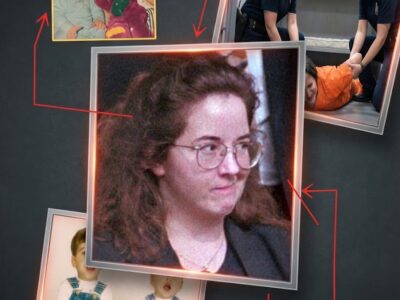
The Fingerprint and the Fury: Inside the Decades-Long Battle to Unmask the Truth in the Darlie Routier Case
🚨 THE 30-YEAR SECRET: Did Texas Death Row Inmate Darlie Routier Take the Fall for a Ghost?
For nearly three decades, Darlie Routier has sat on death row for the brutal 1996 stabbing of her 5-year-old son, Damon. The State painted her as a cold-hearted, materialistic monster who staged a break-in. But behind the sensationalized courtroom videos lies a horrifying possibility that prosecutors never wanted to look at: What if an intruder actually was inside that house?
For years, investigators ignored or buried physical clues that didn’t fit the prosecution’s neat little narrative. We’re talking about unidentifiable bloody fingerprints on a coffee table, a mysterious bloody sock found yards away carrying both boys’ DNA, and a forensic trail that defense experts say was botched from minute one.
As modern DNA testing crawls through endless legal gridlocks, the walls of the official story are starting to cave in. Was a desperate mother railroaded by a rushed investigation, or is a child killer still cheating justice?
👇 The missing forensic details they didn’t want you to see will completely change how you view this case. Click here to uncover the full truth: 🔥
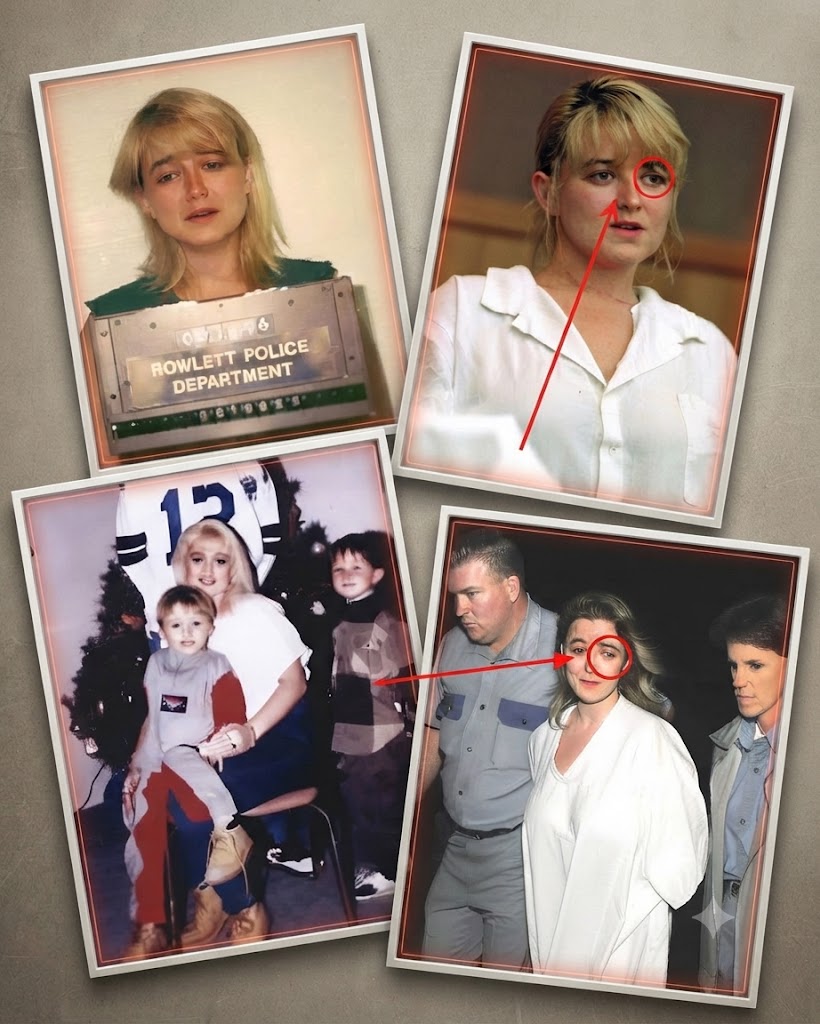
Nearly thirty years after a quiet suburban home in Rowlett, Texas, became the site of one of the most chilling double homicides in modern American history, the legal and public debate surrounding Darlie Routier refuses to rest. Routier, condemned to death row for the June 6, 1996, murder of her five-year-old son Damon, has spent decades maintaining her innocence. While the state’s courts and prosecutors have repeatedly upheld her conviction, an evolving landscape of forensic scrutiny, neglected evidence, and fierce advocacy has kept the case burning in the public consciousness. At the center of this enduring controversy lies a stubborn collection of physical clues—most notably, unmatched fingerprints and disputed trace evidence—that supporters argue point directly away from the death row inmate.
The Night That Split a Family Apart
The timeline of June 6, 1996, remains etched in true crime infamy. According to Routier’s initial statements to law enforcement, she had fallen asleep downstairs on the family room couch while watching television. She reported waking up to a strange presence and discovering an intruder in the house. Moments later, she realized she and her two young sons, Devon and Damon, had been stabbed multiple times. Her husband, Darin Routier, and their infant son, who were sleeping upstairs, rushed down as the chaos unfolded. Devon succumbed to his wounds at the scene, while Damon died shortly after arriving at the hospital.
Within hours, however, investigators grew deeply skeptical of the mother’s account. Police and prosecution experts pointed to what they characterized as an implausible escape route through a cut garage window screen, an absence of bloody footprints in the garage, and wounds on Routier’s own body that they alleged were superficial and self-inflicted. By the time the case went to trial in early 1997, the state had constructed a portrait of a woman driven by financial desperation and vanity, famously showcasing footage of Routier spraying Silly String at her sons’ gravesides weeks after the tragedy to convince jurors of her callousness.
The Forensic Battleground: Fingerprints, Fibers, and Footprints
Despite the jury’s swift guilty verdict and death sentence, defense teams and independent forensic investigators have spent decades picking apart the state’s original methodology. Among the most contentious elements of the defense’s ongoing appeals are pieces of physical evidence that did not belong to any member of the Routier household.
Court records and investigative reviews highlight that a bloody fingerprint discovered on a coffee table inside the home—as well as another print on a utility room door—matched neither Darlie nor anyone else known to live in or visit the residence. Furthermore, a bloody athletic sock containing the blood of both victimized boys was recovered roughly 75 yards away from the home in an alleyway, a piece of evidence the defense argued was indicative of a fleeing assailant dropping items during an escape, contrasting sharply with the state’s assertion that it was a poorly planned staging maneuver.
Questions have also swarmed around the integrity of the physical evidence collected at the scene. Forensic re-examinations over the years targeted testimony from state experts regarding microscopic fibers and hairs. In one notable instance during pre-trial proceedings, a state analyst testified that a hair found on a windowsill belonged to Routier, only for later DNA testing to prove it belonged to a female police officer who had contaminated the scene. Additional controversies enveloped the fiber analysis used to link a household bread knife to the cut garage window screen, with independent specialists arguing that standard dusting tools used by investigators may have cross-contaminated the samples.
A Divided Public and the Long Road of Appeals
As the years have worn on, public opinion on the Routier case has remained intensely polarized. True crime communities, legal advocacy groups, and investigative journalists frequently revisit the transcripts, pointing out what they describe as a rush to judgment fueled by media pressure and flawed 1990s forensic techniques. Documentaries and legal filings have repeatedly underscored the argument that Routier suffered severe, life-threatening blood loss during the attack—refuting the prosecution’s early claims that her knife wounds were trivial.
Conversely, prosecutors and victims’ advocates maintain that the weight of the circumstantial evidence presented at trial—including behavioral anomalies, financial pressures, and the physical layout of the crime scene—points squarely to her guilt. Legal battles in recent years have centered heavily on securing comprehensive, advanced DNA testing on the disputed fingerprints, the bloody sock, and Routier’s blood-stained nightshirt. Though courts have periodically ordered DNA reviews, bureaucratic hurdles and extensive procedural delays have drawn out the process, leaving the final scientific verdict on those physical traces pending.
Nearly three decades after a mother’s screams pierced the Texas night, the Darlie Routier case stands as a haunting reminder of the complexities embedded within the American capital punishment system. Whether the lingering questions surrounding the crime scene’s unidentified fingerprints will ultimately unlock a path toward exoneration or simply reinforce a decades-old conviction remains one of the legal system’s most closely watched and deeply unsettled questions.