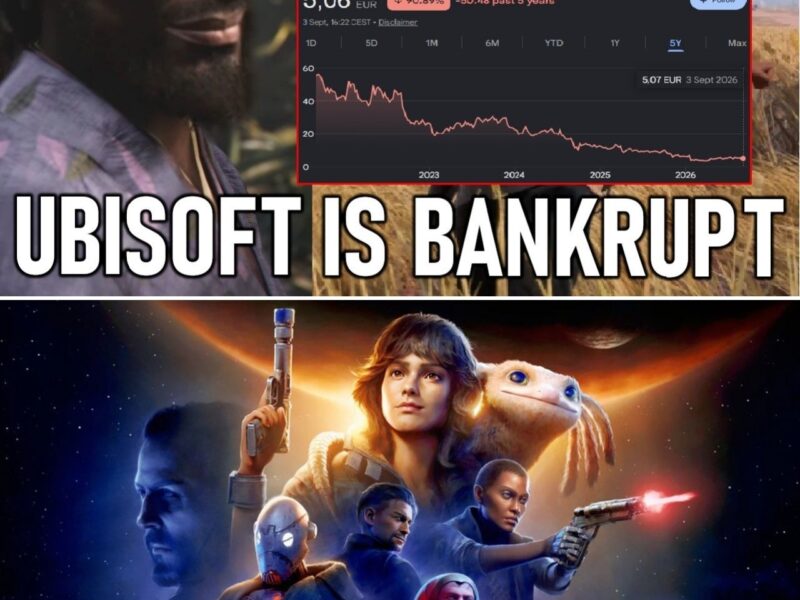
The Fall of the House of Ubisoft: From Corporate Meltdowns to the Ultimate Steam Blunders
Ubisoft is literally begging players to buy their games now… and the internet is absolutely roasting them. 🔥
From losing 99% of their peak valuation to churning out one controversial, uninspired title after another, Ubisoft has officially hit rock bottom. But nothing beats the sheer, mind-boggling incompetence of their latest blunders: accidentally releasing a Steam game that literally contained zero game files (just a 23kb dummy file opening a CMD window), and copyright-striking a VTuber they themselves sponsored because they messed up their own time zones!
Is this the funniest corporate death spiral in gaming history, or are we watching the final collapse of a once-great giant?
You won’t believe how bad the “Ubi-slop” era has gotten and why players are cheering for their downfall. Read the full explosive breakdown right here:
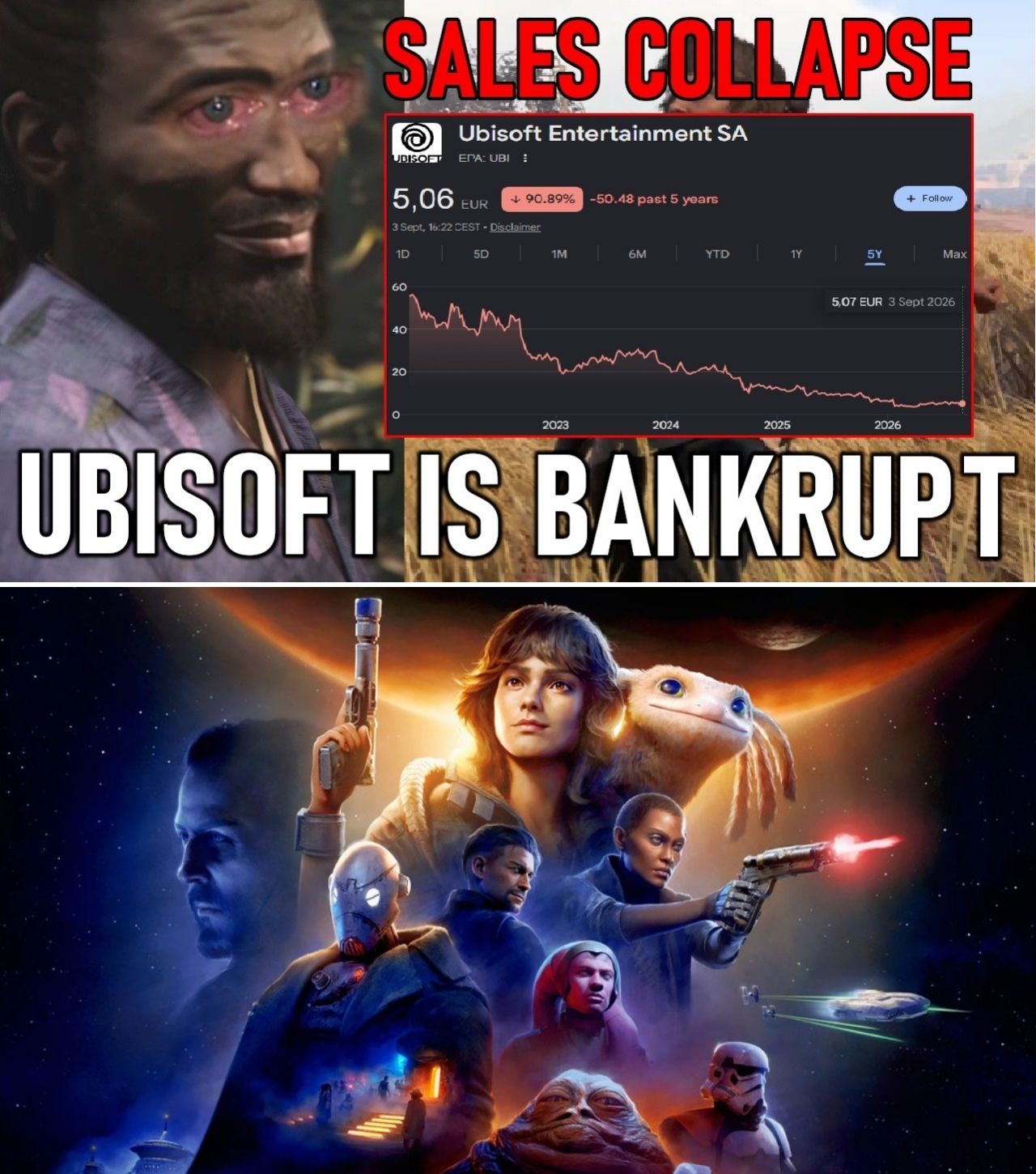
In the modern history of the video game industry, few companies have experienced a descent as precipitous or self-inflicted as Ubisoft. Once heralded as a powerhouse of creative ambition, the publisher now finds itself staggering under billions in debt, facing massive stock devaluation, and enduring relentless ridicule from the global gaming community.
As the studio struggles to stay afloat amidst a string of commercial disappointments and polarizing design choices, recent events have turned the company into a punchline. From bizarre marketing disasters to historic technical screw-ups on digital storefronts, Ubisoft’s recent trajectory paints a picture of a corporation completely detached from its audience and its own operations.
The “Ubi-Slop” Era: Alienating the Core Audience
For years, critics and players have used the term “Ubi-slop” to describe a formulaic approach to game development: open-world maps cluttered with repetitive objectives, uninspired storytelling, and a heavy reliance on corporate trends rather than genuine innovation.
Recent major releases have only deepened the chasm between the publisher and core gamers. Titles attempting to pivot into pirate adventures with unique crew dynamics or historical epics featuring culturally provocative choices have repeatedly divided public opinion, leading to massive financial shortfalls. Rather than capturing lightning in a bottle, these releases have often peaked with a fraction of the engagement expected from multi-million-dollar AAA projects, fueling widespread sentiment that the company has lost its creative compass.
Peak Incompetence: The Heroes of Might and Magic III Steam Disaster
While creative struggles are one thing, Ubisoft’s operational and technical blunders have scaled new heights of absurdity. A prime example unfolded with the digital re-release of the beloved classic Heroes of Might and Magic III on Steam.
In what quickly became an internet legend, Ubisoft managed to launch the game on the platform without actually including the game files. Players who purchased the title downloaded a mere 23-kilobyte package containing a dummy executable that did nothing more than flash a command prompt (CMD) window. The company subsequently issued a public apology, acknowledging the staggering oversight and asking bewildered customers to reinstall a product that had shipped empty.
This technical mishap was compounded by administrative blunders, such as an incident where Ubisoft sponsored a VTuber to stream Assassin’s Creed Shadows, only to issue a copyright complaint that got the creator banned on Twitch due to internal confusion over time zones. Despite fulfilling her contractual obligations, the streamer bore the brunt of the publisher’s internal disarray.
The Community Backlash and the Rise of Alternatives
The cumulative effect of these missteps has created a toxic public relations environment for the publisher. Social media platforms are flooded with mockery, with a significant portion of the gaming community openly expressing a desire to see the company restructure or face bankruptcy.
As consumer trust in mainstream publishers plummets, players are increasingly redirecting their time and money toward independent developers and spiritual successors that honor classic franchises. Whether it is robust tactical strategy games built by passionate teams or community-driven mods, the market is voting with its wallet against corporate complacency.
Conclusion: A Warning to the Industry
Ubisoft’s current predicament serves as a stark cautionary tale for the AAA gaming sector. When a studio loses touch with its player base, prioritizes corporate formulas over craftsmanship, and suffers from systemic operational failures, even the most legendary intellectual properties cannot save it from collapse. Whether Ubisoft can engineer a miraculous turnaround or whether it will stand as a monument to corporate hubris remains one of the industry’s most compelling ongoing dramas.