CCTV footage played during the inquest into the death of Belfast schoolboy Noah Donohoe has highlighted a remarkable coincidence that has deepened the mystery surrounding his final hours. On 21 June 2020, the 14-year-old cycled directly past a man named Daryl Paul near the Queen’s Quarter housing complex in south Belfast, just minutes after leaving his home off the Ormeau Road. Later that same day, Paul was found in possession of Donohoe’s laptop and schoolbooks, items stolen from a rucksack the teenager had discarded during his unexplained journey northward. Yet evidence presented to the coroner’s court on 24 February 2026 made clear there was no interaction between the pair, no physical contact, and no suggestion Paul played any role in the events that led to Donohoe’s disappearance and death by drowning six days later.
The revelation came as lawyers for Donohoe’s mother, Fiona, cross-examined a police witness about gaps in the collection of CCTV evidence along the boy’s route. Barrister Brenda Campbell KC described the moment as “a massive coincidence,” noting that Paul stood outside the Queen’s Quarter building on University Street as Donohoe pedalled by shortly after 5:40pm. Paul, from Cliftonville Avenue in north Belfast, had previously pleaded guilty to stealing the rucksack opportunistically after discovering it abandoned. His solicitor at the time emphasised that his client led a chaotic life marked by drink and drug abuse, requiring medical intervention, but had no personal connection to the schoolboy. Sentencing Paul to three months in prison, the judge stressed that the penalty related solely to the theft itself, not the identity of the owner.

This latest chapter in the long-running inquest, which opened in January 2026 and is expected to run into late March, has lifted a reporting restriction previously imposed on Paul’s identity. On the morning of 24 February, coroner Mr Justice Rooney agreed to remove the order after Paul’s barrister categorically stated there was zero interaction. CCTV placed Paul on Botanic Avenue shortly after Donohoe’s last confirmed sighting, putting him on the opposite side of the city from where the teenager ended up in north Belfast. “That cannot have happened,” the lawyer told the court, dismissing persistent rumours of any encounter in the north. Campbell confirmed for the Donohoe family that the matter was not in dispute, while the coroner’s own counsel noted it was the first time the point had been spelled out so definitively.

Detective Sergeant Gardiner, who coordinated CCTV retrieval for the Police Service of Northern Ireland’s criminal investigation department three days after Donohoe vanished, faced detailed questioning about why additional footage around the Queen’s Quarter area was not prioritised earlier. He acknowledged that further recordings could have helped place Paul more precisely, but stressed the investigation’s primary focus was determining whether any “event” along the route prompted Donohoe to abandon his belongings. With finite resources, officers were redeployed to other duties, though Gardiner insisted the CCTV effort was one of the most intensive he had experienced, involving unprecedented numbers of personnel. The inquest jury heard how the anonymous tip-off about Paul and the laptop reached police on 24 June, yet full CID awareness came the following day, by which time initial searches had already shifted focus.
Donohoe’s journey that Sunday evening began ordinarily enough but unravelled into one of Northern Ireland’s most baffling tragedies. Born on 25 November 2005 in Strabane, County Tyrone, the teenager had moved with his mother Fiona to south Belfast, where he thrived as a bright, inquisitive pupil at St Malachy’s College. Described by those closest to him as possessing a “lust for life and learning,” he played cello, explored philosophy, and showed a thirst for knowledge that impressed teachers and friends alike. In the week before his disappearance, however, subtle changes emerged. He became preoccupied with Jordan Peterson’s book 12 Rules for Life, which he carried everywhere, including in his khaki rucksack alongside his Lenovo laptop and schoolbooks. He performed uncharacteristic chores for his mother, hugged her more often, and displayed mood swings that left Fiona worried. She later told police he seemed “so up and down” and “really huggy,” confiding in a 999 call that something felt “not right.”
At approximately 3:34am on 21 June, Donohoe left home wearing flip-flops, a T-shirt, and shorts, carrying headphones. CCTV captured him heading toward Queen’s University before returning barefoot at 4:08am without the headphones—an unexplained early-morning excursion that later prompted the coroner to release footage seeking public information. By late afternoon, around 5:41pm, he departed again, telling Fiona he was cycling to meet friends near Cavehill. Dressed in helmet, jacket, hoody, shorts, trainers, and carrying the rucksack, he set off on his bicycle through south Belfast.
What followed defies easy explanation. Travelling through the city centre and onto the Shore Road, Donohoe gradually shed his possessions. Eyewitnesses and CCTV documented him discarding the rucksack, mobile phone, and eventually his clothing. At about 5:59pm, he fell from the bike on the Shore Road—a tumble captured on camera—but remounted and continued. By 6:08pm, he had entered a Protestant enclave in north Belfast, an area he had reportedly never visited before. Stripped naked, he abandoned the bicycle on Northwood Road, along with helmet and remaining clothes, and walked toward a stream leading to a gated culvert inlet on Department for Infrastructure land. The grille was not padlocked, allowing relatively easy access despite the site’s restricted nature.
Residents in the Northwood area later reported seeing a naked boy cycling erratically, some assuming it was a prank or that he was under the influence. One heard a loud noise like someone trying a back door handle around 3am the next morning. Others described high-pitched screams shortly after midnight—faint but unmistakably human—echoing through Premier Drive and Northwood Parade. Fiona reported her son missing at 9:44pm, her voice trembling on the recorded 999 call played in court: “My son is 14, he has not come home yet.” She pleaded for help, noting his recent emotional state and fear that something was wrong.
The search that followed mobilised hundreds of volunteers, police, and emergency services across Belfast. Donohoe’s phone was recovered the next day inside railings at Castleton Park, its screen damaged. His bicycle and scattered belongings were found near Northwood Road. Despite extensive efforts, including checks of the culvert area, the teenager’s body was not located until 27 June—six days later—625 metres downstream inside a storm drain behind Northwood Road, near a Translink depot. Recovered face down with his head submerged in a dark, silt-filled tunnel, the body showed signs of prolonged immersion: macerated skin on hands and feet, decomposition, and mud coating. Hand marks on the culvert walls suggested he had clawed his way forward in complete darkness.
A postmortem examination conducted swiftly by Professor Marjorie Turner concluded drowning as the cause of death. Three pathologists—Turner, Professor Jack Crane, and Dr Nathaniel Cary—later “hot-tubbed” their evidence in the inquest’s seventh week, unanimously agreeing Noah entered the water alive. Extensive forehead bruising, consistent with blunt impacts inside the culvert rather than the earlier bike fall (protected by his helmet), could have caused concussion but showed no signs of weapon use or third-party assault. Toxicology found no drugs, though limitations prevented absolute exclusion, and the experts noted hypothermia may have contributed to disorientation but was secondary to drowning. Stomach contents of brown liquid and vegetative matter aligned with swallowing water during the ordeal. Crucially, they found “no evidence to suggest the involvement of another individual,” though Dr Cary could not entirely rule out coercion without physical signs. The consensus: death occurred close to the time of disappearance, likely on 21 June itself.
Fiona Donohoe has sat through these harrowing details with quiet dignity, her presence a constant reminder of the human cost. In prerecorded evidence played at the inquest’s opening, she described the week between disappearance and discovery as a “living nightmare.” She recounted their “beautiful, magical bond,” her son’s intellect, and how he once cried in his room before insisting he was laughing. “I’m holding out hope that this inquest is able to provide me with answers,” she said. Her campaign, supported by “Noah’s Army” and thousands at rallies, has demanded transparency, questioning institutional negligence in the police response. Protests have highlighted delays: the culvert was not fully explored for 12 hours despite its proximity; initial CCTV collection prioritised certain routes over others; and a review raised concerns about “missing person fatigue.” Sergeant Hutchings, involved in the search, faced scrutiny over resource allocation and why the anonymous call about Paul was not actioned faster.
Throughout the proceedings, Mr Justice Rooney has urged the jury of nine men and two women to focus solely on evidence, ignoring social media speculation and conspiracy theories that once swirled around the case. Police witnesses, including Detective Sergeant Gardiner and former chief superintendent Clark, have defended the operation’s scale and sincerity, insisting no foul play was indicated and that every lead—from possible head injury to mood-altering substances—was pursued. Clark described early assumptions of voluntary absence as standard procedure, not dismissal. Community volunteers detailed the drain’s hazards: cold, dark, debris-filled, with gas pockets and tidal influences making navigation treacherous for anyone, let alone a naked, disoriented 14-year-old.
The Daryl Paul episode, while ruled out as connected, underscores the investigation’s complexity. Paul’s chaotic lifestyle and opportunistic theft—admitted in court—occurred far from the drain where Donohoe met his end. Yet the timing, the laptop’s discovery on the northern leg of the route, and the “massive coincidence” of their paths crossing early on have fueled public fascination. Paul’s barrister emphasised his client’s location on Botanic Avenue precluded any northern involvement, a point now accepted by all parties. Gardiner accepted that more CCTV might have clarified Paul’s movements in isolation but reiterated the broader priority: reconstructing events to explain why a promising young student would strip, discard everything, and enter a restricted culvert alone.
As the inquest nears its conclusion, questions linger about the precise sequence inside the drain, potential acute psychotic episodes linked to Donohoe’s recent behaviour and the Peterson book, and whether better coordination could have altered the outcome. Fiona has established the Noah Donohoe Foundation to honour her son’s memory, while Belfast City Council named a bridge after him in recognition of their shared walks. His father, Emmanuel Djakpa, whom Noah never met, expressed devastation from afar. Friends remember a “one in a million” boy who was positive and reflective in his final messages.
The jury’s findings, expected soon, will not assign criminal blame but aim to establish how, when, and where Donohoe died, offering recommendations to prevent future tragedies. For Fiona and the family, the process represents more than procedure—it is the long-awaited opportunity to piece together the final hours of a boy whose vibrant spirit touched everyone. The coincidence of passing Paul may remain just that: a tragic footnote in a story still searching for its full truth. Yet every piece of evidence, from screams in the night to handprints in the dark, brings the court closer to understanding what drove a helmeted cyclist with a book in his bag to venture naked into an unforgiving tunnel, alone.
Beyond the courtroom, the case has left an indelible mark on Belfast. Volunteers who trudged streets and drains recall the exhaustion and hope that turned to grief. Police officers have spoken of unprecedented dedication, yet critics point to early missteps—delayed statements from witnesses, incomplete initial CCTV sweeps, and a hostile crowd complicating searches in some areas. One resident who found the bicycle described it as “abandoned in a flash,” while another who recovered the phone charged it only to see frantic missed calls from “Mum.”
Pathologists’ agreement that drowning occurred without external violence has quelled some rumours, but the absence of water samples for diatom analysis and incomplete toxicology have prompted calls for improved protocols. The coroner himself noted the case’s unusual nature, requiring psychiatric input on possible psychosis, which experts deferred to specialists. Donohoe’s behaviour—discarding items methodically, cycling naked through unfamiliar streets—fits patterns some associate with acute episodes, though no definitive diagnosis emerged.
Inquest evidence has also illuminated broader systemic issues. The transfer from uniform to CID after three days followed standard high-risk protocols, but barristers for the family probed why certain CCTV from rear properties or additional routes was overlooked initially. Gardiner’s testimony revealed the sheer volume of footage analysed, yet finite resources meant prioritisation. The anonymous tip about Paul arrived amid the frenzy, yet processing delays highlighted communication gaps between departments.
Fiona’s supplementary statements have added layers of personal insight. She trusted her son implicitly, allowing occasional overnights with a former partner pre-Covid, and expressed no prior concerns about self-harm or planning to run away. His diary entries mentioning bullying fears and the word “gay” were explored gently, revealing a sensitive boy navigating adolescence. Messages to friends showed introspection about honesty and emotions, yet the friend described him as upbeat in their last encounter.
The screams reported by multiple Northwood residents—two faint cries around midnight, a high-pitched one later—remain unexplained but timed with Donohoe’s likely entry into the drain. A woman on Premier Drive hid in fear after hearing a door handle rattle, unaware at the time of the missing boy nearby. These auditory clues, combined with the bike fall witness who saw him embarrassed but quickly remounting, paint a picture of progressive disorientation rather than immediate foul play.

As weeks of testimony accumulate, the inquest has humanised every aspect. Pathologist Turner conducted the postmortem rapidly to aid police and return Noah to his family, describing the body coated in mud, with immersion changes and no rigor mortis after days in water. The drain’s conditions—heartbreaking for a child alone—were recounted by hazardous environment teams: narrow, slippery, with strong currents pulling debris and anyone inside downstream.
Public vigils, marches to City Hall, and the bridge naming reflect a community’s enduring solidarity. Fiona’s foundation channels grief into positive legacy, supporting mental health and youth initiatives Noah would have championed. His cremation, chosen because of his lifelong fear of the dark, underscored the family’s intimate knowledge of his vulnerabilities.
The Daryl Paul development, while peripheral, serves as a microcosm of the inquest’s value: separating coincidence from causation, rumour from fact. With the reporting ban lifted, Paul’s full context—opportunistic theft amid personal struggles—emerges without implication in the tragedy. His presence on University Street that evening, mere metres from Donohoe’s path, was chance; the laptop’s later discovery elsewhere, another layer of happenstance in a city on edge.
Looking ahead, the jury must weigh all elements: mental health indicators, search efficacy, forensic certainties, and eyewitness accounts. Mr Justice Rooney’s directions emphasise evidence over speculation, ensuring findings rest on proven facts. For the Donohoe family, closure remains elusive until the verdict, yet the process itself validates their six-year quest.
Noah Donohoe’s story is one of promise cut short—a cello-playing scholar with dreams, reduced to a bicycle left on a roadside and a body recovered far underground. The inquest, through meticulous detail on Paul, screams, bruises, and drains, honours that life by demanding answers. As proceedings continue, Belfast watches, hoping the final rulings illuminate the darkness that claimed a boy who once cycled past a stranger with no idea their paths would intersect in court years later. The coincidence, now public, adds one more thread to a tapestry still being woven, thread by thread, in search of truth.
News
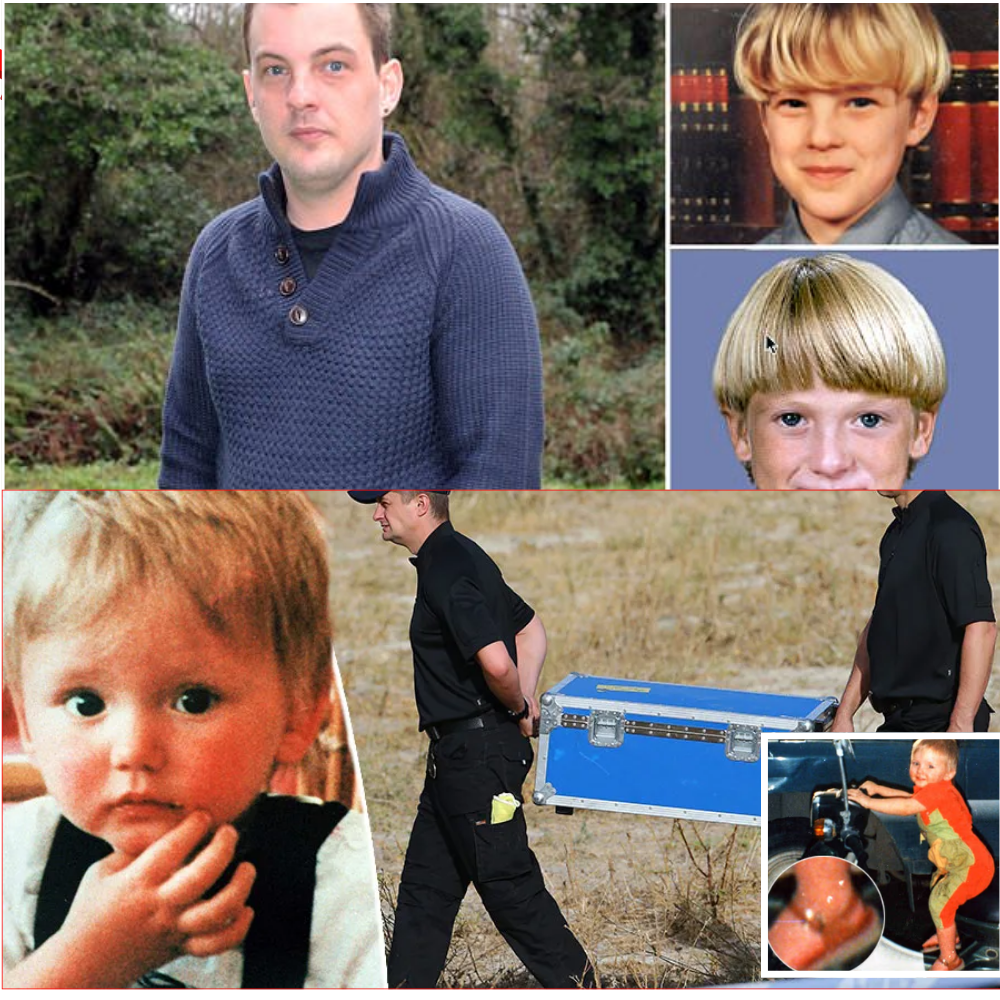
😢 “She’s Waited 35 Years… Now One DNA Test Could Bring Her Baby Home – Or Break Her Again” 🩸 New Photos & Adoption Mystery Explode Online
Ben Needham Latest Update: New Photos and DNA Test Spark Fresh Hope in One of the Longest Toddler Missing Mysteries; What We Know So Far The disappearance of Ben Needham remains one of Britain’s most enduring and heartbreaking unsolved cases. In July 1991, the 21-month-old toddler vanished without a trace from a family farm on […]
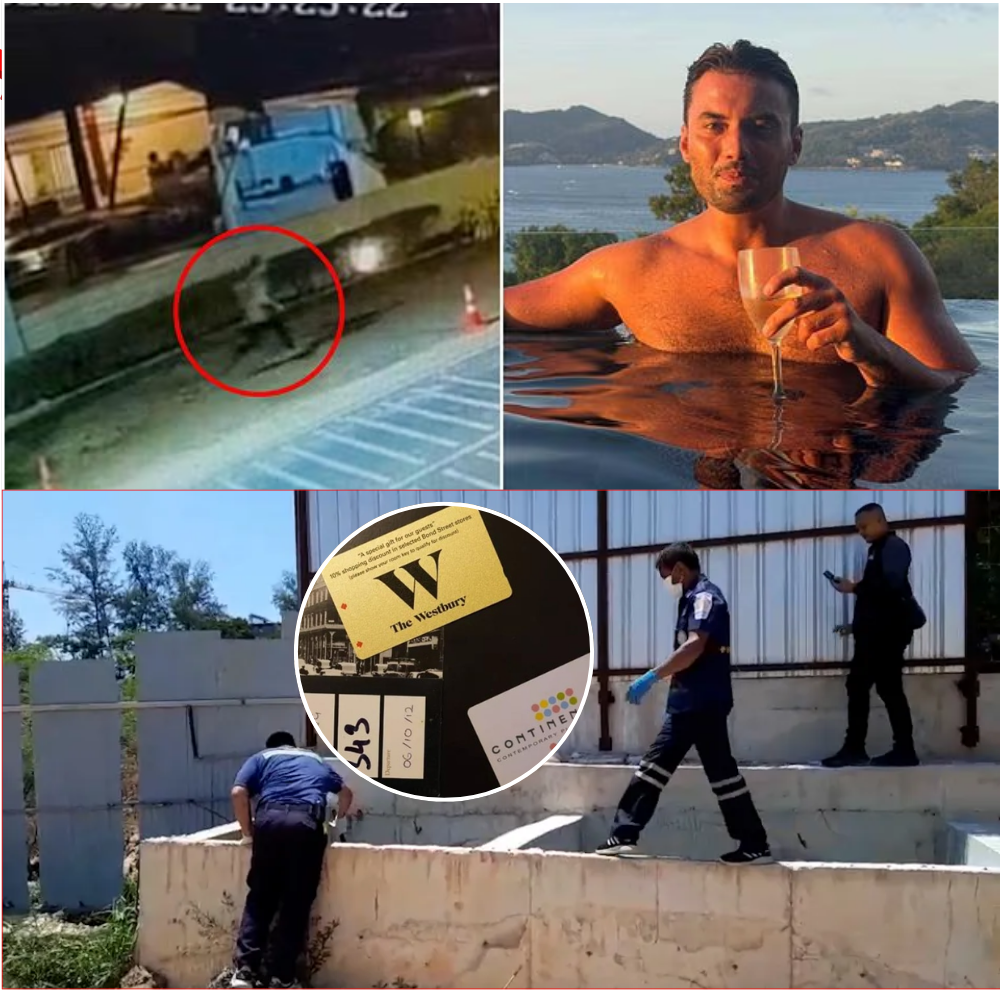
Shocking Footage Emerges: Ex-TOWIE Jordan Wright Desperately Sprinting, Clutching Truck in Fear – Hours Later His Body Lies in Thailand’s Murky Drain
The paradise of Phuket’s Bangtao Beach area, with its luxury resorts, infinity pools overlooking the Andaman Sea, and vibrant nightlife, turned sinister in the early hours of March 13, 2026. Grainy black-and-white CCTV footage, now haunting viewers worldwide, captures the final documented moments of 33-year-old Jordan Wright—a former star of The Only Way Is Essex […]
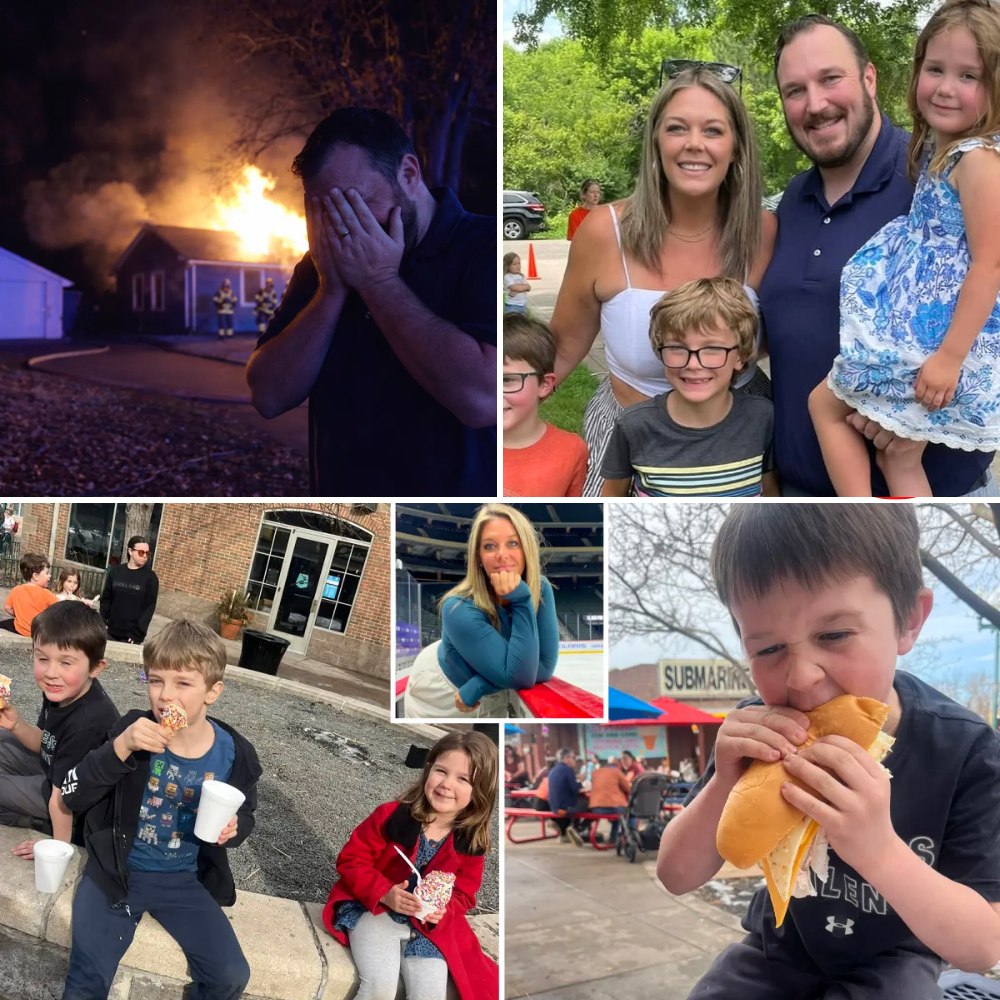
Heartbreaking & Suspicious 😱 Jessi Pierce & 3 Adorable Kids Die in Minnesota House Fire – Husband Miraculously Away…
The early morning silence in White Bear Lake, Minnesota, was brutally shattered on March 21, 2026, when a ferocious blaze erupted from the modest single-family home on the 2100 block of Richard Avenue. Around 5:25 a.m., neighbors were jolted awake by the roar of flames and the thick, choking smoke that poured into the frigid […]
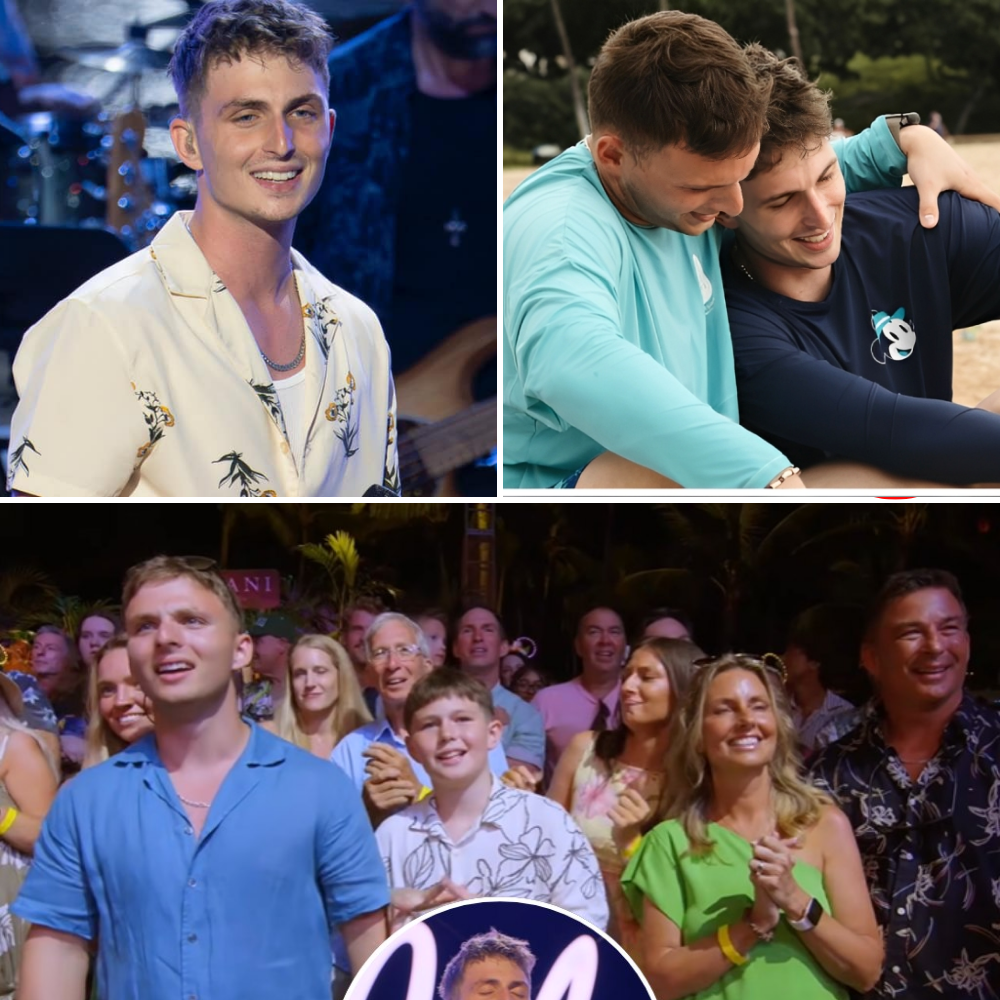
“UMBRELLA” BUT MAKE IT SOUL-CRUSHING! 😍 Braden Rumfelt delivers the most emotional Idol performance ever… from whisper to chills in seconds! Who’s replaying? 🔁💥
“HE DIDN’T JUST SING… HE MADE EVERYONE FEEL IT.” When Braden Rumfelt stepped onto the American Idol stage, no one expected the kind of moment that followed. Covering a hit by Rihanna, he delivered a smooth, emotional performance that instantly shifted the energy in the room. From the first note, it felt different. His voice […]

THE HIDDEN SIDE OF AMERICAN IDOL NO ONE SEES! 😢 Missouri mom Hannah Harper opens up about guilt, exhaustion & rising pressure in Top 14 👶🎤 Who’s Team Hannah?
Missouri native Hannah Harper is opening up about the reality behind her American Idol journey, admitting the challenge of balancing life as a stay-at-home mom while stepping into the spotlight. As she competes for America’s vote in the Top 14, the pressure is only growing. Behind the scenes, Hannah revealed the demanding schedule, emotional weight, […]

19 YEARS LATER… REBA CAST REUNITED & IT FEELS LIKE NO TIME PASSED! 🔥 Hugs, laughs, & epic prank call to JoAnna! This healed my 2000s heart 😍
After 19 Years… The Reba Family Is Finally Back Together. Time may pass, shows may end, but some bonds never fade. Nearly two decades after the beloved sitcom Reba left our screens, the cast reunited for the first time on the set of Happy’s Place. The moment they saw each other again, it felt like […]
End of content
No more pages to load