A child no older than thirteen, stripped of everything—family, home, name—forced to reinvent herself in a landscape where one wrong word could end her life. A stolen identity becomes her only shield. A world that demanded she disappear, not just from sight but from her very sense of self. What unfolds is a haunting true story of courage under unimaginable pressure, where growing up meant learning how to hide. Each scene tightens like a breath held too long. Devastating. Powerful. Deeply human. Streaming on Netflix now — the kind of story people can’t stop sharing once they finish it.
In the flood of content that hits our screens daily, few titles land with the quiet devastation of My Name Is Sara. This understated yet searing biographical drama, based on the real-life experiences of Holocaust survivor Sara Góralnik, has surged in popularity on Netflix, leaving viewers emotionally wrecked and profoundly reflective. Social media overflows with reactions: tears in the comments, sleepless nights shared in posts, urgent recommendations to friends. “I finished it at 2 a.m. and just sat there staring at the wall,” one viewer confessed. Another wrote, “It’s not loud horror—it’s the slow crush of fear that stays with you.” The film doesn’t rely on graphic violence or sweeping spectacle; instead, it builds tension through the mundane terror of everyday survival, making its impact all the more profound.
The true story behind the film is as gripping as any fiction. Sara Góralnik was born in 1928 in Korets, a small town in what was then eastern Poland (now Ukraine). Under Soviet occupation after 1939, life was already difficult, but the German invasion in 1941 brought unimaginable horror. By September 1942, the Nazis had liquidated the Korets ghetto, executing Sara’s parents and most of her extended family in mass shootings. In the chaos of escape, Sara and her older brother Moishe fled into the countryside. Knowing that traveling together increased their risk of capture, they made the agonizing decision to separate. Moishe headed one way; Sara, alone at thirteen, another.
Desperate and starving, Sara remembered her Christian classmate, Manya Romanchenko. She adopted Manya’s identity—complete with fabricated backstory—and presented herself as an orphaned Ukrainian girl seeking work. This act of identity theft wasn’t casual; it required erasing every trace of her Jewish heritage, from accent to customs to the instinctive fear that came with being hunted. Sara eventually found employment as a nanny and farmhand with Pavlo and Nadya, a Ukrainian couple living in a remote village. For nearly two years, she lived under constant scrutiny, performing Christian rituals, attending church, and navigating the volatile dynamics of her employers’ household—all while concealing the truth that could cost her life.

The film, directed by Steven Oritt in his narrative feature debut, stays remarkably faithful to these events. Oritt conducted extensive interviews with Sara before her passing in 2018, ensuring authenticity. Produced in association with the USC Shoah Foundation and executive produced by Sara’s son Mickey Shapiro, My Name Is Sara (sometimes titled The Occupation in certain markets) premiered at film festivals in 2019 but has found renewed life and massive viewership on Netflix in recent years, amplified by viral shares and algorithmic recommendations.
Zuzanna Surowy delivers a breakout performance as Sara/Manya. Discovered through open casting in Poland, Surowy brings an raw, unpolished authenticity to the role. Her face—wide-eyed, guarded, occasionally flashing with the cunning of someone far older—conveys volumes without dialogue. In one early sequence, as Sara flees the ghetto aftermath, Surowy’s physicality speaks: trembling hands clutching a small bundle, hesitant steps across open fields, the constant glance over her shoulder. It’s not showy acting; it’s lived-in terror.
The supporting cast elevates the material. Eryk Lubos portrays Pavlo with layered menace and reluctant humanity—a man capable of cruelty yet dependent on the girl’s labor. Michalina Olszańska’s Nadya simmers with jealousy and suspicion, her own marital unhappiness mirroring Sara’s hidden pain. Their household becomes a psychological pressure cooker: Pavlo’s unwanted advances, Nadya’s probing questions, the arrival of Nazi officials or partisan fighters. Every interaction carries the risk of exposure.
Oritt’s direction favors restraint. Cinematographer Marian Prokop shoots in desaturated palettes that evoke the bleak Ukrainian winter and the emotional numbness of occupation. Long takes linger on mundane tasks—milking cows, scrubbing floors, reciting prayers—turning routine into suspense. The sound design amplifies paranoia: distant gunfire, creaking doors, whispered conversations. Violence is implied rather than shown, allowing viewers’ imaginations to fill the gaps with even greater horror.
Thematically, the film probes the cost of survival. What happens to identity when you must bury it to live? Sara’s internal conflict—guilt over outliving her family, shame at denying her heritage, fear of discovery—forms the emotional core. She learns to mimic Christian gestures so perfectly that she sometimes startles herself. The story also examines moral ambiguity in wartime. Pavlo and Nadya aren’t cartoon villains; they’re flawed people making choices amid chaos, their kindnesses and cruelties intertwined. This nuance avoids simplistic heroism, presenting survival as messy, compromised, and profoundly human.
In the broader landscape of Holocaust cinema, My Name Is Sara stands out for its intimate scale. Unlike the epic scope of Schindler’s List or the confined dread of The Diary of Anne Frank, it focuses on rural hiding and false assimilation. It echoes elements of Europa Europa—a young person passing as Aryan—but centers a female perspective and emphasizes psychological endurance over dramatic escapes. Compared to recent Netflix offerings like The Tattooist of Auschwitz, it trades melodrama for quiet realism, making its emotional punches land harder.
Viewer response has been overwhelming. On platforms like X (formerly Twitter) and Facebook, people describe it as “emotionally exhausting” yet “essential.” Many note how the film’s subtlety amplifies its power: no swelling score during key moments, just silence that screams. “It hurts because it’s real,” one post read. “She didn’t have superpowers—just wits and will.” The story resonates in 2026, amid rising global tensions and debates over historical memory. Sara’s invisibility parallels modern experiences of marginalized groups navigating prejudice by masking identity.
The film’s accessibility on Netflix has broadened its reach. What began as a festival darling has become a word-of-mouth phenomenon, with viewers urging others to watch while warning of its intensity. “Have tissues ready,” is common advice. “But don’t skip it.” Mickey Shapiro, reflecting on his mother’s legacy, has emphasized the importance of sharing these stories to combat forgetting. In an interview tied to the film’s release, he noted, “My mother survived by becoming invisible, but her voice now demands to be heard.”
Critics have praised the restraint. Roger Ebert’s review called it a thriller disguised as biography, noting how it places audiences in Sara’s precarious position. The Los Angeles Times deemed it “absorbing and affecting,” highlighting strong performances and authentic detail. On review aggregators, audience scores reflect deep engagement—people rate it highly not for entertainment, but for impact.
Ultimately, My Name Is Sara reminds us that history’s greatest atrocities were endured one day, one lie, one held breath at a time. It’s a testament to resilience, but also a warning: survival can exact a price beyond the physical. For Sara, liberation in 1944 brought freedom, but the scars of erased identity lingered. She rebuilt her life, married, raised a family, yet carried the weight of those years until the end.
If you’re seeking something that challenges, moves, and lingers, stream it. But prepare yourself. This isn’t easy viewing. It’s necessary. A child. A stolen identity. A world that demanded she disappear. The courage it took to endure will leave you breathless—and changed.
News
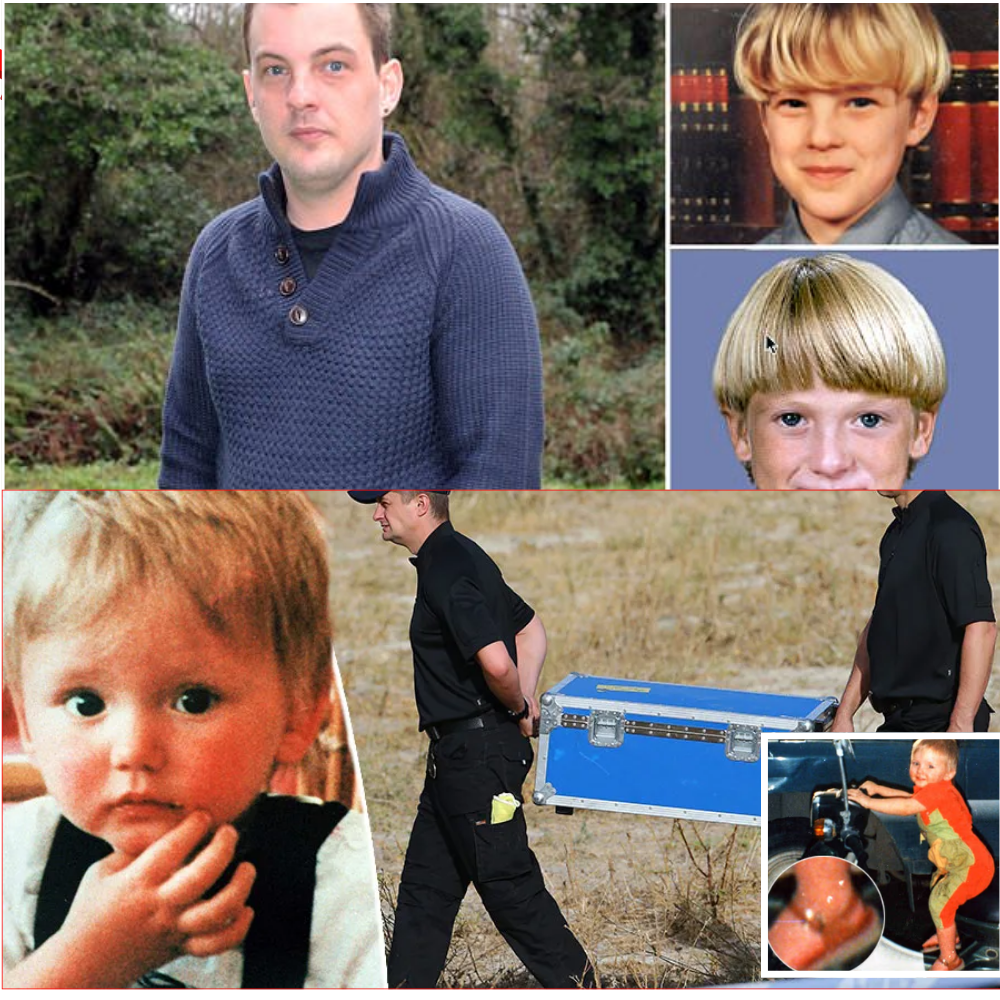
😢 “She’s Waited 35 Years… Now One DNA Test Could Bring Her Baby Home – Or Break Her Again” 🩸 New Photos & Adoption Mystery Explode Online
Ben Needham Latest Update: New Photos and DNA Test Spark Fresh Hope in One of the Longest Toddler Missing Mysteries; What We Know So Far The disappearance of Ben Needham remains one of Britain’s most enduring and heartbreaking unsolved cases. In July 1991, the 21-month-old toddler vanished without a trace from a family farm on […]

Shocking Footage Emerges: Ex-TOWIE Jordan Wright Desperately Sprinting, Clutching Truck in Fear – Hours Later His Body Lies in Thailand’s Murky Drain
The paradise of Phuket’s Bangtao Beach area, with its luxury resorts, infinity pools overlooking the Andaman Sea, and vibrant nightlife, turned sinister in the early hours of March 13, 2026. Grainy black-and-white CCTV footage, now haunting viewers worldwide, captures the final documented moments of 33-year-old Jordan Wright—a former star of The Only Way Is Essex […]

Heartbreaking & Suspicious 😱 Jessi Pierce & 3 Adorable Kids Die in Minnesota House Fire – Husband Miraculously Away…
The early morning silence in White Bear Lake, Minnesota, was brutally shattered on March 21, 2026, when a ferocious blaze erupted from the modest single-family home on the 2100 block of Richard Avenue. Around 5:25 a.m., neighbors were jolted awake by the roar of flames and the thick, choking smoke that poured into the frigid […]

“UMBRELLA” BUT MAKE IT SOUL-CRUSHING! 😍 Braden Rumfelt delivers the most emotional Idol performance ever… from whisper to chills in seconds! Who’s replaying? 🔁💥
“HE DIDN’T JUST SING… HE MADE EVERYONE FEEL IT.” When Braden Rumfelt stepped onto the American Idol stage, no one expected the kind of moment that followed. Covering a hit by Rihanna, he delivered a smooth, emotional performance that instantly shifted the energy in the room. From the first note, it felt different. His voice […]

THE HIDDEN SIDE OF AMERICAN IDOL NO ONE SEES! 😢 Missouri mom Hannah Harper opens up about guilt, exhaustion & rising pressure in Top 14 👶🎤 Who’s Team Hannah?
Missouri native Hannah Harper is opening up about the reality behind her American Idol journey, admitting the challenge of balancing life as a stay-at-home mom while stepping into the spotlight. As she competes for America’s vote in the Top 14, the pressure is only growing. Behind the scenes, Hannah revealed the demanding schedule, emotional weight, […]

19 YEARS LATER… REBA CAST REUNITED & IT FEELS LIKE NO TIME PASSED! 🔥 Hugs, laughs, & epic prank call to JoAnna! This healed my 2000s heart 😍
After 19 Years… The Reba Family Is Finally Back Together. Time may pass, shows may end, but some bonds never fade. Nearly two decades after the beloved sitcom Reba left our screens, the cast reunited for the first time on the set of Happy’s Place. The moment they saw each other again, it felt like […]
End of content
No more pages to load