The disappearance of Nancy Guthrie, the 84-year-old mother of NBC’s “Today” show co-anchor Savannah Guthrie, has evolved from a baffling missing-person case into a chilling narrative of premeditated abduction, potential long-term stalking, and a perpetrator who left virtually no trace. As the search enters its sixth day on February 6, 2026, with no suspect identified and no definitive proof of life, experts are piecing together a profile that points to calculated planning rather than a crime of opportunity. Former CIA officer and FBI special agent Tracy Walder, speaking exclusively to Page Six, asserts that Nancy was likely “stalked for some time” before her vanishing, describing the operation as “highly targeted” and emphatically “planned.”

The saga began on the night of Saturday, January 31, 2026, in the upscale Catalina Foothills neighborhood north of Tucson, Arizona. Nancy, a beloved family matriarch known for her warmth and routine church attendance, had enjoyed dinner with relatives, including Savannah, siblings Annie and Camron Guthrie, and son-in-law Tommaso Cioni. Family members dropped her off at her million-dollar home around 9:45 p.m., exchanging goodnights under the quiet desert sky. By Sunday afternoon, February 1, alarm set in when she failed to appear at her regular church service—a deviation so out of character that loved ones immediately checked on her.
What they discovered transformed concern into horror. The front door was unlocked, personal items like her Apple Watch, cellphone, wallet, and medications remained behind, but Nancy was gone. A trail of blood stained the front porch, later confirmed through rushed DNA testing to be hers. Pima County Sheriff Chris Nanos, in a February 5 press conference, described the scene as “very concerning” and “suspicious in nature,” stating authorities believe Nancy was “abducted” and “harmed” in the process—possibly while she slept. The doorbell camera disconnected abruptly at 1:47 a.m. on February 1, with motion detected shortly after but no recoverable video, as the tech company exhausted recovery efforts. Her pacemaker, a critical monitoring device for her chronic health conditions, went offline around 2:28 a.m., suggesting she was removed from the home sometime in that window.
Tracy Walder, drawing on her extensive experience in counterintelligence and investigations, dissected these details for Page Six with unsettling precision. “This is a person who is clearly suited up and gloved up,” she explained. “Even though they may have surprised [Nancy] in her sleep, I find it very hard to believe that she wouldn’t have fought back a little bit in some way… human nature is to respond, which means DNA could have gone places.” Yet no foreign DNA was recovered, pointing to meticulous precautions. Walder emphasized the home’s secluded position—”set so far back”—requiring knowledge of Nancy’s routines: her comings and goings, security camera placements, and vulnerabilities. “I think they probably stalked her for some time and got a pattern life,” she said. “Her comings and goings and those kinds of things.”
The perpetrator’s presence lasted approximately 45 minutes, per the timeline, during which they navigated the residence undetected, disabled surveillance, and extracted Nancy without leaving obvious forensic evidence. Walder ruled out randomness: “There’s no way this is a robbery gone wrong. You’re not going to bring the person with you… If this is something that was planned, which I do think it was.” She speculated the abductor may have anticipated Nancy’s medical needs, perhaps bringing medications to sustain her—indicating foreknowledge of her pacemaker and daily prescriptions. “Maybe this person knew about the condition she has, and maybe this person knew to have medication for her.”
This premeditation fuels darker theories about motive. While ransom demands surfaced— one note to media outlets referencing insider details like the Apple Watch and a floodlight outside the home, with an initial 5 p.m. deadline on February 5 and a follow-up for the following Monday—Walder questions if money is the sole driver. “I just in my gut, feel like this is someone that either had some kind of obsession with Savannah because of how high-profile she is… Or this is a person that has some kind of beef with Savannah because of whatever story she covered,” she told Page Six. “I am not convinced it’s fully about money. I’m not completely convinced this is solely about the ransom.”
Savannah Guthrie’s prominence as a national television personality has inevitably drawn scrutiny to the possibility of a targeted grudge or fixation. Her career involves high-profile interviews, sensitive reporting, and a public persona that reaches millions daily. Walder noted how easily personal information—addresses, emails, phone numbers—can be gleaned online for someone in the spotlight. The family’s emotional pleas underscore the personal toll: In a tearful Instagram video released February 4, siblings Annie, Camron, and Tommaso begged the abductor for direct contact and proof of life. “We have to know that you have our mom,” Camron said, highlighting Nancy’s fragility without her medications. Savannah, usually composed on air, has stepped back from duties, her anguish palpable in family statements.
Authorities have moved aggressively yet cautiously. The FBI joined early, with Special Agent in Charge Heith Janke confirming multiple ransom communications under scrutiny but no verified proof of life. A $50,000 reward—announced during the February 5 press conference—offers funds for tips leading to Nancy’s recovery or arrests. Sheriff Nanos stressed cooperation from the family: “They’ve been very cooperative and done everything asked of them.” Investigators are “actively looking at everyone” as potential suspects, though no persons of interest have been named. The imposter case of Derrick Callella, arrested February 5 for sending hoax texts demanding Bitcoin minutes after the family’s plea, illustrates how opportunists exploit grief, diverting resources from genuine leads.
Adding to the intrigue is a neighbor’s report of a suspicious white van parked on the block days before the disappearance. Brett McIntire, living directly across from Nancy, described it as full-sized, unmarked, and anomalous in a neighborhood where service vehicles typically bear logos. He reported it promptly, though no license plate or occupants were recalled. Such sightings evoke classic abduction patterns—surveillance vans casing targets—potentially aligning with Walder’s stalking theory.
The Catalina Foothills, with its gated estates and desert vistas, feels worlds away from violence, yet the case shatters that illusion. Search efforts persist: ground teams scour rugged terrain, drones survey canyons, K-9 units track scents, and tips flood in from across the country. The absence of a clear suspect amplifies dread—what if the abductor is someone known, or a stranger who studied the family for months? Walder’s analysis—that this was no spur-of-the-moment act—suggests a cold, patient operator who exploited vulnerabilities built over time.
Nancy’s health remains the ticking clock. At 84, reliant on daily meds for heart conditions and other issues, every hour without them heightens peril. Yet officials cling to hope: “Right now, we believe Nancy is still out there,” Nanos affirmed. “We’re going to continue thinking that way until we find her.” The family echoes this, their videos a raw mix of desperation and resolve.
This tragedy exposes vulnerabilities: the elderly’s isolation in secure-seeming homes, the double-edged sword of celebrity (affording resources but inviting fixation), and the predators who lurk in digital shadows or neighborhood streets. As February 6 dawns, with the second ransom deadline looming and no breakthrough, the nation watches a real-life thriller unfold—one where the villain remains unseen, the victim unseen, and hope hangs by threads of expert insight and tireless investigation.
Walder’s words linger: planned, targeted, possibly personal. If true, the key may lie in overlooked patterns from weeks or months prior—odd vehicles, unfamiliar faces, digital traces. For now, the search intensifies, driven by love, duty, and the unyielding belief that Nancy Guthrie can still be brought home.
News
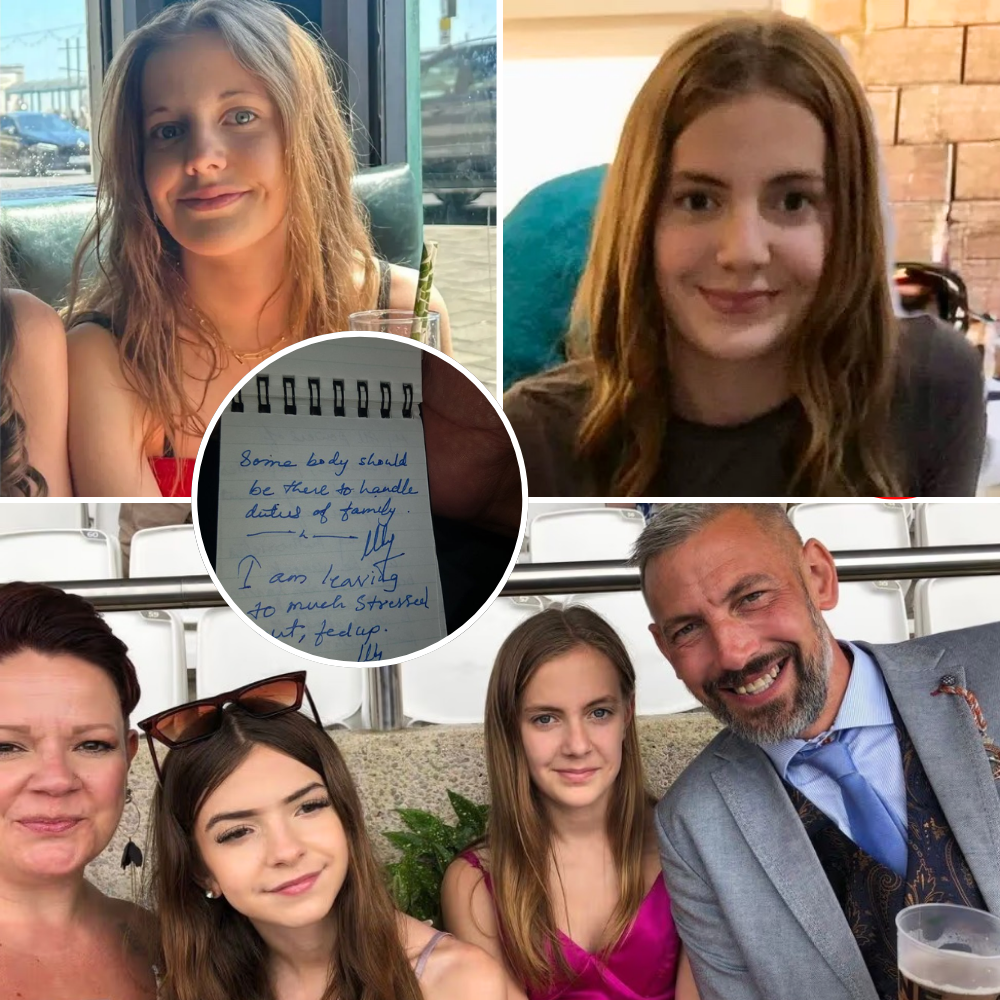
Mum Went to Wake Her 12-Year-Old for School… Instead Found Amelia Dead After Relentless Snapchat Torment 😭 Last Night She Was Happy & Laughing – The Devastating Details Inside
A cheerful 12-year-old girl with a smile that warmed every room spent her final evening wrapped in the simple joys of family life, laughing freely while sharing fish and chips at her grandparents’ house. No one could have predicted that the next morning would bring the kind of silence no parent should ever endure. On […]

👀 American Idol Judges Stunned by Braden Rumfelt’s Voice After Two Major Surgeries Destroyed His Baseball Career — His Comeback Story Is Unbelievable! 😱
The spotlights in the American Idol audition room pulsed with that familiar electric hum as 22-year-old Braden Rumfelt stepped forward, guitar slung over his shoulder, his twin brother Kellen right beside him with fingers poised on the strings. Murphy, North Carolina, felt a world away in that moment—the small-town life of substitute teaching, quiet family […]

😲 She Wrote “String Cheese” While Battling Postpartum Depression… Now Hannah Harper Is Stealing American Idol! Her Incredible Journey Will Inspire You ❤️
The Hawaiian stage lights bathed the Aulani Resort in a golden glow as 25-year-old Hannah Harper, a stay-at-home mom from the tiny town of Bunker, Missouri, gripped the microphone with the same quiet determination she once used to wrangle three rambunctious boys through a long day of laundry and snacks. Her homemade patchwork dress shimmered […]

😱 American Idol Top 20 Poll SHOCK: Hannah Harper & Keyla Richardson Dominate… But Who’s Going HOME Next? 😭 Who’s in Danger?
Hawaii’s sun-drenched shores at Disney’s Aulani Resort became the unlikely battlefield where American Idol Season 24’s Top 20 delivered heart-stopping performances that have left fans divided, judges stunned, and Gold Derby readers casting their clearest verdict yet on who might not survive America’s vote. With the first live results episode looming on March 30, the […]
😱💔 Kimmie Standing On The Rooftop With That USB Drive Has Fans Terrified — Is She About To Destroy The Entire Bellarie Empire? 👀
The first explosive trailer for Beauty in Black Season 2 Part 2 is here — and everything shifts fast. The new footage shows Kimmie stepping fully into her power with zero hesitation, but one bold move has fans in total shock. Is she protecting herself… or setting something much bigger in motion? The stakes feel […]
💥 “Is The Baby Okay?” — Virgin River Season 7 Finale Left One Devastating Clue About Mel & Jack’s Child That Changes Everything 😭
Netflix just dropped the news everyone has been waiting for: Virgin River is officially returning for Season 7 — and fans are already bracing for another emotional chapter. The release date and exact drop time are now confirmed, meaning the next wave of romance, heartbreak, and small-town secrets is closer than expected. But one storyline […]
End of content
No more pages to load