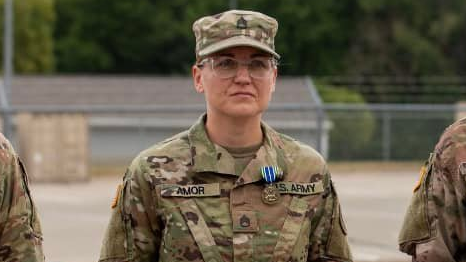
The phrase “days away” carries a devastating weight in military families—those final, agonizing hours before reunion, when suitcases are packed, flights are booked, and dreams of home-cooked meals and children’s hugs feel tantalizingly close. For Sgt. 1st Class Nicole M. Amor, 39, of White Bear Lake, Minnesota, that promise shattered in an instant. On March 1, 2026, an Iranian drone struck a U.S. command center at Port Shuaiba in Kuwait, killing her and five fellow service members. She was mere days from boarding a plane back to her husband Joey and their two young children after months of deployment. The attack came amid escalating hostilities in the U.S.-Iran conflict, turning what should have been a triumphant homecoming into an irreversible tragedy.
Nicole Amor embodied the quiet strength of America’s citizen-soldiers. Enlisting in the Minnesota National Guard in 2005 as an automated logistics specialist, she transitioned to the U.S. Army Reserve in 2006, serving with the 103rd Sustainment Command out of Des Moines, Iowa. Over more than two decades, she rose to Sergeant First Class, mastering the intricate work of keeping troops fed, fueled, and equipped in austere environments. Logistics may lack the glamour of combat arms, but it forms the backbone of any operation—without it, missions grind to a halt. Nicole excelled in this role, earning respect for her precision, reliability, and unwavering dedication.
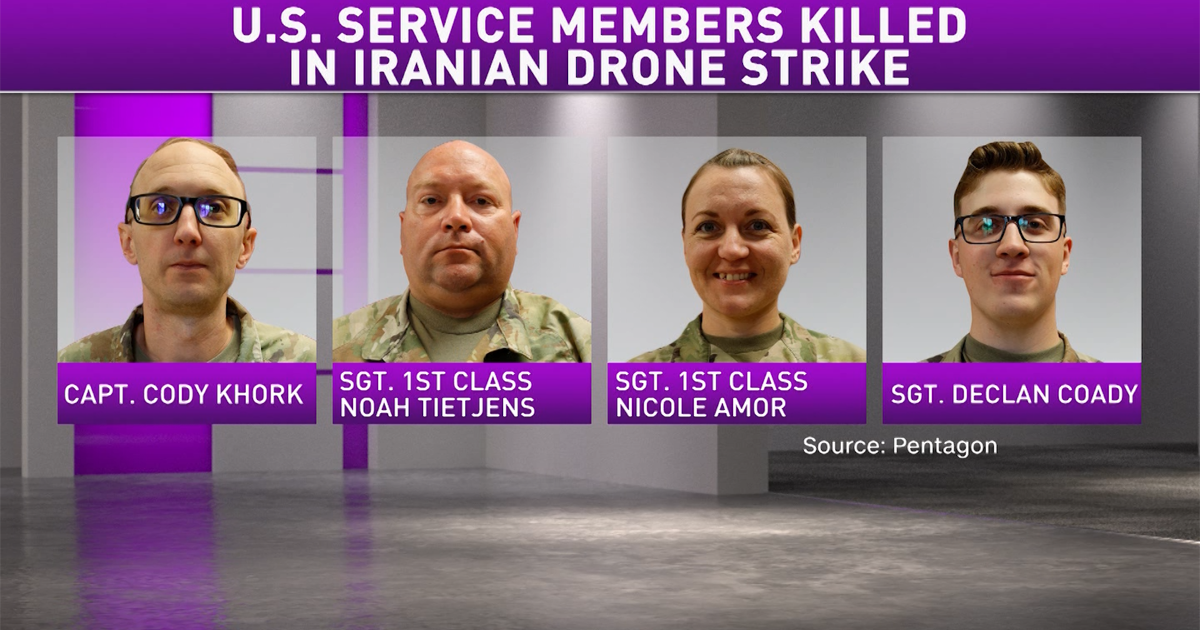
Her deployment to Kuwait supported Operation Epic Fury, the U.S.-led response involving joint strikes with Israel against Iranian targets following heightened regional tensions. Port Shuaiba, a key civilian port repurposed for military logistics, housed command elements coordinating supply chains across the theater. Nicole and her unit—fellow reservists including Capt. Cody A. Khork (35, Winter Haven, Florida), Sgt. 1st Class Noah L. Tietjens (42, Bellevue, Nebraska), and Sgt. Declan J. Coady (20, West Des Moines, Iowa)—handled the unglamorous but essential task of sustaining forward forces. They moved off-base to shipping containers for added security, a common precaution in volatile zones.
The night before the strike, Nicole texted her husband Joey about a minor fall she had taken—nothing serious, just a bump in the routine of deployment life. They chatted lightly, counting down the days. “She was almost home,” Joey later told reporters, his voice cracking with grief. He woke the next morning to silence—no morning check-in, no good-morning emoji. Hours passed before official notification arrived: an unmanned aircraft system (UAS) attack had hit their position. Nicole was gone, one of six American lives lost in Iran’s retaliatory strike following U.S. and Israeli operations that began late February 2026.
The incident unfolded against a backdrop of rapid escalation. U.S. and Israeli forces launched coordinated strikes on Iranian nuclear and military sites starting around February 28, 2026, amid fears of imminent threats. Iran responded with drone swarms targeting U.S. assets in the region, including the Port Shuaiba facility. The strike killed six service members outright; investigations continue into force protection measures, early-warning systems, and the drone’s origin—likely launched from Iranian-backed proxies or directly from Iranian territory. As of early March 2026, this marked some of the first confirmed U.S. fatalities in the expanding conflict.
Nicole’s death reverberated far beyond her unit. In White Bear Lake, a tight-knit suburb northeast of St. Paul, neighbors, friends, and fellow parents mourned a woman known for her warmth and volunteer spirit. She balanced military service with family life—coaching youth sports, organizing school events, and being the steady presence her children relied on. Her mother, living in Wisconsin, spoke of a daughter who always put others first. Minnesota leaders weighed in swiftly: Sen. Amy Klobuchar released a statement honoring Nicole’s service and sacrifice, while Gov. Tim Walz expressed condolences to the family. Community tributes poured in—candlelight vigils, social media floods of memories, and plans for lasting memorials.
Joey Amor, devastated yet determined, shared a vision to honor his wife: a memorial greenhouse in White Bear Lake. “She loved gardening—it was her peaceful place,” he explained in interviews. The project would serve as a living tribute, a space for reflection where families could gather, plant seeds, and remember. GoFundMe campaigns and local donations surged to support the effort and the family’s needs. The idea captured public imagination: in the midst of grief, a symbol of growth emerging from loss.
Nicole’s story highlights the human cost of modern warfare, where technology enables strikes from afar, erasing distance but amplifying heartbreak. Drones—cheap, precise, and deniable—have become weapons of choice in asymmetric conflicts. For the families left behind, the impersonal nature of such attacks offers no closure. No final conversation, no last embrace—just abrupt silence.
Her service record speaks volumes. More than 20 years in uniform, multiple deployments, commendations for logistics excellence. As a reservist, she juggled civilian life—likely a full-time job in supply chain or administration—with weekend drills and activations. Deployment meant separation: missed birthdays, holidays via video call, the constant ache of absence. Yet she volunteered, believing in the mission to protect allies and deter aggression.
The tragedy also underscores risks to support troops. Logistics personnel often operate in rear areas, yet nowhere is truly safe when adversaries employ long-range drones. The 103rd Sustainment Command’s role—ensuring beans, bullets, and bandages reached the front—placed them in vulnerable hubs like ports and airfields. Nicole’s unit worked shifts in warehouses, coordinated convoys, managed inventories under pressure. Their deaths remind that every role matters; every life lost ripples outward.
Public reaction mixed shock, sorrow, and calls for accountability. Social media brimmed with prayers and tributes: “Rest in peace, brave soldier. Your sacrifice will never be forgotten.” Some questioned the conflict’s escalation, others praised the courage of reservists who leave families to serve. Political figures from both parties condemned the attack, vowing justice. The Pentagon identified the fallen swiftly, a small mercy in an era of delayed notifications.
For Joey and the children, the days ahead stretch long and empty. The homecoming preparations—clean sheets, favorite snacks, welcome banners—now gather dust. Birthdays will pass without her smile, milestones without her cheers. Yet her legacy endures: in the stories her children will hear, the greenhouse that blooms each spring, the quiet pride of a community that remembers.
Nicole Amor was not seeking glory. She was a mother counting days until she could hold her kids again, a wife eager for ordinary evenings, a soldier fulfilling her oath. “Days away” became forever away in a flash of violence half a world from home. Her sacrifice—along with her comrades’—demands reflection on the true price of security, the human faces behind headlines, and the families who carry the weight long after the news fades.
In White Bear Lake, flags fly at half-staff. A greenhouse takes shape in plans and donations. And somewhere, two children learn about the mother who loved them fiercely, served bravely, and came heartbreakingly close to coming home. Rest in peace, Sgt. 1st Class Nicole M. Amor. Your light—rare and special—continues to shine.
News

😢 “She’s Waited 35 Years… Now One DNA Test Could Bring Her Baby Home – Or Break Her Again” 🩸 New Photos & Adoption Mystery Explode Online
Ben Needham Latest Update: New Photos and DNA Test Spark Fresh Hope in One of the Longest Toddler Missing Mysteries; What We Know So Far The disappearance of Ben Needham remains one of Britain’s most enduring and heartbreaking unsolved cases. In July 1991, the 21-month-old toddler vanished without a trace from a family farm on […]

Shocking Footage Emerges: Ex-TOWIE Jordan Wright Desperately Sprinting, Clutching Truck in Fear – Hours Later His Body Lies in Thailand’s Murky Drain
The paradise of Phuket’s Bangtao Beach area, with its luxury resorts, infinity pools overlooking the Andaman Sea, and vibrant nightlife, turned sinister in the early hours of March 13, 2026. Grainy black-and-white CCTV footage, now haunting viewers worldwide, captures the final documented moments of 33-year-old Jordan Wright—a former star of The Only Way Is Essex […]

Heartbreaking & Suspicious 😱 Jessi Pierce & 3 Adorable Kids Die in Minnesota House Fire – Husband Miraculously Away…
The early morning silence in White Bear Lake, Minnesota, was brutally shattered on March 21, 2026, when a ferocious blaze erupted from the modest single-family home on the 2100 block of Richard Avenue. Around 5:25 a.m., neighbors were jolted awake by the roar of flames and the thick, choking smoke that poured into the frigid […]

“UMBRELLA” BUT MAKE IT SOUL-CRUSHING! 😍 Braden Rumfelt delivers the most emotional Idol performance ever… from whisper to chills in seconds! Who’s replaying? 🔁💥
“HE DIDN’T JUST SING… HE MADE EVERYONE FEEL IT.” When Braden Rumfelt stepped onto the American Idol stage, no one expected the kind of moment that followed. Covering a hit by Rihanna, he delivered a smooth, emotional performance that instantly shifted the energy in the room. From the first note, it felt different. His voice […]

THE HIDDEN SIDE OF AMERICAN IDOL NO ONE SEES! 😢 Missouri mom Hannah Harper opens up about guilt, exhaustion & rising pressure in Top 14 👶🎤 Who’s Team Hannah?
Missouri native Hannah Harper is opening up about the reality behind her American Idol journey, admitting the challenge of balancing life as a stay-at-home mom while stepping into the spotlight. As she competes for America’s vote in the Top 14, the pressure is only growing. Behind the scenes, Hannah revealed the demanding schedule, emotional weight, […]

19 YEARS LATER… REBA CAST REUNITED & IT FEELS LIKE NO TIME PASSED! 🔥 Hugs, laughs, & epic prank call to JoAnna! This healed my 2000s heart 😍
After 19 Years… The Reba Family Is Finally Back Together. Time may pass, shows may end, but some bonds never fade. Nearly two decades after the beloved sitcom Reba left our screens, the cast reunited for the first time on the set of Happy’s Place. The moment they saw each other again, it felt like […]
End of content
No more pages to load