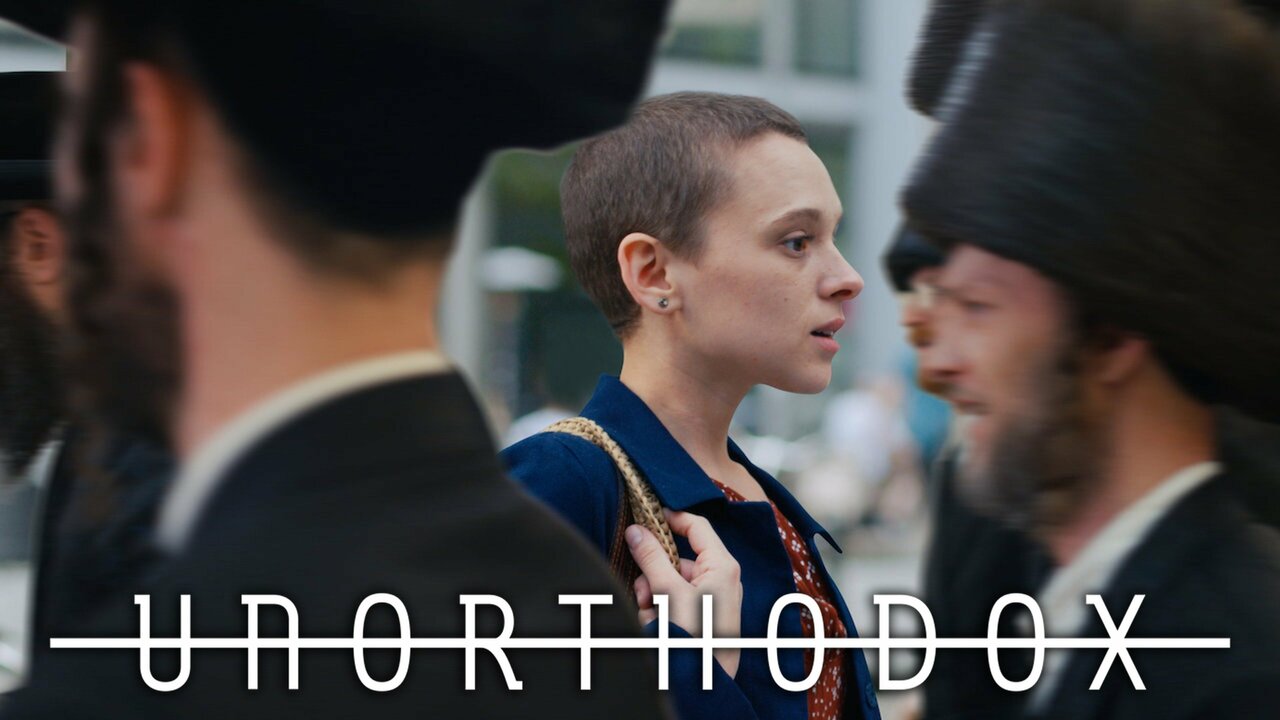
In the vast ocean of content that Netflix unleashes upon its subscribers each month, some titles splash loudly with star-studded casts, explosive trailers, and aggressive marketing campaigns. Others slip in quietly, nestled deep within the algorithm’s recommendations, waiting to be discovered by the curious viewer. “Unorthodox,” a four-part miniseries that premiered on March 26, 2020, falls squarely into the latter category. Yet, what began as an unassuming addition to the platform’s library has transformed into a cultural phenomenon, drawing fervent discussions, critical acclaim, and comparisons to dystopian heavyweights like “The Handmaid’s Tale.” Viewers who stumbled upon it—often by accident—found themselves ensnared in its intimate, raw narrative, unable to look away. As one social media post aptly captured, it’s a series that “hits differently,” blending emotional depth with cultural insight in a way that resonates long after the credits roll.
At its core, “Unorthodox” is the story of Esther “Esty” Shapiro, a 19-year-old woman trapped in the rigid confines of Brooklyn’s ultra-Orthodox Satmar Hasidic community. Played with breathtaking vulnerability by Israeli actress Shira Haas, Esty is a young bride whose life has been meticulously mapped out by tradition, family expectations, and religious doctrine. From an early age, she’s been groomed for a role that prioritizes marriage, motherhood, and unwavering piety above personal desires or autonomy. But beneath her demure exterior simmers a quiet rebellion—a yearning for something more than the prescribed path. One fateful decision propels her into the unknown: she flees her arranged marriage and the only world she’s ever known, seeking refuge in the vibrant, secular streets of Berlin. What unfolds is not a high-octane thriller but a poignant exploration of identity, freedom, and the cost of breaking free from chains that are as invisible as they are unbreakable.

The series’ structure is masterful in its duality, weaving between Esty’s present-day struggles in Berlin and flashbacks to her life in Williamsburg. This non-linear storytelling allows viewers to piece together the puzzle of her past, understanding the suffocating pressures that led to her escape. In Brooklyn, we witness the intricacies of Hasidic life: the elaborate weddings, the strict gender roles, the communal rituals that bind individuals to the collective. Esty’s marriage to Yanky Shapiro (Amit Rahav), a gentle but naive young man equally bound by tradition, is portrayed with unflinching honesty. Their union, arranged by family elders, is meant to be a cornerstone of their faith—procreating to rebuild the Jewish population lost in the Holocaust. Yet, the couple’s inability to consummate the marriage becomes a source of profound shame and tension, highlighting the series’ unflinching look at intimacy, fertility, and the emotional toll of religious expectations.
In contrast, Berlin represents a kaleidoscope of possibilities. Esty arrives with little more than a passport, some hidden cash, and a burning curiosity about the world beyond her community’s walls. She stumbles into a group of music conservatory students—diverse, free-spirited souls from various backgrounds—who become her unlikely guides into secular life. Through them, she experiences firsts: swimming in a lake, wearing jeans, tasting non-kosher food, and discovering her own voice, quite literally, as a singer. These scenes are infused with a sense of wonder and tentative joy, but they’re undercut by the ever-present shadow of her past. Her husband Yanky, urged by his family, embarks on a mission to retrieve her, accompanied by his worldly cousin Moishe (Jeff Wilbusch), whose own history of rebellion adds layers of complexity to the pursuit.

What makes “Unorthodox” stand out is its authenticity, achieved through meticulous research and a commitment to cultural accuracy. The series is loosely based on Deborah Feldman’s 2012 memoir, “Unorthodox: The Scandalous Rejection of My Hasidic Roots,” which chronicles her real-life departure from the Satmar community in Williamsburg. Feldman, who served as a consultant on the show, escaped to Berlin with her young son, seeking a life unencumbered by the strictures of her upbringing. Creators Anna Winger and Alexa Karolinski, along with director Maria Schrader, adapted her story with sensitivity, fictionalizing elements to heighten drama while preserving the essence of her journey. Schrader, known for her work on “Deutschland 83,” brings a nuanced eye to the proceedings, capturing the stark contrasts between the insular Hasidic world and the eclectic vibrancy of Berlin.
A groundbreaking aspect of the production is its use of Yiddish as the primary language for the Brooklyn scenes, marking “Unorthodox” as Netflix’s first series predominantly in the tongue. This choice immerses viewers in the community’s linguistic isolation, underscoring how language reinforces cultural boundaries. The actors, many of whom are Israeli or of Jewish descent, underwent intensive training to master the dialect, adding to the series’ realism. Filming locations further enhance this authenticity: Williamsburg sequences were shot in Berlin to replicate the Brooklyn neighborhood, complete with recreated shuls (synagogues), mikvahs (ritual baths), and bustling streets filled with extras in traditional attire. The attention to detail extends to costumes—modest dresses for women, sidelocks and fur hats for men—and rituals, from Shabbat dinners to wedding ceremonies, all depicted with respect rather than sensationalism.
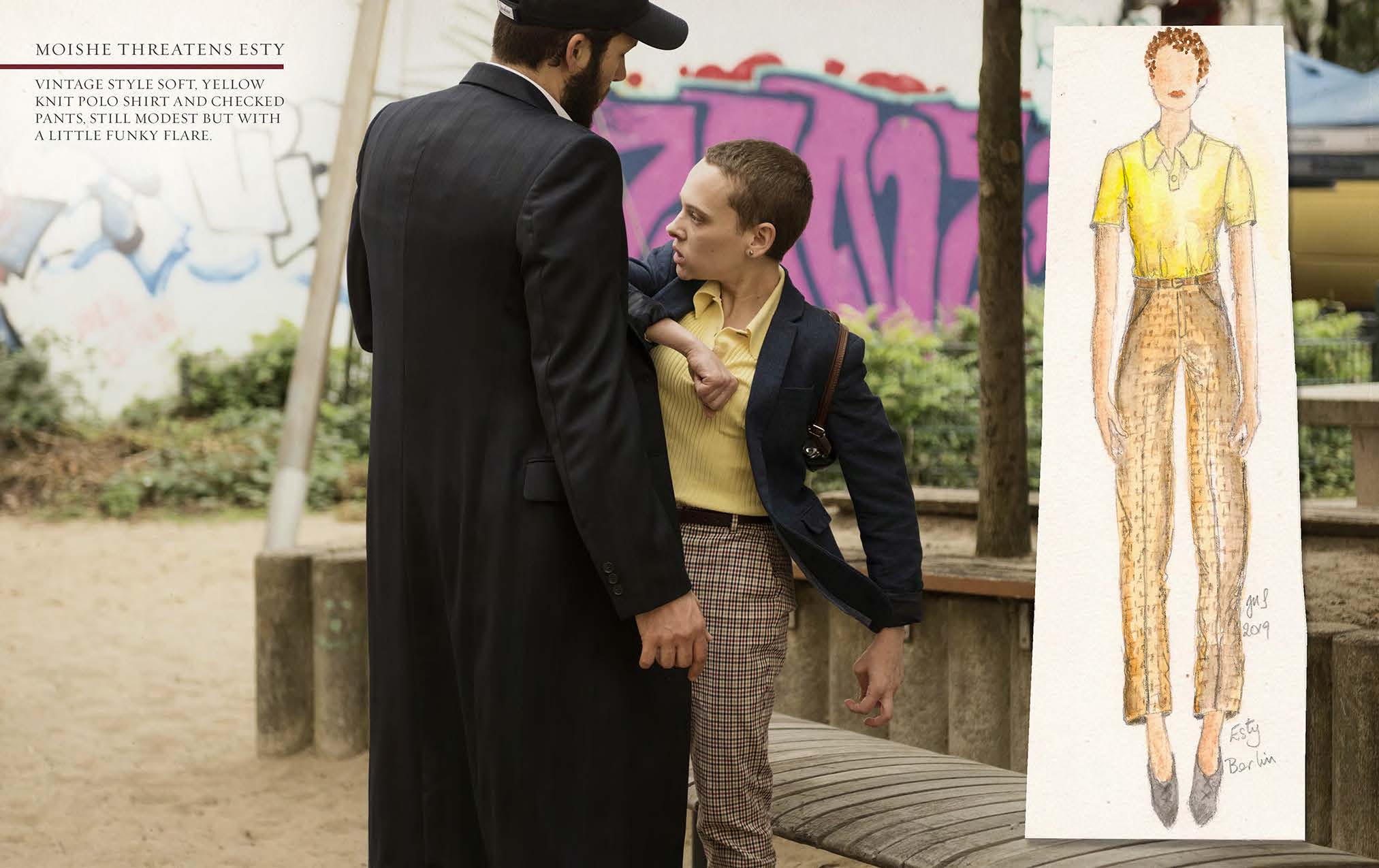
Shira Haas’s performance as Esty is nothing short of revelatory, earning her an Emmy nomination for Outstanding Lead Actress in a Limited Series. At just 24 during filming, Haas shaved her head for the role, a commitment that mirrors Esty’s own transformations. Her portrayal captures the character’s internal turmoil with subtle expressions—a wide-eyed gaze of wonder, a trembling lip holding back tears, a defiant smile emerging from repression. Haas conveys Esty’s evolution from a timid bride to a woman reclaiming her agency, making her journey feel profoundly personal. Amit Rahav, as Yanky, brings empathy to a character who could easily be villainized; he’s a product of the same system, grappling with confusion and loss. Jeff Wilbusch’s Moishe is a wildcard—charismatic yet menacing, his cynicism adding tension to the narrative. Supporting roles, including Alex Reid as Esty’s estranged mother Leah and Ronit Asheri as the formidable aunt Malka, round out a cast that feels lived-in and authentic.
Thematically, “Unorthodox” delves into the universal struggle for self-determination amid oppressive structures. It explores how trauma—specifically the Holocaust’s legacy—shapes communal identities, with the Satmar sect’s emphasis on isolation and reproduction as a form of survival. Esty’s flight is not just from her marriage but from a system that stifles individuality, particularly for women. The series tackles gender dynamics head-on: women’s roles confined to the home, their bodies policed for modesty and fertility, their voices silenced in public spheres. Yet, it avoids broad-brush demonization, portraying community members with humanity—some rigid, others quietly compassionate. This balanced approach invites viewers to empathize with all sides, fostering understanding rather than judgment.
Comparisons to “The Handmaid’s Tale” are inevitable and well-founded. Both narratives center on women escaping dystopian-like societies where religion enforces subjugation. In Margaret Atwood’s Gilead, handmaids are reduced to vessels for procreation; in “Unorthodox,” Esty’s worth is tied to her ability to bear children. The psychological suffocation—the constant surveillance, the internalized guilt—mirrors June Osborne’s plight. However, “Unorthodox” distinguishes itself with its real-world grounding; it’s not speculative fiction but a dramatization of lived experiences. Viewers have noted the series’ quieter intensity: no overt violence or sci-fi elements, just the devastating weight of tradition. As one reviewer put it, it’s “more haunting” because it’s rooted in reality, prompting reflections on how such communities exist in modern cities like New York.
The series also invites parallels to other works exploring religious and cultural exits, such as “The Marvelous Mrs. Maisel,” which features a Jewish woman breaking norms in 1950s New York, or “One of Us,” a documentary about Hasidic defectors. But “Unorthodox” carves its niche by blending coming-of-age elements with thriller undertones—the pursuit in Berlin adds suspense without overshadowing the emotional core. Its exploration of music as liberation is particularly poignant; Esty’s discovery of her vocal talent symbolizes her emerging voice in all senses. The soundtrack, mixing classical pieces with Yiddish folk songs, enhances this theme, creating moments of transcendent beauty amid heartache.
Critically, “Unorthodox” has been a triumph, boasting a 96% approval rating on Rotten Tomatoes and eight Primetime Emmy nominations, including Outstanding Limited Series. It won for Outstanding Directing, making history as the first German-language series to claim an Emmy. Reviewers praised its “intimate and urgent” storytelling, with The New York Times highlighting how it visualizes cultural clashes with “otherworldliness.” Audience reactions echo this: forums like Reddit buzz with discussions on its eye-opening portrayal of Hasidic life, with many viewers binge-watching in one sitting. Some from Orthodox backgrounds have lauded its accuracy, while others critique fictional liberties, sparking debates on representation. Feldman herself has addressed these, noting the series’ intent to humanize rather than vilify.
The cultural impact of “Unorthodox” extends beyond entertainment. It has ignited conversations about “off the derech” (OTD) stories—individuals leaving Orthodox Judaism—and the challenges they face, from family estrangement to rebuilding identities. In a post-#MeToo era, its feminist undertones resonate, emphasizing women’s agency in patriarchal systems. For non-Jewish audiences, it demystifies a often-misunderstood community, fostering empathy in an age of division. Netflix’s global reach has amplified this, with subtitles making Yiddish accessible, turning a niche story into a universal one.
Yet, the series isn’t without controversy. Some in the Hasidic community decry it as stereotypical, arguing it overlooks the joys of their lifestyle. Feldman has countered that her memoir and the adaptation reflect her truth, not a blanket indictment. This tension underscores the power of storytelling: it provokes, challenges, and sometimes divides. In adapting her book, the creators added elements like the Berlin music group to heighten drama, but these serve to illustrate Esty’s growth, not sensationalize.
As we reflect on “Unorthodox” in 2026, its relevance endures. Amid ongoing discussions about religious freedom, women’s rights, and cultural assimilation, the series feels timeless. It’s a reminder that heroism often lies in quiet acts of defiance—pressing play on a new life, one uncertain step at a time. For those who haven’t discovered it yet, this hidden gem awaits, ready to captivate and provoke. In a world of flashy blockbusters, “Unorthodox” proves that the most powerful stories are those whispered from the heart, echoing far beyond their origins.
News
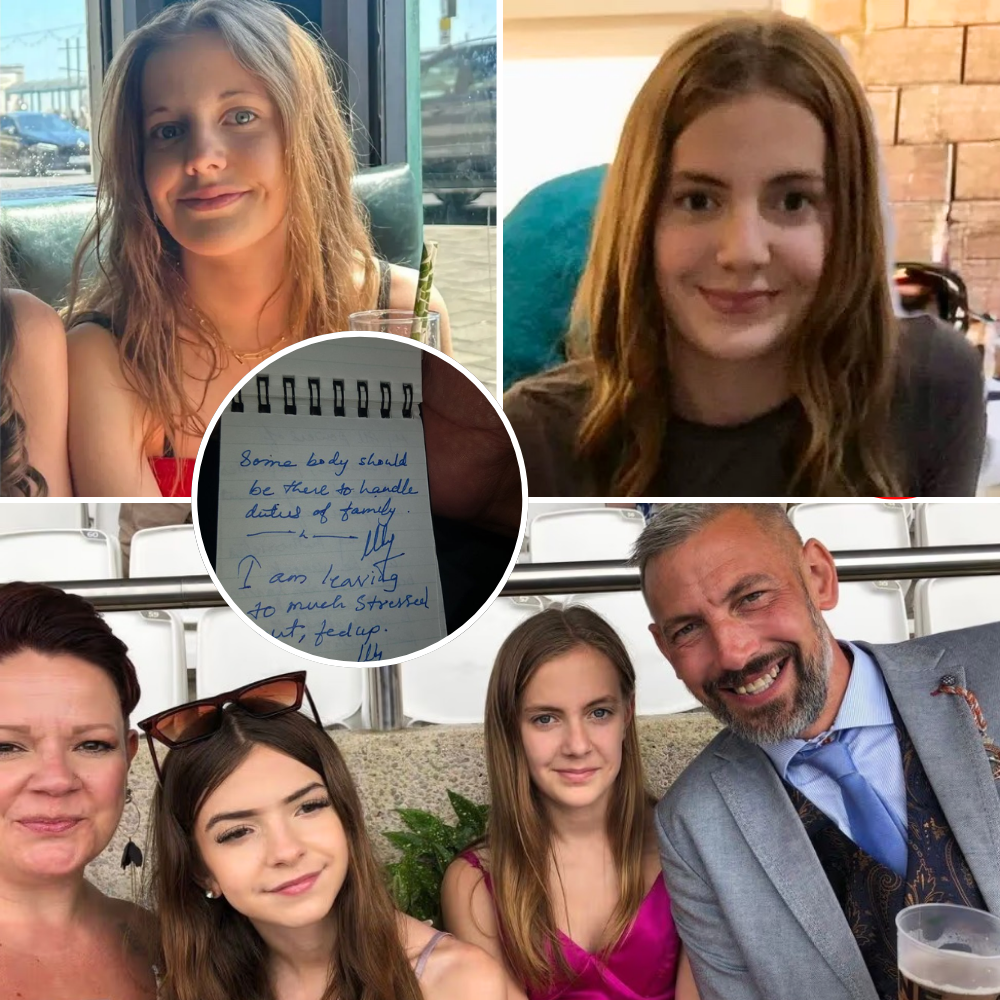
Mum Went to Wake Her 12-Year-Old for School… Instead Found Amelia Dead After Relentless Snapchat Torment 😭 Last Night She Was Happy & Laughing – The Devastating Details Inside
A cheerful 12-year-old girl with a smile that warmed every room spent her final evening wrapped in the simple joys of family life, laughing freely while sharing fish and chips at her grandparents’ house. No one could have predicted that the next morning would bring the kind of silence no parent should ever endure. On […]

👀 American Idol Judges Stunned by Braden Rumfelt’s Voice After Two Major Surgeries Destroyed His Baseball Career — His Comeback Story Is Unbelievable! 😱
The spotlights in the American Idol audition room pulsed with that familiar electric hum as 22-year-old Braden Rumfelt stepped forward, guitar slung over his shoulder, his twin brother Kellen right beside him with fingers poised on the strings. Murphy, North Carolina, felt a world away in that moment—the small-town life of substitute teaching, quiet family […]

😲 She Wrote “String Cheese” While Battling Postpartum Depression… Now Hannah Harper Is Stealing American Idol! Her Incredible Journey Will Inspire You ❤️
The Hawaiian stage lights bathed the Aulani Resort in a golden glow as 25-year-old Hannah Harper, a stay-at-home mom from the tiny town of Bunker, Missouri, gripped the microphone with the same quiet determination she once used to wrangle three rambunctious boys through a long day of laundry and snacks. Her homemade patchwork dress shimmered […]

😱 American Idol Top 20 Poll SHOCK: Hannah Harper & Keyla Richardson Dominate… But Who’s Going HOME Next? 😭 Who’s in Danger?
Hawaii’s sun-drenched shores at Disney’s Aulani Resort became the unlikely battlefield where American Idol Season 24’s Top 20 delivered heart-stopping performances that have left fans divided, judges stunned, and Gold Derby readers casting their clearest verdict yet on who might not survive America’s vote. With the first live results episode looming on March 30, the […]
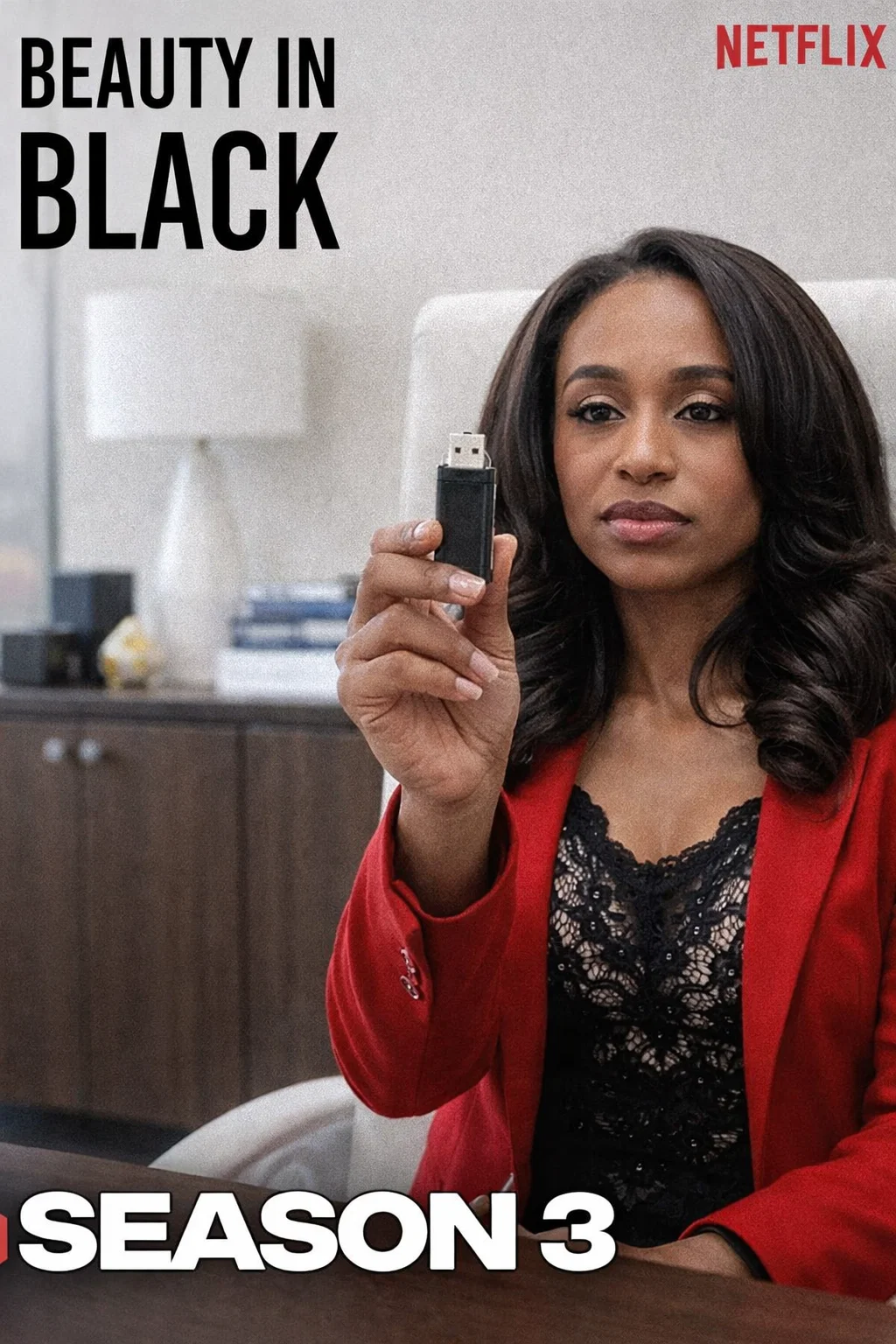
😱💔 Kimmie Standing On The Rooftop With That USB Drive Has Fans Terrified — Is She About To Destroy The Entire Bellarie Empire? 👀
The first explosive trailer for Beauty in Black Season 2 Part 2 is here — and everything shifts fast. The new footage shows Kimmie stepping fully into her power with zero hesitation, but one bold move has fans in total shock. Is she protecting herself… or setting something much bigger in motion? The stakes feel […]

💥 “Is The Baby Okay?” — Virgin River Season 7 Finale Left One Devastating Clue About Mel & Jack’s Child That Changes Everything 😭
Netflix just dropped the news everyone has been waiting for: Virgin River is officially returning for Season 7 — and fans are already bracing for another emotional chapter. The release date and exact drop time are now confirmed, meaning the next wave of romance, heartbreak, and small-town secrets is closer than expected. But one storyline […]
End of content
No more pages to load