Alysa Liu and Eileen Gu: The Diverging Destinies of Two Chinese-American Phenoms in the Olympic Spotlight
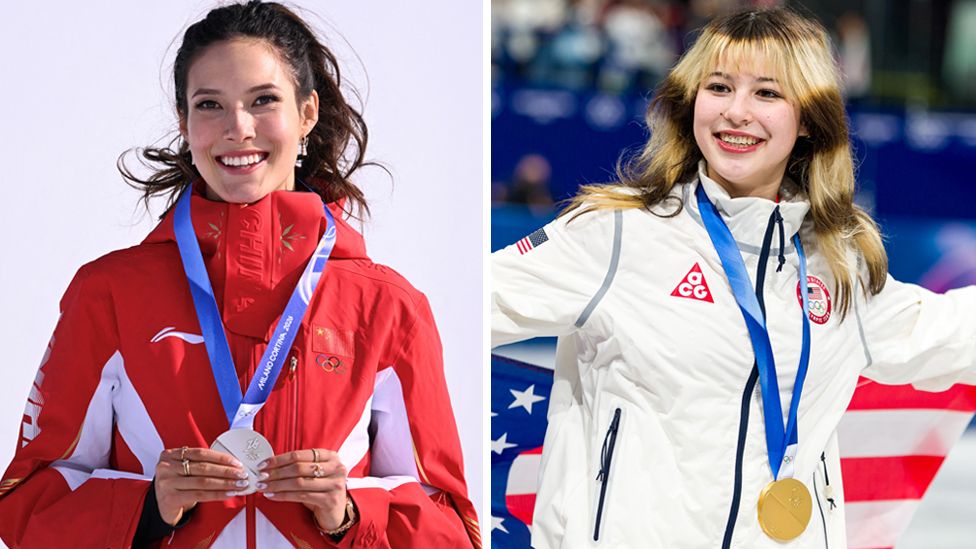
Amid the swirling snow and roaring crowds of the Milan Cortina Winter Olympics, two Chinese-American stars have once again captured the world’s imagination—not just for their gravity-defying feats, but for the profound choices that placed them on opposite sides of a geopolitical divide. Alysa Liu, the resilient figure skater who clinched a historic gold for Team USA, stands as a symbol of American perseverance and loyalty. Eileen Gu, the freestyle skiing sensation who continues to dazzle for China, embodies ambition, cultural duality, and controversy. As of February 24, 2026, with the Games still fresh in memory, their stories intertwine in a narrative of heritage, achievement, and the high-stakes proxy war between superpowers. What began as parallel paths in the Bay Area has evolved into a riveting saga that challenges notions of identity, patriotism, and the true cost of Olympic glory.
Born just a few miles apart in California’s vibrant Bay Area, Alysa Liu and Eileen Gu share roots that trace back to China’s turbulent history. Both are daughters of single parents who fled the People’s Republic in pursuit of freedom and opportunity. Yet, from these similar starting points, their journeys veered in dramatically different directions, fueled by family legacies, personal ambitions, and the relentless pull of international politics. Liu’s story is one of quiet defiance and unbreakable ties to her adopted homeland, while Gu’s is marked by bold reinvention and a willingness to bridge worlds—at a price that has ignited fierce debate.
Let’s start with Alysa Liu, the prodigy whose skates have carved a path from Oakland’s local rinks to the pinnacle of Olympic success. Born on August 8, 2005, in Clovis, California, Alysa is the eldest of five children raised by her father, Arthur Liu. Arthur’s own life reads like a thriller novel: as a law student in Guangzhou, he played a pivotal role in the 1989 Tiananmen Square protests. Serving as president of the Guangzhou Autonomous Student Union, he organized demonstrations and refused to betray fellow activists when interrogated by authorities. Facing imprisonment or worse, Arthur escaped to Hong Kong, then made his way to the United States, where he rebuilt his life as an immigration lawyer in Oakland. Alysa and her siblings were conceived through an anonymous egg donor and gestational surrogate, a modern family structure that Arthur embraced as a single parent. Alysa has never met her biological mother, but she credits her father’s resilience for shaping her unyielding spirit.
Skating entered Alysa’s life at the tender age of five, when Arthur enrolled her in lessons at the Oakland Ice Center to build confidence and coordination. Under the guidance of coach Laura Lipetsky—a protégé of legendary trainer Frank Carroll—Alysa quickly emerged as a force in figure skating. By age 13, she became the youngest U.S. national champion since Tara Lipinski in 1997, landing triple axels with a poise that belied her youth. Her ascent was meteoric: she won the junior world title in 2019 and made history as the first American woman to land a quadruple lutz in competition. But the road to Olympic stardom was fraught with challenges. Ahead of the 2022 Beijing Winter Olympics, Alysa and her family became targets of a chilling espionage plot orchestrated by Chinese agents.
In March 2022, the U.S. Department of Justice charged five individuals, including Matthew Ziburis, with spying on U.S.-based dissidents, including the Lius. Ziburis allegedly impersonated a U.S. Olympic & Paralympic Committee official to obtain passport information and conducted surveillance on the family in the Bay Area. The plot aimed to intimidate Arthur due to his Tiananmen activism and his vocal support for human rights. Alysa described the ordeal as “freaky and exciting” in interviews, but it left deep scars. Protected by the FBI and State Department during the Beijing Games, she competed under tight security, finishing sixth in women’s singles—a respectable showing for the then-16-year-old amid the pressure.
The trauma lingered. Post-Beijing, Alysa announced a temporary retirement, citing PTSD and an aversion to the ice rink. “I couldn’t even look at the rink without feeling overwhelmed,” she later shared in a 2024 interview with Skating Magazine. Yet, resilience runs in the family. Alysa returned to competition in 2024, reclaiming her form with a vengeance. By March 2025, she shattered a 19-year drought by becoming the first American to win gold at the World Figure Skating Championships. Her crowning achievement came at the 2026 Milan Cortina Olympics, where she captured the women’s singles gold—the first for the U.S. since Sarah Hughes in 2002. Executing flawless quadruple jumps and an emotive free skate to “Schindler’s List,” Alysa not only redeemed her Beijing experience but also etched her name among skating immortals. Her victory sparked jubilant celebrations across America, with social media hailing her as a “true patriot” and a beacon for immigrants chasing the American Dream.
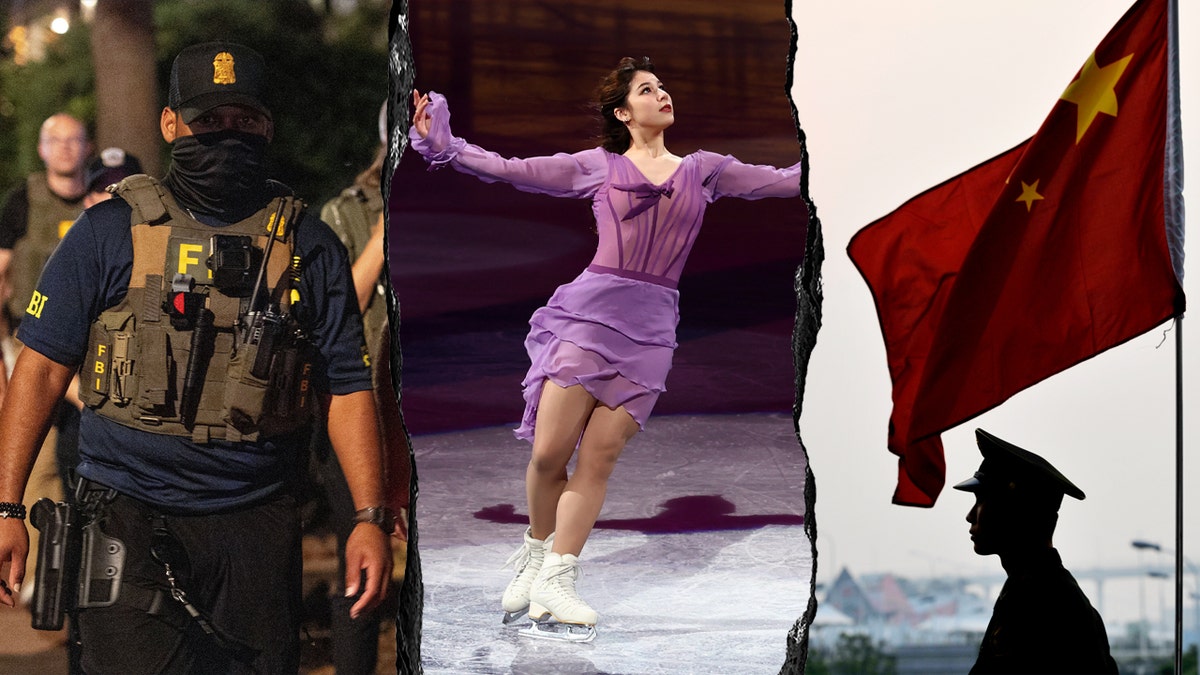
Contrast this with Eileen Gu, the multifaceted freestyle skier whose life has been a whirlwind of excellence and enigma. Born on September 3, 2003, in San Francisco, Eileen is the daughter of Yan Gu, a brilliant biochemist who emigrated from China after studying at Peking University. Yan pursued a master’s at Stanford and gave birth to Eileen at 40, raising her as a single mother in the city’s Sea Cliff neighborhood. Details about Eileen’s father remain shrouded in mystery; she has consistently declined to discuss him publicly, fueling speculation but respecting her privacy. From a young age, Eileen displayed prodigious talent across domains: academically, she scored a near-perfect 1580 on the SAT and attended Stanford University; athletically, she dominated junior skiing circuits while spending summers in Beijing for advanced math training.
Eileen’s entry into freestyle skiing was as dynamic as her personality. She debuted on the World Cup circuit in January 2019, representing the United States and quickly racking up podium finishes. But in June 2019, at age 15, she made a bombshell announcement: she would switch allegiances to compete for China. In an Instagram post, Gu explained her decision as a mission to “inspire millions of young people where my mother is from” and to “unite people, promote common understanding, create communication, and forge friendships between nations.” The move aligned with China’s aggressive “naturalization project,” launched in 2018 to recruit overseas athletes of Chinese descent ahead of the 2022 Beijing Olympics. Unlike Alysa, who resisted such overtures, Eileen embraced the opportunity, viewing it as a way to honor her heritage while expanding her global influence.
Gu’s Olympic debut in Beijing was nothing short of spectacular. She clinched two golds—in big air and halfpipe—and a silver in slopestyle, becoming the first freestyle skier to medal in all three disciplines at a single Games. Her performances, marked by innovative tricks like the double cork 1620, captivated audiences worldwide. Off the slopes, Gu’s star power exploded: she graced magazine covers, modeled for luxury brands like Louis Vuitton and Tiffany & Co., and amassed a fortune estimated at $23 million in 2025 from endorsements, including partnerships with the Bank of China. Reports from the Beijing Municipal Sports Bureau indicate she earned $6.6 million in 2025 alone for her qualifying efforts, part of a nearly $14 million package over three years shared with fellow athlete Zhu Yi.

At the 2026 Milan Cortina Games, Gu continued her dominance for China, securing silver medals in her first two events despite a qualifying crash in the halfpipe that postponed the final. As she prepared for the rescheduled competition on Sunday, February 25, 2026, the pressure mounted—not just from competitors, but from the relentless scrutiny of her choices. Gu has faced a barrage of criticism, particularly from American commentators who view her defection as a betrayal. Barstool Sports founder Dave Portnoy labeled her a “traitor,” while conservative pundit Gordon Chang contrasted her “unlucky” timing with Alysa Liu’s triumphant gold, calling it a “triumph of America.” Vice President JD Vance echoed this sentiment, emphasizing that athletes who benefit from U.S. freedoms should represent the nation that nurtured them.
Gu’s silence on China’s human rights issues has amplified the backlash. In a 2025 Time Magazine interview, she admitted to not having deeply researched the Uyghur persecution in Xinjiang, stating, “I need to see extensive evidence before forming an opinion” and refusing to become a “mouthpiece for any agenda.” She has endured physical assaults, death threats, and even a dorm robbery, describing herself as a “punching bag” caught in anti-China sentiment. Responding to former President Donald Trump’s criticism of U.S. Olympian Hunter Hess, Gu emphasized sports’ role in unity, but her words have done little to quell the storm. Critics point out the double standard: athletes like Gu switch nations without issue when it’s not China, but her case touches a nerve amid U.S.-China tensions over trade, technology, and Taiwan.

The comparisons between Liu and Gu are inescapable, turning the Olympics into what some call a “proxy war.” Both women, products of immigrant ambition, navigated the pull of dual identities. China’s recruitment efforts targeted them aggressively; Arthur Liu rebuffed advances, prioritizing his family’s safety and American values, while Yan Gu encouraged Eileen’s connection to her roots. Social media amplifies the divide: posts celebrating Liu’s gold often juxtapose it with memes mocking Gu’s “betrayal,” ignoring the nuances of cultural pride. Liu’s espionage ordeal underscores the dangers of dissent against Beijing, while Gu’s success highlights China’s soft-power strategy—investing in diaspora talent to bolster its global image.
Yet, beyond the politics, these athletes’ stories reveal deeper truths about identity in a polarized world. Alysa Liu’s journey from trauma to triumph inspires resilience; her potential film adaptation of the spying scandal could immortalize her father’s heroism. Eileen Gu, meanwhile, challenges binaries, advocating for a “both-and” approach to heritage. In a 2025 podcast, she reflected, “I’m American when I’m in the U.S. and Chinese when I’m in China—why can’t I be both?” Their diverging paths force us to confront uncomfortable questions: Is loyalty to one’s birth country absolute? Can sports transcend geopolitics, or are they inevitably entangled?
As the Milan Cortina flames dim, Liu and Gu stand as emblems of possibility and peril. Liu’s gold medal, draped in stars and stripes, affirms the American Dream for immigrants like her father. Gu’s silvers, under the five-starred red flag, showcase the allure of global stardom and cultural reconnection. Together, they remind us that behind every Olympic podium lies a human story—of choices made, risks taken, and legacies forged in ice and snow. In an era of division, their tales urge empathy over judgment, understanding over outrage. Who truly wins in this proxy war? Perhaps the answer lies not in medals, but in the bridges they build—or the divides they expose.
News
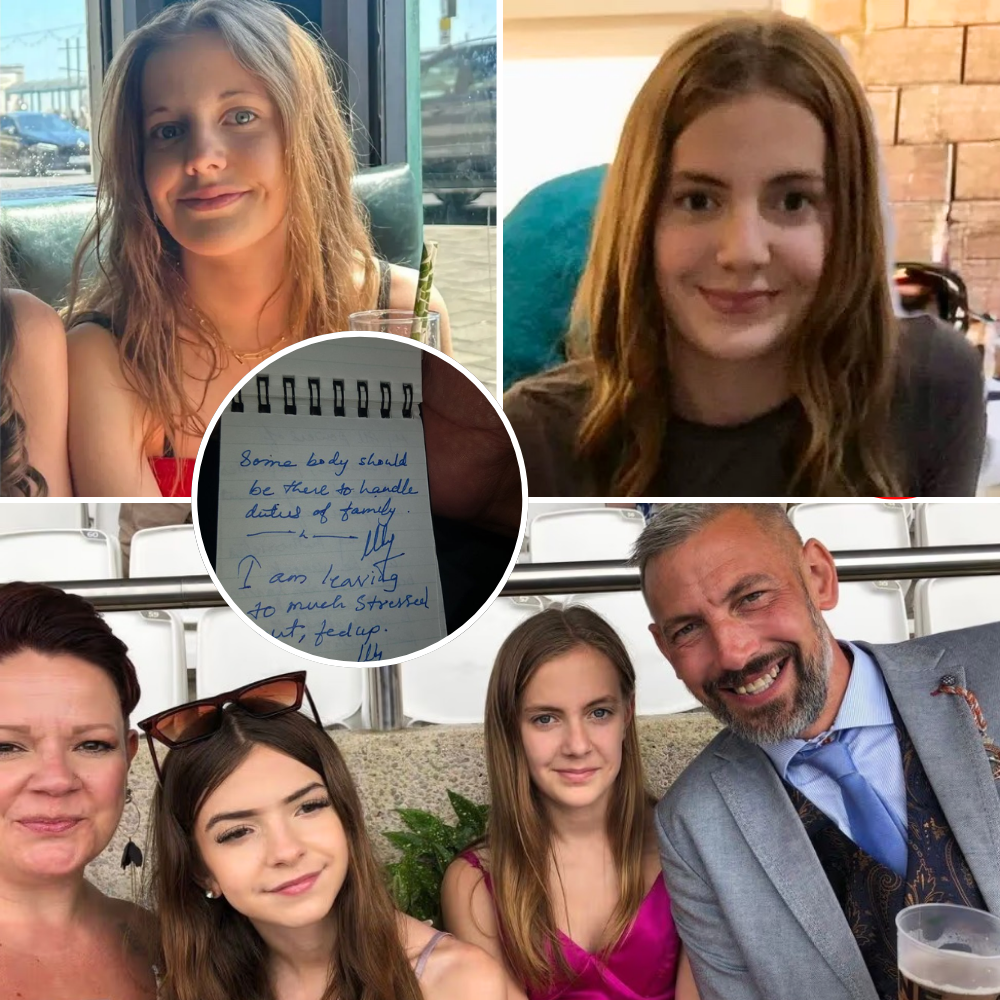
Mum Went to Wake Her 12-Year-Old for School… Instead Found Amelia Dead After Relentless Snapchat Torment 😭 Last Night She Was Happy & Laughing – The Devastating Details Inside
A cheerful 12-year-old girl with a smile that warmed every room spent her final evening wrapped in the simple joys of family life, laughing freely while sharing fish and chips at her grandparents’ house. No one could have predicted that the next morning would bring the kind of silence no parent should ever endure. On […]

👀 American Idol Judges Stunned by Braden Rumfelt’s Voice After Two Major Surgeries Destroyed His Baseball Career — His Comeback Story Is Unbelievable! 😱
The spotlights in the American Idol audition room pulsed with that familiar electric hum as 22-year-old Braden Rumfelt stepped forward, guitar slung over his shoulder, his twin brother Kellen right beside him with fingers poised on the strings. Murphy, North Carolina, felt a world away in that moment—the small-town life of substitute teaching, quiet family […]

😲 She Wrote “String Cheese” While Battling Postpartum Depression… Now Hannah Harper Is Stealing American Idol! Her Incredible Journey Will Inspire You ❤️
The Hawaiian stage lights bathed the Aulani Resort in a golden glow as 25-year-old Hannah Harper, a stay-at-home mom from the tiny town of Bunker, Missouri, gripped the microphone with the same quiet determination she once used to wrangle three rambunctious boys through a long day of laundry and snacks. Her homemade patchwork dress shimmered […]

😱 American Idol Top 20 Poll SHOCK: Hannah Harper & Keyla Richardson Dominate… But Who’s Going HOME Next? 😭 Who’s in Danger?
Hawaii’s sun-drenched shores at Disney’s Aulani Resort became the unlikely battlefield where American Idol Season 24’s Top 20 delivered heart-stopping performances that have left fans divided, judges stunned, and Gold Derby readers casting their clearest verdict yet on who might not survive America’s vote. With the first live results episode looming on March 30, the […]

😱💔 Kimmie Standing On The Rooftop With That USB Drive Has Fans Terrified — Is She About To Destroy The Entire Bellarie Empire? 👀
The first explosive trailer for Beauty in Black Season 2 Part 2 is here — and everything shifts fast. The new footage shows Kimmie stepping fully into her power with zero hesitation, but one bold move has fans in total shock. Is she protecting herself… or setting something much bigger in motion? The stakes feel […]

💥 “Is The Baby Okay?” — Virgin River Season 7 Finale Left One Devastating Clue About Mel & Jack’s Child That Changes Everything 😭
Netflix just dropped the news everyone has been waiting for: Virgin River is officially returning for Season 7 — and fans are already bracing for another emotional chapter. The release date and exact drop time are now confirmed, meaning the next wave of romance, heartbreak, and small-town secrets is closer than expected. But one storyline […]
End of content
No more pages to load