The disappearance of 14-year-old Noah Donohoe in June 2020 sent shockwaves through Belfast and beyond, transforming an ordinary summer day into a haunting mystery that still lingers in the collective memory of Northern Ireland. What began as a routine bike ride near Linear Park ended in tragedy when the teenager’s naked body was discovered a week later inside a storm drain tunnel. Years later, in February 2026, an inquest into his death peeled back layers of the frantic search effort, revealing not only the treacherous physical conditions rescuers faced but also the unexpected human obstacles that complicated the desperate hunt for answers.
Noah, a pupil at a local school in north Belfast, vanished on June 1, 2020, after being seen cycling in the area around Linear Park, a green space close to his neighborhood. The last confirmed sighting placed him near a culvert entrance, a nondescript opening leading into the underground drainage system that snakes beneath parts of the city, including the Seaview football grounds, before emptying toward Belfast Lough. Within hours, concern escalated into full-scale alarm. Friends, family, and community members mobilized, plastering missing posters across lampposts and sharing appeals across social media platforms. The urgency was palpable—every minute mattered in the search for a vulnerable child.
Police from the Police Service of Northern Ireland (PSNI) quickly launched a comprehensive operation. Surface searches combed Linear Park itself, along with nearby Cave Hill, while attention soon turned to the hidden network below ground. Three days after Noah’s disappearance, a specialized hazardous environment team from the PSNI’s Tactical Support Group entered the fray. Former Inspector Philip Menary, who led aspects of the underground effort, later recounted the team’s approach during inquest testimony. This unit, trained for high-risk confined spaces, deployed advanced equipment to probe the storm drain—a place few would voluntarily enter.
The tunnel presented a nightmarish environment from the outset. Completely pitch black, it offered no natural light, forcing rescuers to rely entirely on artificial sources. Menary described it as “quite wide,” stretching his arms to demonstrate during the hearing—wide enough for a person to pass through, albeit crouched or “cropped over” in awkward positions. In some sections, team members had to crawl on hands and knees, navigating a cold, damp, and unforgiving space. Obstructions littered the path: loose stones, discarded metal debris, thick layers of silt, and accumulated toxins from years of urban runoff. Pockets of gas, formed from decomposing organic matter—dead animals, branches, rotting vegetation—created a potentially explosive atmosphere, demanding extreme caution.

Adding to the peril, the tunnel divided into upstream and downstream sections. The upstream portion, non-tidal and somewhat more stable, allowed initial inspections. But the downstream area, where Noah’s body was ultimately located, fell under the influence of daily tidal flows from Belfast Lough. Twice a day, water surged in, carrying sediment and altering conditions unpredictably. Survival in such a place, especially without clothing, seemed improbable. “I believe it would be a very difficult place to survive if you were naked,” Menary told the inquest, his words carrying the weight of grim experience. The chill alone could induce hypothermia rapidly, while the lack of air circulation and presence of hazards amplified every risk.
To minimize danger to personnel, the team first sent in a specialized camera rig. Guided remotely from above ground via computer, the device could pan, tilt, and inspect hard-to-reach corners. Footage from this preliminary probe, shown during the inquest, captured the eerie interior: a dark, cylindrical void stretching 16 meters from a manhole in Linear Park, near the culvert where Noah was last seen. The images offered a stark glimpse into the subterranean world—smooth concrete walls slick with moisture, scattered debris, and an oppressive sense of confinement. No insurmountable barriers blocked passage, confirming the tunnel was navigable, at least in theory. Yet the footage also underscored the isolation; echoes of rescuers calling “Noah!” and “Police!” reverberated uselessly in the void.
While the physical challenges were immense, the human element proved equally disruptive. As search teams arrived at Linear Park, they encountered a swelling crowd—estimates placed it between 300 and 400 people. Most arrived with genuine intent to help: neighbors, volunteers, friends of the family, all driven by empathy and a shared sense of helplessness. Posters fluttered in the breeze, search dogs worked the perimeter, and small groups fanned out across the grass. Yet beneath the goodwill simmered frustration. Social media had already ignited a firestorm of speculation. Rumors circulated wildly: paramilitary involvement, predatory individuals, paedophiles, shadowy figures lurking in the shadows. These unverified claims fueled suspicion toward authorities, breeding an undercurrent of distrust.

Menary, arriving with his team, sensed the shift immediately. “Anti-police” sentiment pulsed through portions of the gathering. Officers faced direct confrontation—people demanding to know what police were “really” doing, shouting accusations like “You know what’s going on, you know where this person is.” Arguments erupted between locals and volunteers; tensions flared over access points. In one dramatic incident, an individual produced an angle grinder and sliced through the heavy padlock securing a metal gate between the park and the culvert entrance, an act of vigilante impatience that risked compromising the scene and endangering everyone involved.
The crowd’s sheer size and volatility created a serious health and safety hazard. Rescuers could not safely deploy equipment or enter manholes amid the chaos. Plans ground to a halt temporarily as local representatives and police worked to disperse the group. Menary described the atmosphere as “quite hostile,” a mix of raw emotion and misinformation that turned a collaborative effort into a fraught standoff. While the majority wished only to aid the search, the actions of a vocal minority delayed critical progress, highlighting how quickly community grief can spiral into obstruction when fueled by unchecked narratives online.
A week after Noah vanished, the grim discovery came. His body lay in the downstream tidal section of the tunnel, a place battered by the relentless rhythm of the tides. The conditions—cold, dark, waterlogged—aligned tragically with Menary’s earlier assessment of survivability. The inquest footage and testimony painted a vivid picture: a boy lost in a labyrinth beneath the city, where even trained professionals struggled to operate.
The broader implications ripple outward. Noah’s case exposed the vulnerabilities of urban infrastructure—storm drains designed for water, not human passage, yet capable of concealing tragedy. It also illuminated the double-edged sword of community involvement in missing persons cases. While public participation often proves invaluable, providing manpower and local knowledge, unchecked rumors and hostility can hinder rather than help. In Northern Ireland, where historical tensions with policing linger in some communities, such dynamics carry added complexity.
Social media’s role looms large. Platforms that amplified pleas for help also spread conjecture, eroding trust and inflaming passions. The inquest testimony served as a sobering reminder: in the absence of facts, speculation fills the vacuum, sometimes with devastating consequences for those on the front lines.
Years on, the inquest continues to probe the circumstances surrounding Noah’s death. Questions remain about how he entered the tunnel, what sequence of events unfolded in those final moments, and whether anything could have altered the outcome. For his family, friends, and the wider community, closure feels distant. The testimony of figures like Philip Menary brings uncomfortable truths into the light: the physical dangers rescuers braved, the human barriers they navigated, and the enduring mystery of a young life cut short in the shadows beneath Belfast.
This story transcends a single disappearance. It speaks to the fragility of safety in familiar places, the power and peril of collective emotion, and the relentless determination required to seek truth amid grief and chaos. Noah Donohoe’s name endures not just as a tragedy, but as a stark illustration of how quickly ordinary spaces can become sites of profound loss—and how communities, in their desperation to help, sometimes unwittingly complicate the path to resolution.
News
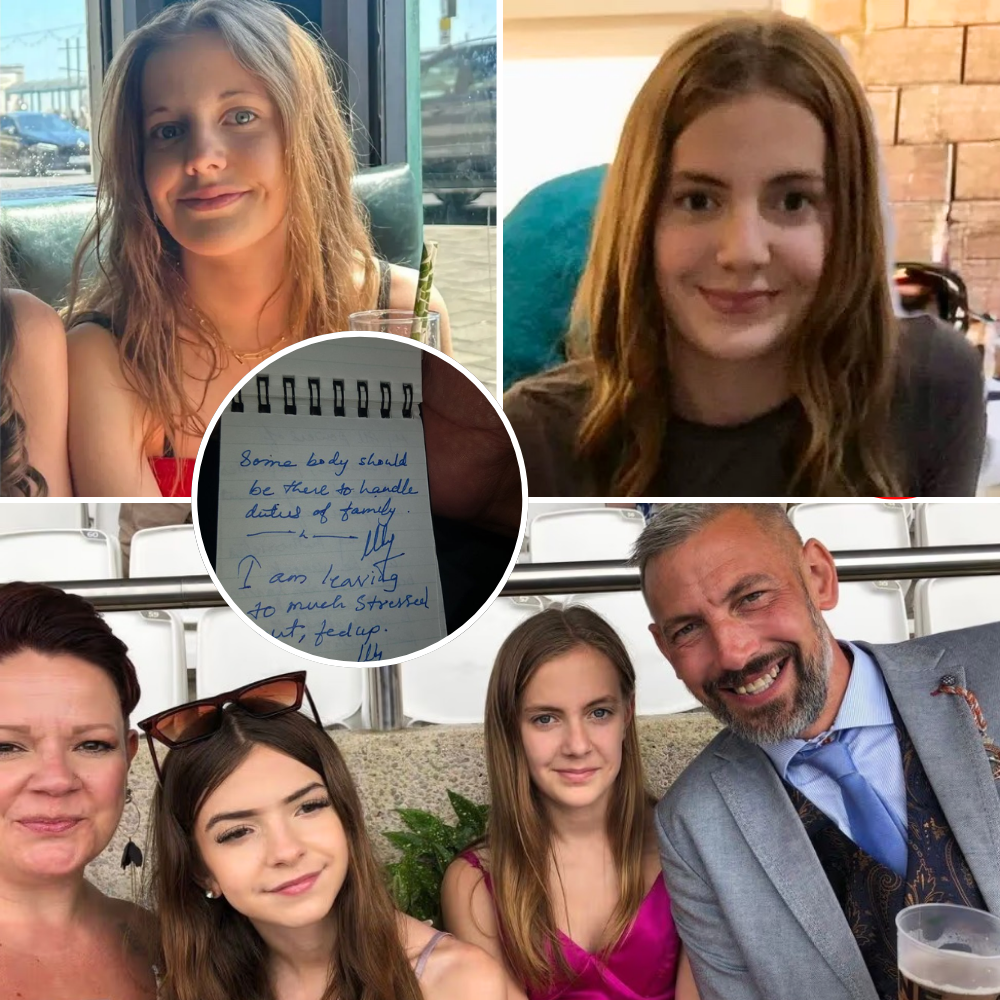
Mum Went to Wake Her 12-Year-Old for School… Instead Found Amelia Dead After Relentless Snapchat Torment 😭 Last Night She Was Happy & Laughing – The Devastating Details Inside
A cheerful 12-year-old girl with a smile that warmed every room spent her final evening wrapped in the simple joys of family life, laughing freely while sharing fish and chips at her grandparents’ house. No one could have predicted that the next morning would bring the kind of silence no parent should ever endure. On […]

👀 American Idol Judges Stunned by Braden Rumfelt’s Voice After Two Major Surgeries Destroyed His Baseball Career — His Comeback Story Is Unbelievable! 😱
The spotlights in the American Idol audition room pulsed with that familiar electric hum as 22-year-old Braden Rumfelt stepped forward, guitar slung over his shoulder, his twin brother Kellen right beside him with fingers poised on the strings. Murphy, North Carolina, felt a world away in that moment—the small-town life of substitute teaching, quiet family […]

😲 She Wrote “String Cheese” While Battling Postpartum Depression… Now Hannah Harper Is Stealing American Idol! Her Incredible Journey Will Inspire You ❤️
The Hawaiian stage lights bathed the Aulani Resort in a golden glow as 25-year-old Hannah Harper, a stay-at-home mom from the tiny town of Bunker, Missouri, gripped the microphone with the same quiet determination she once used to wrangle three rambunctious boys through a long day of laundry and snacks. Her homemade patchwork dress shimmered […]

😱 American Idol Top 20 Poll SHOCK: Hannah Harper & Keyla Richardson Dominate… But Who’s Going HOME Next? 😭 Who’s in Danger?
Hawaii’s sun-drenched shores at Disney’s Aulani Resort became the unlikely battlefield where American Idol Season 24’s Top 20 delivered heart-stopping performances that have left fans divided, judges stunned, and Gold Derby readers casting their clearest verdict yet on who might not survive America’s vote. With the first live results episode looming on March 30, the […]

😱💔 Kimmie Standing On The Rooftop With That USB Drive Has Fans Terrified — Is She About To Destroy The Entire Bellarie Empire? 👀
The first explosive trailer for Beauty in Black Season 2 Part 2 is here — and everything shifts fast. The new footage shows Kimmie stepping fully into her power with zero hesitation, but one bold move has fans in total shock. Is she protecting herself… or setting something much bigger in motion? The stakes feel […]

💥 “Is The Baby Okay?” — Virgin River Season 7 Finale Left One Devastating Clue About Mel & Jack’s Child That Changes Everything 😭
Netflix just dropped the news everyone has been waiting for: Virgin River is officially returning for Season 7 — and fans are already bracing for another emotional chapter. The release date and exact drop time are now confirmed, meaning the next wave of romance, heartbreak, and small-town secrets is closer than expected. But one storyline […]
End of content
No more pages to load