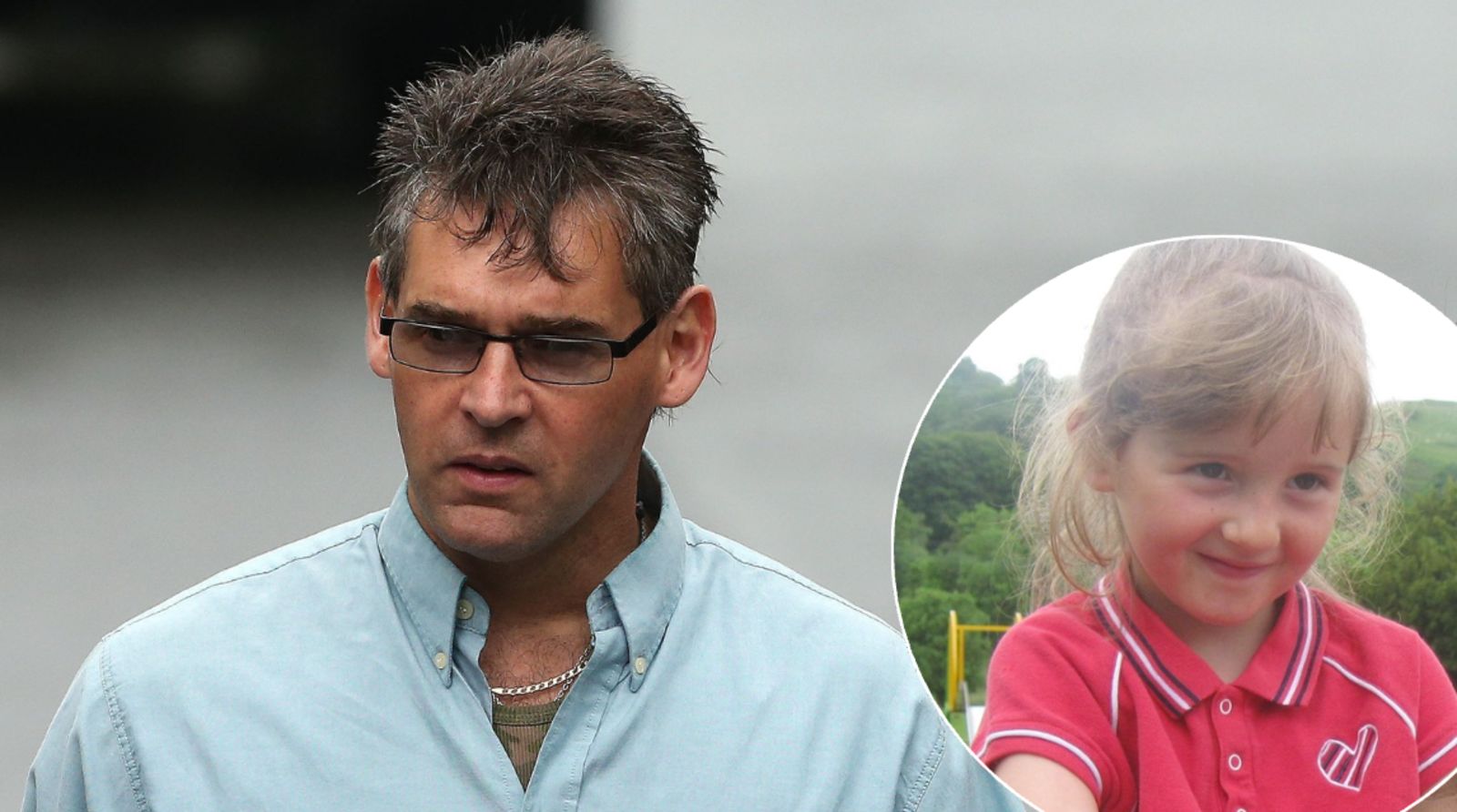
The disappearance of five-year-old April Jones on a crisp autumn evening in 2012 shattered the quiet Welsh town of Machynlleth and sent shockwaves across the United Kingdom. What began as a routine playtime outside her home on the Bryn-y-Gog estate quickly spiraled into one of the most extensive and heartbreaking child abduction cases in British history. Nearly 14 years later, the pain remains raw, compounded by fresh grief: the recent death of April’s father, Paul Jones, who passed away without ever learning where his daughter’s remains were hidden. Now, for the first time, April’s half-sister Hazel Jones has broken her long silence, sharing the enduring torment that has reshaped her life and her family’s fragile existence.
Hazel Jones, now 31 and a mother of three, spoke candidly to the Daily Mail about the nightmare that refuses to end. Her words carry the weight of someone who has carried this burden in the shadows for over a decade, only stepping forward after her father’s death earlier this year removed one of the last barriers to speaking openly. “I’m still waiting to wake up from this nightmare,” she said, her voice echoing the disbelief that has lingered since that fateful October day. Hazel’s revelations are not just personal—they strike at the heart of unresolved suffering, unyielding justice, and the lingering shadow cast by child killer Mark Bridger.

The story begins on October 1, 2012. April Sue-Lyn Jones, a bright-eyed girl born on April 4, 2007, had spent the afternoon at swimming lessons while her parents attended a parents’ evening at her school. By around 7:00 p.m., she was back home, full of energy as children often are after a day of activity. She ventured outside to play with friends on her bike, staying within sight of the family home in the small mid-Wales community. Machynlleth, nestled in the rolling hills of Powys, was the kind of place where doors were left unlocked and children roamed freely. No one could have imagined the horror about to unfold.
At approximately 7:15 p.m., witnesses saw April approach a Land Rover Freelander driven by a local man, Mark Bridger. She climbed into the vehicle, and that was the last time anyone saw her alive. Within hours, panic set in. April’s mother, Coral Jones, and father, Paul, raised the alarm. What followed was an unprecedented mobilization: hundreds of volunteers, sniffer dogs, helicopters, mountain rescue teams, and even divers scoured the surrounding countryside, rivers, and forests. Then-Prime Minister David Cameron issued a public appeal, underscoring the national scale of the search. For days, hope flickered amid the despair—perhaps April had wandered off, perhaps she would be found safe.
But the truth emerged brutally. Bridger, then 46, was arrested the day after the abduction. A former lifeguard and slaughterhouse worker, he lived nearby and had a history that would later reveal disturbing patterns. Investigators found fragments of bone—later confirmed as human skull fragments—in his fireplace. Blood matching April’s DNA was discovered in his home. Bridger initially claimed April had been run over accidentally and that he had disposed of her body to protect her family from the sight, but his story unraveled under scrutiny.
In May 2013, at Mold Crown Court, Bridger was convicted of abduction, murder, perverting the course of justice, and unlawfully disposing of a body. The judge described the crime as one of “unimaginable depravity.” Bridger received a whole-life sentence, meaning he would never be eligible for parole—one of the harshest penalties available in the British justice system. The case prompted calls for tougher sentencing for sex offenders and child killers, influencing subsequent legal reforms. Yet one agonizing detail persisted: April’s body was never recovered. Authorities believe Bridger scattered her remains across the rugged Welsh countryside near his home, ensuring the family could never lay her to rest properly.

For the Jones family, this lack of closure became a perpetual wound. Paul Jones, April’s devoted father, never stopped searching in his mind, even as his health declined. In 2016—or by some accounts 2018—he contracted a devastating brain disease, encephalitis, which ravaged his memory and cognitive functions. He spent his final years in a specialist hospital unit in Swansea, south Wales, relearning the unimaginable truth about his daughter’s fate multiple times as his condition eroded his recollections. Paul died at age 56 (or 55 in some reports) in early 2025 or May 2025, depending on varying accounts, having battled the illness for years. His daughter Jazz Jones, now 29, announced the news with profound sorrow: “It was very unexpected and we are all in shock… heartbroken.” Jazz had previously expressed her desire never to know the full details of what Bridger did to April, a protective stance against further trauma.
Hazel Jones, Paul’s daughter from a previous relationship and April’s half-sister, was 18 and pregnant when the abduction occurred. She rushed to Machynlleth to join the family vigil, clinging to the hope that April would return. One of her most poignant memories is from just days before the disappearance: April in the kitchen with their dad, laughing as they made hot chocolate together. “That was the last time I ever saw her,” Hazel recalled, the simplicity of the moment contrasting sharply with the horror that followed.
As the search dragged on, Hazel tried to shield herself from the overwhelming media frenzy and uncertainty, focusing instead on her pregnancy. When the grim reality emerged—that April had been abducted and murdered—Hazel was “left in pieces.” She gave birth to her daughter Amelia weeks later, a joyous event forever intertwined with grief. “The anxiety from what happened to my younger sister never left me,” she said. Now a mother of three, Hazel admits the tragedy profoundly shaped her parenting. She lives with constant fear for her children’s safety, terrified to let them grow up in a world where such evil exists. “I’m terrified to let my own children grow up,” she has confided in related reports, highlighting how the trauma ripples across generations.
Hazel’s decision to speak out now stems directly from her father’s passing. With Paul gone, unable to find peace or his daughter’s resting place, the family feels another layer of injustice. Hazel directs much of her anger toward Bridger, who remains in HMP Wakefield serving his whole-life term. In July 2025, Bridger was attacked by another inmate, suffering grazes to his hands—the second such incident since his incarceration, following an earlier slashing that required stitches. Hazel views these assaults without sympathy: “He deserves everything he’s getting. He literally deserves it all.”
Her stance extends beyond passive acceptance. Hazel strongly supports harsher measures against sex offenders, including chemical castration. “Chemically castrating paedophiles is 100 per cent right… They should be made to suffer,” she declared. “The death penalty is an easy way out. He didn’t give April an easy way out, did he?” These words reflect a deep-seated belief that Bridger’s punishment should mirror the prolonged agony he inflicted—not just on April, but on an entire family torn apart.
The Jones family’s ordeal underscores broader issues in high-profile child murder cases: the emotional toll of unresolved remains, the lifelong impact on siblings and parents, and the debate over prison justice and offender treatment. Bridger has never revealed April’s burial site, if one even exists, denying the family the basic dignity of a funeral and grave to visit. Paul’s death without answers symbolizes the ultimate cruelty— a father dying with the same unanswered questions that haunted him for over a decade.
Hazel’s emergence from silence offers a glimpse into the quiet resilience of those left behind. She does not seek pity, but understanding. Her story is one of enduring love for a little sister lost too soon, for a father broken by grief, and for a family forever changed. In sharing her pain, Hazel honors April’s memory and reminds the world that some wounds never fully heal. The laughter over hot chocolate in a Welsh kitchen remains the last bright image in a story otherwise defined by darkness.
As the years stretch on, the Jones family continues to navigate their “living nightmare.” Hazel’s words serve as both catharsis and a call for continued awareness: evil exists, it destroys lives long after the headlines fade, and justice, while served in court, often falls short of true closure. April Jones would be approaching her late teens now, perhaps dreaming of her own future. Instead, her legacy endures through the voices of those who loved her most—voices that, after so long, are finally being heard.
News
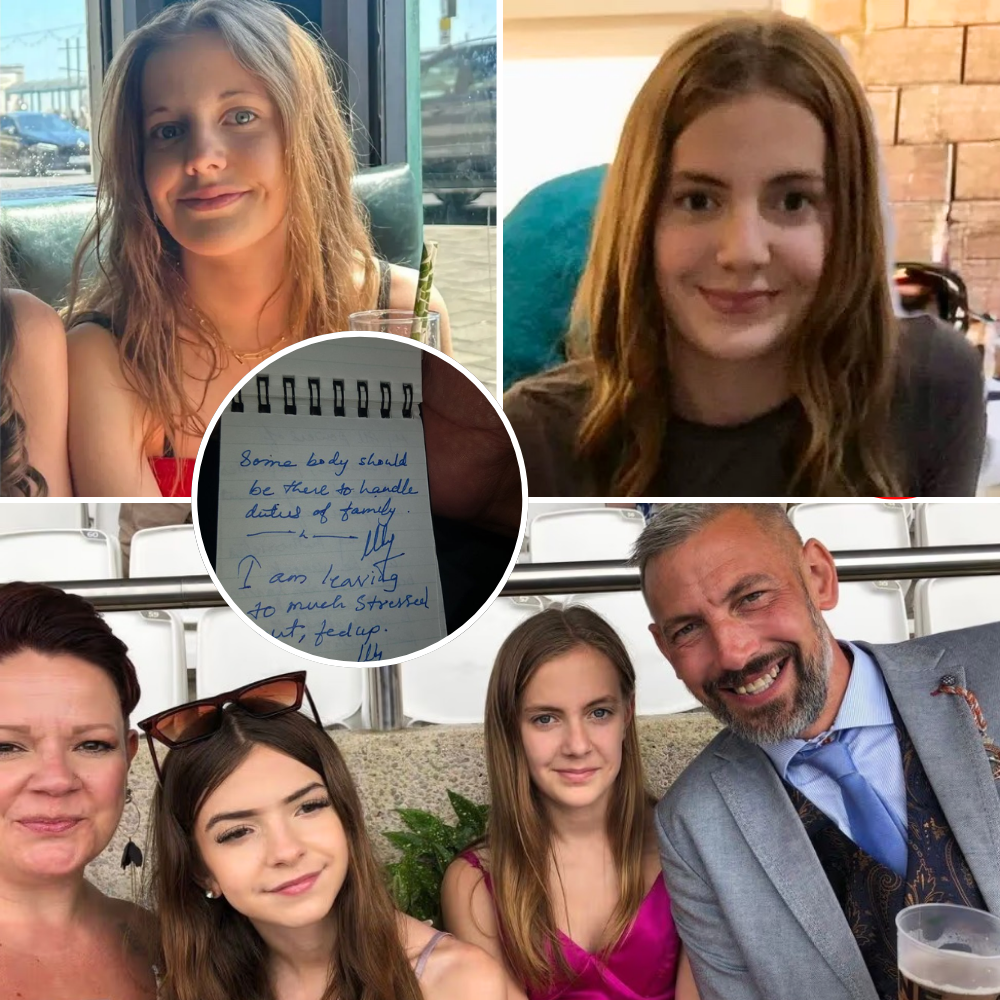
Mum Went to Wake Her 12-Year-Old for School… Instead Found Amelia Dead After Relentless Snapchat Torment 😭 Last Night She Was Happy & Laughing – The Devastating Details Inside
A cheerful 12-year-old girl with a smile that warmed every room spent her final evening wrapped in the simple joys of family life, laughing freely while sharing fish and chips at her grandparents’ house. No one could have predicted that the next morning would bring the kind of silence no parent should ever endure. On […]

👀 American Idol Judges Stunned by Braden Rumfelt’s Voice After Two Major Surgeries Destroyed His Baseball Career — His Comeback Story Is Unbelievable! 😱
The spotlights in the American Idol audition room pulsed with that familiar electric hum as 22-year-old Braden Rumfelt stepped forward, guitar slung over his shoulder, his twin brother Kellen right beside him with fingers poised on the strings. Murphy, North Carolina, felt a world away in that moment—the small-town life of substitute teaching, quiet family […]

😲 She Wrote “String Cheese” While Battling Postpartum Depression… Now Hannah Harper Is Stealing American Idol! Her Incredible Journey Will Inspire You ❤️
The Hawaiian stage lights bathed the Aulani Resort in a golden glow as 25-year-old Hannah Harper, a stay-at-home mom from the tiny town of Bunker, Missouri, gripped the microphone with the same quiet determination she once used to wrangle three rambunctious boys through a long day of laundry and snacks. Her homemade patchwork dress shimmered […]

😱 American Idol Top 20 Poll SHOCK: Hannah Harper & Keyla Richardson Dominate… But Who’s Going HOME Next? 😭 Who’s in Danger?
Hawaii’s sun-drenched shores at Disney’s Aulani Resort became the unlikely battlefield where American Idol Season 24’s Top 20 delivered heart-stopping performances that have left fans divided, judges stunned, and Gold Derby readers casting their clearest verdict yet on who might not survive America’s vote. With the first live results episode looming on March 30, the […]

😱💔 Kimmie Standing On The Rooftop With That USB Drive Has Fans Terrified — Is She About To Destroy The Entire Bellarie Empire? 👀
The first explosive trailer for Beauty in Black Season 2 Part 2 is here — and everything shifts fast. The new footage shows Kimmie stepping fully into her power with zero hesitation, but one bold move has fans in total shock. Is she protecting herself… or setting something much bigger in motion? The stakes feel […]

💥 “Is The Baby Okay?” — Virgin River Season 7 Finale Left One Devastating Clue About Mel & Jack’s Child That Changes Everything 😭
Netflix just dropped the news everyone has been waiting for: Virgin River is officially returning for Season 7 — and fans are already bracing for another emotional chapter. The release date and exact drop time are now confirmed, meaning the next wave of romance, heartbreak, and small-town secrets is closer than expected. But one storyline […]
End of content
No more pages to load