In the labyrinthine underbelly of York’s medieval streets, where the Minster’s spire pierces the fog like a forgotten prayer and the Shambles’ crooked timber frames huddle against the chill of ancient secrets, a quiet revolution is brewing in the world of crime television. It’s November 28, 2025, and Channel 4 has dropped the first electrifying teaser for Patience Season 2—a six-episode extension of the boundary-pushing detective drama that premiered to fervent acclaim and fierce debate earlier this year. The series, which thrust newcomer Ella Maisy Purvis into the spotlight as the autistic police archivist Patience Evans, returns in early 2026 with bolder mysteries, deeper risks, and a performance that’s already being hailed as extraordinary. Purvis, fresh from her breakout turn in the 2025 reboot of Miss Austen—where she embodied the sharp-witted Cassandra Austen with a quiet intensity that earned whispers of BAFTA nods—steps back into her titular role, her razor-sharp mind once again the unlikeliest weapon in Yorkshire’s fight against the shadows. While critics remain split on the show’s “clunky” yet “fascinating” portrayal of autism—praising its authenticity while decrying occasional stereotypes—viewers are unanimous: this is one of the best detective series in years, a fresh infusion into an overcrowded genre that’s as addictive as a midnight scroll through unsolved case files. With Purvis’s nuanced embodiment of neurodivergence at its core, Season 2 promises to crank the tension higher, blending York’s historic hauntings with human frailties in a way that leaves audiences breathless and begging for more.
Patience, the brainchild of screenwriter Matt Baker—a Pocklington native whose love for his home county’s “extraordinary history” seeps into every cobblestone frame—debuted on January 8, 2025, to a polarized premiere that ignited water-cooler wars from Leeds pubs to London living rooms. Adapted loosely from the acclaimed French-Belgian series Astrid et Raphaëlle but reimagined with a distinctly Yorkshire grit, the show centers on Patience Evans, a young autistic woman whose hyper-focused genius transforms a mundane job in the City of York Police’s criminal records department into a clandestine crusade against crime. Purvis, 22, born in South London’s bustling boroughs to an urban planner mother and business coach father, brings an insider’s authenticity to the role; diagnosed with autism and ADHD in her late teens, she infuses Patience with a lived-in verisimilitude that critics like Carol Midgley of The Times lauded as “overt and subtle,” a portrayal that avoids caricature while illuminating the quiet battles of neurodivergence. “I’m honored to bring Patience to life,” Purvis shared in a pre-premiere interview, her voice steady but eyes alight. “She’s not a puzzle to solve—she’s a person pushing past the edges of a world that wasn’t built for her. And in York, with its layers of history hiding in plain sight, that’s the perfect backdrop.”
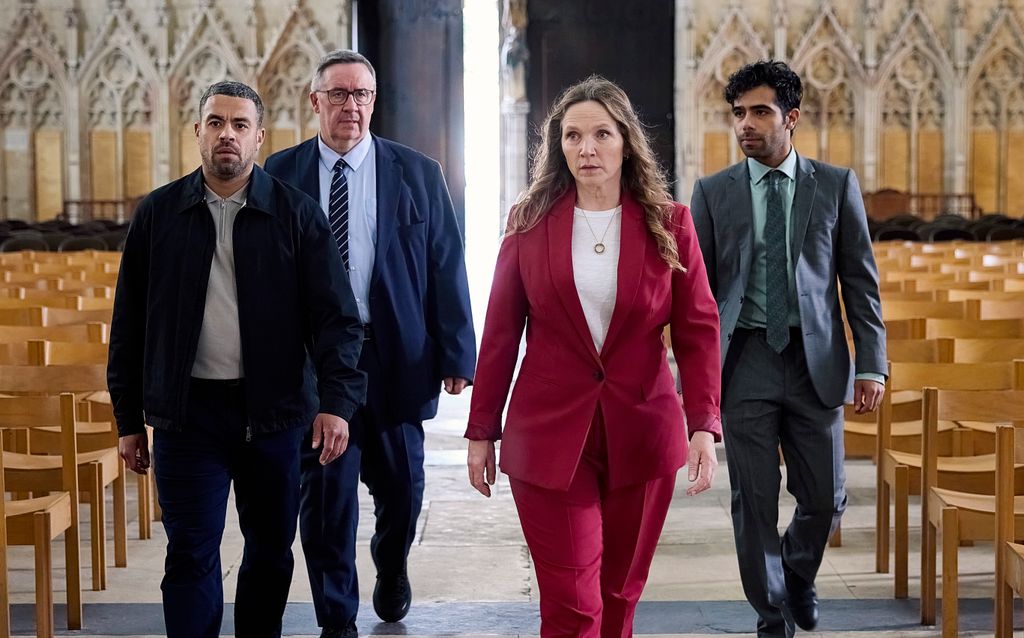
The first season, which wrapped its six episodes in a taut 360-minute arc, followed Patience’s improbable ascent from archival obscurity to investigative oracle. Working in the dimly lit bowels of York’s police headquarters—a warren of filing cabinets and flickering fluorescents that doubles as a metaphor for her compartmentalized mind—Patience catalogues evidence with a precision born of hyperlexia, her auditory and visual memory spotting patterns where others see chaos. Enter Detective Inspector Bea Metcalf (Laura Fraser, the Breaking Bad alum whose steely gaze could melt Minster stone), a maverick cop with the county’s highest clearance rate but a personal life in tatters—separated from her husband, estranged from her possibly autistic son. Their alliance sparks in Episode 1’s opener: a suspicious suicide in a Shambles car park, the victim’s ligature marks echoing an unsolved 1998 strangling that Patience unearths from a dusty dossier. “It’s not suicide—it’s symmetry,” she murmurs, her finger tracing invisible threads on a case map, her insight shattering Metcalf’s skepticism. What ensues is a procedural pas de deux: Metcalf’s gut-driven bravado clashing and complementing Patience’s data-driven detachment, as they unravel a web of cold cases—from a Minster crypt poisoning laced with medieval herbs to a Micklegate ghost haunting modern-day smugglers.
York, with its “magical” medieval maze—timbered Tudor facades on the Shambles, the Minster’s Gothic grandeur looming like a judgmental bishop—serves as more than backdrop; it’s a character, its history a haunting chorus to the crimes. Filming, a logistical love letter to the city, captured Precentor’s Court opposite the Minster for Patience’s contemplative walks, Gillygate’s Georgian grace for tense tail-chases, and Monkgate’s misty alleys for midnight stakeouts. Yet the production’s true alchemy unfolded in Belgium’s Antwerp studios, where vast soundstages recreated the records room’s archival abyss—endless aisles of mahogany cabinets groaning under case files, lit by the blue glow of microfiche readers. “York’s layers mirror Patience’s mind,” Baker explained in a York Press feature. “Every street corner hides a story, just like every file hides a clue.” The show’s visual vernacular, courtesy cinematographer Suzie Lavelle (The Crown), bathes the city in a palette of slate grays and amber lamplight, Patience’s world a chiaroscuro of comfort zones and creeping chaos.
Purvis’s Patience isn’t your archetypal sleuth; she’s a subversion, a self-taught savant whose autism amplifies her acuity while armoring her against the world’s white noise. In the pilot’s pivotal scene, as Metcalf storms the records room—files flying like startled pigeons—Patience freezes mid-catalogue, her hands fluttering like trapped birds before she unfurls a timeline on the wall: dates pinned with red string, photos clustered like crime-scene constellations. “It’s not random,” she states, voice flat as Yorkshire pudding but eyes alight with revelation. “It’s ritual—every third Tuesday, under a gibbous moon.” Purvis, a former classical ballerina who traded pointe shoes for LAMDA’s dramatic forge, embodies the role with a physical poetry that’s both precise and poignant: her stims subtle—a finger-tap Morse code on her thigh during interrogations, a gaze that locks like a lens on a suspect’s micro-tics. “Ella doesn’t play autism,” Fraser raved in a Radio Times roundtable. “She lives it—raw, real, revolutionary.” Purvis’s own journey infuses the authenticity: diagnosed at 17, she credits the role with “unmasking the masks we wear,” her performance a bridge for viewers who see themselves in Patience’s quiet quests for connection.
Season 1’s cases were a gallery of gothic grotesques, each a puzzle Patience pieces with archival artistry. Episode 2’s “The Minster’s Shadow” unspools a clerical killer poisoning choristers with belladonna-laced communion wine, Patience decoding the tox report’s floral footnotes from a 17th-century herbalist’s log. By Episode 4’s “Shambles Specter,” a Victorian ghost story turns grisly when a costumed thief guts a tourist in the meat market’s maze, Patience’s pattern-spotting linking it to a 1892 Ripper copycat. The finale’s “Micklegate Requiem” crescendos in the city’s execution wall, where a serial strangler targets history buffs, Metcalf’s brawn and Patience’s brain forging a fragile friendship amid the noose’s shadow. Supporting turns elevate the ensemble: Mark Benton as gruff Superintendent Calvin Baxter, whose Yorkshire bluntness masks a paternal soft spot for Patience; Adrian Rawlins as the enigmatic Dr. Elias Thorne, the force’s forensic shrink whose sessions with Patience blur therapy and torment; Maxwell Whitelock as young PC Alfie, Patience’s wide-eyed apprentice whose neurotypical naivety sparks her first tentative trust. Jessica Hynes joins in a recurring arc as DI Frankie Monroe, a sharp-tongued rival from Leeds whose “clunky” clashes with Metcalf inject comic grit.
The show’s reception? A battlefield of brilliance and backlash, critics clashing like broadswords at a York joust. The Guardian‘s Lucy Mangan skewered it with two stars, slamming the “preposterous plot and terrible dialogue” as “deeply uninspired,” her ire aimed at the “nuance-free take on neurodivergence” that veers into “embarrassingly clunky” territory—Patience’s support group scenes feeling scripted rather than soulful, her “savant savviness” a shade too convenient. The Telegraph‘s Chris Bennion echoed the unease with three stars, noting it “hardly breaks the mould” in the autistic detective trope (shades of The Good Doctor‘s Shaun Murphy), though he conceded Purvis’s “subtle fire” elevates the ensemble. Yet the flipside flares fierce: The Times‘ Carol Midgley awarded four stars, praising Purvis for “not overacting the condition—showing it in overt and subtle ways,” her portrayal a “beautiful representation” that challenges norms. The Independent‘s Serena Davies hailed it “fascinating” and “brilliant,” a procedural that “prioritizes character over cliché,” its York vistas a “visual valentine to the city’s crooked charm.” Metacritic’s 66/100 “generally favorable” aggregates the ambivalence, while Rotten Tomatoes’ 78% audience score surges higher, fans flooding forums with fervor: “One of the best detective shows in years—Patience is my spirit animal,” raves one; “Finally, an autistic lead who’s genius without the gimmick,” cheers another.
Viewers, undeterred by the critical cacophony, have propelled Patience to cult status, its debut week drawing 4.2 million streams on Channel 4’s All 4 platform and PBS Masterpiece in the U.S., where it aired as a Sunday-night staple. Social media simmers with solidarity: #PatienceEvans trends with 1.5 million posts, TikToks dissecting Patience’s stim scripts and York lore (the Shambles’ “Dickensian dread” a fan-favorite filter). Autistic advocates amplify the authenticity—Purvis’s own ADHD adding layers of lived insight—while detractors decry “stereotypical savant syndrome.” The frenzy peaks in fanfic forums and Reddit rants, where shippers speculate on Patience’s budding bond with Billy (a support group mentor played by Tom Lewis), her “romantic subplot” a rare ray of representation. “It’s messy, it’s real—unlike those glossy Scandi-noir snoozes,” one viewer posted, her thread liked 20,000 times. Purvis, fielding the firestorm with grace, told Hello! Magazine: “Patience isn’t a diagnosis—she’s a detective of differences, and if that sparks debate, we’ve done our job.”
Season 2, greenlit in March amid the buzz, promises a bolder blueprint: six episodes delving deeper into Patience’s psyche, with Metcalf’s maternity leave (Fraser’s real-life hiatus) thrusting her into a precarious partnership with Hynes’s Frankie Monroe—a Leeds import whose “brash brilliance” grates like gravel on York stone. New mysteries loom: a Minster relic heist laced with occult overtones, Patience decoding cryptic runes from a 12th-century grimoire; a Gillygate ghost ship smuggling modern migrants, her archival acumen unearthing Ellis Island echoes in Viking longboat logs. Risks escalate—Patience’s first undercover op in the Shambles’ underbelly, her sensory overload a ticking time bomb amid the tourist throng. Purvis’s arc? A “boundary-breaking” bloom, her Patience navigating romance’s roulette with Billy, a subplot that “challenges the infantilization of autistic women,” as she shared in a Radio Times tease. Critics’ crystal ball? Polarized as ever—Hynes’s addition a “shot in the arm” or “clash of cultures”? Viewers? Already queuing for the York chill, their frenzy a testament to a show that, clunky or captivating, carves its niche in the crime canon.
In York’s eternal twilight, where the Minster tolls like a heartbeat and the archives hold horrors half-forgotten, Patience endures—a detective drama that’s as fractured as its heroine’s focus, as compelling as its cobblestone chase. With Purvis’s poised power at the helm, Season 2 isn’t just a return; it’s a reckoning, splitting skeptics and sending souls into a frenzy for more. In a genre glutted with grizzled gumshoes, Patience stands singular: not a sideshow savant, but a spotlight sovereign, her mind a map to mysteries unsolved. Tune in, if you dare—the archives await, and in York, every file hides a fault line.