THE NIGHT MY HUSBAND BROUGHT HIS MISTRESS TO MY FAther’S HANGAR—AND LEARNED WHO OWNED THE SKY
PART 1: THE LIQUIDITY OF SILENCE
They say the wealthiest families don’t air their dirty laundry in public. They don’t have to—they simply use it to strangle you while the cameras are rolling.
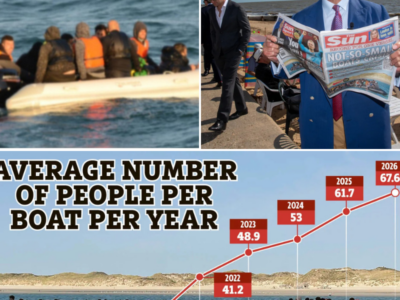
He brought his mistress to the private aviation charity gala and told a room full of donors that she made him feel free. She stood beside his jet wearing my dead father’s watch, laughing like my silence meant I had lost. He thought I would cry, make a scene, and prove every lie he had spent the last six months spinning about me to the board of directors. What he did not know was that the aviation director already had the one name that would ruin him.
Grant looked pristine that night. A bespoke black tuxedo tailored to mask the slight softness of a man who hadn’t worked a real day in his life, a polished, practiced smile, and one hand resting casually on Sloane’s back like she was a trophy he had won from the wreckage of my marriage. The hangar was a cavern of wealth and performative philanthropy, filled to the brim with high-net-worth donors, flashing cameras, state senators, sleek Gulfstreams, and women pretending not to stare at me while whispering behind their gloved hands.
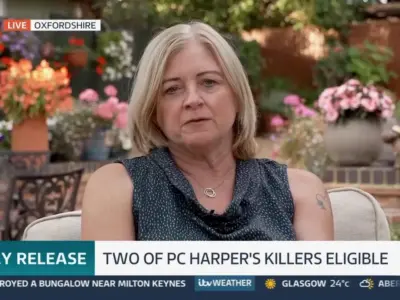
Sloane wore champagne silk that poured over her like liquid vanity, but my eyes were anchored to her wrist. There sat my rose-gold Patek Philippe. It wasn’t just a watch; it was the timepiece engraved with the very last words my father ever whispered to me before his plane went down over the Atlantic: Fly above the storm, Olivia. I looked at her wrist, then looked my husband dead in his eyes, and said absolutely nothing.
That silence made him bold. Arrogance is a disease that rots the cautious mind, and Grant was in the terminal stages. He leaned toward a tight circle of multi-millionaire donors, letting out a heavy, performative sigh like a tired man tragically trapped by a difficult, ungrateful wife. He told them, loud enough for the ambient microphones to catch, “Some people lift you up, and some people clip your wings.” Then he turned those eyes—the same eyes that used to look at me with manufactured devotion—toward Sloane with that soft, public smile. “Sloane, though… she understands freedom.”
A few people glanced at me with curated pity, as if I had officially become a sad, discarded chapter in his glittering new love story. Sloane laughed at the exact wrong time. It was a high, tinkling sound that echoed off the corrugated steel walls of the hangar. She tilted her wrist just so, ensuring the Patek caught the studio lighting, and that was when I spotted the faint, jagged scratch near the platinum clasp. I knew that scratch. I made it myself three summers ago when we hit a rough swell while sailing off the coast of Nantucket. She knew the watch was mine. Grant knew I knew. They were standing there, practically vibrating with anticipation, waiting for me to break in front of the press. That was the narrative he needed.
For months, the whispers had traveled through the country clubs and boardrooms. Olivia is cold. Olivia controls him. Olivia questions his every move and holds back his grand vision for Hart Aviation. He told everyone I was too obsessed with my father’s legacy to let him fly. I had heard every single whisper, tracked every leak to the press, and I had corrected none of them. A woman does not interrupt a trap when the other person is so joyfully walking into it.
The truth was beautifully simple: Grant did not want freedom. He wanted access. My father had built Hart Aviation from a single hangar into a global logistics empire, and Grant had spent our entire seven-year marriage trying to stand close enough to the Hart name so that people would stop asking about his own pathetic numbers. When I caught him red-handed eight months ago, noticing strange, unapproved eight-figure transfers out of our primary holding account, I quietly froze the main corporate trust. That was the day he stopped calling me “brilliant” and started calling me “unstable” to anyone who would listen. When I refused to let his greasy fingers touch the core Hart family assets, he went out and found a woman who would clap for him without reading the legal documents.
So I waited. I hired lawyers who didn’t exist on public registries, forensic accountants who operated like assassins, and security personnel who treated discretion like a religion. I let Grant believe my silence was born of shame. I let Sloane wear my dead father’s watch and smile for the society columns. I even allowed them to stand under the wing of our flagship charter jet tonight like they were the undisputed future of this empire.
Then, the brass bell rang near the main stage, its chime echoing across the hangar. Miles Everett, the executive director of MercyAero, stepped up to the microphone. Grant straightened his posture, puffing out his chest because he genuinely believed the room was about to honor him for his “generous patron status.” Sloane fixed her blonde hair and looked utterly bored by the philanthropy part of the evening.
I set my untouched champagne glass down on a linen-covered table, crossed my arms, and watched the massive digital screen behind Miles go dark.
Miles thanked the donors first, his voice booming over the speakers. He spoke movingly about children flown to critical trauma centers, transplant organs rushed across state lines in the dead of night, and mothers rescued from underfunded rural hospitals. The room softened. Rich people love tragedy when it has pristine lighting and a charitable tax write-off. Grant’s smug smile returned. He actually took a step toward the stage, convinced he could seamlessly insert himself into the climax of the story.
Then Miles took a deep breath, his eyes scanning the crowd. “But tonight, there is one particular woman we need to honor. A woman whose anonymous, unparalleled private contribution single-handedly funded every single emergency medical flight MercyAero launched this past year.”
Grant’s smile didn’t move, but I watched the muscle in his jaw twitch. His throat swallowed hard. Sloane leaned over, her voice a sharp, irritated hiss: “Who is he talking about, Grant?”
He didn’t answer. He couldn’t.
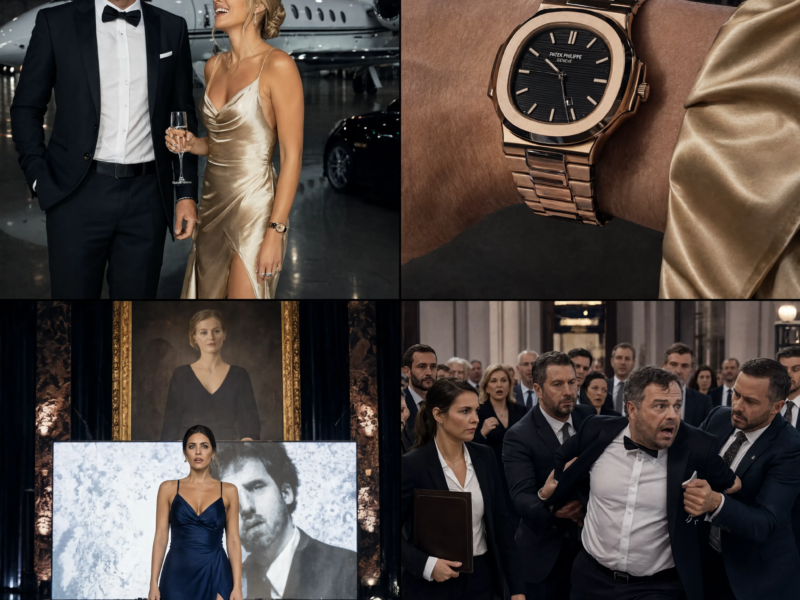
Miles turned his gaze directly toward me. The entire room—two hundred pairs of eyes, ten television cameras, and three prominent senators—turned with him. And right before the massive LED screen lit up behind him to reveal the donor’s identity, Sloane’s smug, patronizing laugh died completely in her throat.
Because the name that flashed in giant, golden letters wasn’t just mine—it was accompanied by the full, terrifying disclosure of the assets used to pay for those flights. Assets pulled directly from the frozen accounts of Grant’s shell corporations.
PART 2: THE ANATOMY OF A CRASH
The silence that fell over the hangar wasn’t just quiet; it was pressurized. It was the kind of silence that exists inside a cabin right before the oxygen masks drop. The giant LED screen didn’t just display my name, Olivia Hart. Beneath it, in cold, unyielding financial font, was a live ledger. It detailed the exact funding source for the three-million-dollar donation to MercyAero: The Vantage Development Group—a shell company Grant had secretly established to siphon money out of Hart Aviation.
“What is that?” Sloane muttered, her voice cracking as she stared at the screen. She didn’t know anything about corporate finance, but she knew how to read numbers, and she certainly knew how to read the word Embezzlement written in the legal footnotes displayed for the entire world to see. “Grant, what is that?”
Grant didn’t look at her. His face had gone a sickening, mottled shade of gray, the exact color of old ash. The hands that had been so casually resting on his mistress’s back were now clenched into tight, trembling fists at his sides. He looked at the screen, then at Miles Everett, and finally, his gaze landed on me.
I didn’t move an inch. I stood my ground, bathed in the expensive lighting of the hangar, the very picture of the “cold, unfeeling” woman he had described to his friends.
“There appears to be a mistake,” Grant stammered, stepping toward the stage, his voice amplified by the sheer, terrified force behind it. He tried to project his usual boardroom authority, but it cracked on the first syllable. “Miles, that data is proprietary. That’s an internal corporate matter. Turn the screen off.”
Miles Everett didn’t look at the screen. He looked at the two federal marshals who had quietly stepped out from the wings of the stage. “The data was provided by the court-appointed receiver of the Hart Estate, Mr. Whitaker. The court orders were signed at four o’clock this afternoon.”
A collective gasp rippled through the crowd. Senator Vance, who had been laughing at Grant’s jokes ten minutes prior, took a deliberate step backward, completely severing himself from Grant’s physical orbit. The society photographers, sensing the blood in the water, began snapping photos with frantic, blinding speed. The flashes illuminated the raw terror in Grant’s eyes.
“Olivia,” Grant hissed, turning on me, his voice a low, desperate snarl as he closed the distance between us. “What did you do? You’ve destroyed the stock price. You’ve ruined the company. Do you have any idea what this looks like?”
“It looks like an audit, Grant,” I said, my voice smooth and perfectly modulated. “And please, don’t raise your voice. We have guests.”
“You insane bitch,” he muttered, his civilized facade completely disintegrating. “You threw me under the bus for a tax write-off? You think the board is going to stand for this? I am the managing partner of this firm!”
“As of 4:15 p.m., you are the former managing partner,” a new voice cut in.
Naomi Bell, my family’s chief legal counsel, stepped out from the crowd of donors. She wore a tailored gray suit that looked like armor, and she held a leather portfolio with the absolute confidence of a woman who had never lost a courtroom battle in her life.
“The board held an emergency meeting via Zoom thirty minutes ago, Graham,” Naomi said, using his legal first name, the one he hated because it sounded less imposing than ‘Grant’. “Given the undisputed evidence of asset diversion, corporate espionage, and grand larceny regarding the Hart family trust, you have been stripped of all executive authority. Your security clearance to all Hart Aviation facilities has been revoked. Effective immediately.”
“You can’t do that!” Sloane shrieked, finally realizing that the billionaire lifestyle she had been flaunting on Instagram was evaporating in real-time. She stepped forward, her face contorted, pointing a French-manicured finger at me. “He built this company! You’re just a bitter, barren woman who couldn’t keep her husband!”
The room went so quiet you could hear the hum of the jet engines on the tarmac outside. I looked at Madison—sorry, Sloane. They all look the same after a while. I looked at her, then down at her wrist.
“The watch, Sloane,” I said softly.
“What?” she blinked, caught off guard.
“The watch on your wrist,” I repeated, my tone dripping with ice. “It belonged to my father. It was on his nightstand at the hospice the night he died. It didn’t go missing. Grant stole it. And according to New York state law, receiving stolen property over the value of fifty thousand dollars is a class C felony. That watch is valued at one hundred and forty thousand.”
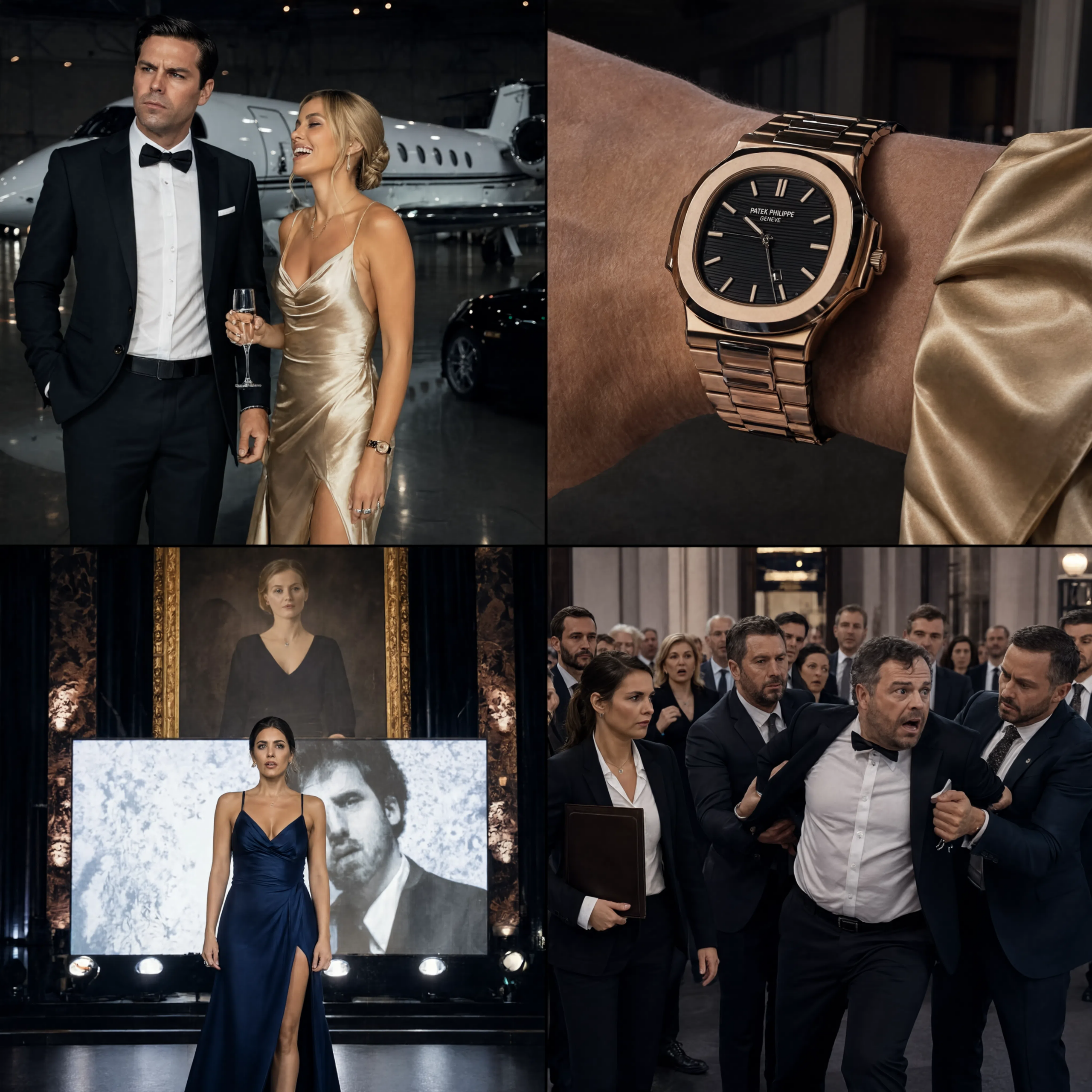
Sloane took a step back, her hand flying over the watch as if she could hide it. She looked at Grant, but Grant was no longer looking at her. He was looking at the two detectives in plain clothes who were now walking down the center aisle of the hangar, straight toward him.
PART 3: THE DEFLATION OF AN EGO
“Let’s move this into the private lounge, shall we?” Detective Harris said, his hand resting casually near his badge as he intercepted Grant. “Mr. Whitaker, you have a lot of people wanting to talk to you tonight, and none of them are here for the champagne.”
The VIP lounge of the hangar was a soundproof room lined with dark walnut and leather, typically used for closing multi-million-dollar aircraft leases. Tonight, it felt like a interrogation cell. Grant sat on the edge of a mid-century modern leather sofa, his tie completely undone now, his hair disheveled. Sloane stood in the corner, weeping silently into a silk cocktail napkin, her gold dress looking ridiculous under the bright, utilitarian overhead lights the detective had switched on.
“Olivia, please,” Grant pleaded, his hands clasped together in a posture of complete supplication. The arrogant, soaring eagle of the country club had been reduced to a grounded, broken bird. “Think about what we built. Think about our legacy. If this goes to trial, the press will destroy everything. We can settle this privately. I’ll sign the post-nup. I’ll give you the house in Aspen. Just drop the criminal complaint.”
“You didn’t build anything, Grant,” I said, sitting across from him, my posture immaculate. Naomi stood behind me like a sentinel. “My father built this. You just managed the calendar and signed checks with my money.”
“I loved you!” he shouted, a desperate, pathetic lie that echoed hollowly off the wood paneling.
“You loved my access,” I corrected him. “You loved the tail number on the G650. You loved the way senators shook your hand because they wanted a ride to Camp David. You loved the illusion of power. And when I stopped letting you play with the adults’ money, you decided to steal it.”
Naomi stepped forward, sliding a stack of document copies onto the marble coffee table between us. The top page was a bank statement from a Swiss account, opened under the name S. Linley—Sloane’s legal maiden name.
“We’ve spent the last six months mapping your financial flight path, Graham,” Naomi said with cold precision. “You thought you were clever using Vantage Development. But you forgot that every line of code in the Hart Aviation accounting software was written by a firm my office owns. We tracked every dollar. The three million you ‘donated’ to MercyAero tonight wasn’t a donation from you. It was the exact amount you tried to wire to Zurich yesterday afternoon. We simply intercepted the transfer and redirected it to a worthy cause.”
Grant stared at the bank statements. His mouth opened slightly, but no sound came out. The realization was finally setting in: he hadn’t been sneaking around in the dark. He had been performing under a spotlight, and I had been holding the switch the entire time.
“And you,” I said, turning my gaze to Sloane, who was trembling in the corner. “The watch.”
Sloane didn’t wait for the detective to intervene. With shaking, frantic fingers, she unclasped the rose-gold Patek Philippe and slammed it onto the table. “Take it! Take it, I don’t want it! He told me it was his! He told me his grandfather left it to him!”
“He lied,” I said simply, picking up the watch. I pulled a silk handkerchief from my evening bag, carefully wiping her perfume and sweat off the gold casing. I turned it over, my eyes tracing the elegant, faded script on the back: Fly above the storm, Olivia. A lump formed in my throat, but I swallowed it down. I was above the storm now.
“Detective,” I said, rising to my feet. “I believe you have everything you need.”
“Olivia, wait!” Grant yelled, lunging forward from the couch, but Detective Harris instantly stepped into his path, his hand firmly gripping Grant’s shoulder, forcing him back down. “You can’t do this to me! I made you! You were nothing but a reclusive heiress before I met you! Nobody in this town respects you!”
I stopped at the door, turning back to look at the man I had spent nearly a decade of my life with. I felt no anger. I felt no sorrow. I felt only the immense, profound relief of a weight being lifted from my wings.
“They don’t have to respect me, Grant,” I said softly. “They just have to clear my runway. Have a good night.”
PART 4: SOVEREIGN AIR
The dawn over the tarmac was a pale, clean blue, the kind of sky that pilots dream about. The storm from the previous night had washed the city clean, leaving the runway glistening like black glass under the rising sun.
I stood by the floor-to-ceiling windows of my private office at the top of the hangar, a mug of black coffee in my hands. On my wrist, the rose-gold Patek Philippe ticked with a steady, rhythmic certainty. The jagged little scratch near the clasp caught the morning light—a permanent reminder that even the most beautiful things can survive a rough swell.
The morning newspapers were stacked on my desk. The headlines were exactly what I had engineered them to be: HART AVIATION UNCOVERS MULTI-MILLION DOLLAR FRAUD; CEO TERMINATED, ARRESTED AT CHARITY GALA. The stock market had opened thirty minutes ago; after an initial five-minute dip, Luma House and Hart Holdings stock had actually stabilized, gaining two points. The market doesn’t panic when a thief is caught; the market rewards a housecleaning.
A soft knock came at my door. Naomi Bell walked in, carrying two thin files. She looked tired, but her eyes were bright with victory.
“It’s done,” Naomi said, sitting in the leather chair across from my desk. “The judge denied bail for Graham this morning. Flight risk, given his access to private aviation assets. His mother tried to leverage the Whitaker name to secure a private bondsman, but the federal freeze on their accounts went live at midnight. Eleanor is currently trapped in her penthouse with no liquid capital and a legal team that just quit due to non-payment.”
“And Sloane?” I asked, taking a sip of my coffee.
“Pleading out,” Naomi replied. “She’s cooperating fully with the District Attorney regarding the stolen property and the shell corporations. She’ll likely get probation and a permanent blemish on her record. Her ‘influencer’ career is effectively over.”
I looked out at the runway, where a white-and-blue Gulfstream G650—my father’s favorite aircraft—was being prepped for flight. The ground crew moved with efficient precision, the logistics engine of Hart Aviation turning smoothly, unburdened by the parasites that had tried to drain it.
“What’s your next move, Olivia?” Naomi asked, closing her folder. “The board is waiting for you to name a permanent CEO. They want stability.”
“They have stability,” I said, turning back to face her. “I’m taking the chair myself.”
Naomi smiled, a genuine, rare expression of warmth from a woman who rarely showed it. “Your mother would be proud. Your father would be ecstatic.”
“My father always told me that the sky belongs to the people who actually know how to fly,” I said, looking down at the watch on my wrist. “Grant thought that owning the pilot’s uniform was the same thing as commanding the aircraft. He never understood the wind.”
I picked up my briefcase, slipped the morning papers into the trash bin, and walked out of the office.
As I walked down the hangar stairs, the smell of jet fuel and cold morning air hit my face. It was the smell of my childhood, the smell of freedom, the real kind—the kind that isn’t bought with someone else’s money or stolen from a dying man’s room.
I climbed the air-stairs of the G650, the cabin crew greeting me with deep, genuine respect. I took my seat in the captain’s chair in the main cabin, looking out the window as the engines began their low, powerful whine, vibrating through the floorboards and into my bones.
The plane taxied out onto the main runway, aligning with the center line. The tower cleared us for takeoff.
As the aircraft accelerated, pressing me back into the leather seat, I watched the ground fall away beneath us. The sprawling city, the country clubs, the boardrooms, and the tiny, petty dynamics of the people who thought they could clip my wings—they all shrank until they were nothing but dust on a map.
I adjusted the watch on my wrist, looked out at the open, infinite blue horizon, and finally, after eight long years, I breathed.