Off-Campus Season 2 Raises the Emotional Stakes as Dean and Allie’s Casual Dynamic Turns Into Something Much Harder to Escape
College relationships often begin with rules that feel safe. Keep expectations low. Keep emotions under control. Keep life moving. But if the next chapter of Off-Campus moves toward Dean Di Laurentis and Allie Hayes as many fans expect, Season 2 may challenge that entire idea. Rather than building around a traditional slow-burn romance, the story appears positioned to explore what happens when two people enter a relationship believing they understand the limits—only to realize feelings rarely follow agreements. After a first season built around discovery and emotional trust, Briar University could return with a more complicated chapter where attraction becomes responsibility and emotional distance becomes impossible to maintain.
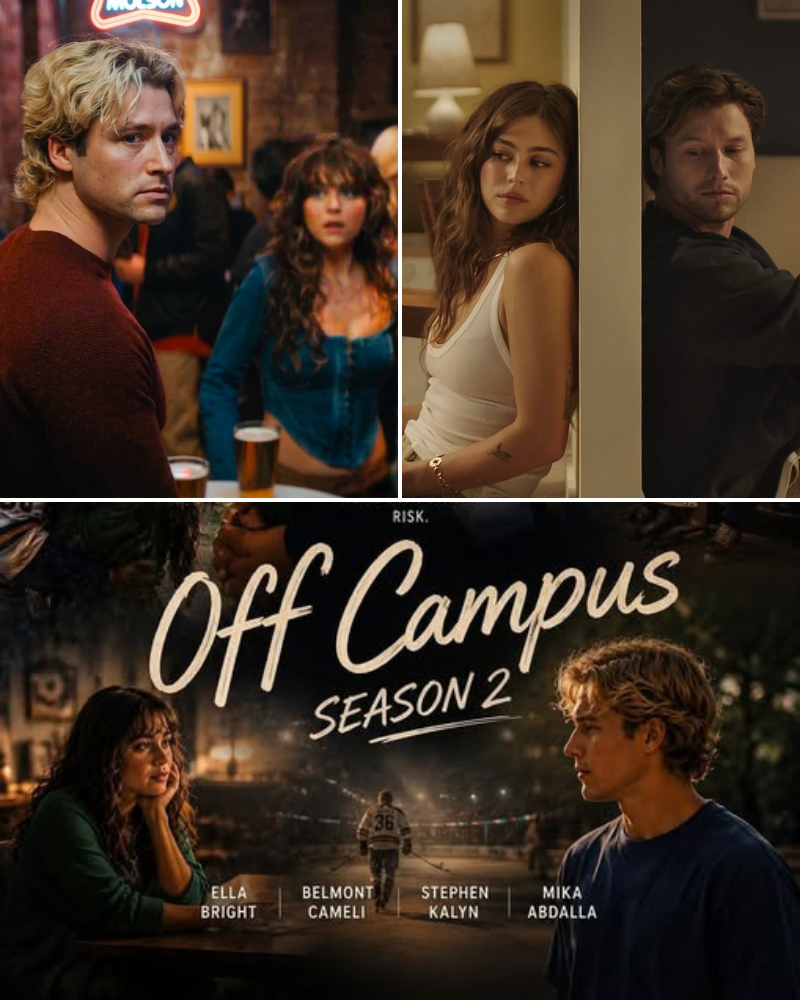
Dean has always occupied a very specific role inside the Briar world. He is confident, social, relaxed under pressure, and seemingly impossible to emotionally trap. Earlier appearances established him as someone who enjoys freedom and rarely allows relationships to interfere with the life he already understands. That personality made him entertaining because he often felt unaffected by the emotional chaos happening around him. But characters who appear most comfortable avoiding vulnerability frequently become the most interesting once certainty begins disappearing. If Season 2 expands his role, the challenge may not be whether Dean can fall in love—it may be whether he knows what to do once he realizes feelings are no longer optional.
Allie enters that equation with a completely different emotional rhythm. Rather than reacting to Dean’s confidence or becoming another temporary chapter in his routine, she naturally shifts the balance. She brings awareness, boundaries, and emotional honesty into situations that would otherwise remain simple. Their connection works because neither character initially appears interested in creating something serious. That emotional starting point creates tension. Relationships built without expectations often become the hardest ones to explain once expectations start appearing anyway. The story’s emotional pull comes not from obvious conflict, but from watching two people slowly realize they are no longer playing by the rules they created.
One of the strongest themes this direction introduces is vulnerability. Earlier romantic dynamics inside Off-Campus often focused on trust and emotional safety. Dean and Allie create a different question entirely: what happens when opening up feels more dangerous than staying emotionally unavailable? Casual relationships can feel safe because they appear temporary. But once routines become habits and habits become emotional dependence, people begin facing choices they never planned to make. That shift creates opportunities for quieter emotional moments rather than dramatic twists. Conversations become heavier. Silence means more. Small decisions suddenly carry unexpected consequences.
The setting remains one of the series’ biggest strengths. Briar University has always felt alive because relationships never exist independently from everything else happening around them. Hockey schedules continue. Friend groups evolve. Personal goals compete with emotional needs. That environment creates natural pressure because nobody has unlimited time to figure themselves out. Characters continue moving forward whether they feel ready or not. If Season 2 continues building on that atmosphere, emotional moments may become stronger precisely because life refuses to slow down and give people perfect timing.
Another important part of this transition is what it means for the larger group. One of Off-Campus’ strongest ideas has always been that every relationship affects everyone else. New connections shift old routines. Friendships become more complicated. Expectations change. Characters who once felt emotionally settled suddenly begin questioning things again. Dean and Allie moving closer would not simply create a new romance—it would naturally influence the energy across Briar itself. That interconnected structure allows the series to evolve while preserving continuity instead of making each season feel disconnected.
Visually and emotionally, Season 2 appears positioned to preserve the identity audiences already associate with Off-Campus: college energy, sports culture, friendship, humor, and emotionally charged moments that arrive unexpectedly. But the emotional questions may become more mature. Not whether people can fall for each other—but whether they are willing to stay once feelings stop being exciting and start becoming real. If the next chapter succeeds in building on those ideas, Dean and Allie’s story may become less about chasing chemistry and more about understanding that love is rarely dangerous because people get hurt. Sometimes it feels dangerous because for the first time, someone finally matters enough to stay.