Medical Misdiagnosis Ignites Outrage as One-Year-Old Toddler Battles Massive 30cm Tumor
A terrifying medical ordeal has sparked widespread outrage across the United Kingdom after a one-year-old toddler endured weeks of agonizing pain while doctors repeatedly misdiagnosed a massive malignant tumor as severe constipation. Little Florence Wilde, hailing from Stourbridge in the West Midlands, was subjected to a harrowing sequence of dismissals from primary care physicians before her family’s persistent advocacy finally uncovered the life-threatening truth. The staggering case has highlighted critical flaws in early pediatric diagnosis protocols and left grieving parents demanding accountability from regional healthcare providers.
The crisis began when Florence, who had recently celebrated her first birthday, developed a mysterious and rapidly swelling stomach alongside persistent fatigue and recurrent infections. Over a grueling three-week period, her parents, 32-year-old clinical psychologist Anna Chattaway and partner Dom Wilde, brought their suffering daughter back and forth to local general practitioners on at least six separate occasions. Despite the visible and alarming expansion of the toddler’s abdomen, medical professionals repeatedly assured the family that the symptoms were entirely benign, attributing the swelling to backed-up feces and prescribing strong laxatives.
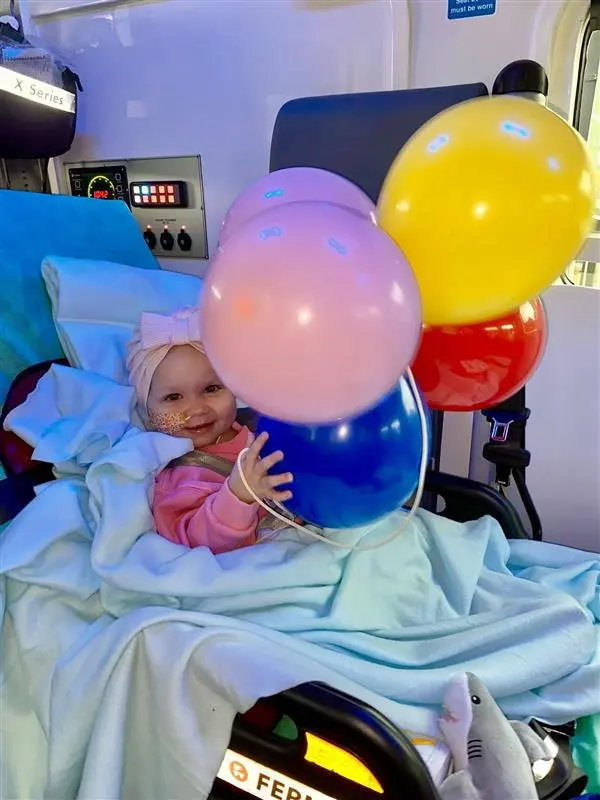
Following the doctors’ instructions turned the family’s home life into an absolute nightmare. The prescribed laxatives caused severe abdominal cramping, forcing the toddler to cry out in distress every single night. Because the internal pressure and physical agony made it impossible for Florence to lie flat in her cot, her mother had to hold her upright in her arms throughout the entire night just so the exhausted child could find brief moments of rest. During one particularly dismissive consultation, a local general practitioner attempted to ease parental anxiety by explicitly stating, “Let’s address the elephant in the room, we don’t think it’s cancer,” before sending the family home with more laxatives.
The turning point finally arrived when Florence’s grandmother stepped in and strongly demanded that medical staff perform immediate blood work. The resulting blood panel revealed severely heightened markers, prompting an urgent referral to a pediatric assessment unit. Upon arrival, a different consulting physician immediately examined the toddler’s abdomen, instantly recognizing that the irregular lumps and hard masses were not indicative of routine digestive blockage. An emergency computed tomography (CT) scan performed on November 18, 2024, shattered the family’s world, unmasking a colossal 30-centimeter high-risk neuroblastoma tumor occupying her tiny frame.
Medical evaluations revealed the staggering physical toll the hidden mass had taken on the young child. While Florence weighed a mere 13 kilograms, the aggressive neuroblastoma tumor weighed a staggering 2 kilograms, accounting for nearly 15 percent of her total body weight. She was immediately transferred to Birmingham Children’s Hospital, where she underwent emergency surgery and intensive multi-phase chemotherapy regimens to combat the cancer. Subsequent scans tragically confirmed that the disease had metastasized to her spine, extending a grueling medical journey that involved months of inpatient hospitalization, stem cell treatments, and major surgical procedures to excise 95 percent of the mass.
In response to the mounting public scrutiny surrounding the repeated misdiagnoses, representatives for the Dudley Group NHS Foundation Trust issued a formal apology and pledged to conduct a thorough internal review of the case to enhance patient safety standards. Meanwhile, Florence’s resilient spirit has inspired her community, even as her family works tirelessly to raise funds for specialized post-treatment preventative care. The shocking case remains a stark reminder of the devastating consequences of medical dismissal in pediatric care and the vital importance of listening to parental intuition when children exhibit unexplained symptoms.