In the high-stakes arena of NBC’s The Voice, where dreams collide under blinding lights and the weight of a nation’s gaze, moments of pure, unadulterated magic are as rare as a perfect pitch in the heat of battle. On December 1, 2025, during the electrifying premiere of the Season 28 Playoffs, 14-year-old Max Chambers from Shreveport, Louisiana, delivered one such miracle. Striding onto the stage with the quiet confidence of a veteran crooner twice his age, the high school freshman—clad in a simple white shirt and slacks that belied his Broadway-honed poise—unleashed a rendition of Sam Cooke’s timeless civil rights anthem “A Change Is Gonna Come” that didn’t just impress the coaches. It transfixed them. It hushed the audience. And it left an indelible mark on a show that’s launched careers from Kelly Clarkson to Ariana Grande. Michael Bublé, the Canadian crooner and Max’s coach, dubbed him his “14-year-old phenom” on the spot, his voice cracking with genuine awe as he proclaimed, “You can be real quiet and shy, and then step up to the pulpit, and people just listen.” The other judges—Reba McEntire, Snoop Dogg, and Niall Horan—leaned forward in stunned silence, their faces a gallery of wide-eyed wonder. For a kid who’s barely navigated freshman algebra, Max Chambers didn’t just sing; he summoned the ghosts of soul legends past, proving that true artistry knows no age limit. In a season already brimming with talent, Max’s performance has ignited a firestorm of fan fervor, positioning him as the dark horse who could redefine The Voice‘s legacy of young prodigies.
To understand the seismic impact of Max’s Playoffs moment, one must rewind to the whirlwind that brought this unassuming teen to the red chairs. Born and raised in the pine-scented heart of Shreveport, Max grew up in a home where music wasn’t a hobby—it was oxygen. His mother, a vocal coach and church choir director, spotted his gift early, enrolling him in local theater troupes by age eight. By 10, he was belting show tunes in community productions, his voice a precocious blend of gospel fire and pop polish. But it was Michael Jackson who became his North Star. “MJ was everything,” Max shared in a pre-audition confessional, his eyes lighting up like stage spots. “The way he moved, the way he felt every note—it made me want to dance and sing like my life depended on it.” That passion landed him a dream gig last year: portraying a young Michael Jackson in Broadway’s smash hit MJ: The Musical. For six months, the 13-year-old shared stages with Myles Frost, nailing the King of Pop’s moonwalk and falsetto with a maturity that stunned directors. “He wasn’t imitating,” one castmate later recalled. “He was channeling.” Broadway’s rigor—eight shows a week, critics’ scrutiny—forged Max into a performer who treats the spotlight like a second skin, a far cry from the shy kid who once hid behind his mother’s skirt at talent shows.
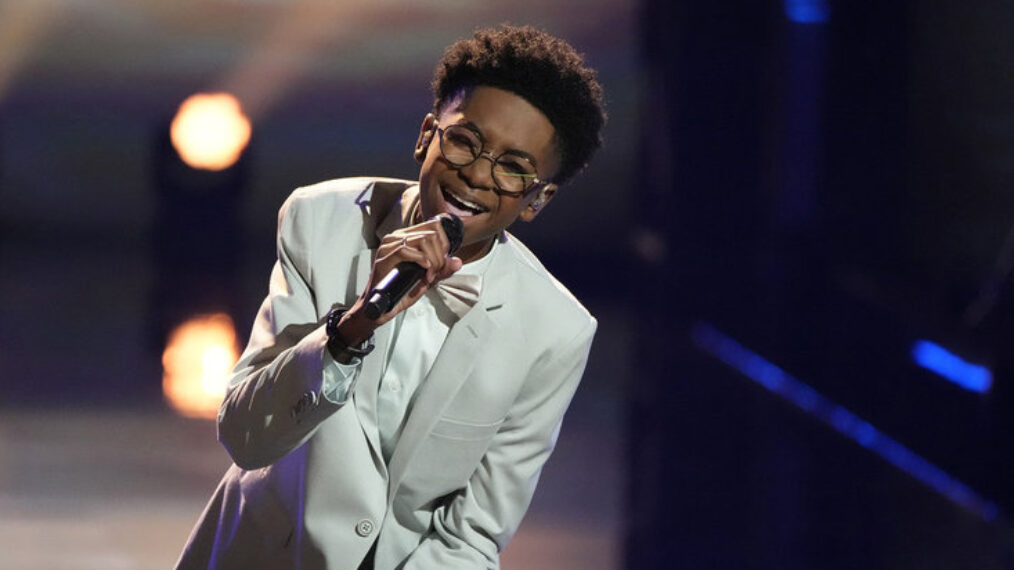
Fast-forward to September 23, 2025: the Season 28 premiere of The Voice. As the Blind Auditions kicked off with coaches Bublé, McEntire, Snoop Dogg, and Horan at the helm, Max bounded onstage in a light blue suit, channeling his idol with a fizzy, foot-stomping take on the Jackson 5’s “I Want You Back.” The studio erupted—coaches bobbing in their seats, Snoop rapping along—as Max’s tenor soared, his dance moves a whirlwind of spins and slides that evoked the Motown era’s joyful chaos. Bublé and McEntire hit their buttons first, but it was Bublé who stole the show, leaping up to mimic Max’s choreography with exaggerated flair. “The joy you just brought to this whole room is immense,” Bublé gushed, pulling Max into a bear hug. “You’re awesome. He can do it all.” McEntire, ever the country queen, pitched her soulful credentials: “I’ve recorded Aretha and Diana Ross—I could teach you that fire.” But Max, with the instincts of a seasoned pro, chose Bublé. “Michael gets the fun in music,” he explained backstage. “And I want to have fun while I learn.” From there, it was a meteoric rise. In the Battles, paired against 25-year-old Aarik Duncan on Bill Withers’ “Just the Two of Us,” Max’s sweet, layered harmonies earned him the win, with advisor Kelsea Ballerini calling his voice “a warm hug in audio form.” Bublé beamed: “Max has the potential to become a star.”
The Knockouts on November 3 only amplified the hype. Facing off against 23-year-old Max Cooper III, Max drew the short straw: Stevie Wonder’s labyrinthine “Don’t You Worry ‘Bout a Thing.” What could have been a vocal minefield became a triumph. Max navigated the song’s syncopated scat and soaring runs with effortless glee, his Broadway footwork turning the stage into a one-man revue. Snoop declared, “A star is born.” Horan marveled, “It’s in your bones—you keep leveling up.” Bublé, eyes misty, selected Max as the victor, then slammed the show’s new “Mic Drop” button—the first ever—nominating him for a Rose Parade performance. “He’s a front-runner to win The Voice this year,” Bublé confided to producers. “He could be the youngest winner in history. I’m doing millions a favor.” Cooper, gracious in defeat, hugged Max offstage, whispering, “Kid, you’re unstoppable.” The moment went viral, clips racking up 5 million views on TikTok and X, where fans dubbed him “#VoiceKidKing.” Shreveport erupted in pride—billboards went up downtown, local radio spun his audition nonstop, and his high school, Caddo Virtual Academy, declared a “Max Day” pep rally. “Representing Shreveport is an honor,” Max told reporters, his drawl thick with humility. “This is bigger than me—it’s for every kid who dreams loud.”
But it was the Playoffs on December 1 that etched Max into The Voice immortality. The round’s rules were brutal: each coach’s four artists perform solo, with only one advancing automatically; the others vie for “America’s Vote.” For Team Bublé—featuring powerhouse Jazz McKenzie, comeback storyteller Rob Cole, and rocker Trinity—stakes couldn’t be higher. Max closed the night, the pressure cooker cranked to eleven. As host Carson Daly introduced him, the crowd— a mix of superfans in “Team Bublé” tees and skeptical vets—leaned in. The band struck up the haunting piano intro to “A Change Is Gonna Come,” Cooke’s 1964 plea for racial justice, a song born from the civil rights inferno and covered by icons from Otis Redding to Aretha Franklin. Max stood center stage, microphone in hand, eyes closed as if communing with the ancestors. Then, he opened his mouth.
What poured out was revelation. Max’s voice—a rich baritone laced with gospel grit—rose like smoke from a sacred fire, each note weighted with a sorrow and hope that belied his youth. “I was born by the river in a little tent / Oh, and just like that river, I’ve been running ever since.” He didn’t belt; he breathed life into the lyrics, his phrasing elastic yet controlled, drawing out “It’s been a long, a long time comin'” with a vibrato that echoed Cooke’s own quiet storm. The camera caught it all: Bublé’s jaw dropping, hands clasped in prayer; McEntire dabbing tears with a handkerchief; Snoop nodding solemnly, as if in church; Horan mouthing the words, transfixed. Backstage, Max’s mom clutched his dad’s hand, pride mingling with prayer. The bridge—”I go to the movie and I go downtown / Somebody keep tellin’ me, don’t hang around”—swelled into a crescendo that filled Universal Studios Hollywood’s soundstage, Max’s eyes locking with the coaches’ in a silent vow of vulnerability. As the final “A change is gonna come” faded, silence reigned—a beat, two—before the room detonated in a standing ovation that shook the rafters.
Bublé was first to his feet, microphone forgotten as he rushed the stage. “Max, you are my phenom,” he declared, voice thick. “That was wisdom beyond your years. You stepped up, and the whole world listened. I’m so proud.” Snoop boomed, “That’s the winner of The Voice right there—real talk.” Horan added, “Mate, you’ve got soul in spades.” McEntire, composure cracking, said, “Child, you just preached. The room felt every word.” Despite the rave, heartbreak loomed: Bublé advanced Jazz McKenzie, her Journey cover a “bold breakout” of range and fire. “Jazz is my three-peat ticket,” he explained, but his eyes lingered on Max. “You owned that stage.” Now, Max joins Rob Cole and Trinity in the fan vote fray, with polls open through December 8. Early tallies show him surging, fans chanting “#SaveMax” across socials. “He’s got the X factor,” one X user posted, clip racking up 2 million views. “Kid’s 14 and schooling us all.”
Max’s journey isn’t just a fairy tale—it’s a testament to resilience’s quiet roar. Shreveport, with its jazz clubs and gospel choirs, shaped his sound: Sunday services at Greater New Hope Baptist, open mics at Artspace, where he once covered Cooke for a crowd of 50. Broadway added polish, but The Voice is his proving ground. Offstage, he’s a typical teen—video games with buddies, algebra woes, dreams of touring with Bublé. “I get nervous,” he admitted pre-Playoffs. “But when the music hits, it’s like flying.” Bublé, a three-time coach with wins under his belt, sees a mirror: “Max reminds me of me at that age—hungry, pure.” As votes pour in, the buzz swells. Will he snag “America’s Save” for the Lives? Snag a label deal? Headline his own tour? One thing’s certain: Max Chambers didn’t just shock The Voice. He awakened it, one soulful note at a time.
In a world craving authenticity amid Auto-Tune gloss, Max’s “A Change” is a clarion call. Fans flood NBC’s app with pleas: “He’s the future.” Shreveport’s mayor lit the Red River bridge in his honor. And as December’s chill sets in, with Lives looming, Max preps in quiet—guitar in lap, Cooke on repeat. “Music changes things,” he says simply. “I want to be part of that.” From Shreveport’s bayous to The Voice‘s summit, Max Chambers isn’t chasing fame. He’s claiming it, proving that sometimes, the youngest voice carries the deepest truth. A change, indeed, is gonna come—and it’s got a 14-year-old’s name on it.