In the fading autumn light of Handsworth, a multicultural heartbeat pulsing within Birmingham’s sprawling urban mosaic, the ordinary rhythm of evening life shattered into chaos on November 16, 2025. At precisely 5:20 p.m., as commuters hurried home along Hutton Road—a bustling artery lined with corner shops, halal butchers, and the aromatic haze of samosa vendors—Yassin Alama, a 19-year-old aspiring mechanic with dreams as bright as the sodium streetlamps flickering to life, collapsed onto the cold asphalt. Clutching his side, blood seeping through his fingers and staining the grey hoodie he wore to his part-time shift at a local garage, Yassin gasped for breath amid the honks of startled drivers and the frantic cries of passersby. What began as a routine stroll from a friend’s flat to catch a bus home devolved into a desperate fight for survival, ending in the sterile hum of an ambulance siren racing toward City Hospital. By 6:45 p.m., despite the valiant efforts of paramedics who battled to stem the flow from multiple stab wounds, Yassin was pronounced dead at the scene. His passing, swift and senseless, ignited a firestorm of grief, outrage, and soul-searching in a community already scarred by the relentless scourge of knife crime. Now, nine days later, a 17-year-old boy stands charged with his murder, a grim milestone in an investigation that has peeled back layers of youthful bravado, simmering rivalries, and the hidden fractures of inner-city adolescence.
Handsworth, a postcode etched into Britain’s collective memory for the 1985 uprisings that saw barricades burn against systemic injustice, has long been a crucible of resilience and reinvention. Wedged between the industrial grit of Lozells and the verdant sprawl of Perry Barr, this neighborhood of 30,000 souls hums with the polyglot chatter of Punjabi, Somali, and Brummie accents. Caribbean takeaways jostle with African fabric shops, and the air carries the spice of jerk chicken mingling with the tang of engine oil from nearby workshops. It’s a place where second-generation immigrants like Yassin—born to Sudanese parents who fled war-torn Khartoum in the early 2000s—forge identities amid opportunity and adversity. Yassin’s family, the Alamas, embodied the immigrant hustle: his father, Omar, a 48-year-old taxi driver whose nights blurred into dawns ferrying night-shift workers; his mother, Fatima, 45, a seamstress whose nimble fingers mended uniforms for local schools while raising five children in a terraced house on nearby Thornhill Road. Yassin, the second eldest, was their quiet pride—a lanky 6-foot teen with a mop of curly black hair, wire-rimmed glasses, and a perpetual grease smudge on his cheek from tinkering with carburetors at Apex Auto Repairs.
At 19, Yassin was on the cusp of everything. Fresh from a BTEC in Motor Vehicle Technology at Handsworth College, he juggled shifts at the garage with evening classes in welding, his eyes set on a full-time apprenticeship at Jaguar Land Rover’s Solihull plant. Friends described him as the fixer—not just engines, but egos too—always the one diffusing playground scraps or lending a socket set to a mate in need. “Yass was solid, you know? Never started trouble, but he wouldn’t back down from it,” recalls his best friend, Jamal Hassan, 20, a fellow Sudanese-Brit whose voice cracks during a vigil on November 20 outside the college gates. Yassin’s social media trail paints a portrait of unassuming joy: Snapchat stories of late-night FIFA sessions with his little brother, Instagram reels of him restoring a rusted Vauxhall Corsa in the family driveway, captioned “From scrap to speed—watch this space.” He was saving for a motorbike license, dreaming of weekend rides through the Lickey Hills, far from the concrete canyons of Handsworth. Romance flickered too; he’d been quietly seeing Aisha, a 18-year-old pharmacy assistant from the local mosque, their dates stolen in the hushed aisles of Soho Road’s markets, sharing falafel wraps and whispers of future plans.

November 16 dawned unremarkable for Yassin, a Sunday etched in the mundane poetry of weekend routines. After morning prayers at Handsworth Islamic Centre—where Imam Khalid praised his volunteer work stacking chairs—he grabbed a shift at the garage, swapping banter with coworkers over a greasy breakfast of beans on toast. By 4 p.m., with the sun dipping low and casting long shadows across the red-brick terraces, he clocked out, texting Aisha: “Fancy shawarma later? Miss your smile xx.” His route home snaked along Hutton Road, past the newsagent where he’d buy his daily Red Bull and the laundrette humming with the spin of dryers. At the junction with Stamford Road, where a bus stop sheltered weary commuters, fate intervened. Witnesses, later huddled in shock under police tarps, described a flashpoint: two figures emerging from a side alley, one in a black puffer jacket and balaclava, the other slighter, hooded in grey. Words were exchanged—sharp, escalating from a perceived slight to a shove. “It was over nothing, man—a wrong look, maybe a comment about territory,” one onlooker, a 52-year-old shopkeeper named Raj Patel, told reporters the next day, his hands trembling as he recounted dialing 999. “The boy pulled a knife—long, like a kitchen blade—and lunged. Yassin put up his hands, but he got him three times: gut, side, and that deep one in the back.”
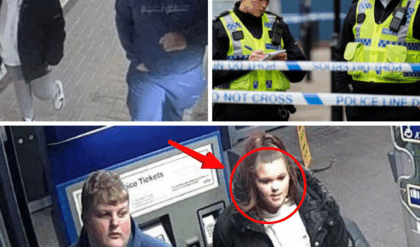
Chaos erupted in seconds. Yassin staggered, collapsing against a lamppost as blood pooled beneath him, his phone clattering to the pavement mid-dial to his mum. Bystanders surged forward—a nurse off-shift applying pressure to the wounds, a cabbie blocking traffic with his vehicle—while the assailants fled on foot, vanishing into the warren of backstreets toward Grove Lane. West Midlands Police arrived within four minutes, their blue lights fracturing the twilight, but the damage was irreparable. Pronounced dead at 6:45 p.m., Yassin’s final moments were captured in fragmented CCTV from a nearby minimart: his eyes wide with disbelief, mouthing “Help” as life ebbed away. The scene, cordoned with fluttering tape, became a macabre tableau—a blue forensic tent erected beside the bus stop, chalk outlines fading under November drizzle, and the acrid scent of blood mingling with exhaust fumes.
The manhunt that followed was swift and unrelenting, a testament to a force wearied by Birmingham’s grim tally—over 40 knife-related incidents in the West Midlands that year alone. Detectives from the Homicide Unit, led by DCI Jenny Birch, pieced together a suspect profile from the grainy footage: a 17-year-old local, Oumar Traore, whose lanky frame and distinctive limp—from a childhood football injury—matched the fleeing figure. Traore, a Handsworth native of Malian descent raised in a single-parent household on Hamstead Road, had a dossier thick with priors: truancy from King Edward VI Handsworth School, a caution for possession of an offensive weapon in 2023, and whispers of affiliation with the “Soho Lads,” a loose crew of teens peddling petty theft and postcode pride. Neighbors painted him as volatile—a boy who once hurled a brick through a rival’s window over a Snapchat diss, his feed littered with drill rap lyrics glorifying “mandem” loyalty and street retribution. “Oumar’s got anger like a lit fuse,” confided an anonymous youth worker from the local community center. “Lost his dad young, mum working doubles—it’s the system chewing them up.”
By November 17, Traore’s face plastered every billboard and bus shelter: “Wanted for Questioning—Murder Investigation,” with a £10,000 reward dangling like bait. Tips flooded the hotline—sightings at New Street Station, a dodgy flat in Aston—culminating in a dawn raid on November 23 at a terraced house in Erdington. SWAT teams, shields raised, breached the door to find Traore huddled in a cupboard, clad in the same grey hoodie, a bloodied Rambo knife tucked in his waistband. An 18-year-old accomplice, bailed on suspicion of aiding his flight, was a schoolmate who’d allegedly stashed clothes and cash. On November 25, at Birmingham Magistrates’ Court, Traore—pallid and shackled, eyes downcast—faced charges of murder and possession of a bladed article. “No comment,” he muttered through a court-appointed solicitor, remanded in youth custody until a plea hearing in January. The courtroom, packed with reporters and Yassin’s tearful kin, thrummed with tension; outside, scuffles erupted as protesters clashed with police over “knife crime killers walk free.”
Yassin’s family, shattered pillars of quiet fortitude, became the human core of the tragedy. Fatima Alama, her hijab askew in grief, collapsed at the mortuary identification, wailing in Arabic as officers held her upright. “My son—my engineer, my light—he was coming home for iftar,” she sobbed to a gaggle of TV crews, her voice a raw keening that pierced the November chill. Omar, hollow-eyed behind the wheel of his black cab, ferried empty seats that week, radio tuned to silence. Siblings—13-year-old Amina, who shared Yassin’s love of anime, and 16-year-old Khalid, already apprenticed as a plumber—clung to memories: family barbecues in Handsworth Park, Yassin’s laughter booming over Arsenal matches. A makeshift shrine bloomed on Hutton Road by November 18: bouquets of lilies wilting in the rain, teddies clutching notes—”Rest easy, bro. You were the realest”—and a mechanic’s wrench laid like a talisman. Vigils swelled, from the Islamic Centre’s midnight prayers to a multidenominational march on November 22, where hundreds linked arms under banners reading “End Knife Culture—For Yassin.”
The ripple effects cascaded through Handsworth like aftershocks. Schools locked down for knife sweeps, youth clubs like the Yasin Project—ironically named after the Prophet’s companion—saw enrollment spike with workshops on conflict resolution. Community leaders, from Sikh gurdwara elders to Somali elders, convened emergency forums, decrying the “zombie knife” epidemic fueled by online sales and gangsta rap aesthetics. “These boys aren’t born monsters,” thundered Pastor Elena Grant at a candlelit rally. “They’re products of cuts—budget slashes to youth services, absent dads, dreams deferred.” Statistics bore grim witness: West Midlands Police reported a 15% uptick in youth stabbings that year, Birmingham’s A&E wards treating 200 blade victims under 25. Politicians piled on—Home Secretary Yvette Cooper pledging £50 million for “knife surrender bins,” while local MP Khalid Mahmood toured the site, vowing “no stone unturned.”
Traore’s charge, while a victory for justice, unearthed deeper fissures. Court whispers hinted at a backstory laced with beef: a disputed drug debt from a summer party, or a slight over a girl’s affections—Aisha’s name surfaced in early probes, though cleared. His mother, Mariam Traore, a cleaner at Heartlands Hospital, issued a trembling plea from her doorstep: “Oumar’s troubled, but he’s no killer. Pray for us all.” As he awaits trial in the towering edifice of Coventry Crown Court, the case spotlights systemic failures: underfunded CAMHS services turning away at-risk teens, social media algorithms amplifying threats. Jamal Hassan, Yassin’s friend, channeled rage into action, launching a GoFundMe for a “Yassin Alama Scholarship” at Handsworth College—£75,000 raised in days for vocational tools. “He fixed cars to fix lives,” Jamal posted. “Now we’ll fix this broken system.”
In the quiet aftermath, as Hutton Road’s tape comes down and the bloodstains fade under rain, Handsworth exhales uneasily. Yassin Alama’s death—a single blade’s arc in the gathering dusk—mirrors a national lament, where youth slips through cracks into coffins. Yet, amid the sorrow, flickers of defiance: Aisha, clutching Yassin’s jacket at the vigil, vows to finish his welding course; the Alamas, fortified by faith, host open-door iftars for Traore’s kin. On November 26, as frost rims the bus stop, a new mural blooms on the corner shop wall—Yassin’s silhouette wrench in hand, captioned “Tools Over Blades.” It’s a fragile hope, etched in spray paint, against the encroaching night. For in Handsworth’s unyielding heart, where stabbings scar but don’t silence, Yassin’s story isn’t just elegy—it’s indictment, urging a city to wrench free from violence’s grip before the next evening claims another son.