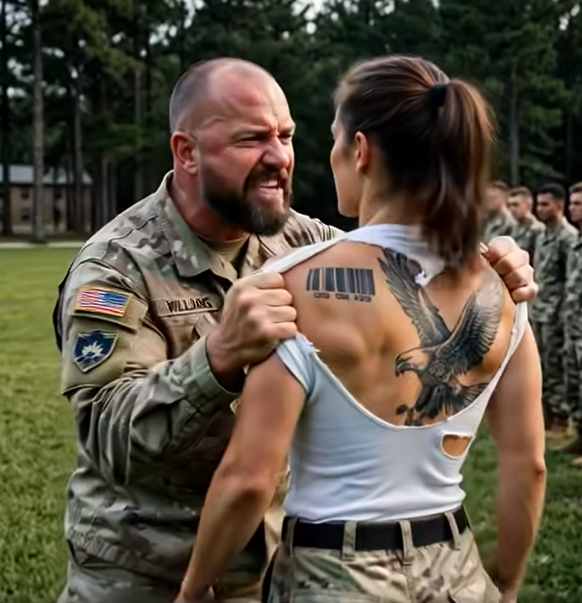
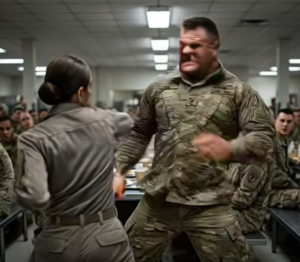
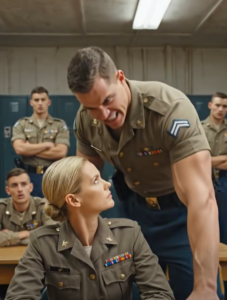
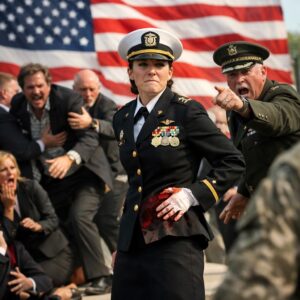
“WHO DO YOU THINK YOU ARE?” They Attacked Her on the Training Field — Then Learned She Was the SEAL Evaluator
The fog at Grey Point didn’t roll in like weather. It hung low and still, like it had been told to stay put and knew better than to argue.
At 0530 the base looked erased—obstacle towers reduced to faint silhouettes, the rappel wall swallowed by gray, the mock convoy lane nothing but cones in a soft white void. Sodium lights buzzed above the parade deck, turning everything the color of tired steel.
Lieutenant Commander Isla Keaton stepped down from an unmarked van with a regulation sling bag and a matte binder. No escorts. No welcoming party. Just the hiss of the sliding door and the wet scent of salt air.
She wore tan working fatigues with nothing flashy. No ribbons. No patch that would invite questions. Her name tape read KEATON, but the second line—where a unit normally sat—was plain: COMMAND OVERSIGHT.
That was the entire disguise, and it was enough. At places like Grey Point, people saw what they expected to see.
The quartermaster at the gear cage didn’t look up from his clipboard when she approached.
“Assignment sheet says you’re here for process evaluation,” he muttered. “Didn’t mention rank that high.”
“I’m sure it didn’t,” Isla said, voice soft, no edge. “Who’s lead instructor on the assault field?”
The quartermaster jerked his chin toward the far side of the compound. “Behind the lockers. Sergeant Brener. Third phase.”
She nodded once and walked off.
Boots made almost no sound on wet concrete, and that was intentional. Isla had learned long ago that loud entrances were for people who needed to be seen. She wasn’t there to be seen. She was there to measure what people did when they thought nobody important was watching.
Two instructors leaned on a rusted rail over the sand pit, coffee steaming in their hands. As Isla passed beneath them, one nudged the other.
“That her?” the first muttered.
“Yep,” the second said. “They sent a commander for clipboard work. Budget must be hurting.”
The first snorted. “Or they’re bored at the Pentagon and needed to remind us they exist.”
Isla didn’t look up. She kept moving, eyes taking in details the way a diver takes in currents: quietly, constantly.
On the far field, recruits fumbled through a gear check line. Straps hung loose. One sling twisted tight enough to choke a shoulder. A hydration bladder dangled with the clip undone. Isla watched the line for ten seconds—long enough to see the pattern, short enough to remain background.
An instructor barked louder than necessary and corrected three obvious mistakes in rapid succession. The instructor glanced Isla’s way once, as if suddenly remembering someone was present.
Isla didn’t write anything down. Not yet.
When she reached the locker corridor, the fog thickened behind her, sealing the field away like a stage curtain. The corridor smelled of bleach, boot polish, and old sweat trapped in concrete.
A door creaked.
A voice called out from inside, rough and amused. “You the new overseer? Paper pusher from up top?”
Isla turned her head slowly. A man stood in the doorway with a square jaw and mirrored shades even indoors, like he was trying to glare through walls. Velcro on his chest read BRENER. A tab beneath it: THIRD PHASE LEAD.
“Something like that,” Isla replied.
Brener’s grin didn’t reach his eyes. “You ever been through this course yourself, Commander?”
A trap wrapped in a question. Loud enough that two nearby recruits paused, pretending not to listen.
Isla let the silence sit for a beat, just long enough for Brener’s confidence to lean forward into it.
“Every obstacle on this field was built from a real mission profile,” she said calmly. “I’d advise you not to test what you haven’t read.”
For a brief moment, the corridor felt colder.
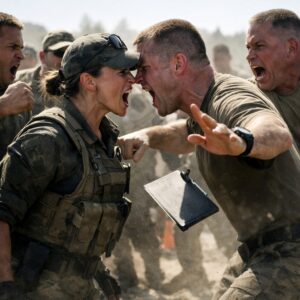
Brener’s grin tightened, the corners pulling like wire. He stepped fully into the corridor, blocking the doorway, shoulders squared. The two recruits behind him exchanged glances, suddenly very interested in their boot laces.
“Read?” Brener echoed, voice dropping into the low, mocking register men use when they think size gives them the last word. “Ma’am, I’ve run this course for six cycles. I know every choke point, every blind spot, every place a body can hide. You? You look like you read about it in a PowerPoint.”
He took one deliberate step forward. Not aggressive enough to be called assault—yet—but close enough to crowd her space, to force her to look up.
“You gonna stand there with your clipboard and tell me how to train men who actually bleed for this country?”
Isla didn’t step back.
She didn’t step forward either.
She simply tilted her head, just enough that the sodium light caught the faint scar running along her left temple—thin, surgical, old.
“Every choke point,” she repeated softly. “Every blind spot.”
Brener’s eyes narrowed. “That’s right.”
“Then you should know the one directly behind you.”
Brener blinked.
The corridor was narrow. Lockers on both sides. A single exit at the far end. No blind spots.
Except there was one.
A recessed maintenance hatch, half-hidden by a stack of old rucks. The kind of place nobody noticed unless they were looking for it.
Isla had noticed it the moment she walked in.
Brener followed her gaze. His smirk faltered.
“You think you’re clever,” he said, but the confidence had a hairline crack now.
Isla reached into her sling bag.
Brener tensed.
She pulled out nothing more threatening than a thin black folder. No weapon. Just paper.
She opened it. One page. Single sheet of letterhead from the Office of the Chief of Naval Operations.
She held it up so he could read the header without stepping closer.
SPECIAL ACCESS REQUIRED EVALUATION DIRECTIVE – GREY POINT TRAINING FACILITY SUBJECT: Integrity of Third Phase Instruction EVALUATOR: LCDR Lena Keaton, USN (SEAL) Authority: CNO Immediate Directive 26-001
Brener’s eyes flicked to the signature block.
Admiral.
Not just any admiral.
The current Commander, Naval Special Warfare Command.
The man who signed every SEAL officer’s career trajectory.
Brener’s throat worked once.
Isla closed the folder with a soft snap.
“You asked if I’d been through this course,” she said quietly. “I wrote half the curriculum you’re teaching. I ran the first validation class in 2018. I was the one who made sure the rappel wall was raised two meters after the first fatality risk assessment.”
Silence swallowed the corridor.
The recruits were no longer pretending not to listen. They were statues.
Brener tried one last push. “This doesn’t change—”
“It changes everything,” Isla cut in, voice still calm, still level. “Because right now, you have two choices. One: you walk out of this corridor, gather your platoon, and tell them the evaluation starts now. Real evaluation. No shortcuts. No intimidation. No ‘secondary screening’ bullshit. Or two: you keep talking, and I call the duty JAG from this phone”—she tapped her pocket—”and we turn this into an Article 32 hearing before lunch.”
Brener stared at her.
The bravado was gone. What remained was calculation. Survival math.
He chose survival.
He stepped aside.
Isla walked past him without a glance.
She paused at the doorway.
“Brener.”
He stiffened.
“Next time you see someone walk in with a clipboard and no visible rank,” she said, “ask yourself why they didn’t feel the need to announce it.”
She left.
Behind her, Brener stood motionless for a long ten-count.
Then he turned to the recruits.
“Formation. Now.”
The rest of the day passed like clockwork.
Isla observed every phase. She timed runs. She checked gear. She asked quiet questions. She took notes. She never raised her voice. She never needed to.
By evening chow, word had spread through the base like wildfire.
The quiet woman with the binder wasn’t a paper-pusher.
She was the evaluator.
She was the one who decided whether instructors kept their jobs, whether platoons graduated, whether careers lived or died.
And she had just walked into the snake pit wearing no armor except her own certainty.
That night, in the small transient quarters they gave her, Isla sat on the edge of the cot and looked at the single photograph she carried: her team, three deployments ago. Five faces. Three still alive.
She touched the frame once.
Then she put it away.
Tomorrow she would finish the evaluation.
She would file the report.
She would recommend what needed to be recommended.
And somewhere in the chain of command, someone would read it and quietly reassign Brener to a desk far from any training field.
Not because she hated him.
Because the job demanded better.
Because the men and women who came after deserved instructors who understood one simple truth:
The greatest danger on any training field isn’t the obstacle.
It’s the instructor who forgets what the obstacles are supposed to teach.
Isla Keaton never forgot.
And because she didn’t, no one else would either.
Not after today.
The fog at Grey Point rolled out with the dawn.
It took the old rules with it.
And left something cleaner behind.
News
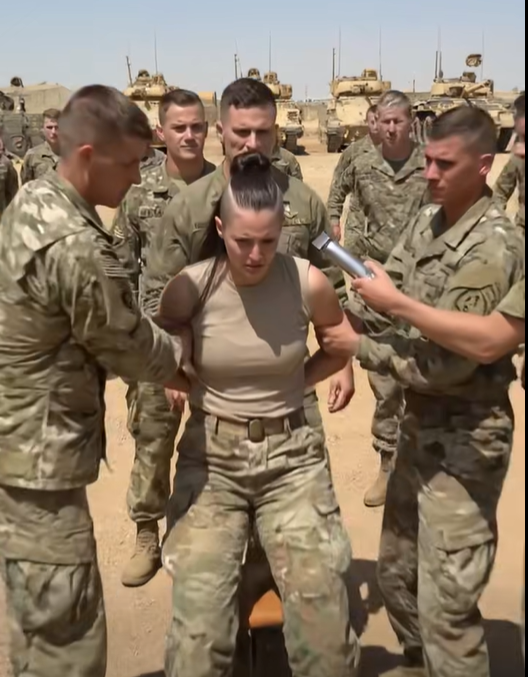
“Shave Her Head,” the Sergeant Ordered Coldly. “If Discipline Won’t Break Her, Maybe Humiliation Will.” But What They Didn’t Know Was That the Woman They Underestimated Would Bring Their Entire Base to Its Knees.
General Alexander Vance had heard the whispers for months: Fort Blackwood was rotting from within. Soldiers spoke in hushed tones of systematic humiliation disguised as “discipline,” falsified training records, missing supply funds that somehow vanished into private accounts, and a toxic command climate built on fear and intimidation. Every official inspection came back sparkling clean […]
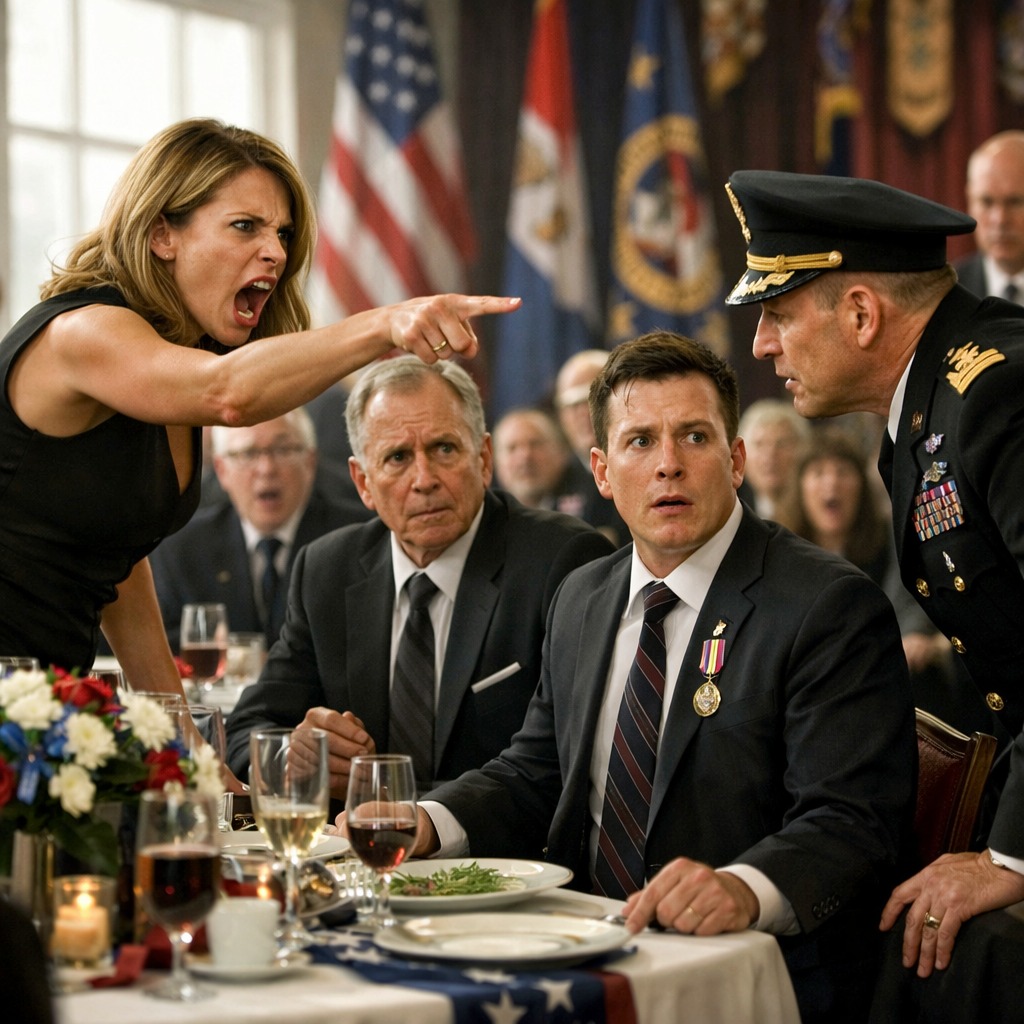
At A Veterans’ Dinner, The Colonel Leaned Toward My Brother And Asked One Simple Question: “Can You Tell Me How You Earned This Decoration, Son?” His Face Turned White. He Pointed At My Father And Said: “He Told Me It Belonged To Our Uncle.” The Uncle Never Existed.
The Ridgewood Armory smelled like every other veterans’ event I’d ever attended: floor wax, overcooked chicken, old coffee, and the faint metallic tang of too many American flags. Fluorescent lights buzzed overhead, casting a harsh glow on rows of folding tables and men in ill-fitting blazers trying to look like they still belonged in uniform. […]
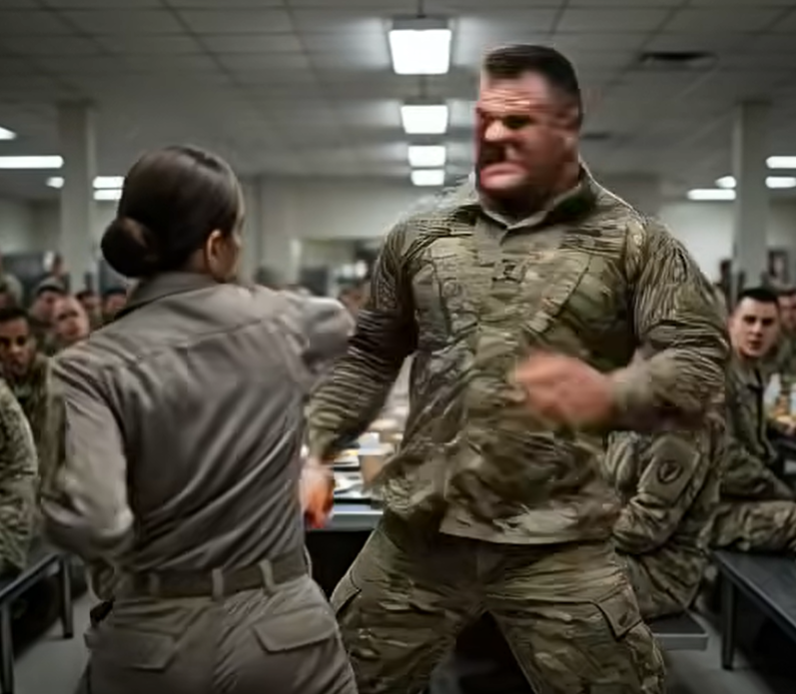
“Die, B*tch,” He Spat, Swinging a Massive Fist in the Mess Hall. He Thought I Was an Easy Target — He Had No Idea He Just Attacked a Classified SEAL Shadow Operative.
I was running on fumes. Seventy-two hours of off-the-books reconnaissance in the frozen Alaskan wilderness had left every muscle screaming. My joints ached from crawling through ice-crusted snow, my eyes burned from staring through night-vision gear, and the only thing keeping me upright was the promise of a hot meal and twelve hours of blackout […]
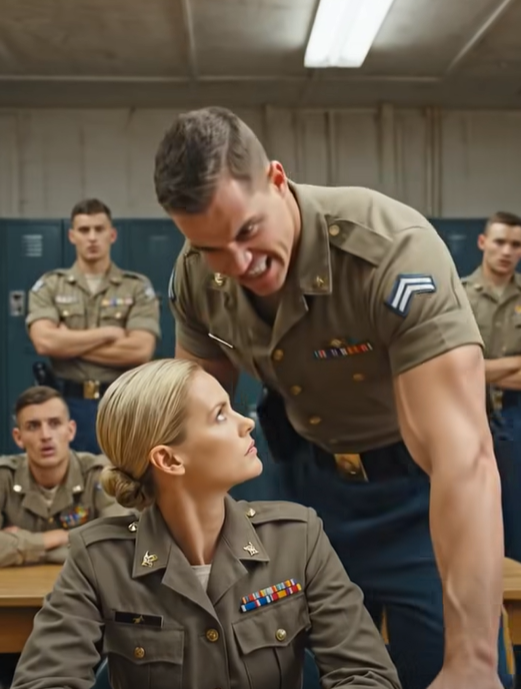
“Do You Know Who I Am?” He Pushed Her — Seconds Later, One ID Card Ended His Career
The dim lights of Rusty’s Bar flickered like dying stars just outside Camp Pendleton. It was a Friday night, the kind where Marines came to forget the sand and the screams they carried home from deployment. I had come here for the opposite reason — to disappear. My name is Commander Thalia Renwick. Highly decorated […]
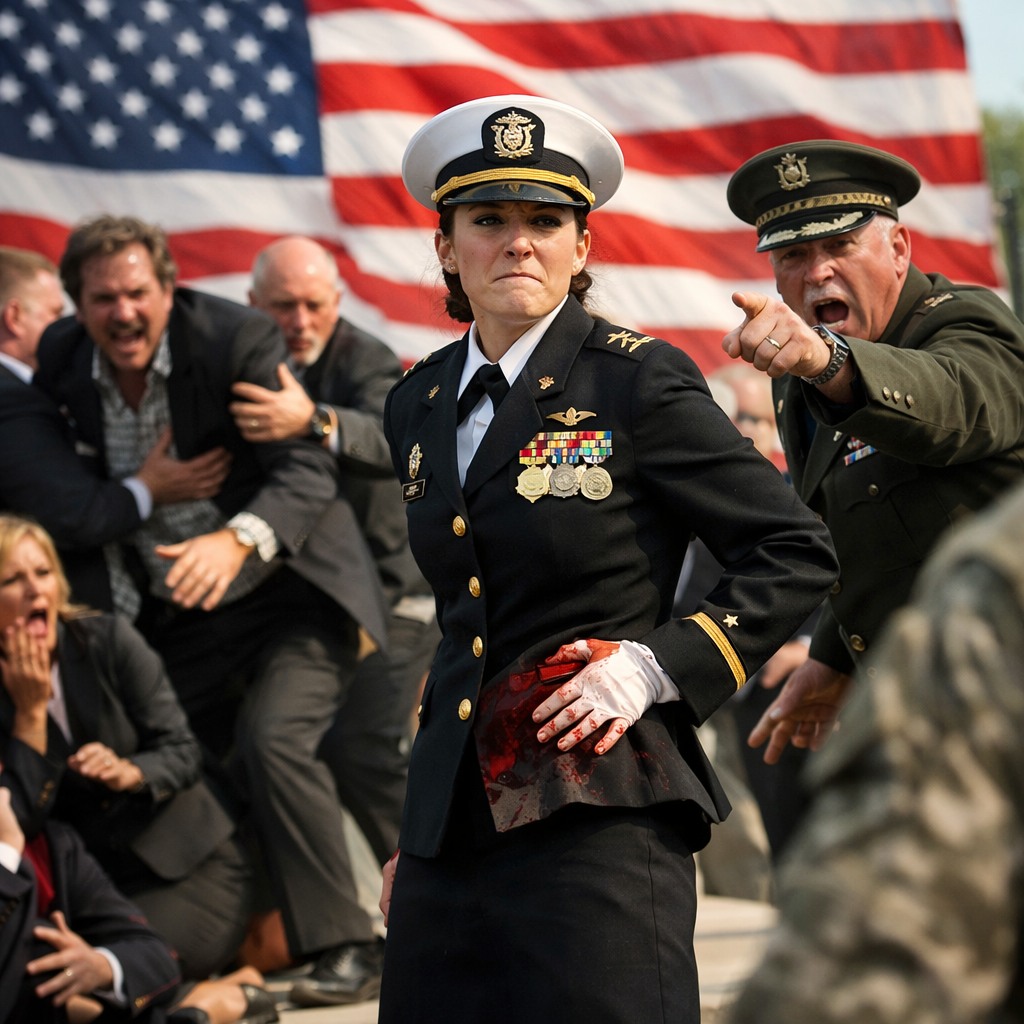
15 Years After My Dad Kicked Me Out, I Saw Him At My Sister’s Wedding. He Sneered: “If It Wasn’t For Pity, No One Would’ve Invited You.” I Just Smiled And Sipped My Wine. Then The Bride Took The Mic And Changed Everything.
The South Carolina sun was merciless that June afternoon, turning the outdoor wedding venue into a glittering oven. I stood near the back in my crisp Army dress uniform, the brass buttons and medals catching the light with every breath. At 34 years old, I had come home for my little sister’s wedding — the […]
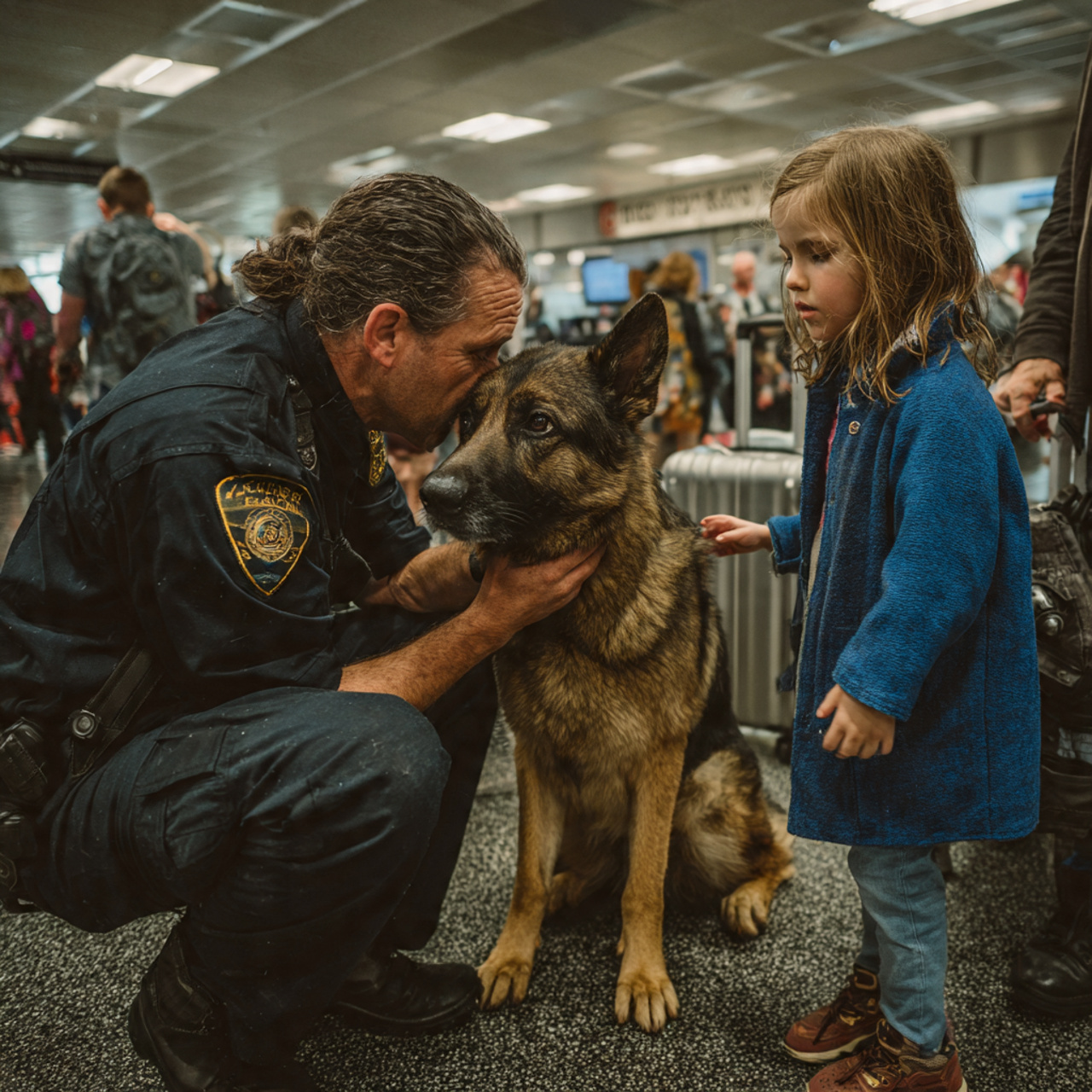
“A POLICE DOG FROZE IN THE AIRPORT. THEN A LITTLE GIRL TAPPED HIS HEAD. WHAT HAPPENED NEXT MADE EVERY TRAVELER STOP. HAVE YOU EVER WITNESSED A SILENT CRY FOR HELP?
The bustling international airport was a whirlwind of rolling suitcases, hurried announcements, and weary travelers rushing to their gates. Officer Liam Mercer patrolled the terminal with his loyal K9 partner, Rex — a highly trained German Shepherd known for his sharp instincts in detection and child safety operations. Everything seemed routine until Rex suddenly froze […]
End of content
No more pages to load