In the quiet suburbs of Titusville, Florida, where palm trees sway like metronomes against the relentless Florida sun, the month of November has always carried a special rhythm for the Kepner family. Turkeys roasted to golden perfection, tables groaning under the weight of cranberry sauces and pumpkin pies, and the chaotic symphony of children darting between laughter and minor squabbles—these were the hallmarks of their Thanksgiving traditions. But this year, as the calendar flips to November 27, 2025, the air in their modest home feels heavier, laced with an undercurrent of absence that no amount of festive decor can fully dispel. Three weeks after 18-year-old Anna Kepner was found lifeless in a cramped cabin aboard the Carnival Horizon, her father, Christopher Kepner, is navigating the uncharted waters of grief while clinging to a simple, defiant truth: “Anna is still with us.” In an exclusive conversation that peels back the layers of a family’s fractured holiday, Christopher reveals how they plan to honor their “Anna Banana”—not with mournful silence, but with the vibrant rituals she loved, even as the specter of unanswered questions looms large.
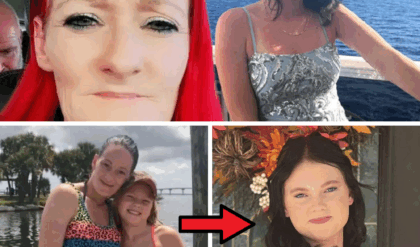
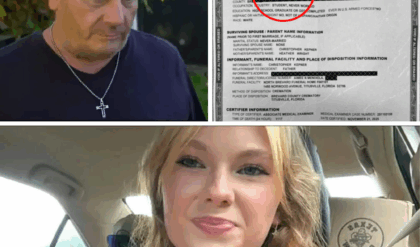
Anna Marie Kepner was the spark that ignited any room she entered, a senior at Temple Christian School whose cheerleading routines weren’t just athletic feats but bursts of unbridled energy that could rally a stadium or soothe a sibling’s scraped knee. At 18, with her braces flashing in perpetual smiles and her sights set on enlisting in the U.S. Navy after graduation, Anna embodied the kind of youthful optimism that makes adults nostalgic for their own lost invincibility. “She was pure energy: bubbly, funny, outgoing,” her obituary would later read, capturing the girl who earned the nickname “Anna Banana” for her sweet, irrepressible charm. Born to Christopher and his first wife, Heather Wright, Anna’s early years were marked by the dissolution of that union when she was just four, sending Heather back to Oklahoma and leaving Christopher to raise her amid the complexities of single parenthood. But Christopher, a 41-year-old steady hand in the shipyards of Florida’s Space Coast, rebuilt with resilience. He remarried Shauntel Hudson in December 2024, weaving Anna into a blended tapestry of seven—two biological siblings, three stepsiblings, and the easy affections that blurred the lines between “step” and “real.”

The Kepner-Hudson household buzzed with the organized chaos of family life: school runs, backyard barbecues, and impromptu dance parties in the living room where Anna’s playlists reigned supreme. Holidays were sacrosanct, democratic affairs where the kids held veto power over the menu. “We’ve always done it different,” Christopher explains, his voice steady but threaded with the gravel of sleepless nights. “If the kids like a certain thing, we cooked it. No stuffy traditions—just what makes everyone happy.” For Anna, that meant cornbread casserole, a buttery, crumbly delight she’d devour with the fervor of someone plotting her next adventure. It was this flexibility, this child-led whimsy, that defined their Thanksgivings past: one year, pizza supplanted turkey; another, a beach picnic replaced the dining room feast. Anna, ever the ringleader, would text “Love you, Mom” to Heather on those Oklahoma evenings, bridging the 1,000-mile gap with pixels and promises of future visits.
But the dream of unbroken family time shattered on November 6, 2025, when the Carnival Horizon slipped its Miami moorings, carrying the Kepners on a seven-day Caribbean odyssey meant to stitch their bonds even tighter. Christopher had planned it meticulously—a floating reunion for grandparents Jeffrey and Barbara Kepner, Shauntel, the kids, and Anna, who at 18 was old enough to savor the irony of a high schooler on spring break vibes. Three staterooms sufficed for the nine souls: cozy quarters where elders bunked with pull-out sofas and teens claimed the thrill of independence. Anna, battling a touch of seasickness that turned her stomach but not her spirit, shared Cabin 7424 with her 16-year-old stepbrother—a lanky, quiet boy from Shauntel’s previous marriage whom the family insisted was “just like a brother.” “No such thing as steps,” Barbara would later affirm, her words a bulwark against the hindsight that now questions every choice. The evening of November 6 unfolded like a postcard: family dinner in the ship’s bustling dining hall, Anna in a sundress despite her queasiness, flashing that trademark grin as she bid her grandparents goodnight. “Meemaw, I love you guys. I’ll see you later,” she said, words that now echo like a farewell.
By 11:17 a.m. the next day, paradise had curdled into nightmare. A housekeeper, following routine protocol, discovered Anna’s body crammed beneath the bedframe—bundled in a blanket, concealed under a haphazard stack of orange life vests that screamed of deliberate hiding. The scene was as claustrophobic as it was confounding: no signs of struggle visible to the untrained eye, but bruises blooming like dark accusations on her neck, whispers of a “bar hold”—an arm barred across the throat, compressing life into stillness. The ship’s security swarmed, the FBI boarded upon docking in PortMiami on November 8, and the medical examiner’s report, released days later, delivered its verdict: mechanical asphyxiation, a homicide inflicted by another. Toxicology cleared drugs or alcohol, but the staging suggested panic, cover-up, a desperate bid to erase what had transpired in those isolated hours. Surveillance footage, swipe-card logs, and cellphone pings painted a solitary picture: the stepbrother, darting in and out like a ghost, the last to see Anna breathing, the first to face the interrogators’ glare.
The investigation’s ripples have torn at the family’s seams. Court filings in Shauntel’s ongoing divorce from the boy’s biological father, Thomas Hudson, thrust the 16-year-old into the spotlight as “T.H.,” a suspect potentially facing charges. “An extremely sensitive and severe circumstance,” Shauntel’s petition pleaded, invoking the Fifth to shield her testimony. Christopher, subpoenaed to appear in Brevard County court on December 5, treads a razor’s edge—loyal to his wife, devoted to the memory of his daughter, and haunted by the what-ifs. “I cannot say that he is responsible,” he confides, his tone measured, “but I can’t decline it.” The boy, now residing with a relative for the safety of his younger sister, has clammed up in interviews, claiming amnesia that frays nerves and fuels speculation. Heather Wright, Anna’s biological mother, learned of the death via Google alert, her texts to Christopher vanishing into the void. From Oklahoma, she wages her own war of words: “Why was she sharing a room with him?” Her grief, raw and public, clashes with the Kepners’ more private mourning, a maternal fury that underscores the custody battles long predating the cruise.
Yet amid the legal tempests and media maelstrom, Christopher turns to Thanksgiving as an anchor. With the holiday just days away, the family of six—minus Anna’s irreplaceable light—gathers not in defeat, but in deliberate defiance. “We’re going to celebrate a little different this year,” he shares, eyes misting at the thought. The cornbread casserole will take center stage, a steaming tribute to Anna’s favorites, flanked by whatever the remaining kids crave: perhaps turkey sliders for the little ones, or a dessert bar piled with her beloved fries-and-ranch combo, a quirky ritual she championed. No black attire, no somber toasts—echoing the “celebration of life” on November 20 at The Grove Church, where hundreds donned blues and brights, balloons festooning Anna’s parked car like defiant blooms. Classmates shared stories of her pyramid-top poise, her off-key karaoke anthems; eulogies painted her not as victim, but as the “mighty” force who dreamed of K9 units and naval blues. “Remember Anna with laughter, color, sunshine, and love,” the program urged, “because that’s exactly how she lived her life.”
This Thanksgiving blueprint is no rote exercise; it’s a radical act of presence. Christopher envisions the table set for seven—an empty chair not as void, but as vessel. “Anna is still with us,” he insists, invoking the faith that baptized her just months prior. Perhaps they’ll stream a Navy recruitment video, toasting her unfulfilled ambitions, or pore over photo albums where her braces-glinting selfies capture mid-laugh mischief. The grandparents, Jeffrey and Barbara, will join, their own hearts scarred by the cabin breach: Jeffrey’s “I went blank” still replaying in nightmares. Shauntel, navigating divorce crossfire, will cook alongside, her strength a quiet bulwark. The younger siblings—biological and step—will navigate the awkwardness of adolescence amplified by tragedy, their games subdued but their hugs tighter. “We’ve lost two children in a way,” Barbara reflected earlier, lumping the stepbrother’s exile with Anna’s absence, a poignant nod to the collateral wounds of suspicion.
Broader than one table’s tableau, Anna’s story unmasks the fragility of blended families in confined crucibles like cruise ships. The Horizon, that 133,500-ton leviathan of leisure, ferries thousands weekly past Cozumel’s reefs and Grand Cayman’s sands, its decks a microcosm of domestic dynamics under duress. Experts in maritime forensics decry the lack of onboard counselors or forensic kits, arguing that floating fortresses amplify whispers into roars—teen tensions, parental oversights, the blur of sibling lines in shared bunks. Carnival’s response? A boilerplate vow of cooperation, the ship sailing on sans fanfare, oblivious vacationers toasting piña coladas where Anna once walked. The FBI’s Miami field office, guardians of international-waters justice, sifts evidence in silence: no arrests, no timelines released, leaving Titusville’s community in a churn of candlelight vigils and online sleuthing.
For Christopher, Thanksgiving becomes a bridge to tomorrow. “It won’t bring her back,” he admits, echoing the universal ache of parents robbed too soon, “but it’ll keep her close.” As the family circles their modified feast—cornbread steaming, chairs pulled in, stories swapped like heirlooms—they reclaim agency from the abyss. Anna, the girl who boated before she drove, who sent “I love yous” like confetti, lives in those acts: a laugh mid-meal, a blue napkin folded just so, the ranch-dipped fry passed in her honor. In Titusville’s twilight, where rocket trails streak the sky—a nod to the Space Coast’s starry ambitions—the Kepners gather not unbroken, but unbowed. Justice may crawl through courtrooms and interviews, but gratitude? That arrives on time, casserole in hand, whispering that even in shadows, light persists. Anna is still with us, indeed— in the feast, in the fight, in the forever of family.