As the first flakes of 2026 dust the peaks of the Swiss Alps, Hollywood’s most anticipated production will stir to life, cameras rolling on a project that feels less like a film and more like a fever dream whispered in the dead of winter. Martin Scorsese’s What Happens at Night, announced in September 2025 to a frenzy of Oscar whispers and fan theories, officially greenlights principal photography on January 15, transforming the remote village of Gstaad into a labyrinth of frostbitten secrets. Starring the indomitable Leonardo DiCaprio and the razor-sharp Jennifer Lawrence as a desperate American couple chasing the ghost of family in a forsaken European hamlet, this adaptation of Peter Cameron’s 2022 novel promises to be Scorsese’s most unnerving detour yet—a psychological ghost story where adoption papers hide horrors, hotel corridors echo with unspoken sins, and the line between salvation and damnation blurs under perpetual twilight. With Apple Original Films and Studiocanal footing the $120 million bill, and screenwriter Patrick Marber (Closer, Notes on a Scandal) weaving the spell, What Happens at Night isn’t just Scorsese’s next chapter; it’s a seismic collision of titans, poised to redefine the haunted house thriller for an age haunted by its own regrets.
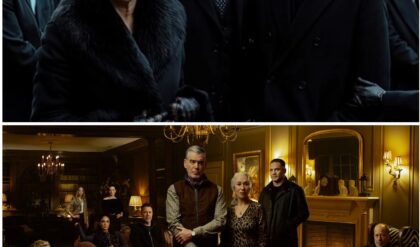
For the uninitiated—or those still thawing from Scorsese’s epic Killers of the Flower Moon—the story unfurls like a Grimm fairy tale laced with arsenic. DiCaprio and Lawrence embody Harlan and Maggie Bell, a Manhattan couple whose marriage has thawed into cordial estrangement after years of infertility’s quiet siege. Desperate for a child, they jet across the Atlantic to a nameless, snow-choked town nestled in the Carpathians, where a shadowy orphanage dangles the promise of a baby boy with eyes like polished obsidian. Their arrival at the Hotel Majestic—a crumbling grande dame of faded opulence, its chandeliers dripping like icicles—should be a beacon of hope. Instead, it’s the unraveling’s prelude. The lobby teems with eccentrics: a spectral chanteuse crooning torch songs in a voice that curdles milk, a portly businessman peddling “miracles” from a valise of curios, and a gaunt faith healer whose palms bear stigmata that weep not blood, but ink-black secrets. As the Bells navigate adoption bureaucracy tangled in archaic rites and midnight meetings, the hotel’s walls seem to breathe—doors creak to rooms that shouldn’t exist, mirrors reflect faces that aren’t theirs, and the infant’s cradle sways empty in the nursery wing, lulling them toward revelations that shatter the soul.

Cameron’s novel, a slim volume of exquisite unease published by FSG Originals, masterfully blends domestic fragility with supernatural dread, earning raves as “a modern Turn of the Screw with the emotional gut-punch of The Road.” Marber’s script, honed over 18 months of revisions, amplifies the intimacy: Harlan’s buttoned-up grief (DiCaprio’s wheelhouse of repressed torment) clashes with Maggie’s defiant vulnerability (Lawrence’s specialty, raw and radiant), their marital fissures widening under the weight of what the orphanage demands—not just signatures, but confessions. Whispers from the X ecosystem, where #WhatHappensAtNight trended post-announcement with over 500,000 impressions, speculate on the ghosts: Are they literal specters of lost children, or manifestations of the Bells’ buried traumas? One viral thread posits the hotel as a purgatory for the infertile, its guests proxies for Harlan and Maggie’s unspoken abortions and affairs. Scorsese, ever the alchemist of moral ambiguity, has teased in a rare Variety sit-down that the film explores “the terror of what we summon when we beg for second chances,” echoing the existential chills of Shutter Island but stripped to a chamber-piece intimacy.
The casting coup elevates this from intriguing indie to awards juggernaut. DiCaprio, Scorsese’s on-screen alter ego across six films from Gangs of New York to The Departed, slips back into the fray as Harlan with the ease of a favorite coat. At 51, post his transformative turn in Paul Thomas Anderson’s One Battle After Another (streaming on Max since October 2025), Leo’s known for plumbing depths—think the unraveling tycoon in The Aviator or the feral survivor in The Revenant. Here, Harlan demands that same coiled intensity: a man of precise ledgers and lingering hugs, whose pursuit of fatherhood unearths a rage as cold as the alpine gales. Insiders from Appian Way, DiCaprio’s banner co-producing alongside Scorsese’s Sikelia, gush about table reads where Leo’s improvisations “turned Harlan’s silences into symphonies of sorrow,” his voice dropping to a gravelly timbre that recalls Inception‘s brooding architect. Off-screen, DiCaprio’s method rigor shines: he’s reportedly decamped to a Zurich chalet for vocal coaching in clipped Midwestern inflections, immersing in adoption memoirs to capture the quiet hysteria of hope deferred.
Lawrence, 35 and fresh from Cannes’ thunderous reception for Die, My Love (Scorsese-produced, Lynne Ramsay-helmed, hitting U.S. theaters December 18), brings lightning to Maggie’s fragility. Her Oscar haul—from Silver Linings Playbook‘s manic pixie reinvention to Winter’s Bone‘s feral grit—positions her perfectly for a role that’s equal parts warrior and wraith. Maggie isn’t the screaming hysteric; she’s the architect of their odyssey, her optimism a shield cracking under the hotel’s malevolent whimsy. Lawrence’s chemistry with DiCaprio, tested in 2021’s satirical Don’t Look Up, crackles with lived-in tension—banter that bites, glances that grieve. In a Deadline profile, she described the script as “a love letter to the ache of wanting what you can’t have,” hinting at personal resonances from her own fertility journey shared in a 2023 Vanity Fair confessional. Their pairing isn’t mere star power; it’s a reunion primed for sparks, with early buzz pegging dual acting nods come 2027.
Scorsese, 83 and unyielding, helms this as his 27th feature, a pivot from the sprawling canvases of The Irishman and Killers toward something more hermetic, akin to After Hours‘ nocturnal paranoia but swathed in Gothic frost. Post-Flower Moon‘s 10 Oscar nods (and one win for Lily Gladstone), Marty weighed biopics like Evel Knievel before Cameron’s tale hooked him—”a ghost story that’s really about the ghosts we carry,” he told The Hollywood Reporter. Pre-production, ramped since September, unfolds in London’s Pinewood Studios for interiors, with exteriors lensing in Switzerland’s Engadin Valley—Gstaad’s funiculars and frozen lakes doubling as the town’s eerie isolation. Cinematographer Rodrigo Prieto (The Irishman, Barbie) returns, promising a palette of bruised purples and glacial blues, long takes prowling the Majestic’s labyrinth like The Shining‘s Overlook on steroids. The score? Whispers point to a collaboration between Trent Reznor and Atticus Ross, their industrial hauntings from Mank evolving into a choral dirge laced with Alpine folk motifs—think monkish chants warping into white noise.
Production logistics hum with Scorsese’s trademark precision. Budgeted at $120 million (Apple’s deep pockets covering 70%), the 65-day shoot prioritizes practical chills: fog machines for perpetual blizzards, practical sets with hidden compartments for “impossible” reveals, and a no-CGI mandate for the orphanage’s subterranean rites. Casting calls from Backstage seek “ethereal Eastern Europeans” for the hotel’s denizens—a Polish soprano for the chanteuse, a Hungarian contortionist for the healer’s acolyte—ensuring authenticity amid the otherworldliness. Emma Tillinger Koskoff (The Wolf of Wall Street) produces, wrangling a crew of 250 that includes dialect coaches for the Bells’ transatlantic twang and child wranglers for the infant (played by triplets to skirt labor laws). Challenges loom: Switzerland’s erratic weather could balloon costs, and Lawrence’s pregnancy rumors (fueled by a People blind item) might necessitate body doubles. Yet Scorsese’s ethos prevails—”We chase the truth, even if it bites”—a mantra from his masterclass that permeates every dailies review.
Fan fervor, ignited by the September reveal, has snowballed into a cultural avalanche. X timelines overflow with concept art: DiCaprio bundled in shearling, Lawrence cradling a spectral swaddle against aurora-lit pines. #ScorseseDiCaprio7 trends weekly, memes pitting Harlan’s ledgers against Jordan Belfort’s excess, while Lawrence stans dub it “J.Law’s Hereditary moment.” Reddit’s r/Scorsese swells with 15,000 new subs debating influences—from Daphne du Maurier’s Rebecca to Lars von Trier’s Antichrist—and Empire forums predict a Venice 2027 premiere, slotting between The Wager (Scorsese’s next, DiCaprio-starring shipwreck saga) and a potential In the Hand of Dante follow-up. Critics, sensing blood, forecast “Scorsese’s spookiest since Cape Fear,” with IndieWire hailing Marber’s draft as “a scalpel to the heart of longing.” Box office projections? A $250 million global haul, buoyed by Apple’s streaming muscle and IMAX rollouts for the hotel’s vertiginous halls.
Thematically, What Happens at Night probes the inferno of infertility—not as melodrama, but as metaphysical horror. The Bells’ quest isn’t mere parenthood; it’s a Faustian bargain with the town’s pagan undercurrents, where the baby symbolizes redemption’s illusion. Scorsese, drawing from his Catholic roots, infuses Harlan’s arc with Job-like trials: visions of drowned cribs, choral accusations from the choir loft. Maggie’s defiance flips the script, her confrontations with the healer echoing Lawrence’s Joy resilience, but twisted into ritualistic fury. It’s a film for our fractured times—post-Roe echoes in the orphanage’s veiled adoptions, climate dread in the melting glaciers portending doom. As Harlan murmurs in the novel’s climax, “We came for life, but found only echoes,” a line Marber sharpens into a gut-wrenching soliloquy that could net DiCaprio his third nod.
In Gstaad’s hush, as cranes hoist the Majestic’s facade skyward, What Happens at Night beckons like a forbidden carol. Scorsese, DiCaprio, and Lawrence aren’t just making a movie; they’re conjuring a mirror to our midnight fears—the what-ifs that keep us staring at ceilings. January’s first take won’t just capture snow; it’ll freeze the soul. Bundle up; this ghost story chills to the marrow, and once the credits fade, the unease lingers like frost on the windowpane. The master returns, and night’s about to get very, very long.