In the annals of cinema, few films have earned the reputation of being both an artistic triumph and an emotional endurance test quite like Elem Klimov’s 1985 Soviet masterpiece Come and See. Often described as the most harrowing anti-war film ever made, this Belarusian-set epic has surged in recent years to claim its place among the highest-rated narrative features of all time on platforms like Letterboxd and consistently ranks near the top on IMDb with an 8.3 rating from over 121,000 votes. What propels this 40-year-old black-and-white film into such exalted status isn’t glamour or heroism—it’s an unflinching, gut-wrenching portrayal of war’s true face that leaves audiences shattered, sleepless, and profoundly changed.
The story centers on Flyora, a wide-eyed 12-year-old Belarusian boy played with raw authenticity by Aleksei Kravchenko in what remains one of the most astonishing child performances in film history. In 1943, amid the brutal German occupation of Belarus, Flyora digs up a buried rifle in a sandy field, dreaming of joining the Soviet partisans to fight the invaders. His youthful enthusiasm quickly gives way to nightmare as he is thrust into the partisan unit, only to witness the systematic destruction of villages, families, and innocence itself. The film follows Flyora’s descent through a landscape of mud, blood, and madness, where every step strips away another layer of his humanity.
Klimov, drawing from real survivor testimonies collected by co-writer Ales Adamovich in works like the novel Khatyn and the memoir I Am from the Fiery Village, crafts a narrative that eschews conventional war-movie tropes. There are no stirring speeches, no triumphant battles—just endless horror visited upon civilians by Nazi forces and their collaborators. The partisans themselves are weary, disorganized, and often powerless against the overwhelming machinery of occupation. Flyora’s journey becomes a surreal odyssey: he loses his family, wanders through bombed-out forests, encounters fleeting moments of humanity amid depravity, and ultimately bears witness to atrocities that defy comprehension.
What cements Come and See as an unforgettable experience is its climactic 25-minute sequence, widely regarded as one of the most sickening and powerful depictions of wartime atrocity ever committed to film. In a remote Belarusian village, Nazi troops round up the entire population—men, women, children, the elderly—into a wooden barn under the pretense of registration. What follows is a meticulously choreographed descent into hell: the doors are barred, machine guns are positioned, and the building is set ablaze while the trapped villagers scream in terror. Flyora, captured earlier, is forced to watch from outside, a gun to his head, as the flames consume the structure and the cries grow frantic then fade into silence. The sequence unfolds in real time with unrelenting intensity—shouts, gunfire, the crackle of fire, the smell of smoke almost palpable through the screen. Klimov uses hypnotic, disorienting cinematography: extreme close-ups on terrified faces, slow-motion chaos, and a sound design that amplifies every agonized wail and plea. Viewers are not spared; like Flyora, they are made complicit in the witnessing.
This extended scene, inspired by the real Khatyn massacre of March 1943—where 149 villagers were burned alive or shot in reprisal for partisan activity—stands as the film’s emotional core. It captures not just physical destruction but the psychological annihilation of an entire community and, by extension, the boy who survives it. The aftermath sees Flyora, his face aged decades in moments, staggering through the ruins in a state of catatonic shock. The film’s surreal elements peak here: a surreal montage of newsreel footage, a hallucinatory vision of Adolf Hitler as an infant, and Flyora’s final, futile act of rage against a photograph of the Führer, firing bullets into the image as if to erase history itself.
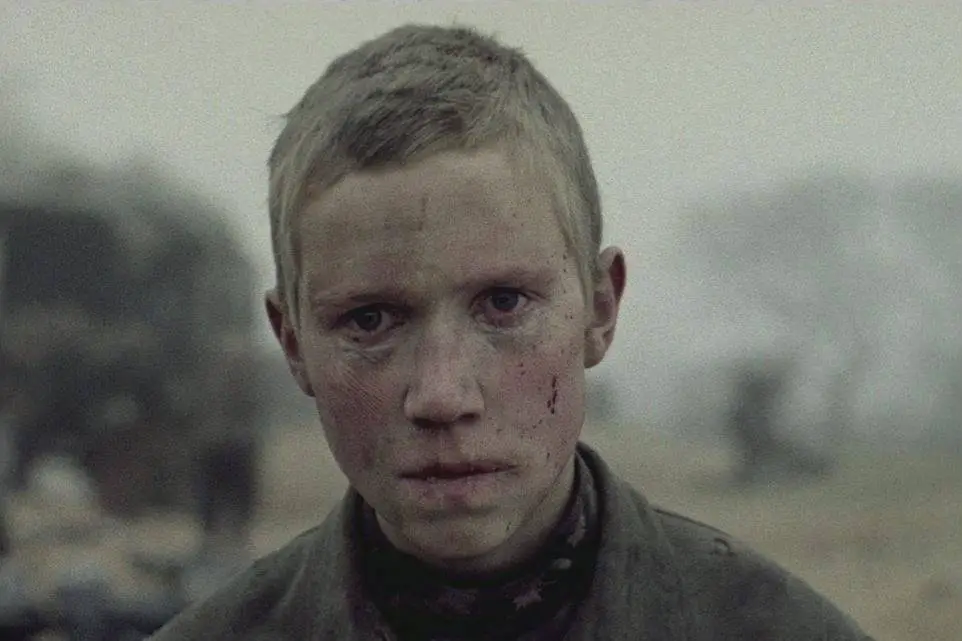
The technical brilliance amplifies the horror. Klimov employed innovative techniques, including a continuously moving camera that follows Flyora through the carnage, creating a sense of inescapable immersion. The soundscape—layered with distant explosions, screams, and an eerie, almost dreamlike score—contributes to the film’s nightmarish quality. Kravchenko’s performance, achieved under grueling conditions (the young actor reportedly aged visibly during filming due to the emotional toll), conveys a transformation from boyish innocence to hollow-eyed survivor that few adult actors could match.
Since its 1985 release, which drew massive Soviet audiences but limited international exposure due to its unflinching nature, Come and See has undergone a remarkable resurgence. Restorations, Criterion Collection releases, and viral discussions on social media have introduced it to new generations. Viewers frequently share visceral reactions: many describe it as “horrifying,” “devastating,” and “impossible to watch without feeling forever altered.” Common warnings circulate online—watch with caution, prepare for sleepless nights, brace for trauma. Some call it the purest form of horror disguised as a war film, arguing it transcends genre to become a visceral indictment of human capacity for evil. Others praise its honesty: unlike sanitized Hollywood depictions, it refuses to glorify or distance the viewer from the brutality.
The film’s anti-war message is absolute. Klimov himself stated that after making it, he had nothing left to say on film—he retired from directing, believing the work had exhausted the possibilities of cinematic expression on the subject. Yet its power endures, especially in an era when global conflicts remind us that such horrors are not confined to history. Come and See doesn’t offer catharsis or hope; it demands confrontation. It forces audiences to “come and see” the pale horse of death and the hell that follows, as referenced in its biblical title from the Book of Revelation.
Critics and cinephiles hail it as a masterpiece for good reason. It ranks highly on prestigious lists, including Sight & Sound polls, and maintains near-perfect audience scores on aggregators. Its influence echoes in later works exploring war’s psychological toll. But its true legacy lies in the personal impact: countless viewers report emerging changed—more empathetic to suffering, more aware of history’s shadows, and profoundly grateful for peace.
In a cinematic landscape often softened for comfort, Come and See remains defiantly raw. It is not entertainment; it is testimony. The 25-minute sequence isn’t just a scene—it’s a scar on the soul of anyone who endures it. For those brave enough to face it, the film stands as a haunting reminder: war’s true face is not heroic banners or victory parades, but the screams of the innocent burning in a locked barn. And once seen, it cannot be unseen.
News
“Shave Her Head,” the Sergeant Ordered Coldly. “If Discipline Won’t Break Her, Maybe Humiliation Will.” But What They Didn’t Know Was That the Woman They Underestimated Would Bring Their Entire Base to Its Knees.
General Alexander Vance had heard the whispers for months: Fort Blackwood was rotting from within. Soldiers spoke in hushed tones of systematic humiliation disguised as “discipline,” falsified training records, missing supply funds that somehow vanished into private accounts, and a toxic command climate built on fear and intimidation. Every official inspection came back sparkling clean […]
At A Veterans’ Dinner, The Colonel Leaned Toward My Brother And Asked One Simple Question: “Can You Tell Me How You Earned This Decoration, Son?” His Face Turned White. He Pointed At My Father And Said: “He Told Me It Belonged To Our Uncle.” The Uncle Never Existed.
The Ridgewood Armory smelled like every other veterans’ event I’d ever attended: floor wax, overcooked chicken, old coffee, and the faint metallic tang of too many American flags. Fluorescent lights buzzed overhead, casting a harsh glow on rows of folding tables and men in ill-fitting blazers trying to look like they still belonged in uniform. […]
“Die, B*tch,” He Spat, Swinging a Massive Fist in the Mess Hall. He Thought I Was an Easy Target — He Had No Idea He Just Attacked a Classified SEAL Shadow Operative.
I was running on fumes. Seventy-two hours of off-the-books reconnaissance in the frozen Alaskan wilderness had left every muscle screaming. My joints ached from crawling through ice-crusted snow, my eyes burned from staring through night-vision gear, and the only thing keeping me upright was the promise of a hot meal and twelve hours of blackout […]
“Do You Know Who I Am?” He Pushed Her — Seconds Later, One ID Card Ended His Career
The dim lights of Rusty’s Bar flickered like dying stars just outside Camp Pendleton. It was a Friday night, the kind where Marines came to forget the sand and the screams they carried home from deployment. I had come here for the opposite reason — to disappear. My name is Commander Thalia Renwick. Highly decorated […]
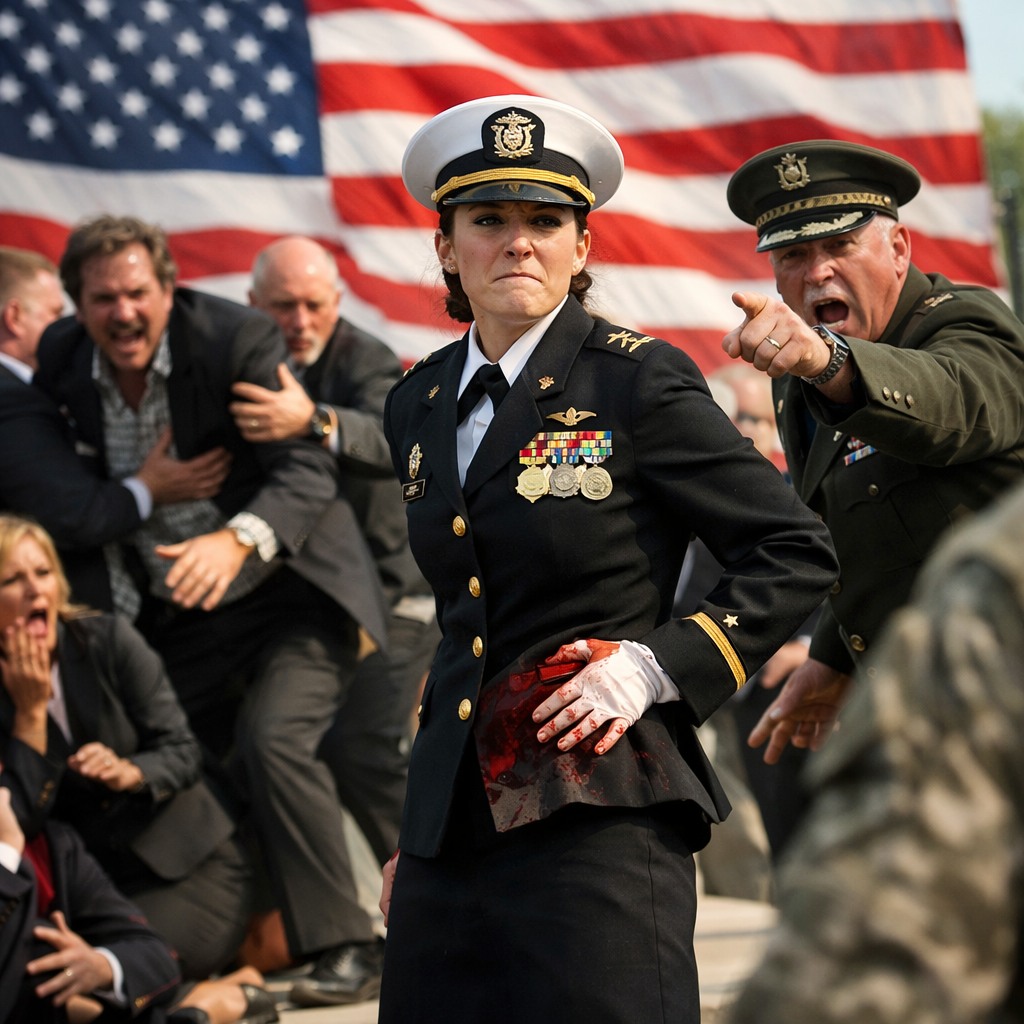
15 Years After My Dad Kicked Me Out, I Saw Him At My Sister’s Wedding. He Sneered: “If It Wasn’t For Pity, No One Would’ve Invited You.” I Just Smiled And Sipped My Wine. Then The Bride Took The Mic And Changed Everything.
The South Carolina sun was merciless that June afternoon, turning the outdoor wedding venue into a glittering oven. I stood near the back in my crisp Army dress uniform, the brass buttons and medals catching the light with every breath. At 34 years old, I had come home for my little sister’s wedding — the […]
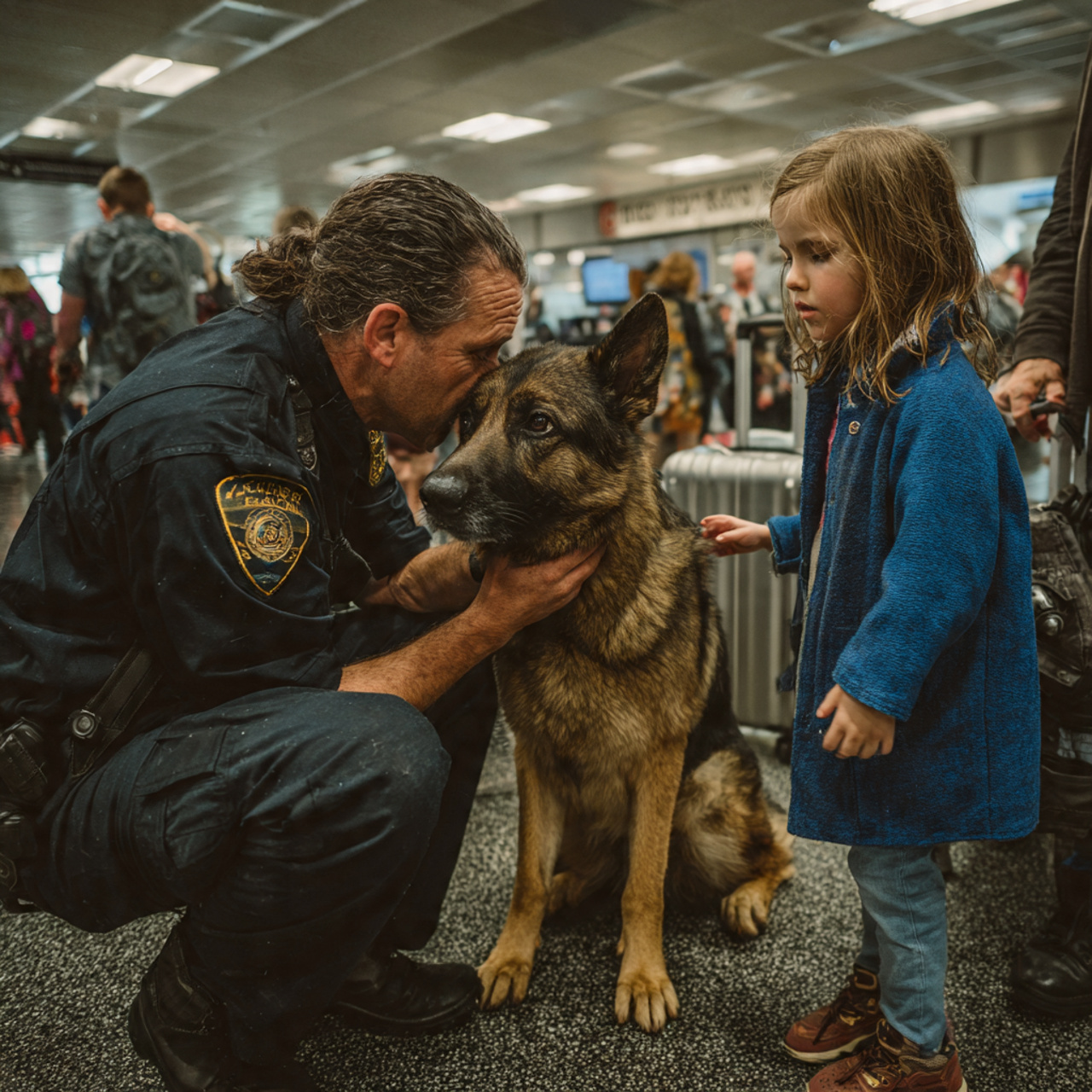
“A POLICE DOG FROZE IN THE AIRPORT. THEN A LITTLE GIRL TAPPED HIS HEAD. WHAT HAPPENED NEXT MADE EVERY TRAVELER STOP. HAVE YOU EVER WITNESSED A SILENT CRY FOR HELP?
The bustling international airport was a whirlwind of rolling suitcases, hurried announcements, and weary travelers rushing to their gates. Officer Liam Mercer patrolled the terminal with his loyal K9 partner, Rex — a highly trained German Shepherd known for his sharp instincts in detection and child safety operations. Everything seemed routine until Rex suddenly froze […]
End of content
No more pages to load