The divorce between Nicole Kidman and Keith Urban, finalized in early January 2026 after nearly 20 years of marriage, was handled with remarkable speed and apparent civility on paper. Court documents show the couple waived child and spousal support, agreed on a clear parenting plan, and prioritized the well-being of their two teenage daughters, Sunday Rose (17) and Faith Margaret (15). Kidman received primary physical custody, with Urban granted every-other-weekend visitation and 59 days per year. Both parents committed to fostering a stable, loving environment despite the split.
Yet behind the orderly legal resolution lies a far more complicated emotional reality. Recent reports indicate the daughters are struggling to adjust to the sudden changes in their family dynamic. Multiple sources claim Sunday and Faith are refusing to meet their father’s rumored new girlfriend—a 26-year-old rising country singer—drawing a firm boundary as they process their parents’ separation and Keith’s quick move into a new relationship.
The girls’ stance is being interpreted by insiders as an expression of loyalty to their mother. Sources close to the family describe Sunday and Faith as “really focused on Mum right now,” prioritizing Nicole’s emotional well-being and their own healing over introducing a new figure into their lives so soon after the breakup. One family friend noted that the teens are “adjusting to all the changes” and naturally want to “protect their space.” Their refusal is framed less as hostility toward the woman herself and more as a need for stability and time to grieve the end of their parents’ marriage.
The timing and age difference have intensified the situation. Urban’s rumored new partner is more than 30 years his junior, and reports suggest the relationship began shortly after—or even overlapped with—the final months of his marriage to Kidman. This has fueled speculation and discomfort, particularly among the daughters, who are navigating adolescence amid intense public scrutiny. Publicly, Sunday and Faith have appeared more frequently alongside their mother on social media and in candid family photos, signaling a clear emotional alignment with Nicole during this transitional period.

Kidman has maintained a dignified silence on the matter. In early 2026, she shared a reflective New Year’s message on Instagram—“Looking forward in 2026”—accompanied by a photo of herself arm-in-arm with her daughters, their backs to the camera. The image conveyed unity and quiet optimism, with no mention of Urban or the divorce. Sources close to Kidman describe her as “refreshed” and focused on her career and family, leaning on close friends like Jennifer Aniston and Sandra Bullock for support.
Urban, meanwhile, has kept his personal life extremely private. He has not publicly confirmed any new relationship, and his rumored girlfriend has dismissed speculation about them moving in together as “absolutely ridiculous and untrue” on social media. Despite the lack of confirmation, reports persist that Urban is dating the young country artist, and the daughters’ reported refusal to meet her stems from discomfort with the speed and optics of their father moving forward.
The situation highlights the complex emotional terrain children face in high-profile divorces. Sunday and Faith, now teenagers, are old enough to form strong opinions and exercise agency in their relationships with their parents. Their choice to prioritize time with Kidman and avoid encounters with Urban’s new partner reflects a common response among children of divorce: a desire to protect the parent they perceive as more vulnerable or to assert control over a situation that has upended their family life.
The public nature of the story adds another layer of pressure. Every photo of Kidman with her daughters, every sighting of Urban alone or with others, is dissected online. Social media commentary ranges from sympathy for the girls’ boundaries to criticism of Urban’s timing. Some fans defend the daughters’ right to set limits, while others argue the family should work toward blended harmony for the children’s sake.
Despite the tension, both Kidman and Urban have emphasized co-parenting. The settlement requires them to foster a nurturing environment, and reports indicate no major drama in day-to-day arrangements. Kidman has allowed the girls flexibility in spending time with their father, and Urban is reportedly focused on balancing his own life with his daughters’ needs.
The contrast between the legal finality and the ongoing emotional adjustment is stark. What was supposed to be a private family transition has become public spectacle, with the daughters’ reported refusal to meet Urban’s new girlfriend symbolizing deeper unresolved feelings. The age gap, the speed of Urban’s rumored new romance, and the girls’ loyalty to their mother have turned a private boundary into a widely discussed flashpoint.
As Kidman continues her busy career and Urban focuses on music, the daughters remain at the center. Their need for stability, time to process, and space to heal is paramount. The legal split may be settled, but the personal consequences—especially for Sunday and Faith—are still unfolding. In the glare of public attention, the family navigates grief, loyalty, and the challenge of redefining relationships after nearly two decades together.
For now, the story remains one of adjustment rather than resolution. The daughters’ firm stance reflects a common truth in divorce: even when adults move forward, children often need more time. And in this high-profile case, that need is playing out in full view.
News

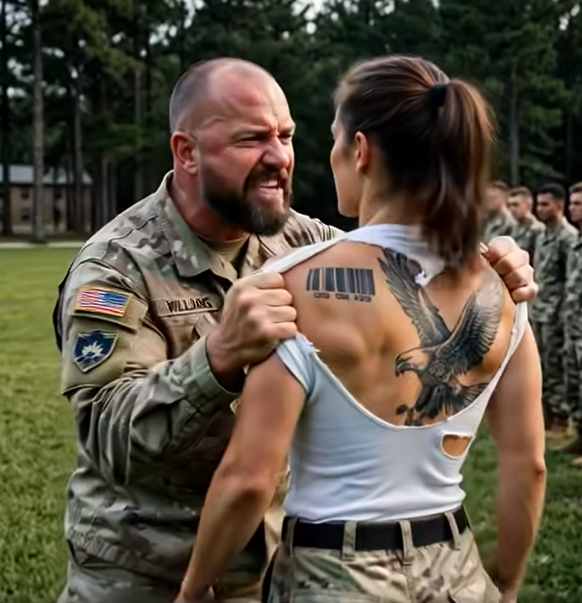
“Shave Her Head,” the Sergeant Ordered Coldly. “If Discipline Won’t Break Her, Maybe Humiliation Will.” But What They Didn’t Know Was That the Woman They Underestimated Would Bring Their Entire Base to Its Knees.
General Alexander Vance had heard the whispers for months: Fort Blackwood was rotting from within. Soldiers spoke in hushed tones of systematic humiliation disguised as “discipline,” falsified training records, missing supply funds that somehow vanished into private accounts, and a toxic command climate built on fear and intimidation. Every official inspection came back sparkling clean […]

At A Veterans’ Dinner, The Colonel Leaned Toward My Brother And Asked One Simple Question: “Can You Tell Me How You Earned This Decoration, Son?” His Face Turned White. He Pointed At My Father And Said: “He Told Me It Belonged To Our Uncle.” The Uncle Never Existed.
The Ridgewood Armory smelled like every other veterans’ event I’d ever attended: floor wax, overcooked chicken, old coffee, and the faint metallic tang of too many American flags. Fluorescent lights buzzed overhead, casting a harsh glow on rows of folding tables and men in ill-fitting blazers trying to look like they still belonged in uniform. […]

“Die, B*tch,” He Spat, Swinging a Massive Fist in the Mess Hall. He Thought I Was an Easy Target — He Had No Idea He Just Attacked a Classified SEAL Shadow Operative.
I was running on fumes. Seventy-two hours of off-the-books reconnaissance in the frozen Alaskan wilderness had left every muscle screaming. My joints ached from crawling through ice-crusted snow, my eyes burned from staring through night-vision gear, and the only thing keeping me upright was the promise of a hot meal and twelve hours of blackout […]

“Do You Know Who I Am?” He Pushed Her — Seconds Later, One ID Card Ended His Career
The dim lights of Rusty’s Bar flickered like dying stars just outside Camp Pendleton. It was a Friday night, the kind where Marines came to forget the sand and the screams they carried home from deployment. I had come here for the opposite reason — to disappear. My name is Commander Thalia Renwick. Highly decorated […]

15 Years After My Dad Kicked Me Out, I Saw Him At My Sister’s Wedding. He Sneered: “If It Wasn’t For Pity, No One Would’ve Invited You.” I Just Smiled And Sipped My Wine. Then The Bride Took The Mic And Changed Everything.
The South Carolina sun was merciless that June afternoon, turning the outdoor wedding venue into a glittering oven. I stood near the back in my crisp Army dress uniform, the brass buttons and medals catching the light with every breath. At 34 years old, I had come home for my little sister’s wedding — the […]
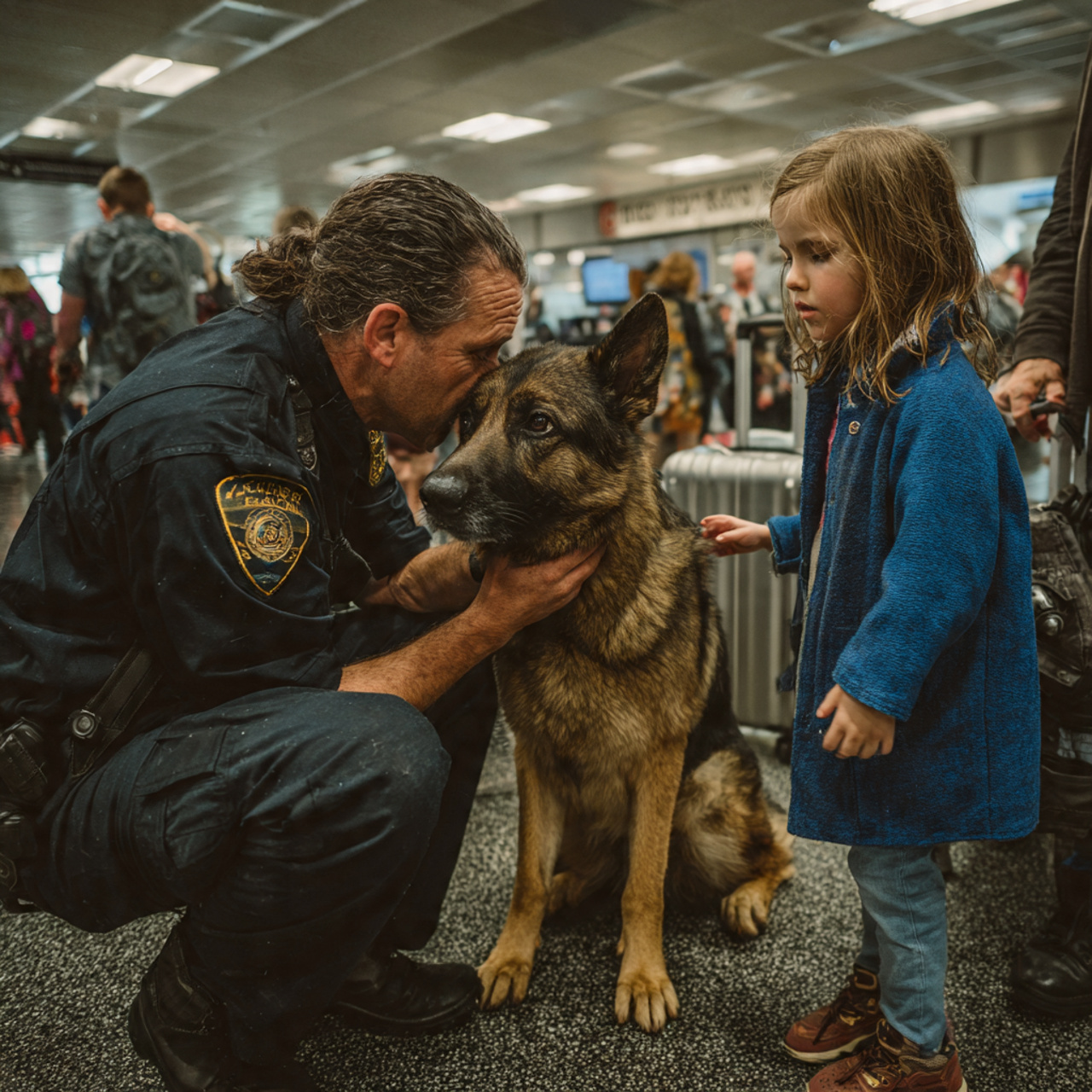
“A POLICE DOG FROZE IN THE AIRPORT. THEN A LITTLE GIRL TAPPED HIS HEAD. WHAT HAPPENED NEXT MADE EVERY TRAVELER STOP. HAVE YOU EVER WITNESSED A SILENT CRY FOR HELP?
The bustling international airport was a whirlwind of rolling suitcases, hurried announcements, and weary travelers rushing to their gates. Officer Liam Mercer patrolled the terminal with his loyal K9 partner, Rex — a highly trained German Shepherd known for his sharp instincts in detection and child safety operations. Everything seemed routine until Rex suddenly froze […]
End of content
No more pages to load