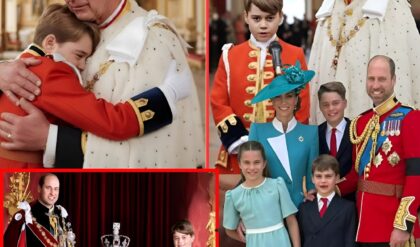
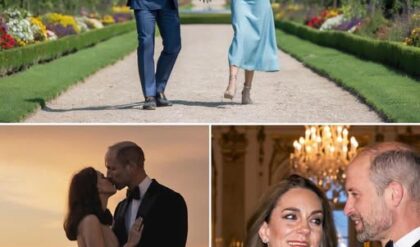
Prince William and Princess Kate are once again proving that even the simplest decisions can spark worldwide attention—and this time, they may be waiting until the absolute last moment before saying anything at all. Royal watchers say the couple is being especially cautious with an upcoming choice that’s already drawing speculation, knowing that announcing it too early could invite weeks of intense scrutiny, online commentary, and pressure they simply don’t need. As fans know, the Waleses have become masters at balancing duty with privacy, carefully choosing when and how to share personal or family-related updates. Their thoughtful approach has many people wondering what’s coming—and why they’re holding their cards so close. Is it tradition? Timing? Protection? Or simply a desire to make the decision without the world dissecting every detail? Whatever the reason, the anticipation is growing fast.
In the glittering yet unforgiving world of the British monarchy, where every public appearance is choreographed and every whisper analyzed, the Prince and Princess of Wales have carved out a niche as the royals who dare to draw boundaries. William, the heir to the throne, and Kate, the poised future queen consort, have long navigated the tightrope between their roles as working royals and devoted parents to Prince George, Princess Charlotte, and Prince Louis. Their latest act of discretion revolves around a deeply personal milestone: the selection of Prince George’s next school as he approaches his teenage years. Sources close to the family suggest this “heartbreaking” decision—laden with emotional weight and historical echoes—won’t be revealed until the eleventh hour, likely not until September 2026, when George is set to transition from Lambrook School to a senior institution. This delay isn’t born of indecision but of a deliberate strategy to shield their eldest son from the relentless spotlight that has shadowed the Windsors for generations.
To understand the gravity of this choice, one must rewind to the Waleses’ own educational journeys, which were anything but ordinary. William attended elite boarding schools like Ludgrove and Eton College, institutions synonymous with privilege, rigorous academics, and a network that has shaped British leaders for centuries. Yet, his time there was marred by the intense media frenzy following his parents’ divorce and the tragic loss of Princess Diana in 1997. Paparazzi hounded him relentlessly, turning what should have been formative years into a public spectacle. Kate, meanwhile, experienced a more grounded path at Marlborough College, a co-educational boarding school known for its balance of tradition and modernity. Their shared history at the University of St Andrews, where they met as undergraduates, underscores a mutual appreciation for environments that foster independence amid scrutiny.
For George, born in 2013 as third in line to the throne, the stakes feel exponentially higher. At 12 years old, he is on the cusp of adolescence, a phase when young royals historically retreat into more insulated settings to prepare for their futures. Lambrook, the preparatory school in Berkshire where the family settled after moving from London in 2022, has provided a semblance of normalcy. Nestled in the idyllic Windsor countryside, it’s a place where George can kick a football with classmates without the immediate threat of headlines. But as he eyes a senior school, the decision looms large: Will it be Eton, the storied riverside academy where his father and uncle thrived (and suffered)? Or perhaps Marlborough, honoring his mother’s legacy? Rumors swirl around other contenders, like Winchester College or even international options, though the family has emphasized keeping the children rooted in the UK.

The “heartbreaking” label attached to this choice stems from its inherent bittersweetness. Boarding schools, while prestigious, mean separation from family—a rite of passage that William has spoken about candidly. In interviews, he’s recalled the loneliness of his early days at boarding school, compounded by the instability at home. “It was a lonely feeling,” he once shared, reflecting on how such environments can amplify isolation for children already burdened by destiny. For Kate, who has prioritized mental health advocacy through initiatives like her Shaping Us campaign, the emotional toll is paramount. She’s been vocal about the importance of early childhood experiences, arguing that secure attachments form the bedrock of resilience. Announcing George’s school too soon would thrust this intimate family deliberation into the public arena, inviting armchair experts to debate its merits and armchair critics to probe its implications for the monarchy’s relevance.
This caution aligns with the Waleses’ broader philosophy of “privacy by design.” Since their marriage in 2011, they’ve methodically controlled the narrative around their children. Birth announcements are timed with palace releases, school runs are off-limits to photographers, and family holidays remain sacred. The 2020 birth of Louis was a masterclass in containment: details emerged only after the couple had bonded privately. Even amid Kate’s highly publicized cancer diagnosis and treatment earlier in the year—a trial that tested their resolve—the family maintained a dignified veil over the grittier details. William’s steadfast support during her chemotherapy, including stepping back from some duties to be present, underscored their pact: Family first, always.
Speculation about the school decision has already ignited a frenzy, much to the couple’s likely chagrin. Online forums buzz with polls pitting Eton against alternatives, while tabloids dissect George’s extracurriculars—his love for rugby, aviation modeling, and environmental causes—as clues to his future path. Eton, with its Tudor-era cloisters and alumni roster boasting 20 prime ministers, represents continuity, a nod to the monarchy’s enduring ties to the establishment. Yet, in an era of republican sentiments and calls for modernization, it also evokes elitism. Marlborough, by contrast, offers co-education and a less stuffy vibe, potentially signaling a shift toward inclusivity. William and Kate, ever attuned to public mood, seem intent on letting the choice breathe without premature judgment.
Their delay until 2026 isn’t arbitrary; it’s tactical. By waiting until the academic year is imminent, they minimize the “weeks of intense scrutiny” that an early reveal would provoke. Imagine the deluge: Daily Mail front pages with Photoshopped images of George in school blazers, Twitter threads analyzing uniform colors as metaphors for royal evolution, and inevitable comparisons to Harry’s rebellious school days at Eton. The couple knows this all too well—William’s own Eton years were a media circus, with Diana’s absence amplifying every vulnerability. Today, social media amplifies it exponentially. A single leaked detail could spawn TikTok trends and Reddit rabbit holes, turning a parental milestone into a global sideshow.
This approach also protects George himself. At 12, he’s old enough to grasp his position but young enough to crave anonymity. The Waleses have instilled values of service and empathy, evident in George’s poised demeanor during state events like the 2023 coronation. But they’ve also shielded him from the “heir and spare” dynamic that fractured his uncles’ brotherhood. By involving him in the decision—perhaps touring campuses incognito—they empower him, fostering the agency that William lacked in his youth. It’s a subtle rebellion against tradition: Not rejecting the system, but humanizing it.
Beyond the school saga, the Waleses’ restraint reflects a monarchy in flux. King Charles III’s reign, now in its third year, emphasizes slimming down the institution, with William positioned as its eco-conscious, relatable face. Recent moves, like the family’s relocation to Forest Lodge in Windsor—a sprawling yet cozy estate dubbed their “forever home”—signal a commitment to rootedness. This Georgian manor, with its gardens and proximity to the castle, allows the children to roam freely while keeping William close to his Earthshot Prize work. Kate’s return to duties post-recovery has been gradual: a poignant visit to the Anna Freud Centre on November 27, where she championed children’s mental health, her newly blonder hair catching the light as she engaged with young patients. William, meanwhile, has juggled solo engagements, from youth mental health hubs in Wales to environmental pushes via the Duchy of Cornwall.
These efforts aren’t without challenges. Whispers of “heartbreaking news” from the Duchy—perhaps estate setbacks amid climate pressures—add layers to William’s burdens. Yet, the couple’s unity shines through. At upcoming events like the Royal Variety Performance, a star-studded black-tie affair confirmed for late November, they’ll appear as a formidable team, their competitive banter (Kate’s prowess in table tennis, William’s golf obsession) humanizing the crown. Christmas at Sandringham looms, too, a festive anchor amid speculation. Will Beatrice and Eugenie attend sans their parents, as rumored, in a nod to family realignments? The Waleses, ever discreet, let actions speak.
Critics might decry this opacity as aloofness, but supporters see savvy. In a post-Diana world, where transparency can curdle into exploitation, their measured pace preserves dignity. It echoes Kate’s ethos: “Preparation is key,” she said during her cancer reflections, urging society to equip children for life’s curveballs. For George, this means deciding his path unencumbered, perhaps blending Eton’s rigor with Marlborough’s warmth in a hybrid vision.
As 2025 draws to a close, the anticipation crests like a tide. Royal diarists pencil in engagements—a Gloucester visit to Bradford’s media museum on November 28, William’s Youth Shedz tour—but the real intrigue simmers privately. Will the announcement drop via a simple palace statement, or a family photo on Instagram? Whatever form it takes, it will reaffirm the Waleses’ creed: Duty endures, but family defines.
In holding back, William and Kate aren’t evading responsibility; they’re redefining it. They’re teaching George—and the world—that true strength lies in quiet conviction, not clamor. As the monarchy evolves, this eleventh-hour reveal could mark a turning point: A boy stepping into boyhood, unbowed by the gaze of millions. And in that space between decision and disclosure, the royals remind us all of a timeless truth: Some chapters are best written in private, savored before they’re shared.