The Princess of Wales marked St Patrick’s Day in a time-honored tradition by joining the Irish Guards at Mons Barracks in Aldershot on March 17, 2026. As Colonel of the regiment, she took the salute during the annual parade, embodying her senior ceremonial role in representing, supporting, and upholding the unit’s traditions, morale, and storied heritage.
The Irish Guards, one of the most prestigious regiments in the British Army, were formed in 1900 amid the Second Boer War. Queen Victoria authorized their creation to honor the valor of Irish soldiers who fought with distinction in South Africa. The regiment quickly earned a reputation for discipline, courage, and unyielding loyalty, serving in major conflicts from the World Wars to modern operations in Iraq and Afghanistan. Today, it continues to draw recruits from across Ireland—both north and south—symbolizing enduring ties despite historical divisions.
At the core of the St Patrick’s Day ceremony lies the presentation of shamrock sprigs, a custom that dates back to March 17, 1901. Queen Alexandra, consort of King Edward VII, initiated the practice for the newly established regiment. She sent shamrock to honor the bravery displayed during the Boer War, where Irish troops faced harsh conditions and heavy casualties. The gesture was more than symbolic; it acknowledged the sacrifices of soldiers drawn from Ireland at a time when national identity and imperial service intersected profoundly. Over the decades, this ritual has persisted without interruption, except during wartime disruptions. Subsequent royal figures, including Queen Elizabeth The Queen Mother, carried it forward, ensuring the tradition remained a vital link between the monarchy and the regiment.
In 2026, the event carried added significance as the Irish Guards celebrated their 125th anniversary. Founded in 1900, the regiment marked this milestone throughout the year with various commemorations, but the St Patrick’s Day parade at Mons Barracks stood out as a focal point. The occasion blended solemn remembrance with quiet pride, reflecting the unit’s motto—”Quis Separabit?” (Who shall separate us?)—drawn from St Patrick’s breastplate prayer, emphasizing unbreakable bonds of comradeship and faith.
The Princess of Wales, who assumed the honorary colonelcy in 2022 (with her first full parade attendance in subsequent years), arrived dressed appropriately in a striking forest green ensemble, complete with elegant accessories that echoed the festive spirit. She was greeted warmly and presented with her own sprig of shamrock upon arrival, which she pinned proudly. The ceremony unfolded with precision: the regiment paraded in full dress uniform, bearskins topped with blue plumes unique to the Irish Guards, evoking their distinctive identity within the Household Division.

A highlight was the distribution of shamrock sprigs. The Princess personally presented them to officers and guardsmen, who then passed them along the ranks so every soldier received one to wear. The tradition extends to the regimental mascot, an imposing Irish Wolfhound named Seamus. The Princess affixed a specially crafted, oversized sprig to his silver-plated collar, a moment that never fails to delight onlookers and underscores the affection the regiment holds for its four-legged representative. Seamus, standing tall and composed amid the pomp, has become an iconic figure in these annual observances.
Beyond the formal parade, the Princess took time to award long-service and good conduct medals to deserving members, recognizing their dedication and years of exemplary service. She also met with soldiers and their families in a more informal setting, chatting with children, spouses, and veterans. These interactions highlighted the human side of military life—the pride families take in their loved ones’ service, the challenges of deployments, and the strong community spirit that binds the regiment together. Young children, excited by the occasion and the presence of royalty, added warmth and spontaneity to the day.
The event served as a living expression of service, heritage, and enduring honor. For the Irish Guards, St Patrick’s Day is not merely a holiday; it is an affirmation of identity and unity. The shamrock, with its three leaves representing faith, hope, and charity in Irish lore, mirrors the regiment’s values of loyalty, discipline, and courage. In an era when the British Army evolves to meet contemporary demands, such traditions ground the force in history while fostering morale and cohesion.
The Princess’s participation reinforced the monarchy’s longstanding connection to the armed forces. As Colonel, she acts as a visible champion for the regiment, attending key events, visiting troops on exercise, and advocating for their welfare. Her presence in 2026, amid the 125th anniversary reflections, underscored continuity—linking back to Queen Alexandra’s original gesture and forward to future generations of guardsmen.
In quiet moments amid the marching bands and salutes, the ceremony reminded all present of the sacrifices made by Irish soldiers over more than a century. From the muddy fields of the Boer War to peacekeeping missions abroad, the Irish Guards have upheld a legacy of bravery. The shamrock presentation remains a powerful symbol: a small green token that carries profound meaning, uniting past and present in recognition of shared duty and pride.
As the day concluded, with the regiment standing proud and families gathering for photographs, the atmosphere reflected quiet confidence. The Irish Guards, now well into their second century, continue this ritual with the same dignity that has defined them since inception. It is a testament to resilience, tradition, and the unbreakable spirit that binds soldiers, royals, and the wider nation in celebration of St Patrick and all he represents.
News
“Shave Her Head,” the Sergeant Ordered Coldly. “If Discipline Won’t Break Her, Maybe Humiliation Will.” But What They Didn’t Know Was That the Woman They Underestimated Would Bring Their Entire Base to Its Knees.
General Alexander Vance had heard the whispers for months: Fort Blackwood was rotting from within. Soldiers spoke in hushed tones of systematic humiliation disguised as “discipline,” falsified training records, missing supply funds that somehow vanished into private accounts, and a toxic command climate built on fear and intimidation. Every official inspection came back sparkling clean […]
At A Veterans’ Dinner, The Colonel Leaned Toward My Brother And Asked One Simple Question: “Can You Tell Me How You Earned This Decoration, Son?” His Face Turned White. He Pointed At My Father And Said: “He Told Me It Belonged To Our Uncle.” The Uncle Never Existed.
The Ridgewood Armory smelled like every other veterans’ event I’d ever attended: floor wax, overcooked chicken, old coffee, and the faint metallic tang of too many American flags. Fluorescent lights buzzed overhead, casting a harsh glow on rows of folding tables and men in ill-fitting blazers trying to look like they still belonged in uniform. […]
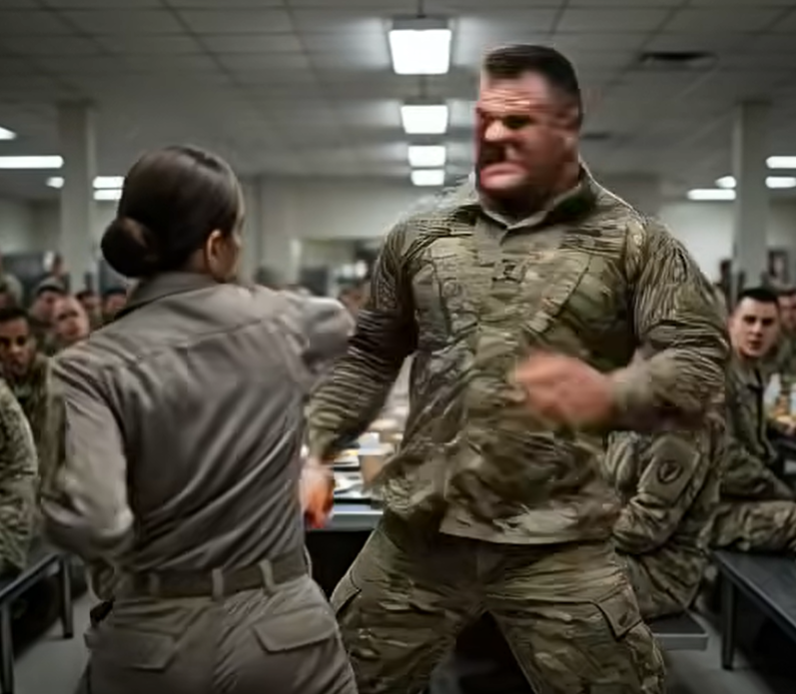
“Die, B*tch,” He Spat, Swinging a Massive Fist in the Mess Hall. He Thought I Was an Easy Target — He Had No Idea He Just Attacked a Classified SEAL Shadow Operative.
I was running on fumes. Seventy-two hours of off-the-books reconnaissance in the frozen Alaskan wilderness had left every muscle screaming. My joints ached from crawling through ice-crusted snow, my eyes burned from staring through night-vision gear, and the only thing keeping me upright was the promise of a hot meal and twelve hours of blackout […]
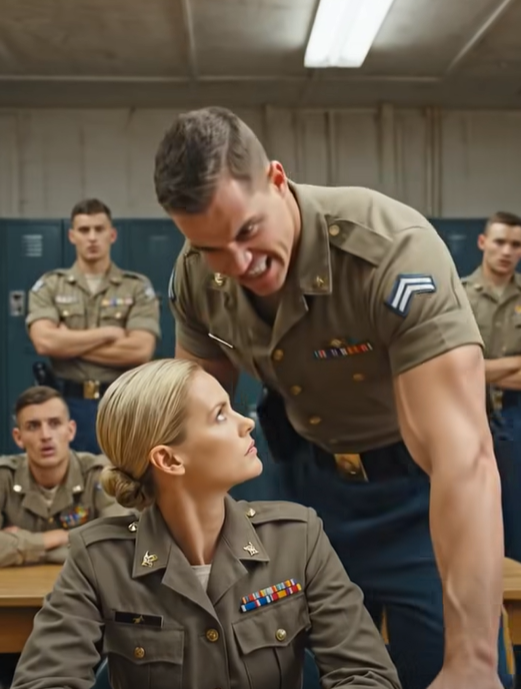
“Do You Know Who I Am?” He Pushed Her — Seconds Later, One ID Card Ended His Career
The dim lights of Rusty’s Bar flickered like dying stars just outside Camp Pendleton. It was a Friday night, the kind where Marines came to forget the sand and the screams they carried home from deployment. I had come here for the opposite reason — to disappear. My name is Commander Thalia Renwick. Highly decorated […]
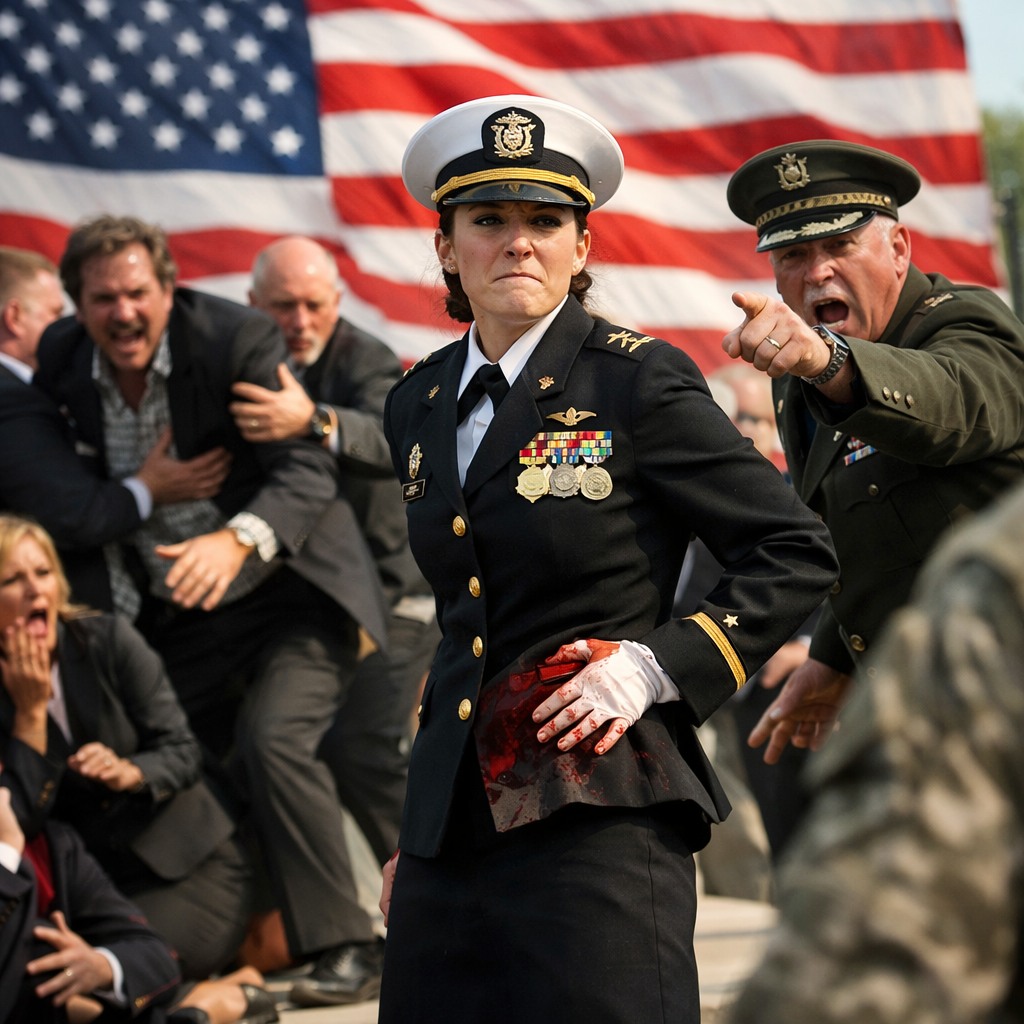
15 Years After My Dad Kicked Me Out, I Saw Him At My Sister’s Wedding. He Sneered: “If It Wasn’t For Pity, No One Would’ve Invited You.” I Just Smiled And Sipped My Wine. Then The Bride Took The Mic And Changed Everything.
The South Carolina sun was merciless that June afternoon, turning the outdoor wedding venue into a glittering oven. I stood near the back in my crisp Army dress uniform, the brass buttons and medals catching the light with every breath. At 34 years old, I had come home for my little sister’s wedding — the […]
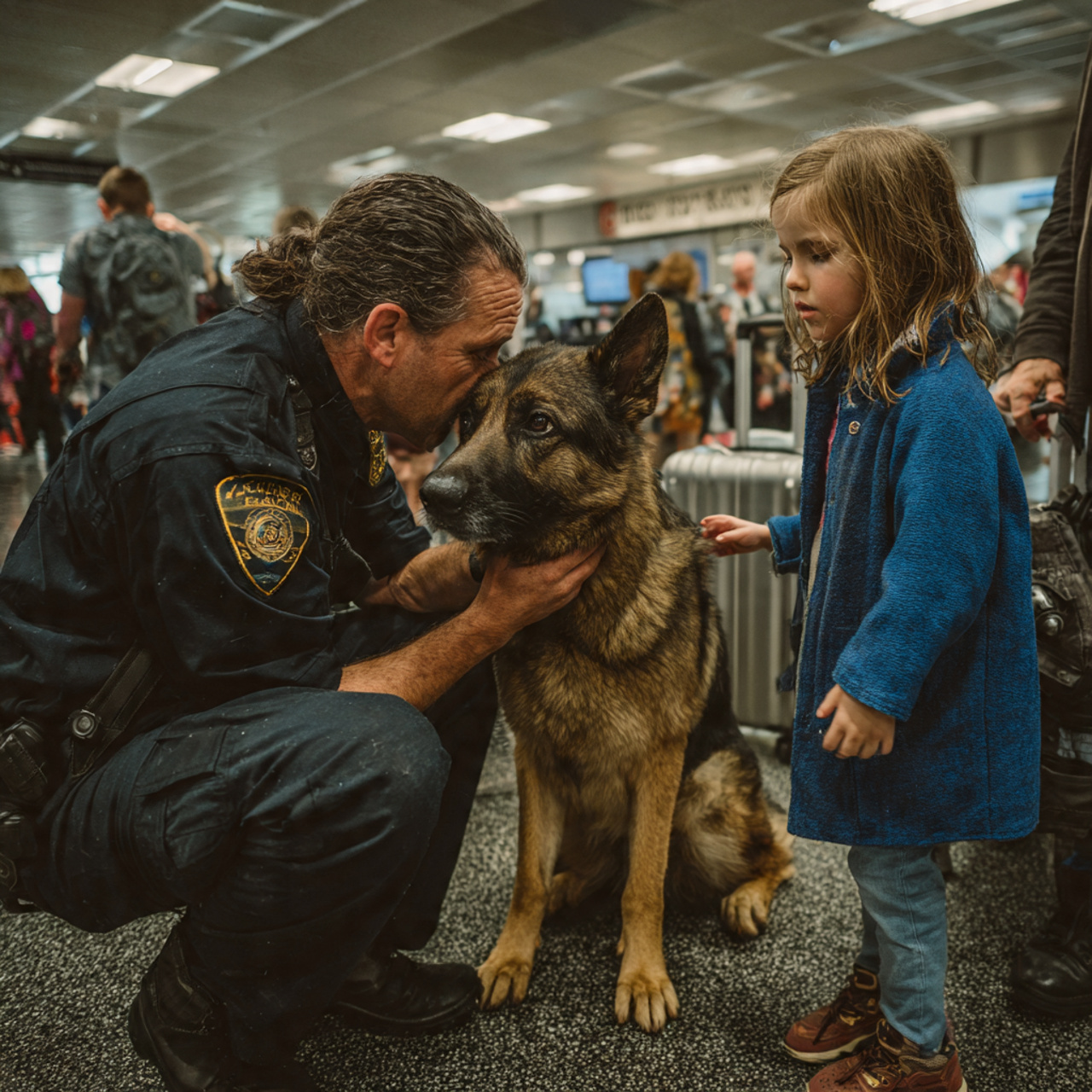
“A POLICE DOG FROZE IN THE AIRPORT. THEN A LITTLE GIRL TAPPED HIS HEAD. WHAT HAPPENED NEXT MADE EVERY TRAVELER STOP. HAVE YOU EVER WITNESSED A SILENT CRY FOR HELP?
The bustling international airport was a whirlwind of rolling suitcases, hurried announcements, and weary travelers rushing to their gates. Officer Liam Mercer patrolled the terminal with his loyal K9 partner, Rex — a highly trained German Shepherd known for his sharp instincts in detection and child safety operations. Everything seemed routine until Rex suddenly froze […]
End of content
No more pages to load