The frozen expanse of Wyoming’s Wind River Indian Reservation stretches like a vast, indifferent canvas under a leaden sky, where the wind howls secrets no one dares to whisper. It’s here, amid the relentless snow and shadowed pines, that a young woman’s body is discovered—barefoot, brutalized, and left to the mercy of the elements. This isn’t the glossy ranch intrigue of Yellowstone‘s Dutton dynasty; it’s the raw, unflinching underbelly of the American West, captured in Taylor Sheridan’s 2017 directorial debut Wind River. Now, eight years after its Sundance premiere, the film has detonated on Netflix like a long-dormant geyser, catapulting into the Top 10 in over 40 countries worldwide as of December 10, 2025. What began as a modest indie thriller has morphed into a streaming juggernaut, drawing in Sheridan superfans hungry for more of his signature blend of taut suspense and social scalpel-work. Critics crowned it his “most haunting achievement” upon release, and new viewers are echoing the sentiment: “It hits harder than Sicario and Hell or High Water combined,” one viral review proclaims. With an unyielding 87% on Rotten Tomatoes, Wind River isn’t just riding the Sheridan wave—it’s redefining it, proving that in a world of bingeable blockbusters, sometimes the coldest stories burn the brightest.
Sheridan’s ascent to TV titan—architect of the sprawling Yellowstone universe, 1883, and Tulsa King—has somewhat eclipsed his early cinematic forays, but Wind River was the spark that lit the fuse. Fresh off penning the Oscar-nominated Hell or High Water and the borderland gut-punch Sicario, Sheridan stepped behind the camera for the first time (discounting his overlooked 2011 micro-budget horror Vile) to helm this neo-Western lament. Inspired by a chilling statistic—thousands of Indigenous women vanishing or falling victim to violence on reservations, their cases lost in jurisdictional limbo—he crafted a narrative that’s equal parts procedural and requiem. “This isn’t fiction; it’s based on thousands of actual stories just like it,” Sheridan has said, his voice gravelly with intent. The film doesn’t preach; it plunges you into the frostbitten fray, where federal red tape clashes with tribal sovereignty, and silence is the deadliest predator of all. Shot on location in the stark beauty of Utah’s snowy wilds (standing in for Wyoming’s Wind River Range), Wind River transforms the landscape into a character as formidable as any human foe—beautiful, brutal, and utterly unforgiving.
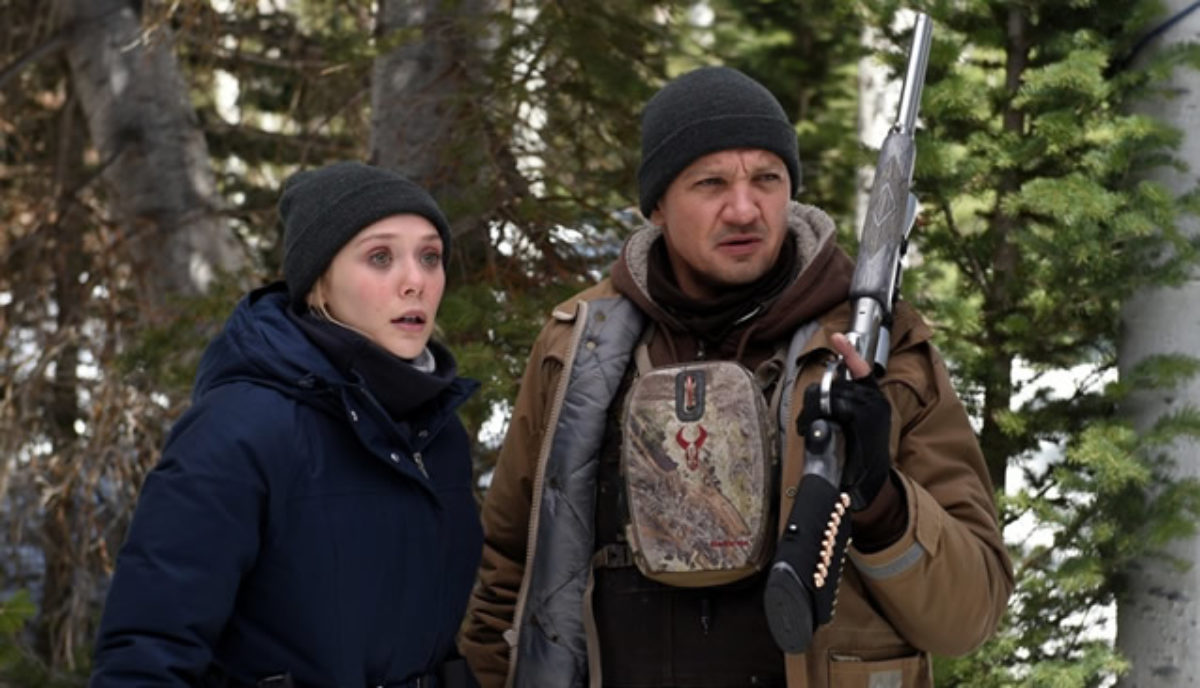
The story uncoils with the precision of a predator’s stalk. Cory Lambert (Jeremy Renner), a stoic U.S. Fish and Wildlife Service tracker, navigates the reservation’s fringes, his rifle a constant companion in a life scarred by loss. Divorced and haunted, Cory’s days blur between hunting invasive threats to livestock and wrestling ghosts from his past: three years earlier, his own teenage daughter Emily froze to death under mysterious circumstances, her case unsolved and her absence a hollow ache. While scouting for mountain lions, Cory stumbles upon the corpse of Natalie Hanson (Kelsey Asbille), an 18-year-old Northern Arapaho woman he’s known since she was a child—barefoot in the snow, lungs ruptured from the cold, signs of savage assault etched into her final flight. The discovery isn’t just a body; it’s a mirror to Cory’s unresolved grief, pulling him back into the abyss he thought he’d outrun.
Enter Jane Banner (Elizabeth Olsen), a greenhorn FBI agent airlifted from Las Vegas, her city polish cracking under the reservation’s raw assault. Clad in inadequate layers, she faces not just subzero temps but a labyrinth of bureaucracy: the crime’s federal status grants jurisdiction, yet tribal police chief Ben Shoyo (Graham Greene) warns her of the jurisdictional black hole that swallows cases like Natalie’s whole. “You’re on your own out here,” he drawls, his eyes weary from too many forgotten files. As Cory signs on as Jane’s reluctant guide—his tracking skills unmatched, his local ties indispensable—the duo peels back layers of a cover-up that reeks of oil rig excess. Natalie’s death isn’t isolated; it’s the bloody thread in a tapestry of exploitation, where transient security guards from a nearby drilling operation prey on vulnerable women amid the isolation. What starts as a routine homicide spirals into a powder keg of corporate indifference, racial erasure, and vigilante reckoning, culminating in a final 15 minutes of such visceral fury that theaters reported audiences frozen in stunned silence, hands trembling as the credits rolled.
Renner’s Cory is a revelation—a man forged in the wild’s indifference, his quiet intensity masking a storm of paternal fury. Best known then for The Hurt Locker‘s bomb-defuser and Avengers‘ Hawkeye, Renner sheds the superhero sheen for something profoundly human: a father who failed once, vowing never again. His scenes with ex-wife Wilma (Julia Jones) and young son are daggers to the heart, laced with the unspoken venom of shared blame. “Cory’s not a hero; he’s a survivor,” Renner told interviewers at the time, his voice thick with the role’s toll. Olsen, pre-WandaVision Scarlet Witch fame, imbues Jane with wide-eyed tenacity, her character’s arc a crash course in humility—from barking orders in a trailer to gasping for air in a blizzard, rifle in hand. Their chemistry simmers without romance, a partnership born of necessity that blooms into mutual respect, two outsiders forging alliance in a land that devours the unprepared. Then there’s Greene, the veteran actor whose Ben Shoyo steals every frame with world-weary wisdom and gallows humor. Nominated for an Oscar for Dances with Wolves, Greene channels decades of on-screen Indigenous resilience into a man who’s seen too much, his barroom confession to Cory a masterclass in bottled rage: “Luck? There is no such thing as luck on these roads.” Sadly, Greene passed away on September 1, 2025, at 73, leaving Wind River as a poignant capstone to his legacy—timely, given the film’s renewed surge.
Supporting players deepen the film’s textured grit. Gil Birmingham, fresh from Hell or High Water‘s stoic Alberto, reprises his Sheridan collaboration as Natalie’s grieving father Martin, his silent vigil at her grave a gut-wrenching portrait of paternal impotence. Jon Bernthal snarls as Matt Rayburn, one of the rig’s security contractors whose bravado masks rot, while James Jordan and Hugh Dillon round out the antagonists with chilling banality. Kelsey Asbille, of Eastern Shoshone and Nez Perce descent, brings ethereal fire to Natalie’s fleeting flashbacks—her final run through the snow a haunting prologue that sets the pulse racing. Sheridan populates the reservation with authenticity, consulting Eastern Shoshone and Northern Arapaho leaders for script approval and cultural nuance, ensuring the community isn’t a backdrop but a beating heart. Filmed with cinematographer Ben Richardson’s eye for desolation—wide shots of endless white pierced by crimson blood, intimate close-ups of frostbitten faces—the visuals evoke There Will Be Blood‘s menace but with a keener social bite.
Critically, Wind River was a triumph from the jump, bowing at Sundance to a standing ovation and snagging the Best Director prize at Cannes. Roger Ebert’s site hailed it as “moody, chilling & engrossing,” praising Sheridan’s assured hand: “He cuts to the marrow, keeping the story on track through every snowflake and gunshot.” Variety called it a “humanistic crime drama with more skill than excitement,” while The Verge dubbed it “a thrilling, violent finale to the Sicario/Hell or High Water trilogy—Coen brothers noir meets the case of the week.” The Rotten Tomatoes consensus nails it: “Smart writing, a strong cast, and a skillfully rendered setting that delivers the bitter chill promised by its title.” Not without detractors—some faulted its heavy symbolism or occasional procedural contrivances—it nonetheless resonated, grossing $45 million worldwide on an $11 million budget, a indie smash that quadrupled its cost.
Its impact transcended box office. Ending with a stark card—”While missing person statistics are compiled for every other demographic in the U.S., none exist for Native American women”—Wind River ignited conversations on the MMIWG crisis (Missing and Murdered Indigenous Women and Girls), inspiring advocacy and even influencing policy whispers. Sheridan severed ties with The Weinstein Company mid-release amid scandals, redirecting proceeds to Indigenous women’s resources—a move that amplified its moral core. Post-Yellowstone, it’s the perfect palate cleanser: where Duttons wrangle empires with operatic flair, Wind River whispers of quieter atrocities, the kind that fester in footnotes.
Fast-forward to December 2025, and Netflix’s algorithm has worked its magic. Added to the U.S. library in early September, the film rocketed to No. 3 domestically within days, fueled by Sheridan’s Paramount+ dominance and Renner’s Mayor of Kingstown buzz. By mid-fall, it cracked global Top 10s in over 40 countries—from Canada and the UK to Australia, Brazil, and beyond—amassing millions of hours viewed. Ad-tier subscribers faced a brief heartbreak in early December when licensing lapsed for that plan, but premium access restored it swiftly, sending it surging anew. Social media is ablaze: Reddit’s r/NetflixBestOf threads dissect the finale’s catharsis, TikTok stitches overlay the snow chase with haunting soundtracks, and X buzzes with #WindRiverNetflix, fans confessing, “Slept with the lights on after that ending—Sheridan’s a menace.” It’s no coincidence; with Yellowstone spin-offs wrapping and Sheridan’s Landman heating up Paramount+, viewers crave his origin story—a pre-TV blueprint of the moral ambiguities that define his empire.
Yet Wind River‘s resurgence feels especially poignant now. A sequel, Wind River: Rising, is in the works sans Sheridan (directed by Kari Skogland, starring Gil Birmingham with Scott Eastwood and Jason Clarke), teasing expanded lore amid ongoing MMIWG advocacy. As winter grips the northern hemisphere, the film’s icy dread mirrors the season’s chill, a reminder that Sheridan’s West isn’t tamed—it’s teeming with unfinished business. For newcomers, it’s a gateway drug to his oeuvre; for veterans, a rediscovered gem that hits harder with time. In a streaming deluge of forgettable fare, Wind River stands sentinel: a devastating reminder that some stories don’t just entertain—they endure, etching their cold truth into the soul. Fire up Netflix, bundle up, and brace yourself. The wind’s rising, and it’s whispering names long overdue for justice.