The first thing Staff Sergeant Elena Cross noticed about Ravenwood Advanced Marksmanship Center was how the building tried to look humble.
It sat low against the Arizona desert like it didn’t want attention—steel shutters, dull concrete, sand-colored walls. But everything about it screamed pride. The flagpole out front was polished. The gravel was raked as if the wind needed permission to move it. Even the heat felt disciplined, pressed into neat waves that shimmered beyond the long range lanes.
Inside, the briefing room smelled like coffee that had been burned on purpose and gun oil that had seeped into the walls years ago. A row of men in crisp uniforms leaned back in chairs that could have come from any government building, but their eyes were different. These weren’t paper-pushers. Rangers. SEALs. Green Berets. Instructors with the quiet posture of people who had done hard things and survived them.
At the front of the room, Colonel Richard “Ironhand” Cobburn stood behind a podium like it belonged to him by divine decree. He wasn’t tall, but he carried height in his certainty. His hair was cut so tight it looked painted on. His jaw was the kind that made you think the world had tried to break him and given up.
He clicked a remote. A slide came up—arcs and numbers and neat, confident lines.
“Eliminating guesswork,” Cobburn said, voice smooth as a polished blade. “That’s what separates a professional from a hobbyist. You don’t feel the shot. You don’t pray the shot. You solve the shot.”
Quiet laughter moved through the room at the last line, like a familiar joke. Cobburn let it happen. He liked laughter when it belonged to him.
Elena sat three rows back with the evaluation team. SOCOM had sent them in with binders and questions, the kind of people who wrote reports that changed budgets and doctrine. Elena’s badge sat clipped to her chest, small and unimpressive, a rectangle of authority that didn’t match her rank or her reputation—because her reputation wasn’t the kind you put on paper.
She looked like the kind of soldier Cobburn had already dismissed. Thirty-one. Hair pulled into a regulation bun. No loud jewelry, no loud expression. Combat boots scuffed but clean. A face that could disappear in a crowd.
But she wasn’t here to be seen.
She was here to listen.
Cobburn went on about wind and distance and the curvature of the Earth, confident in a way that made other men relax. He spoke as if he had never been wrong in his life and had the citations to prove it.
Elena waited, pen poised above her notebook, letting him lay the foundation. It wasn’t that he was incompetent. That would have been easy. It wasn’t that he was lying. That would have been obvious.
The problem was worse.
He was almost right.
Almost right was what got people killed.
When the classroom portion ended, Cobburn gestured toward the glass doors that opened onto the thousand-yard line. “Let’s see if theory holds up in the heat. We’ll run the standard SOCOM qualification course—rapid engagement, moving targets, stress drills. Volunteers?”
Several hands went up immediately. Cobburn’s mouth curved in the smile of a man who had already decided the outcome.
Then he looked straight at Elena.
“You. The quiet one with the clipboard. You look like you know which end of the rifle goes bang. Care to demonstrate for the class?”
The room went still. A few instructors exchanged glances. They knew the game. Cobburn had a habit of selecting the smallest, quietest person in the room, letting them flounder, then delivering the “lesson” with fatherly condescension.
Elena closed her notebook. Slowly. She stood.
“I’d be honored, sir.”
Cobburn’s smirk deepened. “Civilian range is that way, sweetheart. Don’t want you getting hurt.”
The laughter was louder this time.
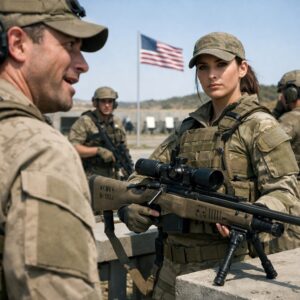
Elena didn’t answer. She simply walked past him, out the doors, down the concrete path, and stopped at Lane 7—the longest, most difficult lane on the range. She laid her clipboard on the bench, opened the hard case at her feet, and began assembling her rifle with the same calm precision she would use to fold laundry.
It was a custom-built Accuracy International AXMC in .338 Lapua Magnum. Matte black, suppressor-ready, with a Nightforce ATACR 7-35×56 scope that cost more than most soldiers made in a year. The kind of rifle that didn’t belong in the hands of someone who looked like a supply clerk.
Cobburn followed, arms crossed, already preparing his critique.
Elena chambered a round. The metallic click sounded like punctuation.
“Whenever you’re ready,” Cobburn said, voice dripping with patience. “Take your time. No rush.”
She exhaled once. Adjusted her cheek weld. Then the world narrowed to the reticle.
The first target was a steel plate at 1,200 yards, partially obscured by a berm. Wind was left-to-right, 8–10 knots, gusting.
She fired.
Clang.
Second target—silhouette, moving left at 8 mph, 950 yards.
Clang.
Third—reactive pop-up, 1,050 yards, 15-knot crosswind.
Clang.
She didn’t stop. She didn’t breathe between shots the way most shooters did. She simply existed between trigger breaks.
By the time she reached the stress drill—three targets, 800–1,100 yards, 20 seconds, while an instructor fired simunition rounds six inches from her position—every instructor on the line had stopped talking.
Elena finished the course in 18.4 seconds.
The range went dead quiet.
She lowered the rifle, ejected the magazine, and turned to face Cobburn.
His smirk was gone.
She walked back to the bench, opened her rifle case, and gently laid the weapon inside. Then she reached into a side pocket and pulled out a small, battered notebook. She flipped it open to the last page and turned it so Cobburn could see.
One hundred nineteen neatly printed hash marks.
One for every confirmed kill.
No dates. No locations. Just numbers.
Cobburn stared at the page for a long moment.
Elena closed the notebook. “I’ve heard your lecture before, Colonel. Different continent, different language, same words. ‘Eliminate guesswork.’ ‘Solve the shot.’ Very clean. Very safe.”
She looked him in the eye. “Until the moment it isn’t.”
She picked up the case and started walking toward the exit.
Behind her, Cobburn finally spoke.
“Staff Sergeant Cross.”
Elena paused but didn’t turn.
“You just qualified for Ravenwood instructor cadre,” he said. His voice was quieter now. Almost respectful. “If you want it.”
She turned just enough to meet his gaze.
“I’ll think about it, sir.”
Then she walked out into the Arizona heat, boots crunching on the perfect gravel.
The instructors watched her go.
No one laughed this time.
Outside, the desert wind picked up, scattering tiny grains across the raked path. For the first time in years, the gravel looked a little less perfect.
And somewhere in the briefing room, a burned-coffee pot quietly hissed to a stop.
The silence that followed felt cleaner than any lecture Colonel Ironhand Cobburn had ever given.
News
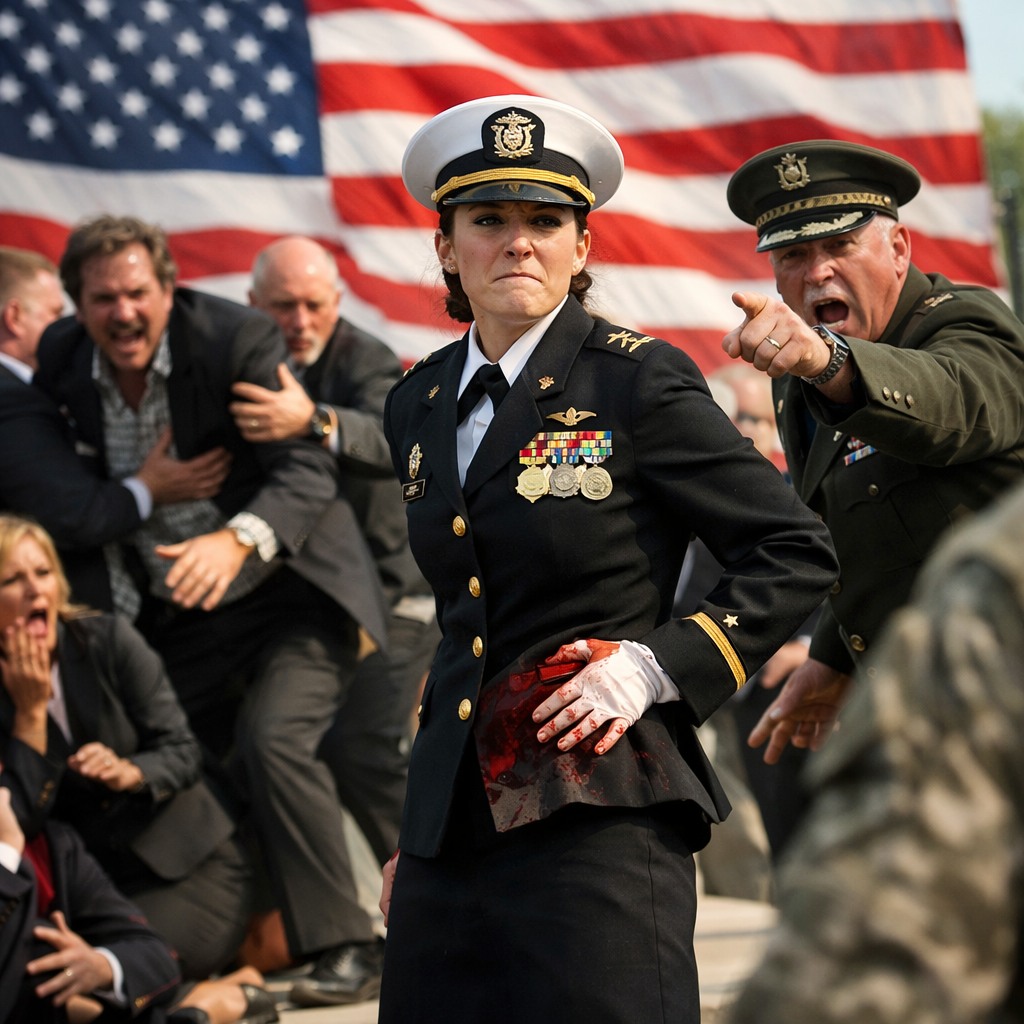
15 Years After My Dad Kicked Me Out, I Saw Him At My Sister’s Wedding. He Sneered: “If It Wasn’t For Pity, No One Would’ve Invited You.” I Just Smiled And Sipped My Wine. Then The Bride Took The Mic And Changed Everything.
The South Carolina sun was merciless that June afternoon, turning the outdoor wedding venue into a glittering oven. I stood near the back in my crisp Army dress uniform, the brass buttons and medals catching the light with every breath. At 34 years old, I had come home for my little sister’s wedding — the […]
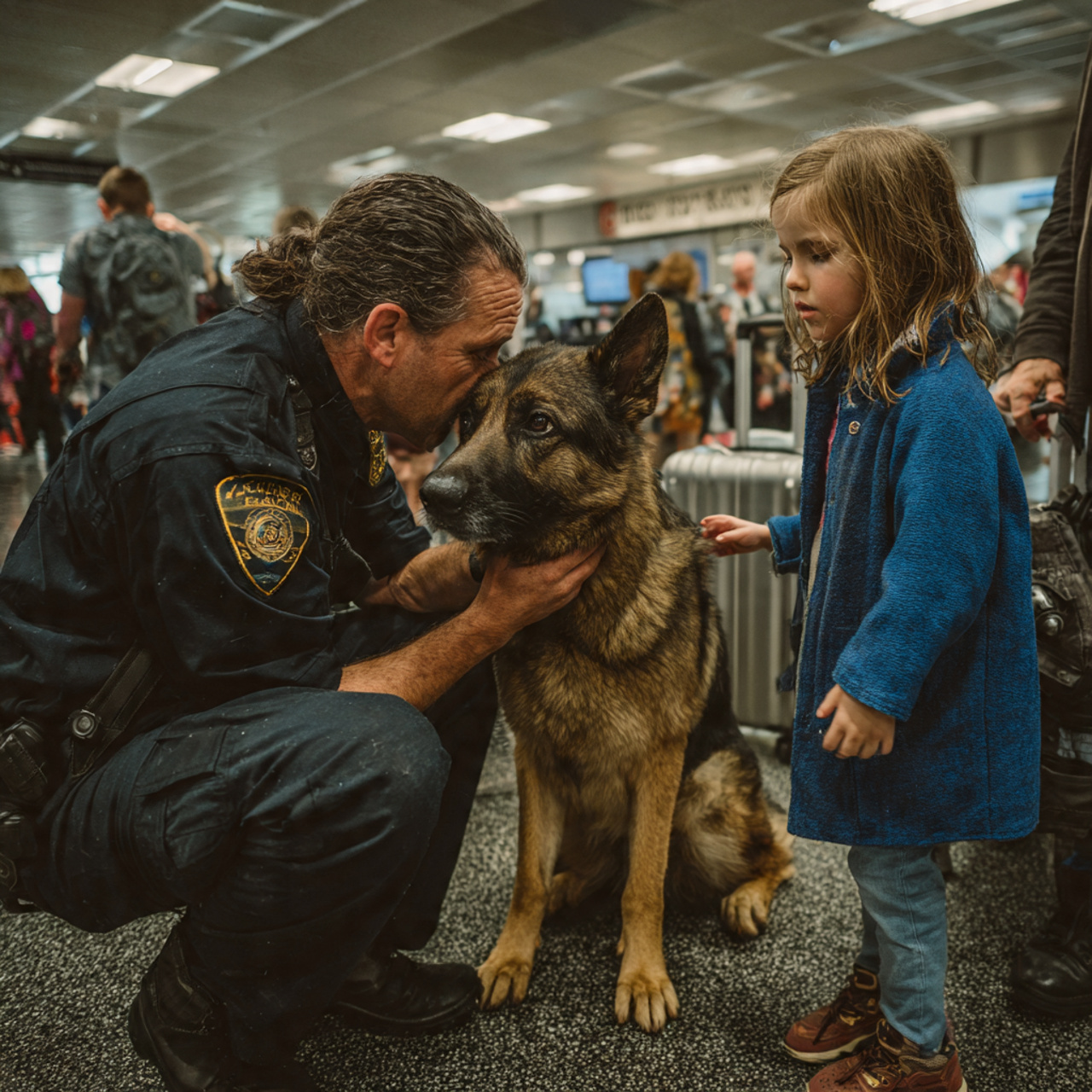
“A POLICE DOG FROZE IN THE AIRPORT. THEN A LITTLE GIRL TAPPED HIS HEAD. WHAT HAPPENED NEXT MADE EVERY TRAVELER STOP. HAVE YOU EVER WITNESSED A SILENT CRY FOR HELP?
“A POLICE DOG FROZE IN THE AIRPORT. THEN A LITTLE GIRL TAPPED HIS HEAD. WHAT HAPPENED NEXT MADE EVERY TRAVELER STOP. HAVE YOU EVER WITNESSED A SILENT CRY FOR HELP? “The airport was a blur of rolling suitcases and muffled announcements until the world stopped. My partner, Rex, went rigid beside me, a statue of […]
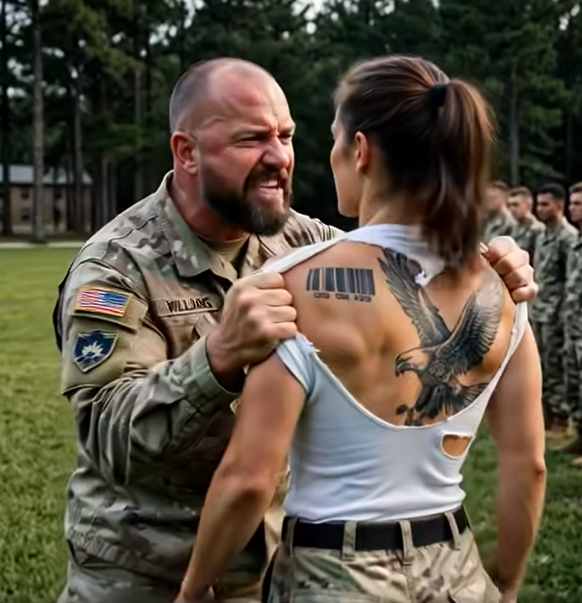
‘DEADWEIGHT?’ — THEY TORE THE SEAL GIRL’S SHIRT, AND THE GENERAL FROZE WHEN HE SAW HER KILL-CODE TATTOO
My name is Rebecca Kane. By the time I stepped off the Black Hawk at Fort Carson, Colorado, I already knew the first rule of special operations: men don’t fear a woman until she stops asking for permission. Twenty-eight years old. Special operations qualified. Transferred under sealed orders into the most brutal inter-branch advanced combat […]
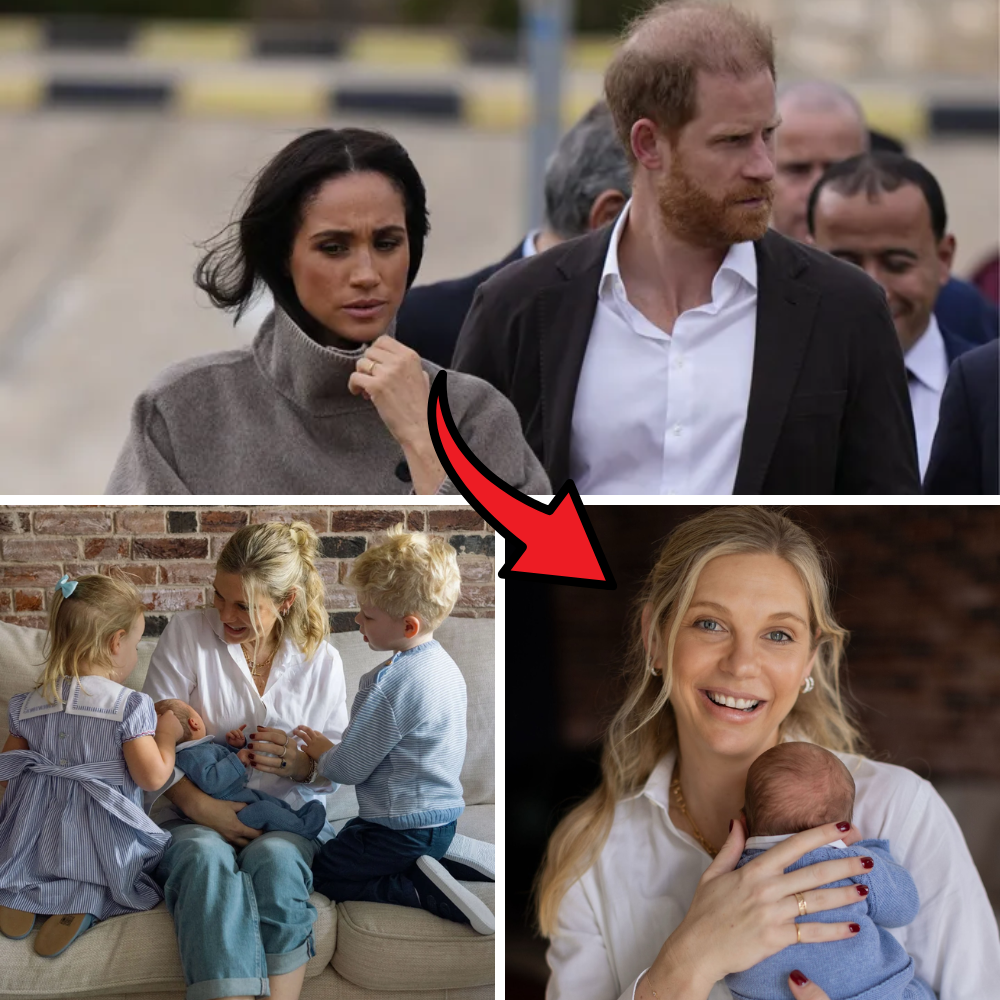
HARRY SHATTERED? Chelsy Davy’s Baby #3 News Hits Prince Harry at His Most Vulnerable Moment!
In a twist no one saw coming, Prince Harry is rumored to be struggling behind closed doors after discovering that his ex, Chelsy Davy, has just welcomed her third child. Insiders claim the news has resurfaced old dreams of the life he once imagined — and the contrast is said to be hitting harder than […]

Kate Middleton’s Blunt Warning to Prince Harry: “This Needs to Stop” After Meghan Markle’s Latest ‘Disrespectful’ Move
Tensions within the British royal family have simmered for years, but a new flashpoint has emerged that reportedly pushed the Princess of Wales to take decisive action. According to well-placed insiders, Kate Middleton is preparing to deliver a direct and firm warning to her brother-in-law Prince Harry regarding what many in royal circles view as […]
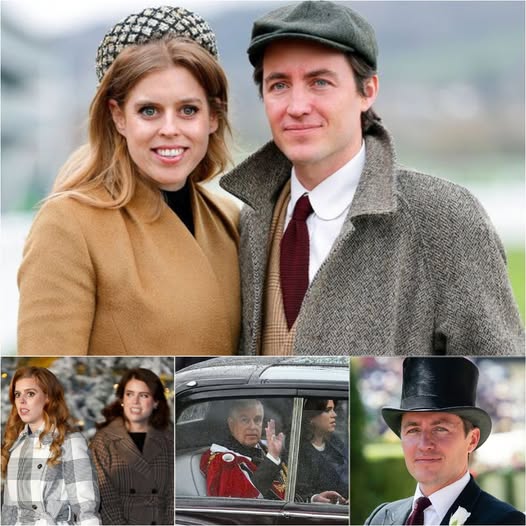
The Quiet Church Service That Turned Heads: Edoardo Mapelli Mozzi’s Unexpected Behavior Sparks Debate
The atmosphere inside the Cotswolds church was exactly as one would expect for a traditional service — calm, respectful, and steeped in centuries-old decorum. Guests sat quietly, the soft murmur of prayers and hymns filling the sacred space. Princess Beatrice and her sister Princess Eugenie were present alongside their husbands, Edoardo Mapelli Mozzi and Jack […]
End of content
No more pages to load