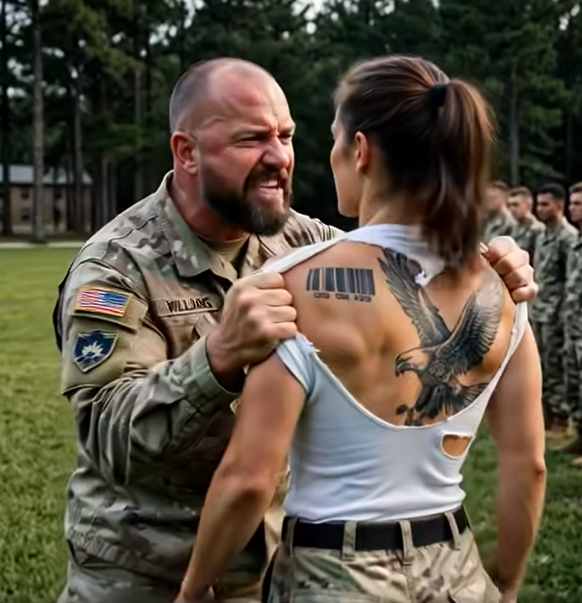
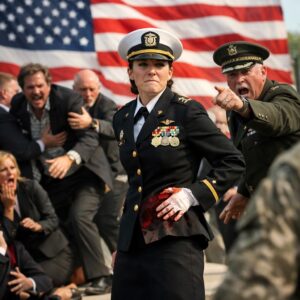
“She’s probably homeless by now,” my aunt whispered at the wedding. Then Marines saluted me…
Part 1
The envelope was thick, expensive, and smug.
It arrived on a Tuesday, slid under my apartment door like it was doing me a favor. The paper was cream-colored and textured, the kind you run your thumb over because it feels like money. My name was printed in looping script that tried too hard to look effortless.
Catelyn Steedman.
Underneath, in smaller letters: You’re invited.
I set the envelope on my kitchen counter and stared at it the way you stare at a suspicious package. The kitchen was small. Everything in my apartment was small—on purpose. Two rooms, clean lines, no extra clutter, nothing that begged questions. My neighbors believed I traveled for work. That part was true. My family believed I traveled for corporate events. That part was the lie.
The lie had weight. It sat in my chest like a stone that never rolled away, no matter how far I ran or how hard I worked.
I opened the envelope carefully, because the truth is I still respected logistics. Even fancy wedding invitations were a supply chain of emotion: paper, ink, intent.
Inside was a card and a smaller note tucked behind it.
The card listed the details: garden estate, ceremony at four, cocktails at five, reception to follow. Belle and Preston. White roses. Oak trees. “A celebration of love.”
The note was handwritten in that same looping cursive, all cheerful curls and dots shaped like tiny hearts.
No plus ones for single aunts. We’re keeping it intimate. XO Belle.
Single aunts.
The words were polite. That was the problem. Polite cruelty was Belle’s specialty. She’d inherited it the way some people inherited cheekbones. My sister Tiffany called it “being particular.” My mother called it “having standards.”
I called it what it was: a knife hidden in lace.
I held the note under my desk lamp for a long moment, studying it like it was evidence. The more I looked, the more I saw the intention behind the ink. Belle wasn’t simply managing a guest list. She was drawing a line. She was reminding me where I belonged.
Back row. Side table. Out of the photos. Out of the story.
I could have declined. I should have declined.
Instead, I picked up my phone and typed a single word into my calendar.
Wedding.
Then I opened my closet and looked at my dress blues hanging in their garment bag, crisp and heavy as a second skin, and I felt something shift in my ribs.
Game on, Belle.
My name is Catelyn Steedman. I’m forty-five years old. For nineteen years I’ve served in the United States Marine Corps, and at this moment I hold the rank of Lieutenant Colonel. I’ve managed supply lines through places where roads were more crater than pavement. I’ve coordinated humanitarian relief under aftershocks and gunfire. I’ve watched young Marines step into chaos and come out changed, carrying the kind of quiet that never leaves you.
I have a scar on my left shoulder from shrapnel. I have ribbons on my chest for things my family never imagined I’d do.
And my family thinks I plan corporate retreats.
The wedding was held at an old estate two hours north of the city, the kind of place that smelled like fresh-cut grass and inherited money. White tents billowed on the lawn like sails, fairy lights already twinkling even though the sun hadn’t set. Guests milled in pastel dresses and seersucker suits, laughing too loudly at nothing in particular. Champagne flutes caught the light like tiny signals.
I arrived alone, in civilian clothes at first: a simple navy sheath dress, low heels, hair pinned back the way I wore it when I didn’t want to be noticed. My dress blues were folded neatly in the trunk of the rental car, hidden under a blanket. I wasn’t ready to show my hand yet.
Belle spotted me the moment I stepped onto the grass. She was radiant in ivory lace, hair swept into an elaborate updo, diamond studs flashing with every turn of her head. She floated over, arms open, smile fixed.
“Catelyn! You made it!” She air-kissed both cheeks. “I was worried the invitation might have gotten lost. You know how the mail is these days.”
Her eyes flicked over me—quick inventory, no warmth. “You look… rested.”
Translation: You look like you haven’t been taking care of yourself.
I smiled the small, polite smile I’d practiced in mirrors for years. “Wouldn’t miss it for the world, Belle.”
She looped her arm through mine and steered me toward the ceremony chairs. “We saved you a seat in the back row. It’s quieter there. You can slip out early if you need to.”
I let her lead. Let her think she was winning.
The ceremony was perfect. Preston said his vows in a voice that cracked just enough to seem sincere. Belle cried prettily. The string quartet played Pachelbel’s Canon like it had been written for them. When the officiant pronounced them husband and wife, the crowd stood and cheered. Belle threw her bouquet straight into the arms of one of her sorority sisters, who squealed like she’d won the lottery.
At the cocktail hour, I found my assigned table—far corner, near the kitchen entrance. My name card read “Catelyn Steedman – Aunt.” No plus-one. No title. Just Aunt.
I sat. I sipped water. I watched my mother glide past without stopping, her eyes sliding over me the way they always did: disappointment wrapped in silk. My father was already three whiskeys in, laughing too loud with Preston’s groomsmen. Tiffany, my younger sister, gave me a quick wave from across the lawn before turning back to her phone.
No one asked where I’d been. No one asked what I did. They never did.
Then the DJ announced the first dance.
Belle and Preston floated onto the floor, all smiles and slow spins. The song was something soft and romantic—Ed Sheeran, probably. Halfway through, Belle’s eyes found me again. She tilted her head, a tiny smirk playing at her lips, as if to say: See? This is what winning looks like.
That was when I stood.
I walked back to the parking lot, heels clicking on the stone path. The trunk of the rental car opened with a soft thunk. I changed right there, behind the open door, the way I’d changed in forward operating bases a thousand times—quick, efficient, no fuss. The dress blues settled over me like armor. Medals clicked softly against my chest. The cover went on last, squared perfectly.
When I walked back onto the lawn, the first person to notice was a young waiter carrying a tray of canapés. His eyes widened. He almost dropped the tray.
Then the ripple started.
Heads turned. Conversations faltered. Phones came out.
I kept walking, steady, shoulders back, the way I’d walked into rooms full of generals and rooms full of chaos.
Belle saw me first. Her smile froze. Preston’s arm tightened around her waist.
My mother gasped, hand flying to her mouth.
My father stopped mid-laugh, glass halfway to his lips.
I reached the dance floor just as the song ended. The DJ, sensing something electric, let the music fade.
Silence fell like a curtain.
I stopped in front of Belle and Preston. Slowly, deliberately, I removed my cover and tucked it under my left arm.
Then I came to attention.
And I saluted.
Not a casual salute. The kind drilled into muscle memory: crisp, precise, held.
The entire lawn went still.
Then, from the edge of the crowd, movement.
A man in his late twenties stepped forward. He was wearing a cheap rented tux, but his posture snapped straight the moment he saw me. He came to attention and returned the salute.
Another man joined him. Then another. Five. Ten. Fifteen.
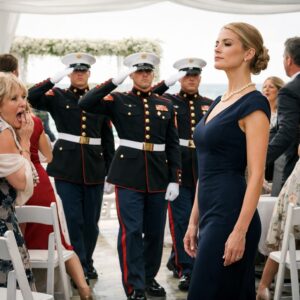
Marines—some active, some veterans—who had been invited as Preston’s college buddies or distant cousins. They recognized the blues. They recognized the ribbons. They recognized rank.
One by one, they saluted back.
The silence stretched, thick with something heavier than surprise.
Belle’s face had gone pale. Her bouquet trembled in her hand.
I held the salute a moment longer, then dropped it.
“Congratulations on your marriage,” I said, voice calm and carrying. “I wish you both every happiness.”
Then I turned, walked off the dance floor, and kept walking until I reached the parking lot.
Behind me, I heard the first tentative clap. Then another. Then a wave of applause that grew until it drowned out the string quartet trying to restart.
I didn’t look back.
In the car, I sat for a long minute with my hands on the wheel, breathing.
The stone in my chest felt lighter.
Not gone. But lighter.
I started the engine and drove away from the white tents, the white roses, the white lies.
And for the first time in nineteen years, I didn’t feel like I was hiding.
News
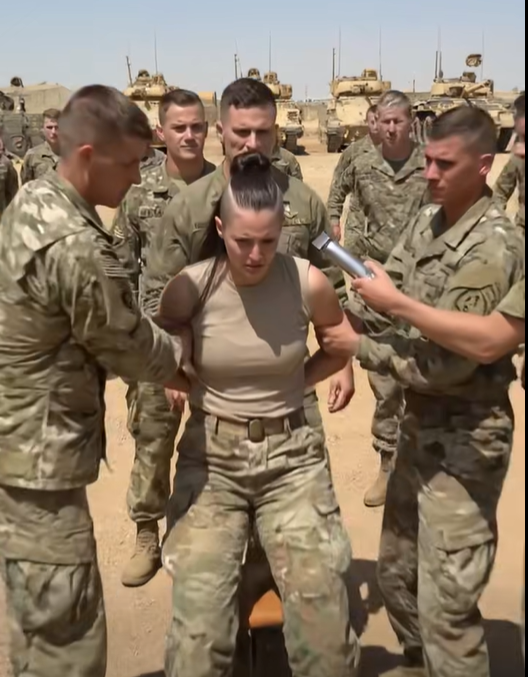
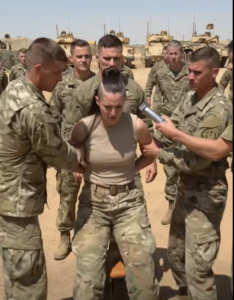
“Shave Her Head,” the Sergeant Ordered Coldly. “If Discipline Won’t Break Her, Maybe Humiliation Will.” But What They Didn’t Know Was That the Woman They Underestimated Would Bring Their Entire Base to Its Knees.
General Alexander Vance had heard the whispers for months: Fort Blackwood was rotting from within. Soldiers spoke in hushed tones of systematic humiliation disguised as “discipline,” falsified training records, missing supply funds that somehow vanished into private accounts, and a toxic command climate built on fear and intimidation. Every official inspection came back sparkling clean […]
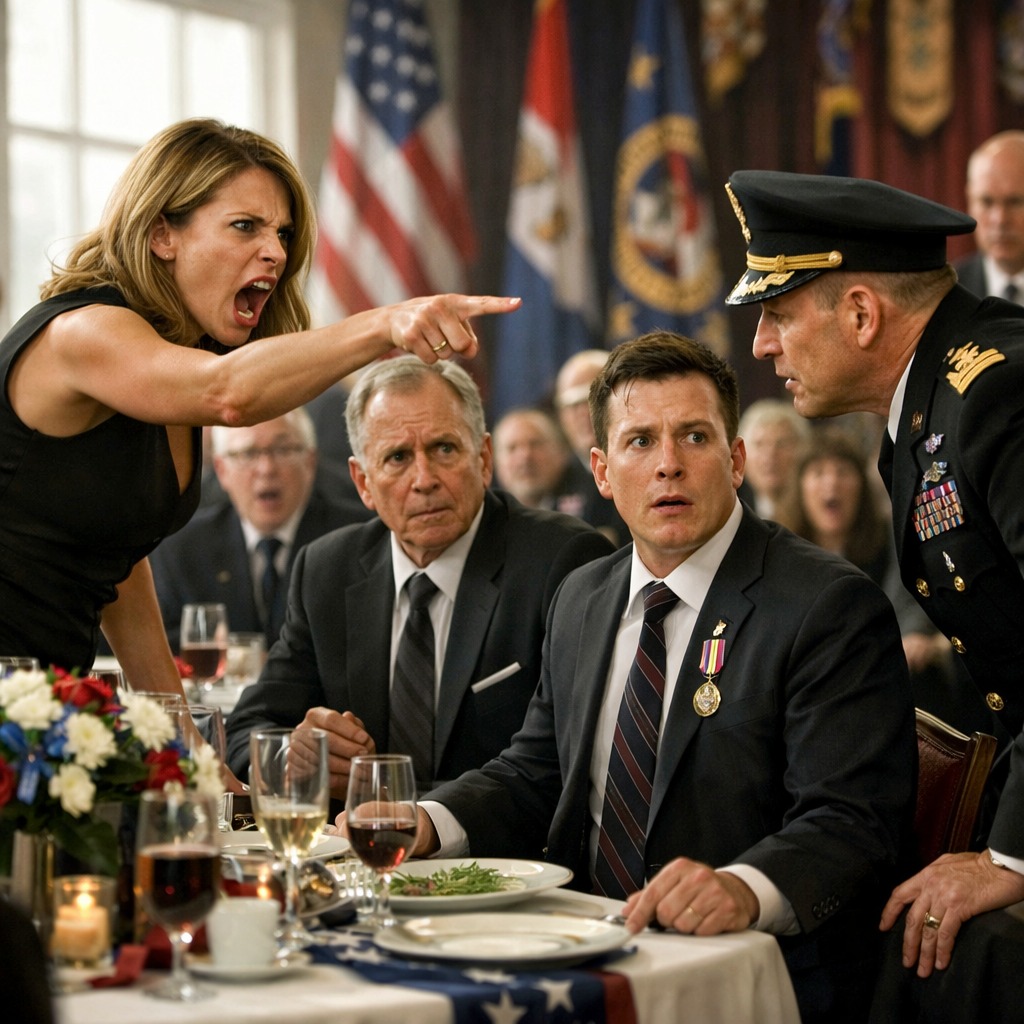
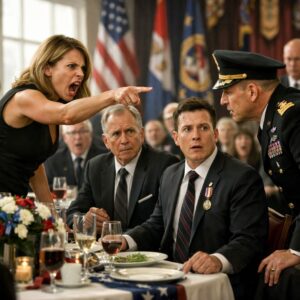
At A Veterans’ Dinner, The Colonel Leaned Toward My Brother And Asked One Simple Question: “Can You Tell Me How You Earned This Decoration, Son?” His Face Turned White. He Pointed At My Father And Said: “He Told Me It Belonged To Our Uncle.” The Uncle Never Existed.
The Ridgewood Armory smelled like every other veterans’ event I’d ever attended: floor wax, overcooked chicken, old coffee, and the faint metallic tang of too many American flags. Fluorescent lights buzzed overhead, casting a harsh glow on rows of folding tables and men in ill-fitting blazers trying to look like they still belonged in uniform. […]
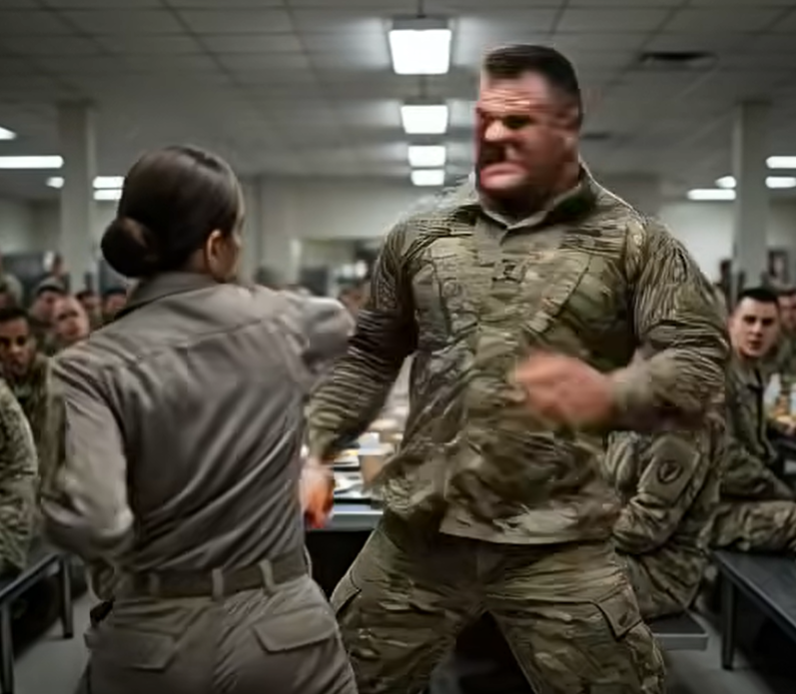
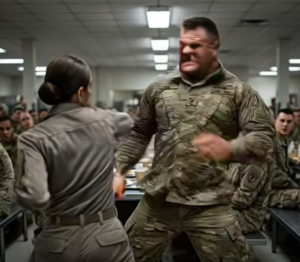
“Die, B*tch,” He Spat, Swinging a Massive Fist in the Mess Hall. He Thought I Was an Easy Target — He Had No Idea He Just Attacked a Classified SEAL Shadow Operative.
I was running on fumes. Seventy-two hours of off-the-books reconnaissance in the frozen Alaskan wilderness had left every muscle screaming. My joints ached from crawling through ice-crusted snow, my eyes burned from staring through night-vision gear, and the only thing keeping me upright was the promise of a hot meal and twelve hours of blackout […]
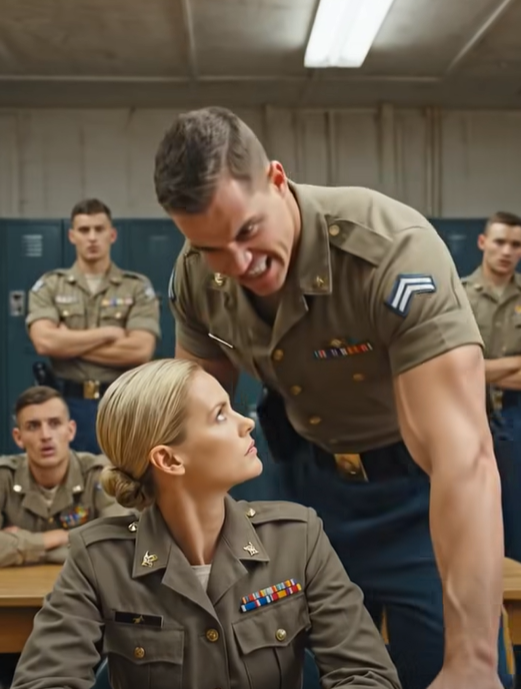
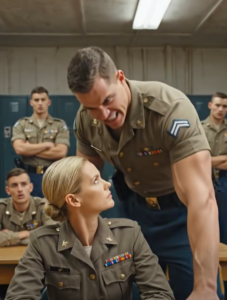
“Do You Know Who I Am?” He Pushed Her — Seconds Later, One ID Card Ended His Career
The dim lights of Rusty’s Bar flickered like dying stars just outside Camp Pendleton. It was a Friday night, the kind where Marines came to forget the sand and the screams they carried home from deployment. I had come here for the opposite reason — to disappear. My name is Commander Thalia Renwick. Highly decorated […]
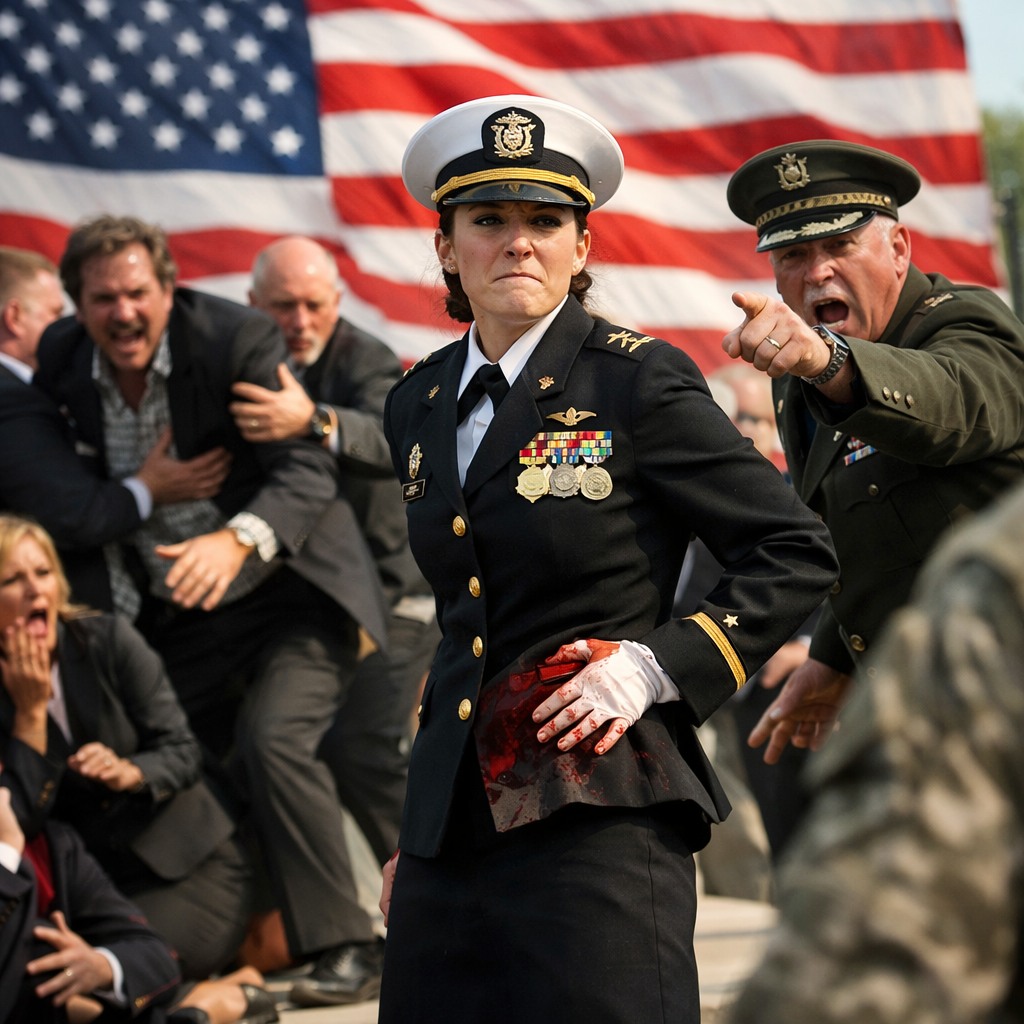
15 Years After My Dad Kicked Me Out, I Saw Him At My Sister’s Wedding. He Sneered: “If It Wasn’t For Pity, No One Would’ve Invited You.” I Just Smiled And Sipped My Wine. Then The Bride Took The Mic And Changed Everything.
The South Carolina sun was merciless that June afternoon, turning the outdoor wedding venue into a glittering oven. I stood near the back in my crisp Army dress uniform, the brass buttons and medals catching the light with every breath. At 34 years old, I had come home for my little sister’s wedding — the […]
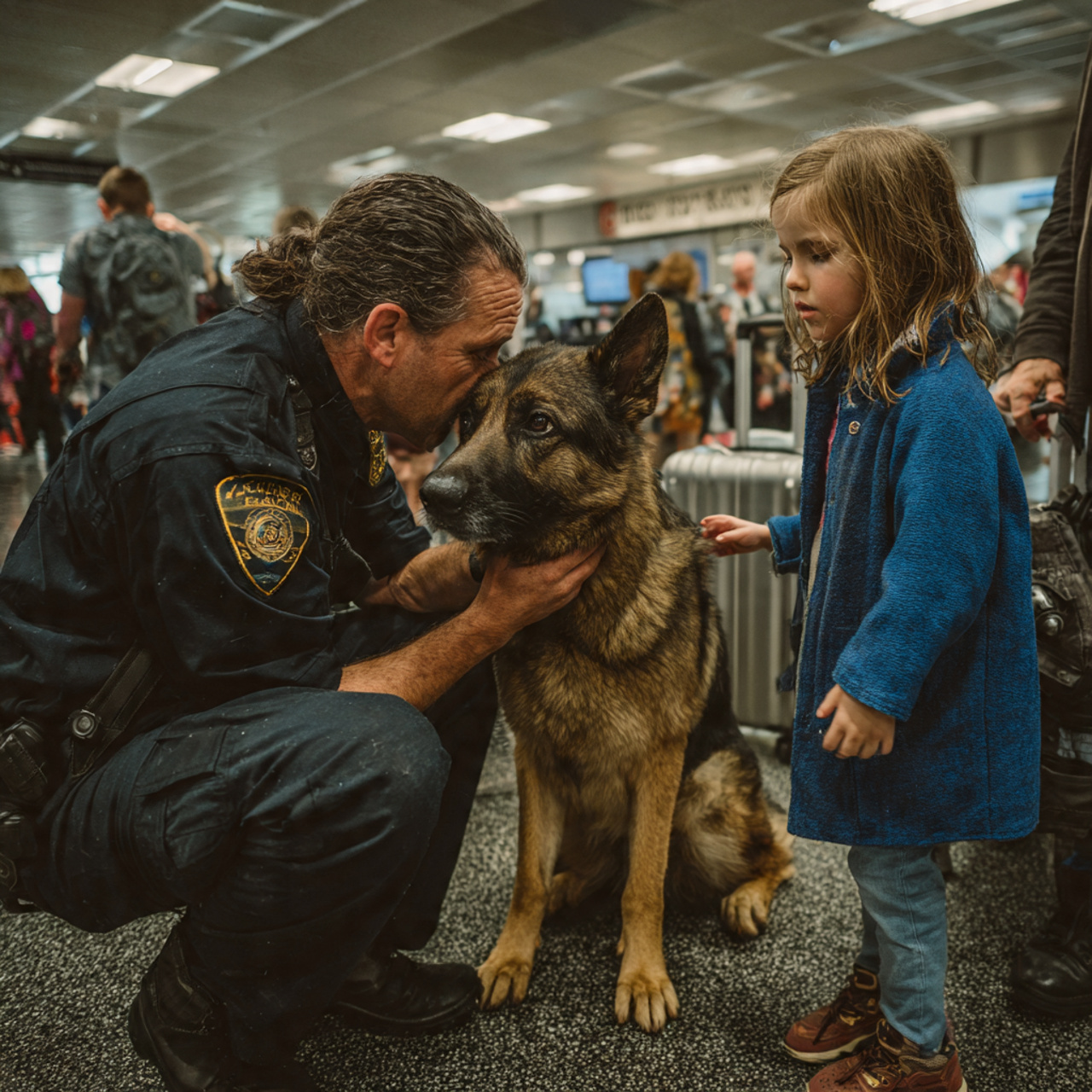
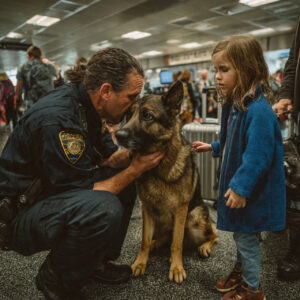
“A POLICE DOG FROZE IN THE AIRPORT. THEN A LITTLE GIRL TAPPED HIS HEAD. WHAT HAPPENED NEXT MADE EVERY TRAVELER STOP. HAVE YOU EVER WITNESSED A SILENT CRY FOR HELP?
The bustling international airport was a whirlwind of rolling suitcases, hurried announcements, and weary travelers rushing to their gates. Officer Liam Mercer patrolled the terminal with his loyal K9 partner, Rex — a highly trained German Shepherd known for his sharp instincts in detection and child safety operations. Everything seemed routine until Rex suddenly froze […]
End of content
No more pages to load