The 68th Grammy Awards on February 1, 2026, at Crypto.com Arena in Los Angeles were filled with celebration, but one moment cut through the glamour and applause like a knife through silence. Sharon Osbourne, widow of rock legend Ozzy Osbourne, stepped onto the stage during the Premiere Ceremony—visibly trembling, eyes already brimming—clutching the arm of Yungblud as he accepted his Grammy for Best Rock Performance. The win was for his live cover of Black Sabbath’s “Changes,” recorded at Ozzy’s final concert, “Back to the Beginning,” at Villa Park in Birmingham on July 5, 2025—just weeks before Ozzy’s death on July 22, 2025, at age 76.
Sharon’s appearance wasn’t planned as a solo spotlight. Yungblud, real name Dominic Richard Harrison, had invited her up after his name was called. The 28-year-old British rocker, who had formed a close bond with the Osbourne family in recent years, used the platform to pay tribute to the man he called his “idol.” His acceptance speech was raw, passionate, and unfiltered—peppered with expletives that only amplified the emotion.
“To grow up loving an idol who helps you figure out your identity, not only as a musician but also as a man, is something I’m truly grateful for,” Yungblud said, voice shaking. “But to then get to know them and form a relationship with them, honor them at their final show and receive this… is something I am struggling to comprehend. We f***ing love you, Ozzy.”
He then turned to Sharon, who had joined him on stage, and added: “We want to thank Sharon, Jack, Kelly, and Amy for this opportunity. Everyone in the Back to the Beginning show, the whole band with me right now—we’re six generations of rock musicians that came together in the name of our genre, in the name of Sabbath, in the name of Ozzy Osbourne. God bless rock music and god bless f***ing Ozzy Osbourne.”

The words landed like a punch. Sharon, dressed in black, stood beside him, one hand gripping the podium for support. As Yungblud spoke, her composure cracked. Tears streamed down her face. She pressed a hand to her mouth, shoulders heaving, struggling to hold back sobs. The arena—filled with thousands and broadcast to millions—fell into a hushed reverence. Cameras lingered on her grief, capturing every tear, every shaky breath.
For Sharon Osbourne, the pain was still raw. Ozzy had passed away just six months earlier, on July 22, 2025, after years of battling Parkinson’s disease and other health complications. His death came shortly after what was intended as his farewell performance with Black Sabbath at Villa Park—a reunion that brought together original members and generations of rock royalty for “Back to the Beginning.” That concert had been emotional for everyone involved; for Sharon, it was the last time she saw her husband perform.
Yungblud’s cover of “Changes”—a tender, stripped-down ballad Ozzy had recorded in 1972 and revisited live—had been captured at that final show. Winning for it felt like fate. The song, written by Ozzy and guitarist Geezer Butler, is a quiet, introspective reflection on love, loss, and return. Hearing it honored at the Grammys, with Sharon standing right there, turned the award into something far bigger than music: a living tribute to a man whose voice had shaped generations.
Sharon’s breakdown wasn’t hidden. She made no attempt to compose herself for the cameras. Instead, she let the tears fall—grief mixed with pride, heartbreak laced with gratitude. As Yungblud finished speaking, he turned to her again, and they shared a long, tearful embrace. Kelly and Jack Osbourne, seated in the audience, watched with their own tears, hands clasped tightly.
The moment reverberated far beyond the arena. Social media exploded with clips and reactions. Fans called it one of the most authentic and moving tributes in Grammy history. “Sharon’s tears said everything words couldn’t,” one viewer posted. Others praised Yungblud for his respect and grace: “He didn’t just win an award—he gave the Osbournes a piece of Ozzy back.” The image of Sharon clutching Yungblud’s arm, overcome with emotion, became an instant symbol of enduring love and legacy.
Later that evening, during the main ceremony’s In Memoriam segment, Ozzy received another tribute: an all-star performance of Black Sabbath’s “War Pigs” by Post Malone, Slash, Duff McKagan, Chad Smith, and Andrew Watt. Sharon, Kelly, and Jack watched from the audience, visibly emotional once more. Sharon later called the night “blessed” in interviews, noting how much Ozzy was honored throughout the evening.
For Sharon Osbourne, the Grammys were never just about awards. They were a public reckoning with private pain. Six months after losing the man she had stood beside through addiction, fame, illness, and everything in between, she walked onto that stage carrying decades of memories—and the fresh wound of absence. Yungblud’s tribute didn’t heal the loss, but it reminded her—and the world—that Ozzy’s voice still echoed, his influence still inspired, his legacy still lived.
In a room full of bright lights and loud applause, Sharon Osbourne’s tears reminded everyone that grief doesn’t fade under spotlights. It simply shows up, raw and real, and sometimes the most powerful tribute is letting the world see you feel it.
Ozzy Osbourne would have loved it—not the glamour or the trophy, but the love that refused to let him go.
News
“Shave Her Head,” the Sergeant Ordered Coldly. “If Discipline Won’t Break Her, Maybe Humiliation Will.” But What They Didn’t Know Was That the Woman They Underestimated Would Bring Their Entire Base to Its Knees.
General Alexander Vance had heard the whispers for months: Fort Blackwood was rotting from within. Soldiers spoke in hushed tones of systematic humiliation disguised as “discipline,” falsified training records, missing supply funds that somehow vanished into private accounts, and a toxic command climate built on fear and intimidation. Every official inspection came back sparkling clean […]
At A Veterans’ Dinner, The Colonel Leaned Toward My Brother And Asked One Simple Question: “Can You Tell Me How You Earned This Decoration, Son?” His Face Turned White. He Pointed At My Father And Said: “He Told Me It Belonged To Our Uncle.” The Uncle Never Existed.
The Ridgewood Armory smelled like every other veterans’ event I’d ever attended: floor wax, overcooked chicken, old coffee, and the faint metallic tang of too many American flags. Fluorescent lights buzzed overhead, casting a harsh glow on rows of folding tables and men in ill-fitting blazers trying to look like they still belonged in uniform. […]
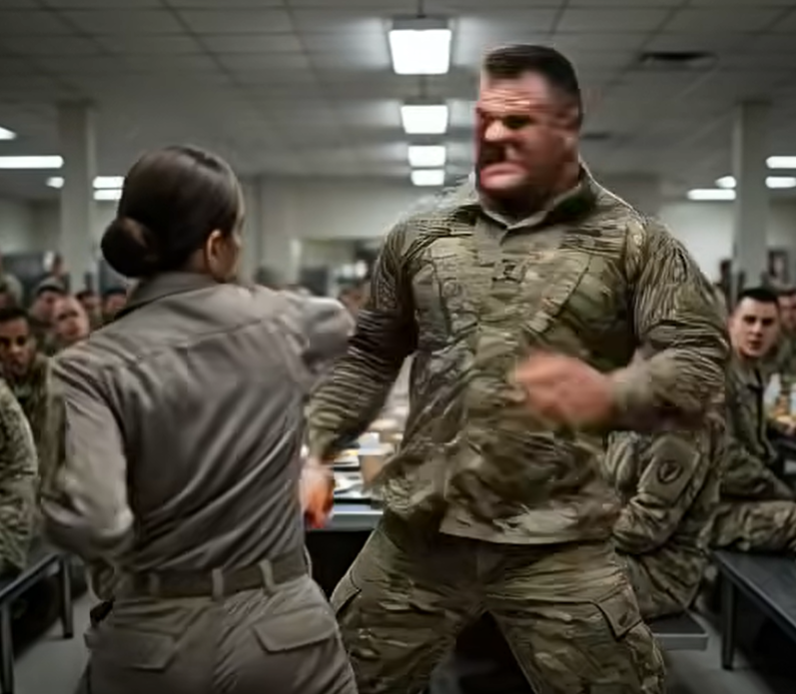
“Die, B*tch,” He Spat, Swinging a Massive Fist in the Mess Hall. He Thought I Was an Easy Target — He Had No Idea He Just Attacked a Classified SEAL Shadow Operative.
I was running on fumes. Seventy-two hours of off-the-books reconnaissance in the frozen Alaskan wilderness had left every muscle screaming. My joints ached from crawling through ice-crusted snow, my eyes burned from staring through night-vision gear, and the only thing keeping me upright was the promise of a hot meal and twelve hours of blackout […]
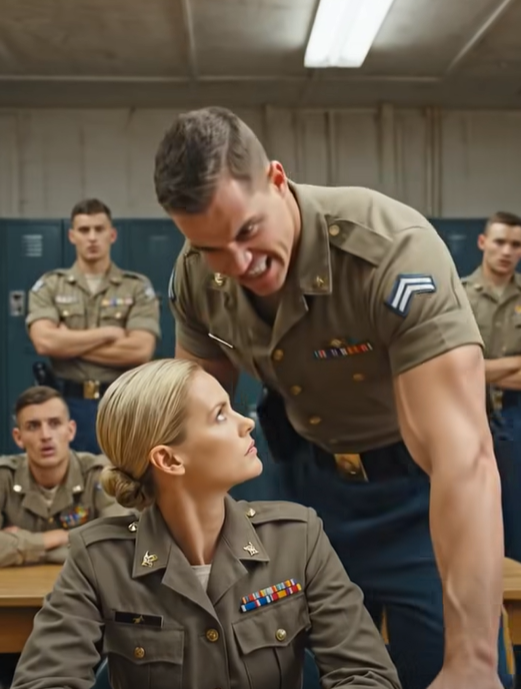
“Do You Know Who I Am?” He Pushed Her — Seconds Later, One ID Card Ended His Career
The dim lights of Rusty’s Bar flickered like dying stars just outside Camp Pendleton. It was a Friday night, the kind where Marines came to forget the sand and the screams they carried home from deployment. I had come here for the opposite reason — to disappear. My name is Commander Thalia Renwick. Highly decorated […]
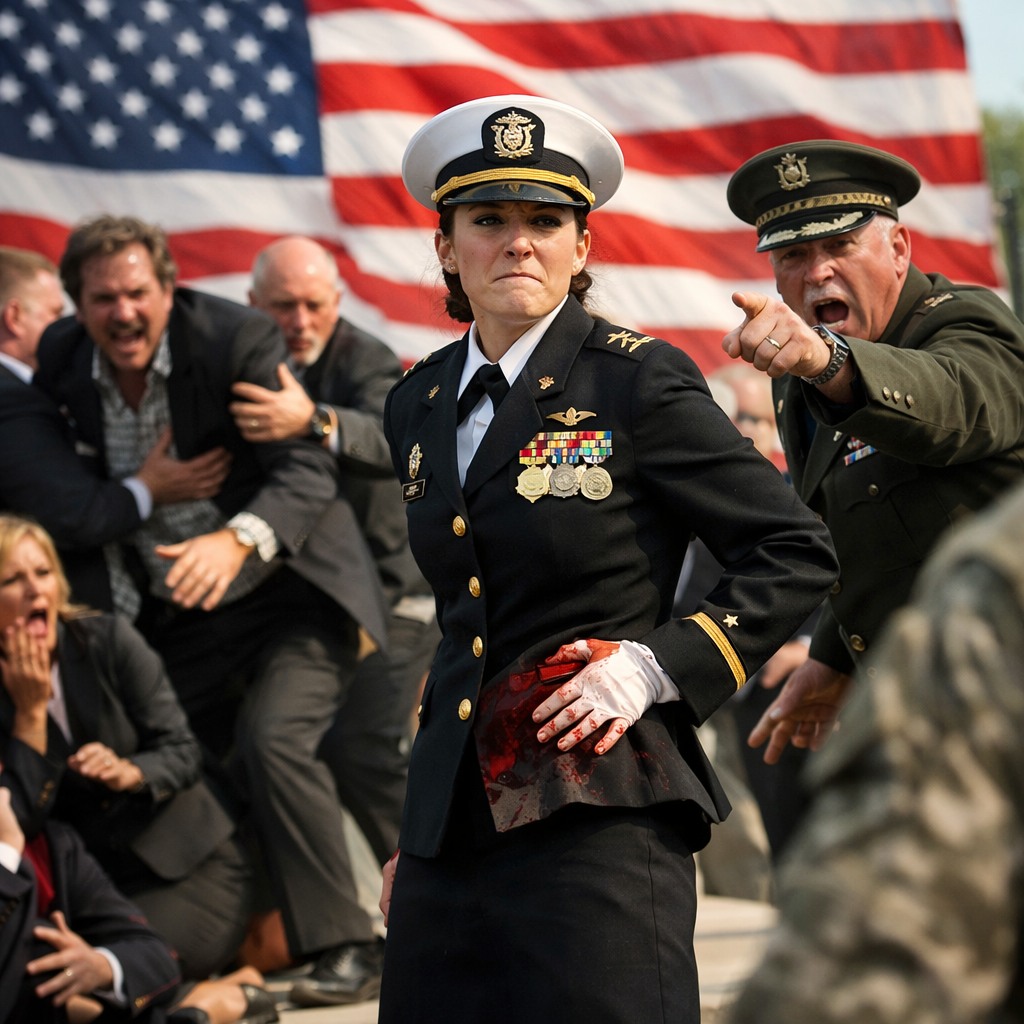
15 Years After My Dad Kicked Me Out, I Saw Him At My Sister’s Wedding. He Sneered: “If It Wasn’t For Pity, No One Would’ve Invited You.” I Just Smiled And Sipped My Wine. Then The Bride Took The Mic And Changed Everything.
The South Carolina sun was merciless that June afternoon, turning the outdoor wedding venue into a glittering oven. I stood near the back in my crisp Army dress uniform, the brass buttons and medals catching the light with every breath. At 34 years old, I had come home for my little sister’s wedding — the […]
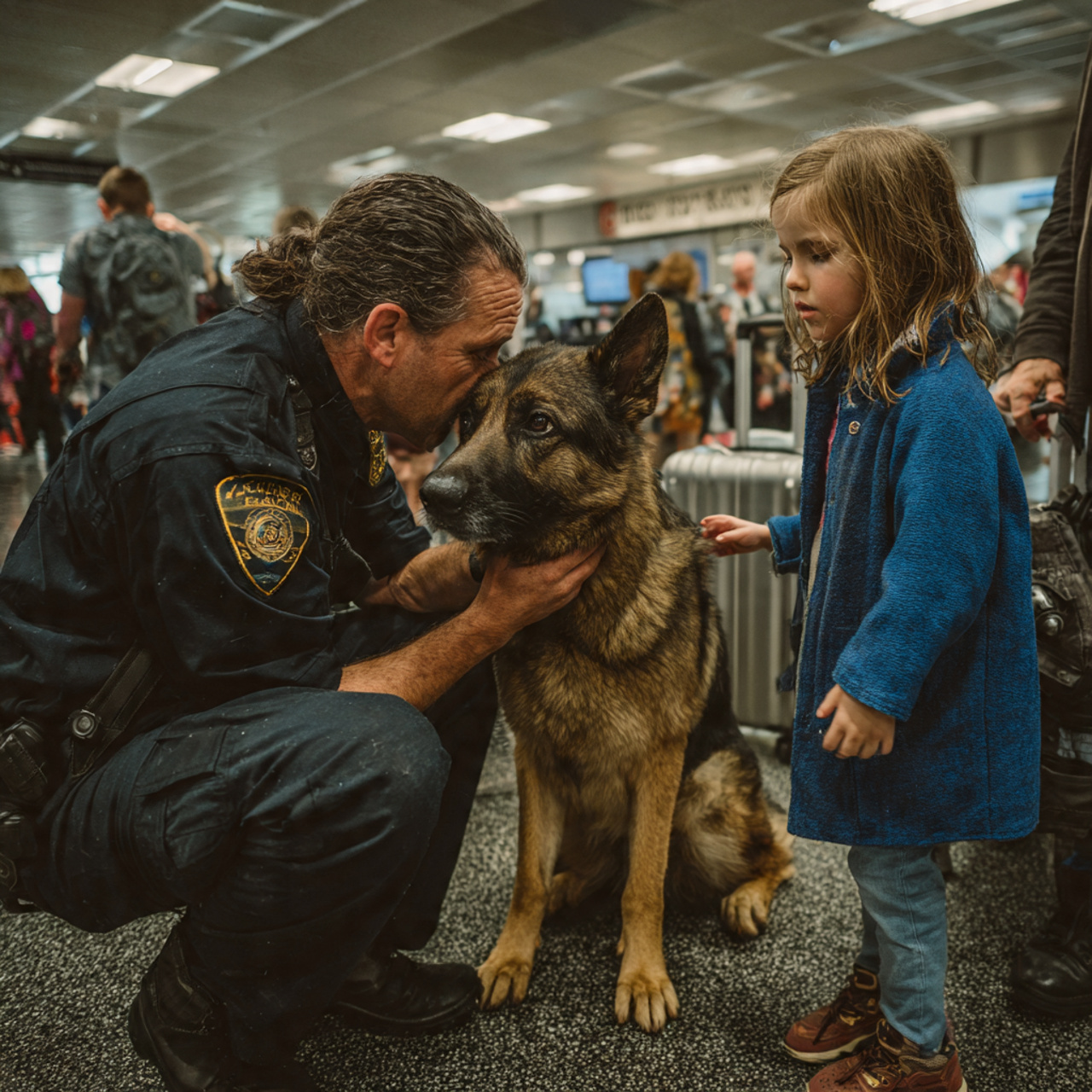
“A POLICE DOG FROZE IN THE AIRPORT. THEN A LITTLE GIRL TAPPED HIS HEAD. WHAT HAPPENED NEXT MADE EVERY TRAVELER STOP. HAVE YOU EVER WITNESSED A SILENT CRY FOR HELP?
The bustling international airport was a whirlwind of rolling suitcases, hurried announcements, and weary travelers rushing to their gates. Officer Liam Mercer patrolled the terminal with his loyal K9 partner, Rex — a highly trained German Shepherd known for his sharp instincts in detection and child safety operations. Everything seemed routine until Rex suddenly froze […]
End of content
No more pages to load