Country music star Riley Green’s Australian tour took a shocking and violent turn on March 14, 2026, when a fan threw a mobile phone that struck him directly in the face during a packed show at Margaret Court Arena in Melbourne. The impact left the singer bleeding from near his ear, with a thin stream of blood visibly running down his neck as stunned fans watched in disbelief. Viral videos captured the chaotic moment in slow motion and real time, showing the phone slamming into Green’s head mid-performance, forcing a brief pause in his set as crew rushed to assist him.
The incident occurred during Green’s second Melbourne show on his Cowboy As It Gets Tour, a sold-out run that had already drawn enthusiastic crowds across Sydney and Melbourne. Green was in the middle of engaging with the audience—likely during or just after performing one of his signature heartfelt ballads like “I Wish Grandpas Never Died”—when the object came hurtling from the crowd. The phone hit him on the side of the face, near his ear and neck area, causing immediate bleeding. Footage shows Green instinctively touching the wound, looking surprised but composed, as blood began to trickle down his skin.
Security sprang into action almost instantly. Green, still holding his microphone, pointed toward the section where the throw originated and shouted instructions to remove the culprit. In clips shared by attendees and later amplified across social media, he can be heard clearly demanding, “Get his fat ass out of here,” as venue staff and security escorted the fan out of the arena. The crowd’s reaction was a mix of boos directed at the offender and cheers for Green’s toughness, with many fans chanting his name in support as he wiped blood away with a towel handed to him by a crew member.
Remarkably, Green refused to let the incident derail the night. After a short pause to clean up and assess the injury, he returned to the microphone and powered through the rest of the set. He even cracked jokes about the moment later in the show, displaying the same resilient, down-to-earth demeanor that has endeared him to country music fans worldwide. “Y’all see how tough I am?” he quipped at one point, earning roars of approval from the audience. The show continued to its conclusion, with Green delivering full energy despite the visible blood on his shirt and neck.
Later that night and into the following day, Green took to Instagram to share photos of the injury, showing a close-up of the cut near his ear that required six stitches. The images revealed a nasty gash and bruising, underscoring how hard the phone had struck him. In his caption, he kept the tone light but firm, thanking fans for their support and making clear that such behavior has no place at concerts. “Not leaving Australia without a few battle scars,” he wrote, alongside images of the wound and him smiling through the pain backstage.
The fan responsible was immediately ejected from the venue, and reports indicate venue security and local authorities handled the matter swiftly. No further legal updates were available in the immediate aftermath, but the incident has reignited conversations about artist safety and crowd behavior at live events. Throwing objects onstage has become an alarming trend in recent years, with artists from Bebe Rexha to Kelsea Ballerini suffering similar assaults. Green’s case—where the object was a full-sized mobile phone thrown with enough force to cause real injury—has drawn particular outrage from fans and fellow performers alike.
Green’s Australian tour, part of an expanding international footprint for the Alabama native, had been a triumph up to that point. His blend of traditional country storytelling, heartfelt lyrics, and rowdy anthems has resonated strongly with overseas audiences, and the Melbourne shows were packed with enthusiastic crowds singing along to hits like “There Was This Girl,” “Different ‘Round Here,” and “In Love by Now.” The violent interruption stood in stark contrast to the warm, communal energy that had defined the run.
In the wake of the incident, country music peers and fans rallied around Green online. Fellow artists posted messages of support, condemning the act and praising his professionalism in continuing the show. Social media was flooded with clips of the moment, many slowed down to show the phone’s trajectory and impact, alongside comments expressing shock, anger at the fan, and admiration for Green’s grit. “That’s not a fan—that’s assault,” was a common sentiment, with many calling for stricter security measures and consequences for such dangerous behavior.
Green’s toughness in the face of adversity is nothing new. The singer, who first gained attention through his time on reality TV and his authentic, no-frills approach to country music, has built a reputation as a resilient, relatable artist who connects deeply with fans. His willingness to laugh off the injury and keep performing only reinforced that image. By the next morning, he was already posting lighthearted updates, signaling that the incident wouldn’t define the tour or his spirit.
The Melbourne show will now be remembered not just for the music, but for the shocking moment that tested Green’s resolve. As the tour continues and the singer heals—six stitches and all—the hope is that the industry and fans alike take this as a wake-up call. Concerts should be places of joy and connection, not danger. Riley Green proved once again why he’s a favorite: he shows up, bleeds if he has to, cracks a joke, and keeps singing. For that, the country world stands behind him—minus the thrown phones.
News
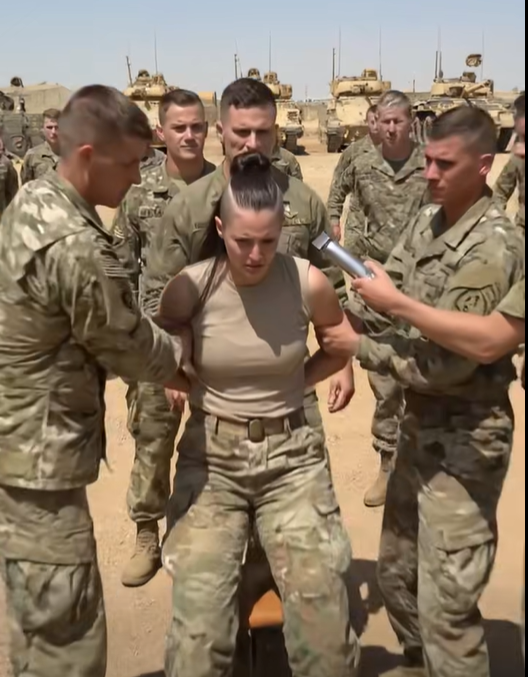
“Shave Her Head,” the Sergeant Ordered Coldly. “If Discipline Won’t Break Her, Maybe Humiliation Will.” But What They Didn’t Know Was That the Woman They Underestimated Would Bring Their Entire Base to Its Knees.
General Alexander Vance had heard the whispers for months: Fort Blackwood was rotting from within. Soldiers spoke in hushed tones of systematic humiliation disguised as “discipline,” falsified training records, missing supply funds that somehow vanished into private accounts, and a toxic command climate built on fear and intimidation. Every official inspection came back sparkling clean […]
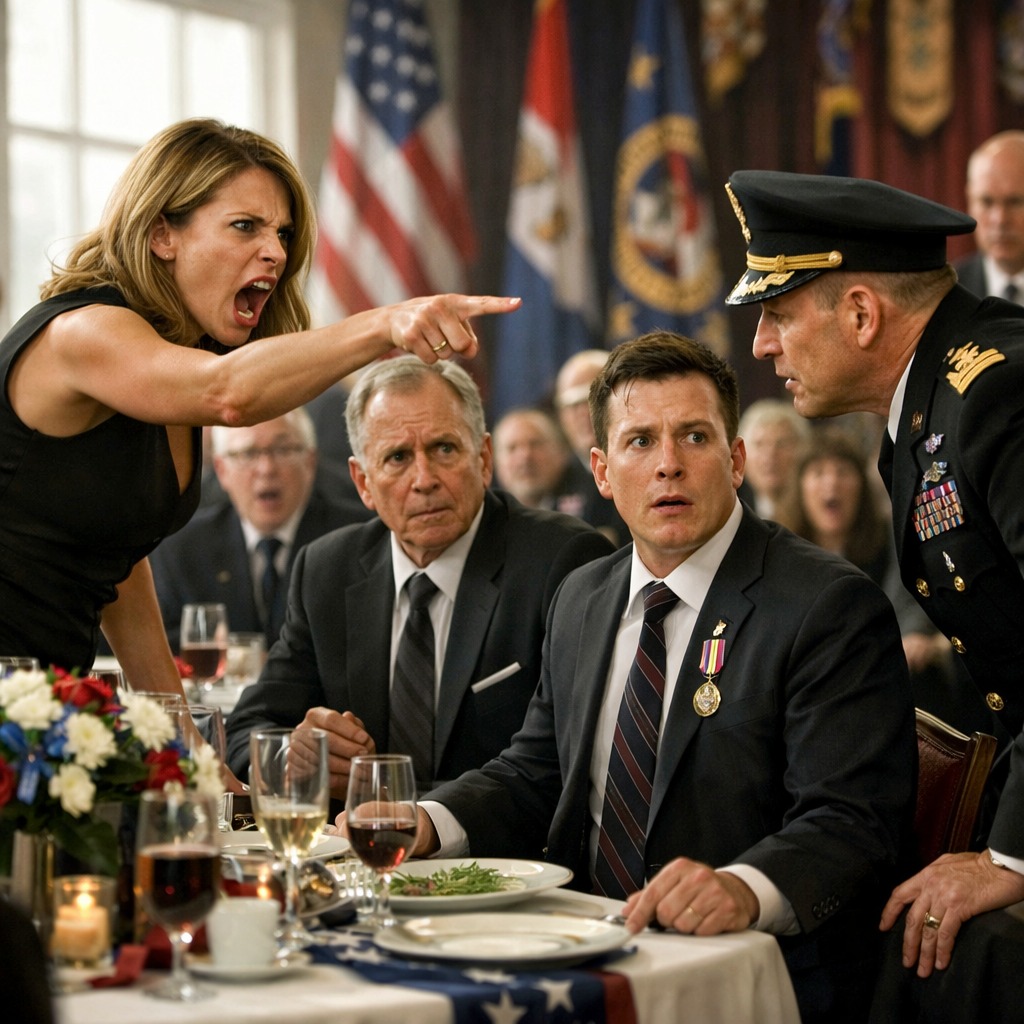
At A Veterans’ Dinner, The Colonel Leaned Toward My Brother And Asked One Simple Question: “Can You Tell Me How You Earned This Decoration, Son?” His Face Turned White. He Pointed At My Father And Said: “He Told Me It Belonged To Our Uncle.” The Uncle Never Existed.
The Ridgewood Armory smelled like every other veterans’ event I’d ever attended: floor wax, overcooked chicken, old coffee, and the faint metallic tang of too many American flags. Fluorescent lights buzzed overhead, casting a harsh glow on rows of folding tables and men in ill-fitting blazers trying to look like they still belonged in uniform. […]
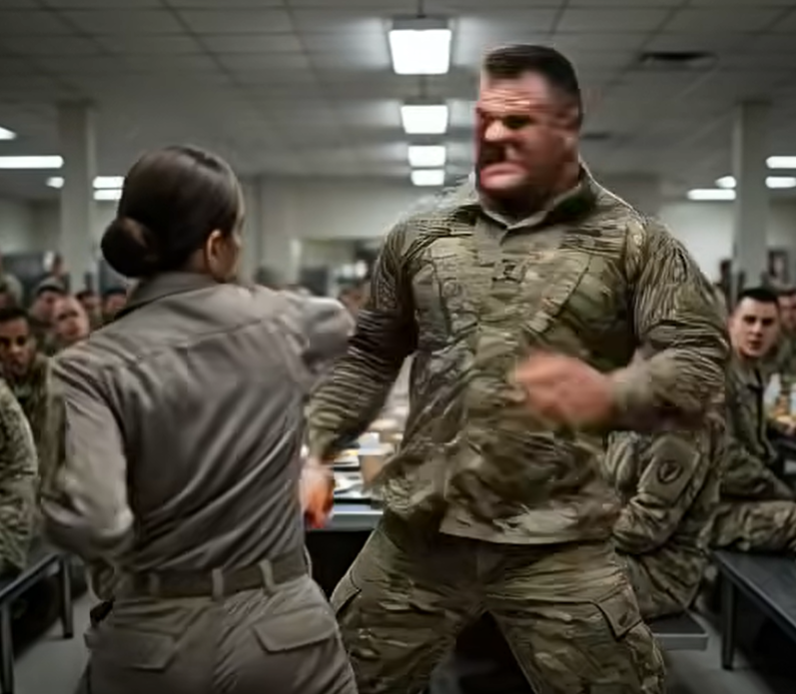
“Die, B*tch,” He Spat, Swinging a Massive Fist in the Mess Hall. He Thought I Was an Easy Target — He Had No Idea He Just Attacked a Classified SEAL Shadow Operative.
I was running on fumes. Seventy-two hours of off-the-books reconnaissance in the frozen Alaskan wilderness had left every muscle screaming. My joints ached from crawling through ice-crusted snow, my eyes burned from staring through night-vision gear, and the only thing keeping me upright was the promise of a hot meal and twelve hours of blackout […]
“Do You Know Who I Am?” He Pushed Her — Seconds Later, One ID Card Ended His Career
The dim lights of Rusty’s Bar flickered like dying stars just outside Camp Pendleton. It was a Friday night, the kind where Marines came to forget the sand and the screams they carried home from deployment. I had come here for the opposite reason — to disappear. My name is Commander Thalia Renwick. Highly decorated […]
15 Years After My Dad Kicked Me Out, I Saw Him At My Sister’s Wedding. He Sneered: “If It Wasn’t For Pity, No One Would’ve Invited You.” I Just Smiled And Sipped My Wine. Then The Bride Took The Mic And Changed Everything.
The South Carolina sun was merciless that June afternoon, turning the outdoor wedding venue into a glittering oven. I stood near the back in my crisp Army dress uniform, the brass buttons and medals catching the light with every breath. At 34 years old, I had come home for my little sister’s wedding — the […]
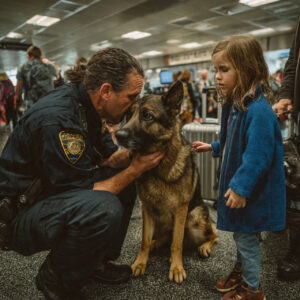
“A POLICE DOG FROZE IN THE AIRPORT. THEN A LITTLE GIRL TAPPED HIS HEAD. WHAT HAPPENED NEXT MADE EVERY TRAVELER STOP. HAVE YOU EVER WITNESSED A SILENT CRY FOR HELP?
The bustling international airport was a whirlwind of rolling suitcases, hurried announcements, and weary travelers rushing to their gates. Officer Liam Mercer patrolled the terminal with his loyal K9 partner, Rex — a highly trained German Shepherd known for his sharp instincts in detection and child safety operations. Everything seemed routine until Rex suddenly froze […]
End of content
No more pages to load