In the quiet hush of a Nashville home on the evening of December 8, 2025, the world lost a voice that had danced across borders and generations—a baritone as rich as aged rum, as soulful as a midnight confession. Raul Malo, the charismatic co-founder and lead singer of The Mavericks, slipped away at 60, surrounded by the family he’d fought so fiercely to cherish. For millions, Malo was the unmistakable timbre behind hits like “All You Ever Do Is Bring Me Down” and “Dance the Night Away,” a sonic alchemist who fused the twang of country with the fire of Latin rhythms, the grit of rock ‘n’ roll, and the velvet of R&B. But to those closest—his wife of 34 years, Betty Malo, and their three sons, Dino, Victor, and Max—he was the anchor, the joker, the man who turned ordinary evenings into symphonies of laughter and song. After an 18-month odyssey against colon cancer that metastasized into the rare, ruthless leptomeningeal disease (LMD), Malo’s passing wasn’t a defeat; it was a final, defiant crescendo. Now, in her first public words since that fateful night, Betty Malo has broken her silence—not to eulogize the legend, but to illuminate the love that outshone the spotlight, sharing the fragile fragility of their last conversation, the promise he whispered, and the vow she breathed back as his hand went still.
The news rippled through the music world like a skipped heartbeat, halting playlists mid-note and filling social feeds with tributes that spanned from Miami’s Cuban cafes to Nashville’s neon-lit honky-tonks. The Mavericks, in a raw Instagram post, described their bandmate as “a force of human nature, with an infectious energy” whose “towering creative contributions… created the kind of multicultural American music reaching far beyond America itself.” Trisha Yearwood, a peer whose voice had harmonized with Malo’s in spirit if not on stage, posted a black-and-white photo of him mid-croon, captioning it: “One of the finest voices of our generation… Gone too soon.” Steve Earle, who joined a star-studded Ryman Auditorium tribute just days before Malo’s passing, called him “the real deal—a singer who could break your heart and mend it in the same breath.” Fans, too, poured out their grief: one X user shared a grainy video of a 1994 Austin City Limits performance, writing, “Raul’s voice was my soundtrack to falling in love. Now it’s the echo of goodbye.” Another, a lifelong devotee, confessed, “He made me believe in second chances—through his music, and now, through how he faced this.” By dawn on December 9, #RaulMalo trended worldwide, a digital wake where strangers swapped stories of concerts that felt like family reunions, songs that scored road trips and rainy nights.

Malo’s life was a melody woven from Miami’s vibrant mosaic, born Raul Francisco Martínez-Malo Jr. on August 7, 1965, to Cuban immigrants who’d fled Castro’s revolution for the promise of American soil. Little Havana pulsed through his veins: the sizzle of plantains on cast-iron skillets, the salsa rhythms spilling from open windows, the church bells calling the faithful to Mass. Music was the family’s lingua franca—his father, a factory worker with a hidden tenor, crooned boleros after supper, while his mother, Norma, hummed rancheras as she mended hems. By 12, young Raul had formed his first band, The Basics, strumming bass at quinceañeras where the air smelled of rum punch and fresh orchids. He wasn’t confined to one genre; honky-tonk from the radio mingled with jazz from his grandfather’s records, blues from late-night drives, and the untamed pulse of Tex-Mex border radio. “Music was my escape, my rebellion, my prayer,” he’d later reflect in a 2019 American Songwriter interview, his eyes crinkling with that trademark mischief.
The Mavericks ignited in 1989, a scrappy quartet born in Miami’s underground scene: Malo on guitar and vocals, drummer Paul Deakin (his high-school compatriot), bassist Robert Reynolds, and accordionist Nick Trahos. They peddled their self-titled debut independently, hawking cassettes from car trunks at gigs where the crowd was more dive-bar regulars than future fans. MCA Nashville signed them in 1991, unleashing From Hell to Paradise, a Tex-Mex tornado that charted modestly but hinted at their alchemy. By 1992’s O What a Thrill, Malo’s voice had bloomed into its operatic glory—velvety lows that could hush a room, soaring highs that shattered ceilings. The title track, a sultry plea laced with mariachi horns, peaked at No. 75 on Billboard’s Hot Country Songs, but it was the band’s live fire that converted skeptics. “We weren’t just playing music,” Deakin recalled in a 2020 Rolling Stone oral history. “Raul was conducting a revival—sweat, smiles, and stories all in one.”
The ’90s were their golden epoch, a defiant stand against Nashville’s cookie-cutter churn. What a Crying Shame (1994) exploded with the Latin-infused title track, a Top 40 smash that earned them the Academy of Country Music’s Top Vocal Group nod. Malo’s pen co-wrote gems like “There Goes My Heart,” a heartbreak anthem that cracked the Top 20, its lyrics—”You took the best part of me and left the rest to rust”—delivered with a vulnerability that masked his stage-commanding swagger. Critics raved: The New York Times dubbed them “the future of country, if country dares to dream in Spanish.” Their 1995 self-titled album clinched a Grammy for Best Country Performance by a Duo or Group with Vocal for “Here Comes the Rain,” a brooding ballad that fused soulful croon with Tex-Mex twang. Malo, ever the maestro, infused his heritage without apology—Cuban guajiro riffs rubbing shoulders with Bakersfield swing, creating a sound that felt like a borderless hoedown. “We didn’t set out to blend genres,” he’d quip in interviews. “We just played what moved us. Turned out, it moved a lot of folks.”
Offstage, Malo was the glue: a devoted husband to Betty, whom he wed in 1992 after a whirlwind courtship at a Miami club where she’d critiqued his setlist over tequila shots. “She saw through the showman to the softie underneath,” he once shared, crediting her with grounding his nomadic soul. Their sons—Dino, the budding producer; Victor, the athlete with his dad’s grin; Max, the quiet artist—grew up backstage, lulled by amps and applause. The band fractured in 2000 amid label woes and burnout, but Malo soldiered solo: nine albums, from the jazz-drenched Today (2001) to the rootsy Lucky One (2014), plus stints with Los Super Seven, the Latin supergroup that netted another Grammy nom. Reunions beckoned—2003’s In Time, 2011’s mono-mania Born in Cuba—each resurrection fiercer, Malo’s voice undimmed by time.
Then, June 2024: the diagnosis, Stage 4 colon cancer, announced mere hours before a Syracuse Jazz Fest headliner. “This colonoscopy saved my life—or bought me time,” he posted on Instagram, a selfie from the stage, sweat-slicked and smiling. “Get yours. For me, for your loves.” What followed was 18 months of unyielding grit: liver tumor surgery in July, chemo rounds that left him “feeling like a piñata after a party,” radiation zaps in Houston’s MD Anderson Cancer Center. He relocated the family there, turning hospital vigils into jam sessions—sons on guitars, Betty harmonizing off-key to make him laugh. By September 2025, the beast evolved: LMD, cancer’s insidious spread to the brain and spinal cord’s meninges, a thief that blurred vision, sapped strength, and whispered finality. Tours crumbled—cancellations with Dwight Yoakam mid-run, the band’s 2025 slate shelved. Yet Malo rallied for whispers of miracles: experimental trials, prayer chains from fans in Cuba to Canada. “I’m not scared,” he wrote in a September update, photo clutched by Betty. “I’ve got an amazing wife, boys who make me proud, a band that’s family. And you all—your cards, your songs, they carry me more than you know.”
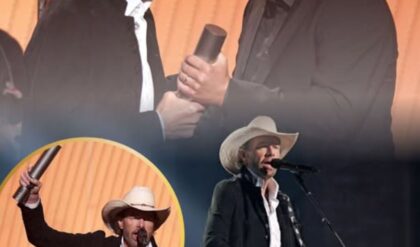
The Ryman tributes, December 5-6, were his phoenix moment: bandmates Deakin, Eddie Perez, and Jerry Dale McFadden, joined by Earle, Crowell, Patty Griffin, and Marty Stuart, turning the Mother Church into a Mavericks memorial-in-motion. Malo, hospitalized since the 4th, couldn’t attend, but the band FaceTimed him mid-set, their voices a chorus of “All You Ever Do Is Bring Me Down.” “Sing it for me, brothers,” he rasped, eyes bright through the screen. Proceeds funneled to Stand Up To Cancer, a nod to his advocacy. On the 6th, they visited his bedside for an impromptu “concert”—guitars unplugged, harmonies hushed—Betty capturing a clip of Malo mouthing lyrics, fist raised like a conductor’s baton.
December 8 dawned fragile, Malo home from Houston, the Nashville air crisp with winter’s bite. Betty, in her first interview since—a tear-streaked sit-down with People on December 10—recalled the room as “a sanctuary of soft light and softer songs.” He’d slept fitfully, pain meds a veil over lucidity, but midday clarity bloomed. Sons gathered, stories flowed: Dino’s first guitar lesson, Victor’s championship goal, Max’s poem etched on his forearm. As dusk fell, Betty at his side, Malo turned, voice a threadbare whisper: “Betty, mi amor… promise me you’ll dance. For the boys, for us. Don’t let the music stop.” She nodded, throat tight, tracing the lines of his face—the same face that had grinned from album covers, serenaded crowds from Miami to Madrid. “I promise, Raulito. We’ll move it, always. And you? Fly high, like the eagle you are. Te amo, forever.” His hand squeezed hers, eyes locking in that final, wordless vow—the promise of souls intertwined beyond the veil. Then, as if cueing a fade-out, he slipped away, the room falling silent save for the faint hum of a radio crooning “Here Comes the Rain.”
Betty’s words, raw and resonant, cut through the grief’s fog. “It wasn’t about the end; it was about the everything before,” she told the magazine, clutching a photo of their 1992 wedding—Raul in a bolero jacket, her in lace, both eyes alight. “He fought for every sunrise, every chorus. That last talk? It was our love song’s bridge—no goodbyes, just ‘see you on the other side.'” In the days since, she’s fielded calls from legends: Yearwood offering a shoulder, Earle sharing a flask of virtual whiskey. The Mavericks, in their statement, vowed to honor him: “Raul’s spirit lives in every note, every night we play.” A public memorial’s whispered for January, perhaps at the Ryman, with fans invited to share stories, songs, a collective “muchísimas gracias.”
Malo’s legacy? A discography that defies shelves: 13 Mavericks albums, from the fiery Trampoline (1998) to 2024’s swan-song Moon & Stars, a rootsy valediction recorded amid chemo fog. Solo ventures like Sinners & Saints (2016) showcased his jazz heart, while collaborations—from Los Lobos to Rick Trevino—bridged worlds. Awards stacked: CMA Vocal Group of the Year (1995), three ACM nods, that ’96 Grammy. But his true trophy? The lives touched—the fan who credited “O What a Thrill” for proposing under lantern light, the kid in Havana discovering his Cuban roots through a bootleg tape.
As December’s chill deepens, Malo’s absence aches like a skipped beat, but his echo endures. In Betty’s promise, in the sons’ resolve, in the band’s unyielding rhythm. He wasn’t just a frontman; he was a bridge—between cultures, eras, heartbeats. And in that final whisper, he reminded us: savor the song, dance through the storm. Because some voices don’t fade; they flow on, wider than a river, sweeter than the rain.