In the crisp chill of early December, as fairy lights began twinkling across the United Kingdom in anticipation of the holiday season, Prince William, the Prince of Wales, stepped into one of the most demanding stretches of his royal calendar. On December 1, 2025, he arrived in Newport, South Wales, not just as a figurehead but as a passionate advocate for the nation’s future. This visit marked the official kickoff to a whirlwind week that would blend economic diplomacy, international statecraft, and festive reflections on community and resilience. For William, whose deep personal connection to Wales has evolved from his early days as a newlywed to his current role as its steward, the engagements served as a poignant reminder of the enduring bonds that define his public life.
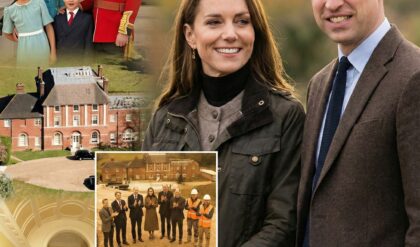
The day dawned with a journey westward from Kensington Palace, where William, dressed in a sharp navy suit that echoed the industrial heritage of the region, touched down in Newport. The city, a bustling port on the River Usk, has long been a symbol of Wales’s transformation from coal and steel to cutting-edge innovation. His first stop was the gleaming new facility of KLA, a global leader in semiconductor manufacturing. Opened just months earlier, the site represents a £100 million investment that promises to create up to 750 high-skilled jobs, bolstering Wales’s reputation as a hotspot for tech and green energy. As William toured the expansive cleanrooms and research labs, he paused to chat with engineers fine-tuning wafer inspection tools—machines that ensure the flawless production of microchips powering everything from smartphones to electric vehicles.
What struck observers was not just the prince’s evident fascination with the technology but his genuine curiosity about the people behind it. He lingered over a demonstration of advanced lithography equipment, asking pointed questions about how Welsh talent was driving global supply chains. One young technician, a recent graduate from Cardiff University, shared how the facility had drawn her back home after studying abroad. William nodded thoughtfully, his blue eyes lighting up as he replied, “It’s inspiring to see how places like this are keeping the next generation right here, building the future on familiar ground.” This interaction encapsulated his broader vision: Wales as a beacon of sustainable progress, where heritage fuels ambition rather than holding it back.
From the high-tech hum of KLA, William’s convoy wound through Newport’s regenerated docks to the Celtic Manor Resort, the grand venue for the Wales Investment Summit. Organized by the Welsh Government, the event gathered over 300 business leaders, policymakers, and innovators from across Europe and beyond. The summit’s theme—”Wales: Powering Tomorrow”—could not have been more apt for a prince whose environmental initiatives, like the Earthshot Prize, champion green innovation. As delegates settled into the opulent ballroom, adorned with Welsh dragon motifs and projections of wind turbines off the coast, William took the stage to deliver a speech that wove personal anecdote with forward-looking optimism.
He began with a nod to his roots in the principality, his voice warm and reflective. “Wales has always held a special place in my heart,” he said, pausing as memories surfaced. “It was here, on the island of Anglesey, that Catherine and I built our first home together. Those years—far from the spotlight, raising George in a farmhouse by the sea—taught us the quiet strength of community, the kind that sees you through storms, literal and otherwise.” The audience, a mix of suited executives and local entrepreneurs, leaned in, captivated by this glimpse into the prince’s more private world. Anglesey, with its rugged cliffs and whispering winds, had been a sanctuary for the young family during William’s time as a search-and-rescue pilot at RAF Valley. It was there, amid the isolation of island life, that he and Catherine forged the resilience that now underpins their public service.
Transitioning seamlessly to the summit’s agenda, William praised Wales’s burgeoning renewable sector. “This nation is stepping forward as one of Europe’s most significant centers for clean energy,” he declared, highlighting offshore wind farms that could power millions of homes and tidal projects harnessing the Severn Estuary’s mighty currents. He drew a direct line to his late grandmother, Queen Elizabeth II, whose Platinum Jubilee in 2022 had spotlighted Welsh craftsmanship, and to his father, King Charles III, whose environmental advocacy dates back decades. “I’m pleased to continue the work my father began over half a century ago,” William noted, recalling how Charles had personally persuaded Sony’s co-founder to establish Europe’s first factory in Bridgend, sparking a manufacturing renaissance. Today, that legacy lives on in ventures like the eco-friendly underfloor heating systems William inspected earlier—activated, fittingly, with his own handprint—and the electric reimagining of the iconic Morris Minor van, set for production in St Athan next year, safeguarding 150 jobs.
Beyond the speeches and handshakes, the visit pulsed with moments of unscripted humanity. William examined lightweight carbon-fiber door panels for the electric van, lifting one with a surprised “Goodness, that’s lighter than it looks!” He met a prosthetics innovator whose company, inspired by his own childhood accident, crafts bespoke limbs for amputees. And in a quiet exchange, he viewed a restored classic vehicle, quipping about its potential to “outpace my helicopter days.” These interactions weren’t mere photo ops; they were threads in the tapestry of Welsh identity William has long sought to champion. As Prince of Wales since 2022, he has invested personally in the role, learning Welsh phrases, supporting cultural festivals, and launching initiatives like the Welsh Lamb marketing campaign that boosts rural economies.
Yet, this single day was merely the overture to a symphony of commitments. As William departed Newport under a slate-gray sky, his mind was already turning to the week’s crescendo: a state visit from Germany’s President Frank-Walter Steinmeier and First Lady Elke Büdenbender, hosted by King Charles and Queen Camilla from December 3 to 5. The visit, the first from Germany in 27 years, underscored the enduring Anglo-German partnership forged in the fires of two world wars and tempered by modern alliances like NATO. William and Catherine would play pivotal roles, starting with a ceremonial welcome at Heathrow Airport on Wednesday morning.
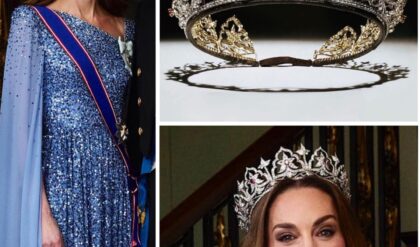
Picture the scene: a red carpet unfurling beneath the wings of the presidential Airbus, emblazoned with the German tricolor. The King’s Colour Squadron of the Royal Air Force, in crisp blue uniforms, formed a guard of honor as the aircraft taxied to a halt. William, ever the poised diplomat in a tailored black morning coat, stood shoulder-to-shoulder with Catherine, whose elegant blue ensemble—a Burberry dress layered under a Sarah Burton coat, topped with a matching hat—evoked the winter skies over Windsor. She accessorized with pearlescent earrings once belonging to Diana, Princess of Wales, and a brooch bearing the Prince of Wales feathers, a subtle nod to her husband’s title. As the Steimeiers descended the stairs, handshakes gave way to warm embraces, the couples exchanging pleasantries in a blend of English and German.
From Heathrow, the procession rolled toward Windsor Castle, where the royal party would join a carriage ride through the Great Park. The estate, with its ancient oaks and deer herds, has hosted countless dignitaries, but this visit carried extra resonance. King Charles, whose lifelong affinity for Germany stems from his studies at Heidelberg and his marriage to Camilla, whose father was a British Army officer in postwar Hanover, would lead the formalities. At the Castle’s Green Drawing Room, the group viewed treasures from the Royal Collection: illuminated manuscripts from the Anglo-Saxon era, porcelain from Meissen, and a poignant entry in Queen Victoria’s diary recounting her honeymoon with Prince Albert in the Rhine Valley. “These artifacts remind us that our histories are intertwined,” William remarked to President Steinmeier, “not as rivals, but as partners in progress.”
Thursday’s state banquet in St George’s Hall promised pageantry on a grand scale. Beneath crystal chandeliers and suits of armor, the menu—crafted by royal chef Mark Flanagan—would feature British-German fusion: Severn & Wye smoked salmon with caviar, followed by roast Windsor venison and a dessert of Black Forest gâteau. Speeches would toast shared values: democracy, environmental stewardship, and reconciliation. William, seated near the president, might reference his recent Earthshot Prize in Brazil, drawing parallels to Germany’s Energiewende energy transition. Catherine, radiant in a gown shimmering with emerald accents, would engage the First Lady on women’s leadership, a cause close to both their hearts.
The visit’s intellectual heart lay in Oxford on Friday, where Steinmeier would receive an honorary degree from the university. William and Catherine joined for discussions on AI ethics and climate migration, themes aligning with the prince’s United for Wildlife coalition. As the delegation departed, amid RAF flypasts and pealing bells, the week would close on a note of quiet triumph—a reinforcement of alliances in an uncertain world.
Interwoven through these high-stakes diplomacy was the royal family’s nod to the season’s spirit. On Friday, December 5, Catherine would host her annual “Together at Christmas” Carol Service at Westminster Abbey, a beacon of hope amid national challenges. Now in its fourth year, the event draws 1,800 guests—key workers, charity volunteers, and families touched by hardship—from across the UK. William, supporting his wife, would mingle with attendees, sharing stories of quiet heroism. A special letter, penned by the couple, would be distributed to all: “In times of trial, we find strength in one another… Love and empathy are the greatest gifts we can give.” Community carol services in cathedrals from St David’s to St Paul’s would echo the message nationwide, amplifying the Waleses’ commitment to mental health and social cohesion.
This jam-packed itinerary—spanning economic summits, state honors, and heartfelt gatherings—reveals a prince in full command of his destiny. At 43, William balances the weight of succession with the joy of fatherhood, his three children—George, Charlotte, and Louis—ever in his thoughts. His Wales visit, rich with nostalgia and innovation, set the tone: a dedication to heritage that propels progress. As he navigates this busiest of weeks, one senses the quiet confidence of a leader shaped by loss, love, and an unyielding sense of duty. In championing Wales’s dynamism, hosting global allies, and fostering communal warmth, Prince William isn’t just fulfilling obligations—he’s crafting a legacy of purposeful connection, one engagement at a time.