On January 22, 2026, Prince Harry concluded three days of intense testimony in the High Court in London, giving evidence in his civil claim against Associated Newspapers Limited (ANL), the publisher of the Daily Mail and Mail on Sunday. The Duke of Sussex’s appearance in the witness box was marked by striking contrasts: the morning began with unexpected courtroom laughter, but the day ended with Harry visibly emotional, his voice breaking as he described the devastating impact of alleged unlawful press intrusion on his wife, Meghan, Duchess of Sussex.
Harry is one of several high-profile claimants—including Elton John, David Furnish, Sadie Frost, and others—alleging that ANL journalists and private investigators used unlawful methods such as phone hacking, blagging personal information, and deploying surveillance tactics to obtain private details for stories published between 1996 and 2016. The publisher denies all wrongdoing, insisting that any information was obtained lawfully or through legitimate journalistic means.
The third and final day of Harry’s evidence opened with a brief moment of levity. When Mr Justice Johnson asked how the duke had been referred to during his previous court appearance, Harry paused, then admitted with a wry smile, “I can’t remember.” The judge reminded him that he had been addressed as “His Royal Highness Prince Henry Charles Albert David of Wales,” prompting quiet laughter from the public gallery and a small chuckle from the bench. Harry shrugged and said, “It’s been a while,” lightening the atmosphere in the otherwise tense courtroom.

That lightness disappeared as questioning turned to the personal toll of years of media scrutiny. Under examination by his barrister, David Sherborne KC, and cross-examination by ANL’s counsel, Harry recounted specific articles he believes were based on unlawfully obtained private information. He spoke of the cumulative psychological impact on his family, particularly on Meghan, and the constant fear for their children’s safety.
Appearing visibly upset, Harry’s voice cracked as he addressed the court directly. “They continue to come after me,” he said, pausing to steady himself. “They have made my wife’s life an absolute misery, my Lord.” The statement was delivered with raw emotion; his eyes filled with tears, and he swallowed hard several times, struggling to maintain composure. The courtroom fell silent. Several members of the public gallery wiped away tears. The judge allowed a brief pause before gently prompting him to continue.
Harry went on to describe the relentless nature of the coverage he believes stemmed from unlawful practices—intrusive photographs, detailed accounts of private conversations, and stories that he says could only have been obtained through blagging or surveillance. He told the court that the impact on Meghan’s mental health had been profound, and that he had witnessed firsthand how the pressure eroded her sense of safety and well-being. “I have seen what it does to a person,” he said. “I have seen it up close. It’s not just words on a page. It’s real pain.”
The duke emphasized that his motivation for bringing the case was not financial or vindictive but protective: to safeguard his wife and children from further harm and to expose practices he believes have gone unchecked for too long. He described feeling helpless as he watched Meghan endure what he called “industrial-scale” intrusion, and spoke of the toll it took on their marriage and family life. His testimony returned repeatedly to the theme of privacy as a fundamental human right, and the need for accountability when that right is violated.
ANL’s legal team cross-examined Harry rigorously, questioning the timing and basis of his suspicions, the specificity of his allegations, and whether some stories could have been sourced legitimately. Harry maintained his position, insisting that the pattern of stories—particularly those containing highly personal details—pointed to unlawful methods. He acknowledged the difficulty of proving such practices definitively after so many years but argued that the circumstantial evidence was compelling.
The emotional peak of the day came when Harry spoke directly about Meghan’s suffering. His voice faltered as he said, “They have made my wife’s life an absolute misery,” and the words appeared to take a visible toll. He paused frequently, breathing deeply and looking down at his notes. The judge and courtroom staff remained attentive and respectful, allowing him the time he needed. When he finished, the silence in the room was heavy; several observers later described the moment as one of the most affecting in recent High Court memory.
Outside court, reactions were swift and polarized. Supporters praised Harry’s courage in confronting the issue head-on and sharing the human cost of press intrusion. Many shared clips of his tearful testimony, calling it “heartbreaking” and “powerful.” Critics questioned whether revisiting old grievances served any public interest or argued that the case kept old wounds open unnecessarily. News coverage across outlets ranged from sympathetic to skeptical, with headlines focusing on the duke’s emotional state and the gravity of his accusations.
Harry left the High Court shortly after 4 p.m., composed once more, walking out with his legal team. The case continues, with further witness statements, expert evidence, and closing arguments expected in the coming weeks. Whatever the judgment, Wednesday’s testimony will likely be remembered as one of the most personal and affecting moments in the long-running legal battle between Prince Harry and sections of the British press.
In a courtroom accustomed to measured argument and legal precision, Harry’s evidence—sometimes steady, sometimes breaking—reminded everyone that behind the titles and headlines are real people, real pain, and real consequences. The laughter at the day’s start gave way to silence and empathy by its end. And in that shift—from amusement to tears—lay the true weight of the story he told.
News

“Shave Her Head,” the Sergeant Ordered Coldly. “If Discipline Won’t Break Her, Maybe Humiliation Will.” But What They Didn’t Know Was That the Woman They Underestimated Would Bring Their Entire Base to Its Knees.
General Alexander Vance had heard the whispers for months: Fort Blackwood was rotting from within. Soldiers spoke in hushed tones of systematic humiliation disguised as “discipline,” falsified training records, missing supply funds that somehow vanished into private accounts, and a toxic command climate built on fear and intimidation. Every official inspection came back sparkling clean […]
At A Veterans’ Dinner, The Colonel Leaned Toward My Brother And Asked One Simple Question: “Can You Tell Me How You Earned This Decoration, Son?” His Face Turned White. He Pointed At My Father And Said: “He Told Me It Belonged To Our Uncle.” The Uncle Never Existed.
The Ridgewood Armory smelled like every other veterans’ event I’d ever attended: floor wax, overcooked chicken, old coffee, and the faint metallic tang of too many American flags. Fluorescent lights buzzed overhead, casting a harsh glow on rows of folding tables and men in ill-fitting blazers trying to look like they still belonged in uniform. […]
“Die, B*tch,” He Spat, Swinging a Massive Fist in the Mess Hall. He Thought I Was an Easy Target — He Had No Idea He Just Attacked a Classified SEAL Shadow Operative.
I was running on fumes. Seventy-two hours of off-the-books reconnaissance in the frozen Alaskan wilderness had left every muscle screaming. My joints ached from crawling through ice-crusted snow, my eyes burned from staring through night-vision gear, and the only thing keeping me upright was the promise of a hot meal and twelve hours of blackout […]
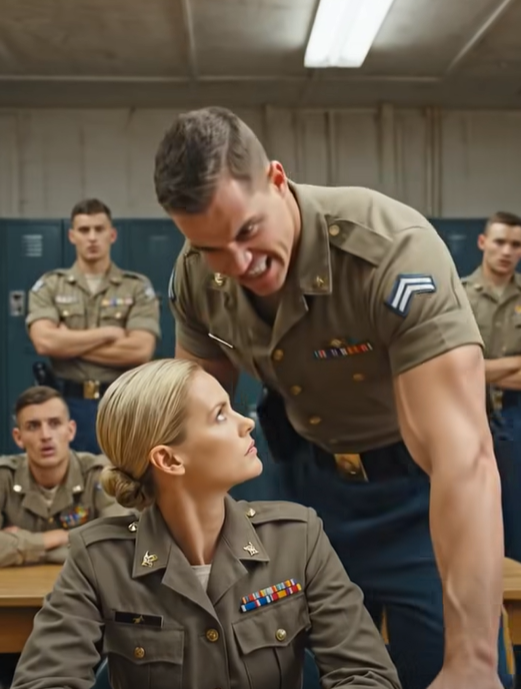
“Do You Know Who I Am?” He Pushed Her — Seconds Later, One ID Card Ended His Career
The dim lights of Rusty’s Bar flickered like dying stars just outside Camp Pendleton. It was a Friday night, the kind where Marines came to forget the sand and the screams they carried home from deployment. I had come here for the opposite reason — to disappear. My name is Commander Thalia Renwick. Highly decorated […]
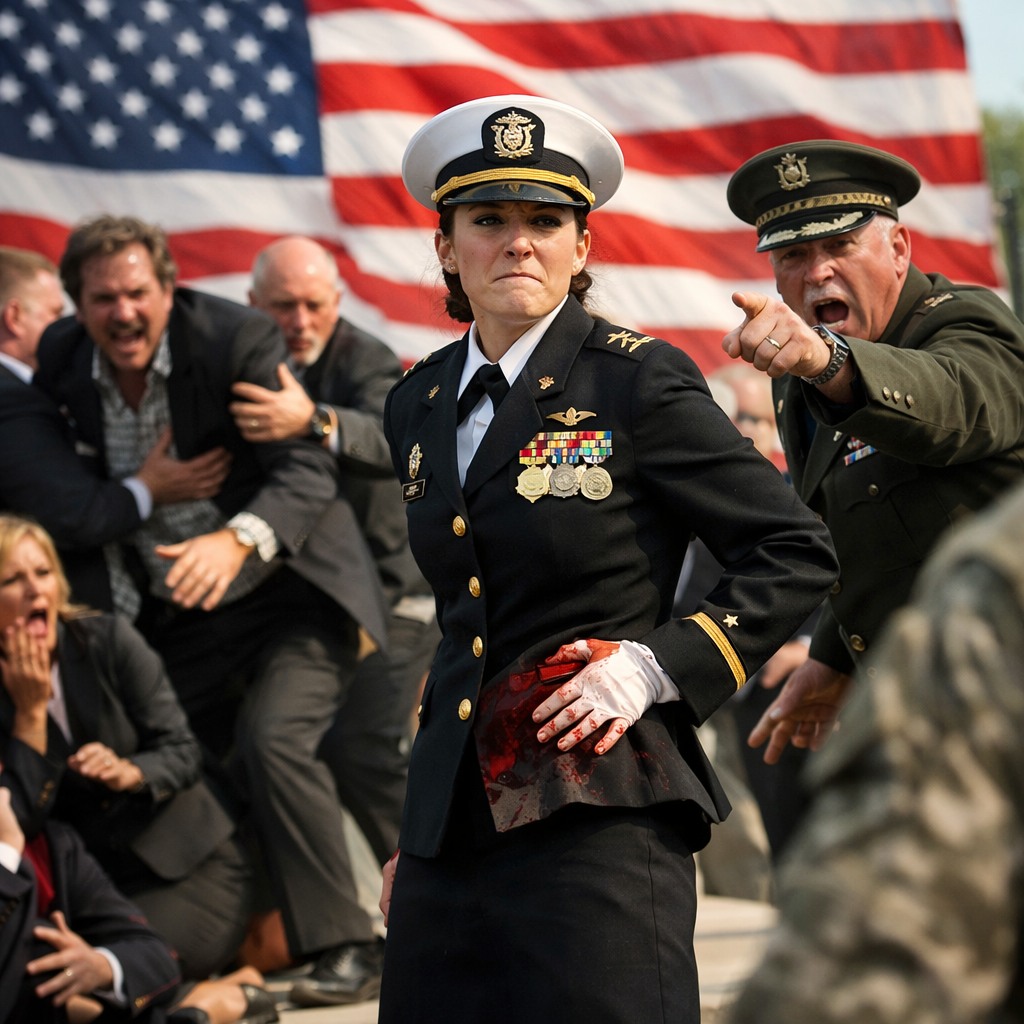
15 Years After My Dad Kicked Me Out, I Saw Him At My Sister’s Wedding. He Sneered: “If It Wasn’t For Pity, No One Would’ve Invited You.” I Just Smiled And Sipped My Wine. Then The Bride Took The Mic And Changed Everything.
The South Carolina sun was merciless that June afternoon, turning the outdoor wedding venue into a glittering oven. I stood near the back in my crisp Army dress uniform, the brass buttons and medals catching the light with every breath. At 34 years old, I had come home for my little sister’s wedding — the […]
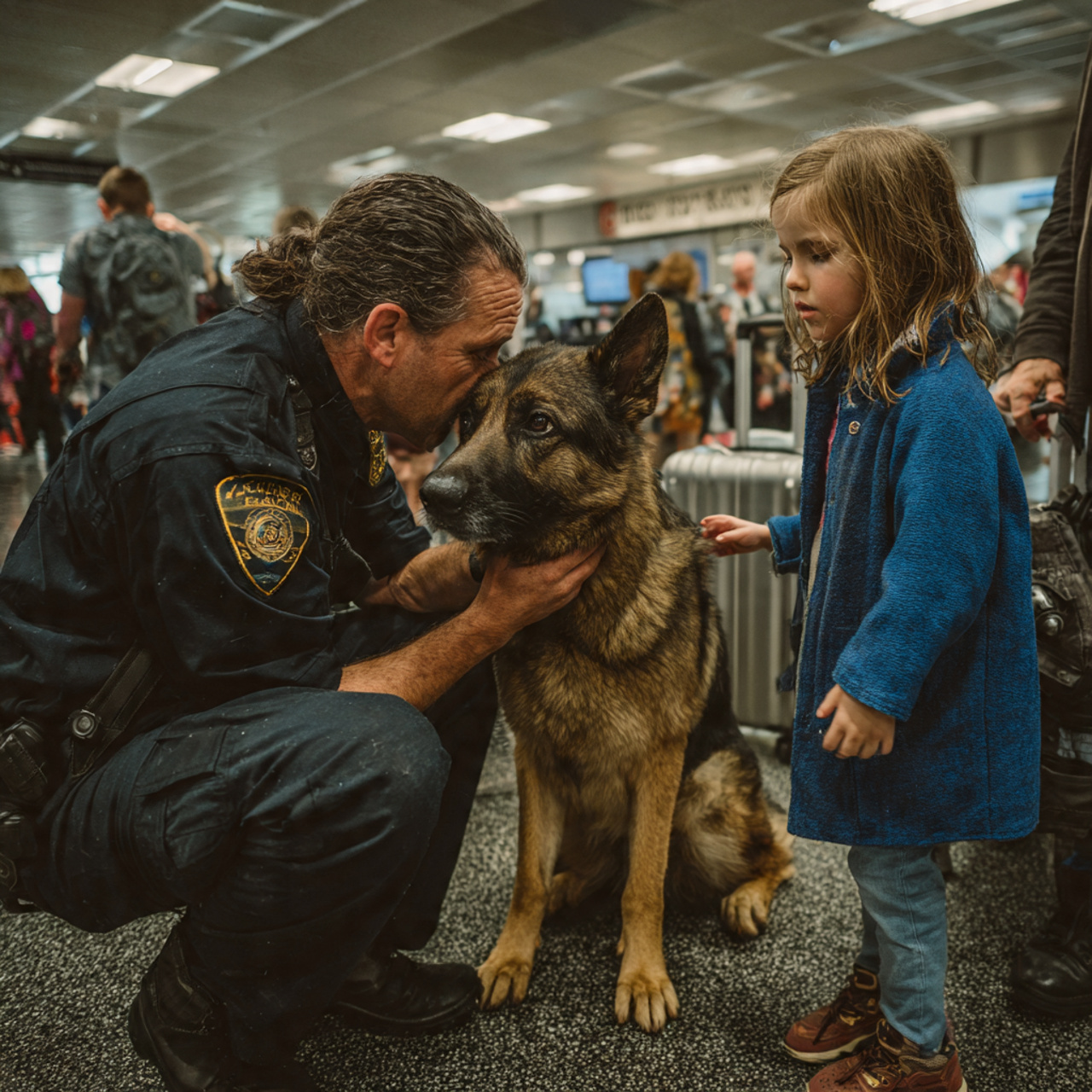
“A POLICE DOG FROZE IN THE AIRPORT. THEN A LITTLE GIRL TAPPED HIS HEAD. WHAT HAPPENED NEXT MADE EVERY TRAVELER STOP. HAVE YOU EVER WITNESSED A SILENT CRY FOR HELP?
The bustling international airport was a whirlwind of rolling suitcases, hurried announcements, and weary travelers rushing to their gates. Officer Liam Mercer patrolled the terminal with his loyal K9 partner, Rex — a highly trained German Shepherd known for his sharp instincts in detection and child safety operations. Everything seemed routine until Rex suddenly froze […]
End of content
No more pages to load