Netflix quietly released Outlaw King in November 2018, a gritty historical action drama that slipped under the radar for many but has since earned a dedicated cult following as one of the platform’s most unfairly overlooked gems. Directed by David Mackenzie, the filmmaker behind the acclaimed Hell or High Water, the film reunites him with Chris Pine in a visceral retelling of Robert the Bruce’s rise during Scotland’s Wars of Independence in the early 14th century. Far from a glossy period piece, Outlaw King plunges viewers into the mud, blood, and relentless hardship of medieval warfare, delivering a grounded, unflinching portrayal of rebellion against overwhelming odds.
Set primarily between 1304 and 1307, the story opens with the surrender of Scottish nobles—including Robert the Bruce (Chris Pine)—to the formidable English King Edward I (Stephen Dillane). The aging English monarch has crushed resistance, forcing homage from the Scots and imposing harsh occupation. Robert, a nobleman with a legitimate claim to the throne, initially complies but soon finds himself drawn into open defiance after personal betrayals and the murder of rival John Comyn. Crowned King of Scots in a hasty ceremony, Robert is immediately declared an outlaw by Edward, who unleashes his forces—including the volatile Prince of Wales (Billy Howle)—to hunt him down.
The film chronicles Robert’s transformation from a reluctant, defeated lord into a determined guerrilla leader. Exiled and hunted, he rallies a ragtag band of loyal followers, including the fierce James Douglas (Aaron Taylor-Johnson), a vengeful warrior seeking to reclaim his family’s lands, and Angus MacDonald (Tony Curran). Robert’s young wife, Elizabeth de Burgh (Florence Pugh), represents both alliance and vulnerability; their arranged marriage evolves into genuine respect and affection, though the English soon capture her as leverage. The narrative emphasizes the brutal cost of leadership: family separations, betrayals, and the constant threat of annihilation.
Chris Pine delivers one of his most committed performances as Robert the Bruce. Shedding his usual polished charm, Pine embodies a weary, pragmatic warrior whose resolve hardens through suffering. His portrayal captures the internal conflict of a man who seizes power not for glory but survival, often second-guessing his choices amid mounting losses. Pine’s physicality shines in the grueling battle sequences, where he conveys exhaustion and determination without relying on heroic posturing.

Aaron Taylor-Johnson stands out as James Douglas, bringing raw intensity and dark humor to the role. His character is a savage, loyal ally whose vendetta against the English adds visceral energy. Florence Pugh, in an early breakout role before her rise to stardom, imbues Elizabeth with quiet strength and intelligence, making her more than a damsel despite limited screen time. The supporting cast—including Sam Spruell, Callan Mulvey, and James Cosmo—adds depth to the ensemble, portraying a mix of Scottish clansmen whose motivations range from patriotism to personal revenge.
The film’s greatest strength lies in its battle sequences, which feel authentic and harrowing rather than choreographed spectacle. Mackenzie opts for long, unbroken takes that immerse viewers in the chaos: mud-soaked charges, clashing steel, and the sheer physical toll of combat. The opening siege of Stirling Castle sets a gritty tone, while the climactic Battle of Loudoun Hill showcases tactical brilliance against superior numbers. These scenes emphasize survival over glory, with realistic armor, weapons, and injuries that highlight the brutality of medieval warfare. The production’s attention to detail—filthy conditions, practical effects, and a muted color palette—creates an oppressive atmosphere that makes every victory feel hard-won.
Critics and audiences have noted the film’s grounded approach, contrasting it with more romanticized historical epics like Braveheart. While it draws from the same era and features overlapping figures (including a nod to William Wallace), Outlaw King focuses on endurance and strategy rather than mythic heroism. It explores themes of loyalty, sacrifice, and the futility of endless war, questioning the price of kingship. Robert’s journey is not triumphant from start to finish; setbacks mount, forcing him to adapt or perish.
Despite strong performances and technical prowess, Outlaw King received mixed reviews upon release. Some praised its ambition and realism, while others felt it lacked emotional depth or narrative focus compared to its predecessor Hell or High Water. The film’s two-hour runtime (trimmed from a longer festival cut) keeps the pace deliberate, allowing tension to build through attrition rather than constant action. Over time, however, word-of-mouth has elevated its status. Fans on streaming platforms and forums frequently call it “criminally underrated,” praising its immersive world-building, raw battles, and refusal to sanitize history. Many argue it deserves more recognition as a thoughtful entry in the historical epic genre, especially for those seeking substance alongside spectacle.
Outlaw King stands as a testament to Netflix’s willingness to back ambitious period dramas. Though it didn’t generate blockbuster buzz, its enduring appeal lies in its unflinching depiction of rebellion’s harsh realities. In an era of polished superhero fare and formulaic blockbusters, this muddy, intense tale of a banished king forging a nation offers real stakes, memorable characters, and battles that feel lived-in rather than staged. For viewers craving historical drama with grit and heart, it’s an unforgettable hidden gem well worth rediscovering.
News
“Shave Her Head,” the Sergeant Ordered Coldly. “If Discipline Won’t Break Her, Maybe Humiliation Will.” But What They Didn’t Know Was That the Woman They Underestimated Would Bring Their Entire Base to Its Knees.
General Alexander Vance had heard the whispers for months: Fort Blackwood was rotting from within. Soldiers spoke in hushed tones of systematic humiliation disguised as “discipline,” falsified training records, missing supply funds that somehow vanished into private accounts, and a toxic command climate built on fear and intimidation. Every official inspection came back sparkling clean […]
At A Veterans’ Dinner, The Colonel Leaned Toward My Brother And Asked One Simple Question: “Can You Tell Me How You Earned This Decoration, Son?” His Face Turned White. He Pointed At My Father And Said: “He Told Me It Belonged To Our Uncle.” The Uncle Never Existed.
The Ridgewood Armory smelled like every other veterans’ event I’d ever attended: floor wax, overcooked chicken, old coffee, and the faint metallic tang of too many American flags. Fluorescent lights buzzed overhead, casting a harsh glow on rows of folding tables and men in ill-fitting blazers trying to look like they still belonged in uniform. […]
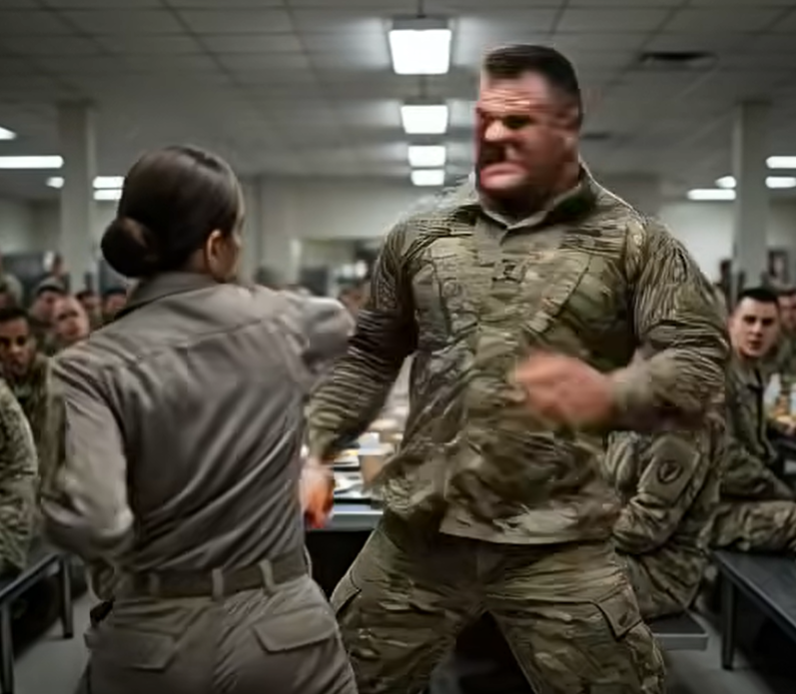
“Die, B*tch,” He Spat, Swinging a Massive Fist in the Mess Hall. He Thought I Was an Easy Target — He Had No Idea He Just Attacked a Classified SEAL Shadow Operative.
I was running on fumes. Seventy-two hours of off-the-books reconnaissance in the frozen Alaskan wilderness had left every muscle screaming. My joints ached from crawling through ice-crusted snow, my eyes burned from staring through night-vision gear, and the only thing keeping me upright was the promise of a hot meal and twelve hours of blackout […]
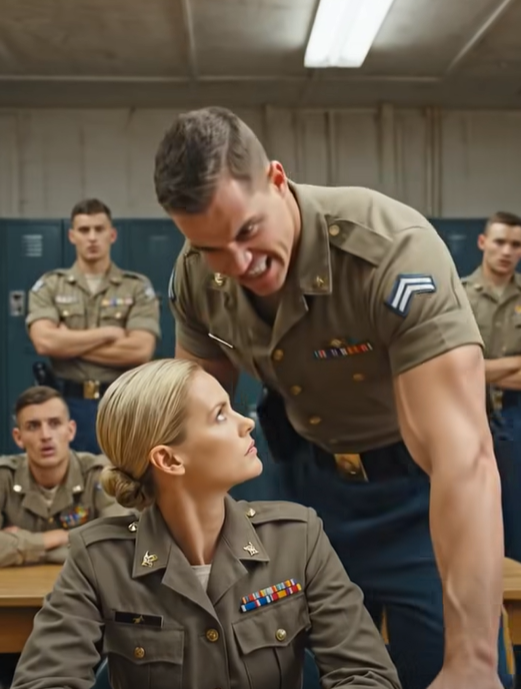
“Do You Know Who I Am?” He Pushed Her — Seconds Later, One ID Card Ended His Career
The dim lights of Rusty’s Bar flickered like dying stars just outside Camp Pendleton. It was a Friday night, the kind where Marines came to forget the sand and the screams they carried home from deployment. I had come here for the opposite reason — to disappear. My name is Commander Thalia Renwick. Highly decorated […]
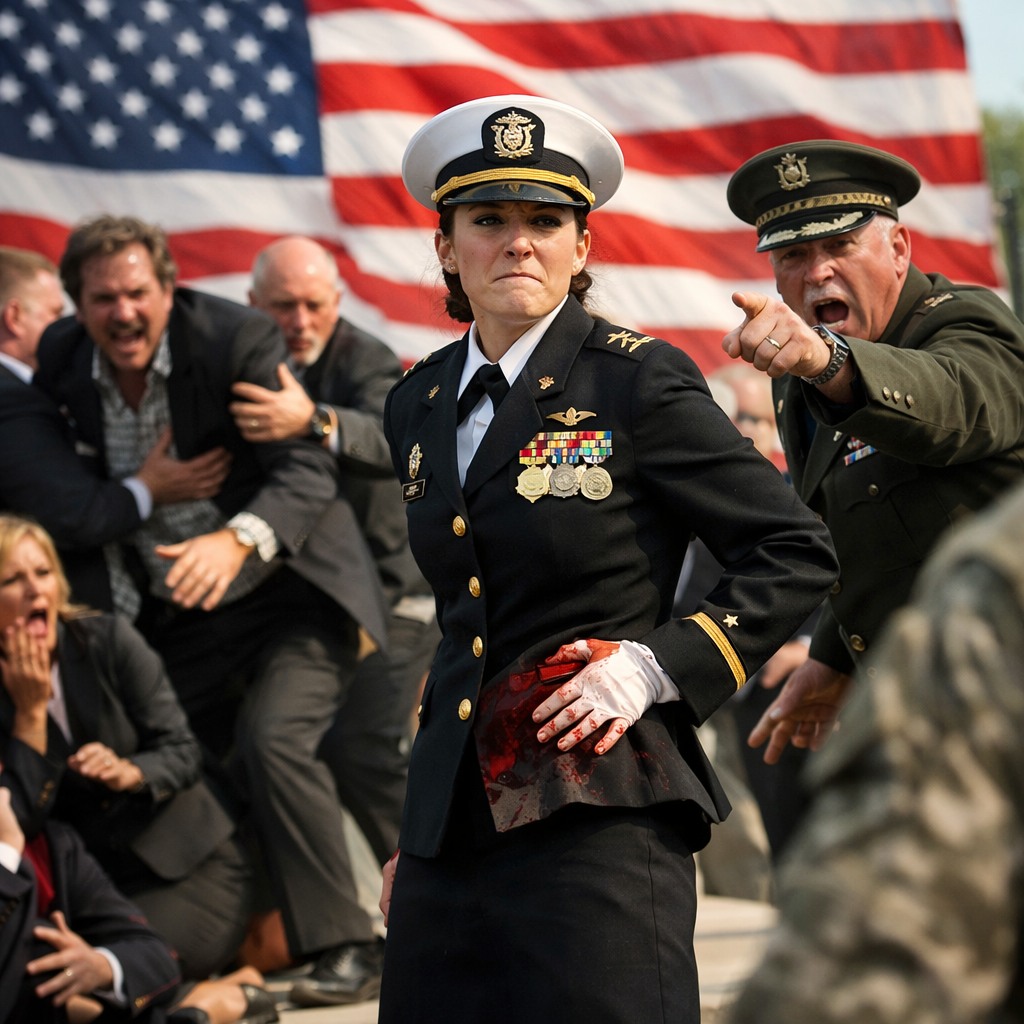
15 Years After My Dad Kicked Me Out, I Saw Him At My Sister’s Wedding. He Sneered: “If It Wasn’t For Pity, No One Would’ve Invited You.” I Just Smiled And Sipped My Wine. Then The Bride Took The Mic And Changed Everything.
The South Carolina sun was merciless that June afternoon, turning the outdoor wedding venue into a glittering oven. I stood near the back in my crisp Army dress uniform, the brass buttons and medals catching the light with every breath. At 34 years old, I had come home for my little sister’s wedding — the […]
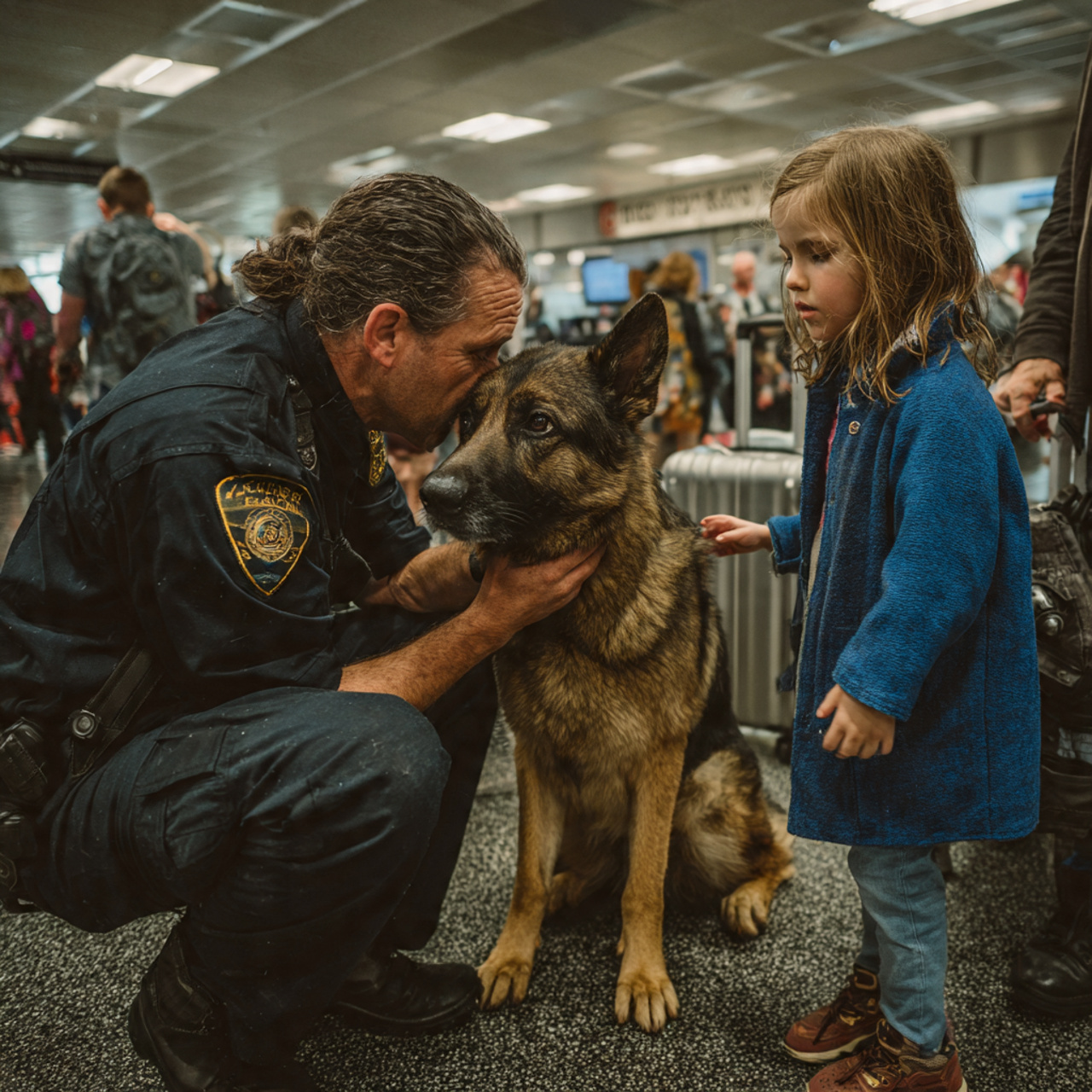
“A POLICE DOG FROZE IN THE AIRPORT. THEN A LITTLE GIRL TAPPED HIS HEAD. WHAT HAPPENED NEXT MADE EVERY TRAVELER STOP. HAVE YOU EVER WITNESSED A SILENT CRY FOR HELP?
The bustling international airport was a whirlwind of rolling suitcases, hurried announcements, and weary travelers rushing to their gates. Officer Liam Mercer patrolled the terminal with his loyal K9 partner, Rex — a highly trained German Shepherd known for his sharp instincts in detection and child safety operations. Everything seemed routine until Rex suddenly froze […]
End of content
No more pages to load