In the fragile hush that followed the Great War, where grief lingers like morning mist over English countryside estates, Mothering Sunday arrives on Netflix as a slow-burning revelation. This 2021 British period drama, directed by Eva Husson and adapted from Graham Swift’s acclaimed novella, has quietly resurfaced on the streaming giant, drawing viewers into its intimate world of restrained emotion and lingering sorrow. Far from the sweeping spectacle of many costume dramas, this film earns its impact through subtlety—every paused glance, every heavy silence, every fleeting touch carries the weight of lives forever altered by war and time.
Set primarily on March 30, 1924—Mothering Sunday, a day traditionally for honoring mothers and family bonds—the story unfolds in the verdant, sun-dappled landscapes of post-war England. The upper classes cling to traditions like riverside picnics, but beneath the surface, the scars of World War I run deep. Entire generations of young men have been lost, leaving families shattered and futures uncertain. Into this world steps Jane Fairchild, a young orphan and housemaid played with luminous vulnerability by Odessa Young. Jane has served the Niven household since her teenage years, an “occupational observer” of life who watches the privileged world from the margins.
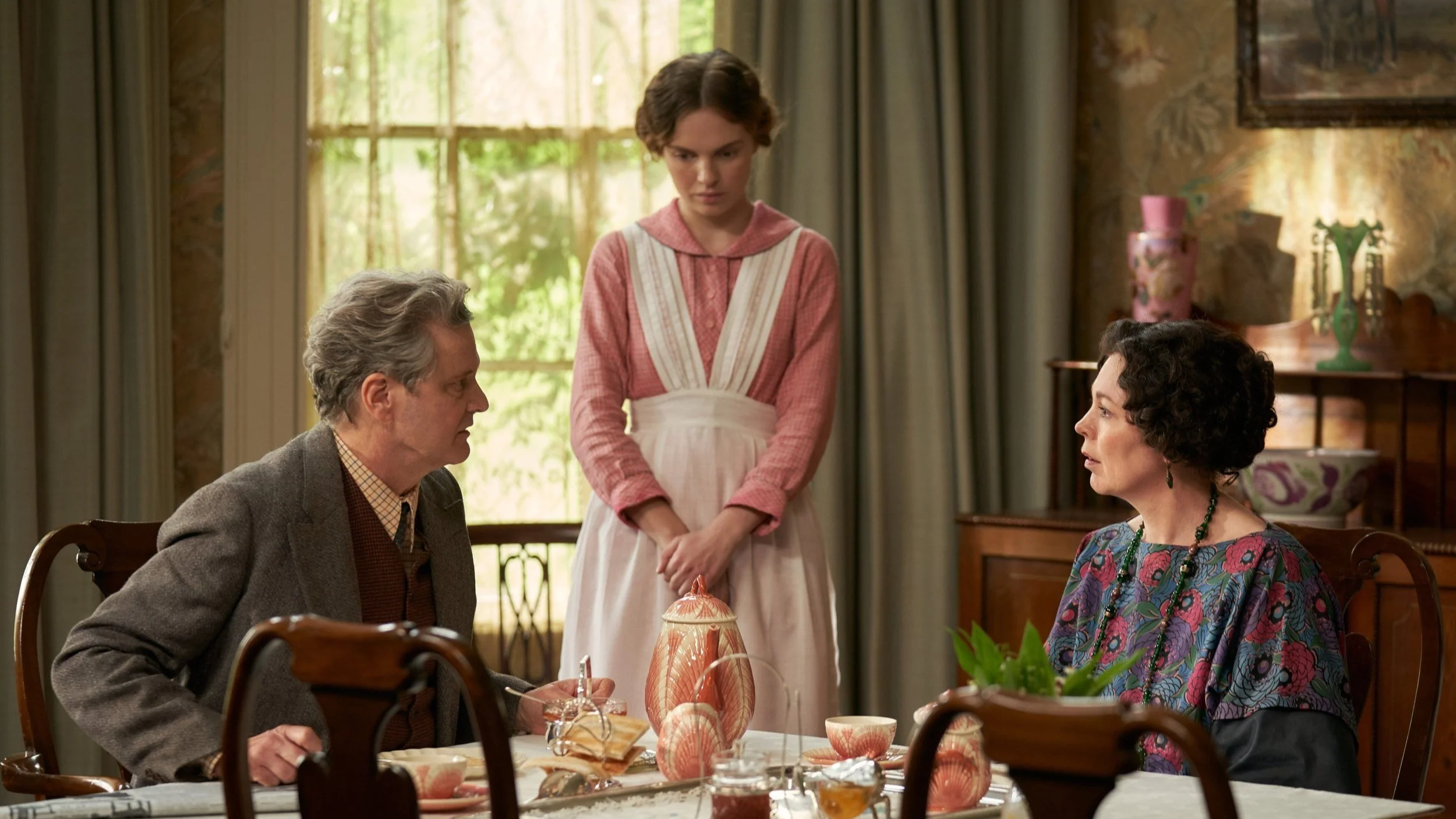
The Nivens—Godfrey (Colin Firth) and Clarrie (Olivia Colman)—are grieving parents who have lost their only son to the trenches. Godfrey maintains a facade of stoic cheer, his smiles tight and practiced, while Clarrie has retreated into a brittle, flinty shell, her once-vibrant spirit dulled by irreversible loss. On this particular Mother’s Day, the Nivens head out for a picnic with neighboring families, leaving Jane alone in the grand house for the first time. What follows is a day that will define her life: a secret rendezvous with Paul Sheringham (Josh O’Connor), the last surviving son of a nearby aristocratic family and Jane’s clandestine lover for years.
Paul, engaged to be married to a suitable young woman from their social circle, invites Jane to his empty family home for what both know will be their final meeting. The afternoon unfolds in stolen intimacy—passionate, tender, and achingly bittersweet. In a bold departure from typical period restraint, the film includes sensual scenes of nudity and lovemaking that feel earned rather than exploitative, emphasizing the raw physicality of their connection amid emotional fragility. Jane, free from societal eyes, wanders naked through Paul’s rooms, touching his books and belongings with a sense of discovery and ownership she has never known.
Yet the day is laced with inevitability. Paul must leave to join the engagement announcement picnic, driving off in his car while Jane remains behind, alone once more. The film’s emotional core lies not in dramatic confrontations but in the quiet aftermath: Jane’s solitary walk home, the weight of what has been said and left unsaid, and the slow realization that love, even when it survives war, often cannot withstand the passage of time and class divides.
Husson’s direction is patient and poetic, allowing the camera to linger on details—the play of light through windows, the rustle of leaves, the subtle shifts in expressions—that convey volumes. The non-linear structure weaves Jane’s memories across decades, flashing forward to her later life as a successful writer (briefly portrayed by the formidable Glenda Jackson in a poignant cameo) and her midlife romance with a kind philosopher named Donald (Ṣọpẹ́ Dìrísù). These glimpses reveal how that one transformative day fueled her creativity, channeling grief, desire, and observation into words that would eventually become literature.
The performances elevate the material to something profound. Odessa Young anchors the film with a breakout turn as Jane, capturing the character’s quiet strength, curiosity, and eventual self-possession. Josh O’Connor brings nuance to Paul—a man torn between duty and genuine affection—making his departure feel like a wound rather than a betrayal. But it is the supporting turns from Firth and Colman that linger longest. Firth’s Godfrey embodies the stoic Englishman crumbling inwardly, his every line delivery measured yet heavy with unspoken pain. Colman, in a role that demands restraint rather than her usual expressive flair, delivers a masterclass in contained devastation. Her Clarrie is a woman who has lost everything that mattered, yet must carry on; a single scene where she tells Jane she is “lucky” to have been orphaned—spared the agony of losing children—cuts to the bone with its brutal honesty.
The film’s emotional brutality comes not from overt tragedy but from its unflinching look at regret and what might have been. It explores class barriers, the lingering trauma of war, the power of memory, and the ways love can both liberate and haunt. Jane’s journey from observer to creator is one of quiet triumph, but it is paid for with profound loss. The final moments—a reflective coda that ties the threads together—leave audiences in stunned silence, the screen fading to black while a single, devastating image or line echoes in the mind long afterward.
Since its theatrical release and festival premieres—including Cannes in 2021—Mothering Sunday has earned praise for its sensual beauty, thoughtful adaptation, and stellar ensemble. Critics have called it “lush” and “aching,” a “sensuous portrait” that bypasses stuffiness for genuine emotional depth. On Netflix, where it has found a new audience in recent months, the film resonates even more powerfully in an era still grappling with collective grief and the slow healing that follows catastrophe.
This is not a film that demands tears; it simply earns them through patience and precision. In its beautiful, unhurried way, Mothering Sunday reminds us that the deepest wounds often come not from dramatic events but from the quiet accumulation of moments lost forever. For anyone seeking a period drama that prioritizes interior life over spectacle, this hidden gem delivers a punch that stays with you—beautiful, patient, and emotionally brutal in the best possible sense.
News

“Shave Her Head,” the Sergeant Ordered Coldly. “If Discipline Won’t Break Her, Maybe Humiliation Will.” But What They Didn’t Know Was That the Woman They Underestimated Would Bring Their Entire Base to Its Knees.
General Alexander Vance had heard the whispers for months: Fort Blackwood was rotting from within. Soldiers spoke in hushed tones of systematic humiliation disguised as “discipline,” falsified training records, missing supply funds that somehow vanished into private accounts, and a toxic command climate built on fear and intimidation. Every official inspection came back sparkling clean […]
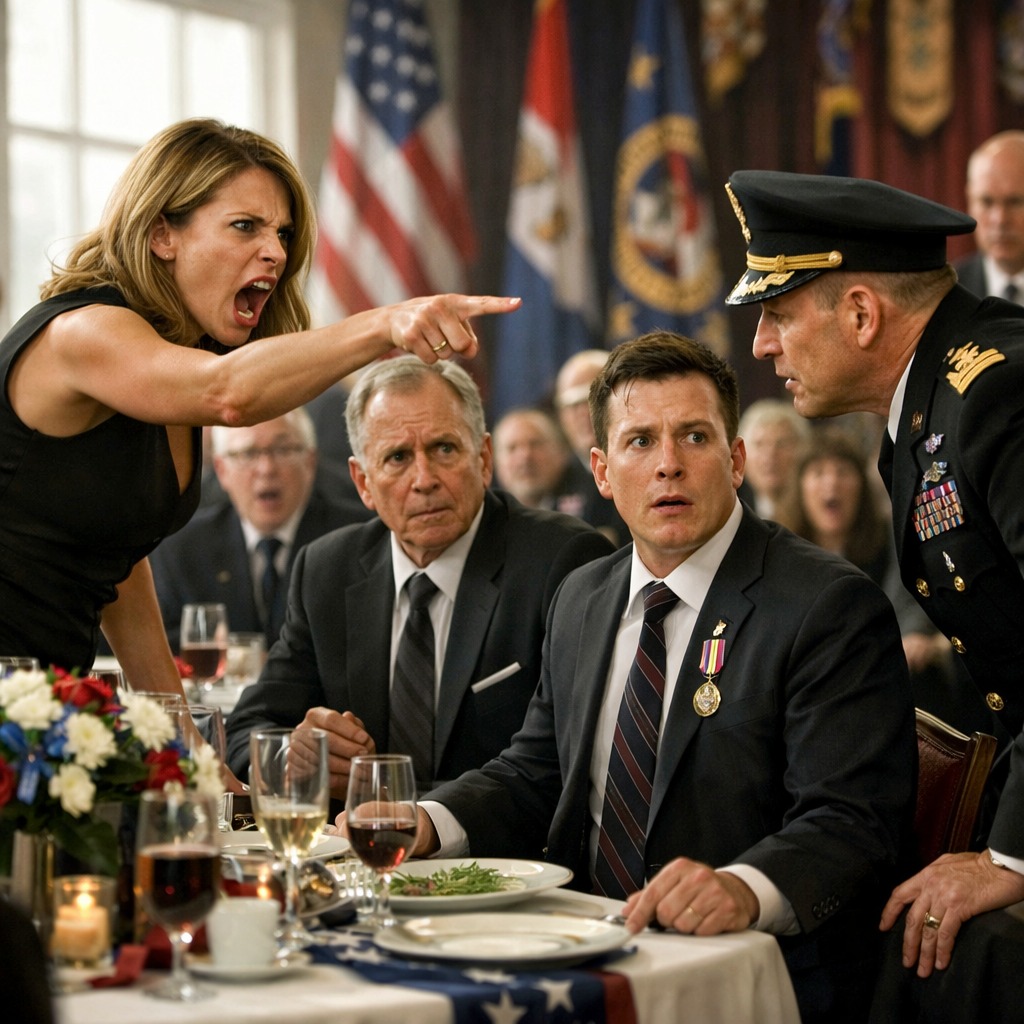
At A Veterans’ Dinner, The Colonel Leaned Toward My Brother And Asked One Simple Question: “Can You Tell Me How You Earned This Decoration, Son?” His Face Turned White. He Pointed At My Father And Said: “He Told Me It Belonged To Our Uncle.” The Uncle Never Existed.
The Ridgewood Armory smelled like every other veterans’ event I’d ever attended: floor wax, overcooked chicken, old coffee, and the faint metallic tang of too many American flags. Fluorescent lights buzzed overhead, casting a harsh glow on rows of folding tables and men in ill-fitting blazers trying to look like they still belonged in uniform. […]

“Die, B*tch,” He Spat, Swinging a Massive Fist in the Mess Hall. He Thought I Was an Easy Target — He Had No Idea He Just Attacked a Classified SEAL Shadow Operative.
I was running on fumes. Seventy-two hours of off-the-books reconnaissance in the frozen Alaskan wilderness had left every muscle screaming. My joints ached from crawling through ice-crusted snow, my eyes burned from staring through night-vision gear, and the only thing keeping me upright was the promise of a hot meal and twelve hours of blackout […]

“Do You Know Who I Am?” He Pushed Her — Seconds Later, One ID Card Ended His Career
The dim lights of Rusty’s Bar flickered like dying stars just outside Camp Pendleton. It was a Friday night, the kind where Marines came to forget the sand and the screams they carried home from deployment. I had come here for the opposite reason — to disappear. My name is Commander Thalia Renwick. Highly decorated […]
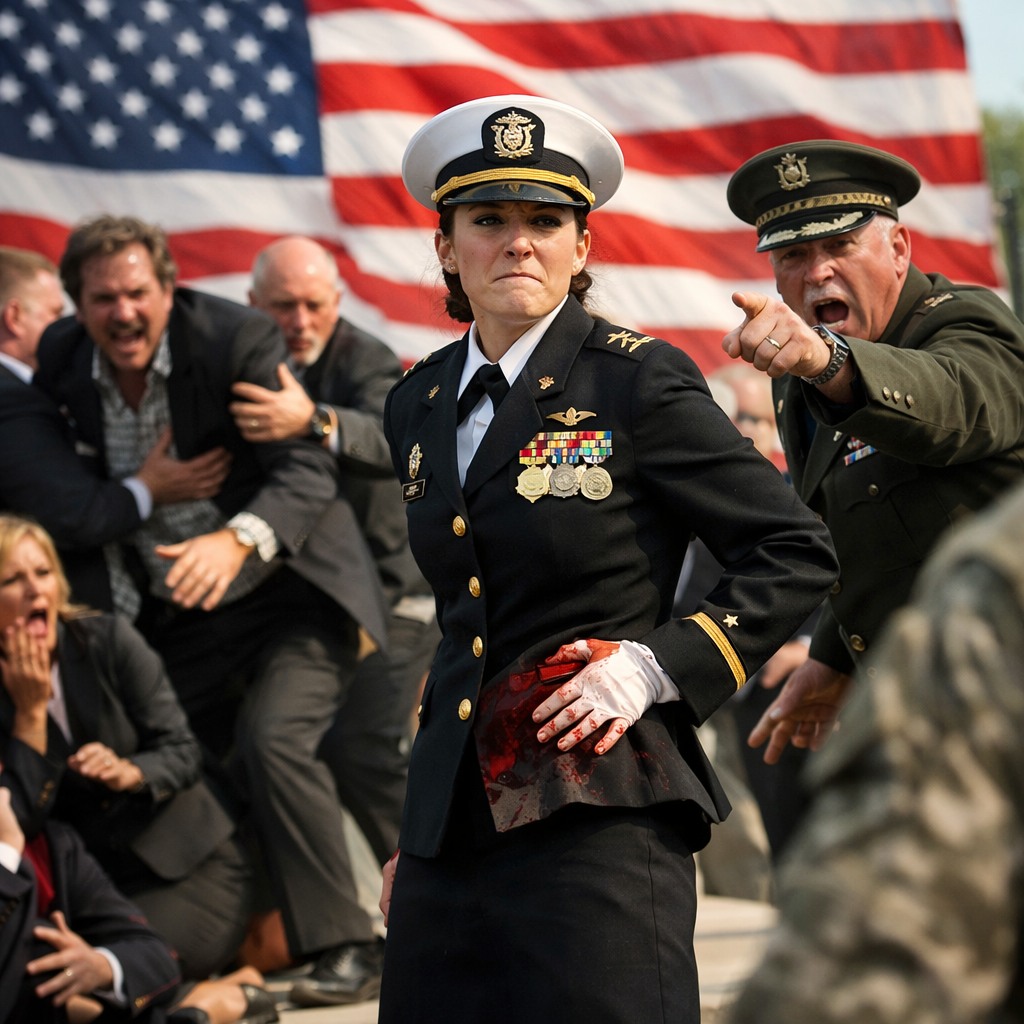
15 Years After My Dad Kicked Me Out, I Saw Him At My Sister’s Wedding. He Sneered: “If It Wasn’t For Pity, No One Would’ve Invited You.” I Just Smiled And Sipped My Wine. Then The Bride Took The Mic And Changed Everything.
The South Carolina sun was merciless that June afternoon, turning the outdoor wedding venue into a glittering oven. I stood near the back in my crisp Army dress uniform, the brass buttons and medals catching the light with every breath. At 34 years old, I had come home for my little sister’s wedding — the […]

“A POLICE DOG FROZE IN THE AIRPORT. THEN A LITTLE GIRL TAPPED HIS HEAD. WHAT HAPPENED NEXT MADE EVERY TRAVELER STOP. HAVE YOU EVER WITNESSED A SILENT CRY FOR HELP?
The bustling international airport was a whirlwind of rolling suitcases, hurried announcements, and weary travelers rushing to their gates. Officer Liam Mercer patrolled the terminal with his loyal K9 partner, Rex — a highly trained German Shepherd known for his sharp instincts in detection and child safety operations. Everything seemed routine until Rex suddenly froze […]
End of content
No more pages to load