I Was Mistaken for a Civilian — Until the Colonel Said, “Ma’am…Are you the Black Widow of SEAL?”
Dulles was doing that winter thing where the sun looked warm and the air disagreed. Adrienne Cross moved through the terminal with the slow gravity of someone who had crossed too many time zones to notice stares anymore. Faded jeans, a salt-stained field jacket, and boots that had earned their scuffs on metal instead of pavement marked her as just another tired traveler. The carry-on behind her had lost a wheel somewhere between Bahrain and Boston, but it still followed.
The USO lounge waited behind frosted glass like a quiet pocket cut out of the noise. Adrienne stepped toward the counter without anticipation, already knowing the shape of the exchange before it happened. The young attendant glanced from the bold ACTIVE DUTY lettering on the sign to the denim at her knees and back again. He straightened his shoulders as policy gave him courage.
“Ma’am, this section is for active duty only.”
Polite. Practiced. The kind of tone meant to soften refusal. Adrienne slid her ID across the counter without comment. He didn’t pick it up right away, instead measuring denim against the word “Navy” like they weren’t meant to exist together. Behind him, the lounge breathed quietly with low television audio and the dry rustle of newspapers.
An older Marine in a faded cover sat with his paper balanced against the sleeve where his arm no longer was. Across from him, a woman in a worn Korea cap stared at the muted screen without blinking. Somewhere, ice settled inside a glass and made a sound like a decision waiting to be made.
“Really?” the attendant tried again, uncertain now. “What branch?”
“Navy,” Adrienne said. “Fleet operations.”
The answer didn’t land the way it should have. People always heard “operations” and imagined desks instead of dark water and deck lights and mathematics that kept ships alive. The attendant finally picked up the ID but didn’t flip it over yet.
That was when the coffee cup didn’t hit the floor.
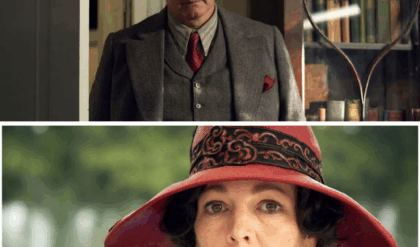
A chair turned softly behind her. No rush. No sound of surprise, just deliberate motion controlled the way only long habit can teach. A man in a gray service coat stood halfway from his seat, West Point ring worn crooked on a scarred hand, posture carrying authority that had outlived its rank.
“Ma’am…”
Adrienne lifted her eyes.
He studied her face the way you watch weather change on a horizon—slow, certain, and with the quiet understanding that once it shifts, nothing goes back to the way it was. The room followed his attention without knowing why. The Marine lowered his paper. The woman in the Korea cap turned. Even the attendant stilled completely.
The colonel drew a slow breath.
“Are you the Black Widow of SEAL?”
The lounge went so quiet Adrienne could hear the ice finish its sentence.
The colonel didn’t blink. The question wasn’t loud, but it carried the weight of classified briefings and closed-casket funerals. The Marine with one arm leaned forward. The Korea-cap woman’s eyes sharpened like she’d just recognized a ghost from her own war.
Adrienne let the silence settle a second longer than courtesy allowed, then gave the smallest nod.
The colonel exhaled through his teeth, a sound halfway between prayer and disbelief. He came the rest of the way out of his chair, slow, like approaching a loaded weapon that happened to be wearing jeans.
“Jesus Christ,” he said softly. “It really is you.”
The attendant finally flipped her ID. His face drained of color when the hologram caught the light: the trident, the black border that meant things most people were never read in on, and a clearance code that started with letters he’d never seen outside of nightmares.
Adrienne took the card back, slid it into her pocket without hurry. “Still just need a corner and a coffee, Colonel.”
He didn’t move out of her path. Instead he did something she hadn’t expected from a man wearing a combat infantryman’s badge with two stars: he saluted. Not the crisp parade-ground kind. A slow, tired salute from a soldier who had buried too many friends and suddenly found one standing in an airport USO wearing civilian clothes.
“Ma’am,” he said, voice rough, “on behalf of every sorry bastard who ever owed you a life… welcome home.”
The Marine was on his foot now, prosthetic hand clamped to the table’s edge for balance, eyes shining. The Korea-cap woman stood too, came forward, and without asking wrapped Adrienne in a hug that smelled like mothballs and old tobacco and something fiercely maternal. Adrienne let it happen. She’d forgotten what it felt like to be held by someone who wasn’t bleeding.
The attendant, twenty-two and suddenly aware the world was bigger than his clipboard, stammered, “There’s—uh—there’s a private room in the back. Quiet. I’ll… I’ll bring whatever you want.”
Adrienne eased free of the embrace. “Black coffee. And if you’ve got anything that isn’t decaf, I’ll take the real stuff.”
He practically ran.
The colonel gestured to the corner table farthest from the door, the one nobody ever chose because it sat under the air-conditioning vent. Adrienne took the seat facing the entrance out of habit. He sat opposite, hands folded like he was afraid to break something.
“I thought the rumor mill finally killed you off for good,” he said. “Last I heard, you took a round off Yemen and vanished into the ether.”
“Rumors are lazy,” she answered. “They hate paperwork.”
He laughed once, surprised at the sound. “Fair. How long have you been stateside?”
“Forty-three hours. Long enough to remember why I stay gone.”
The coffee arrived in a real mug, not the paper kind. The kid set down cream and sugar he already knew she wouldn’t touch, then retreated like he was leaving a chapel.
The colonel studied the scars that started at her jaw and disappeared under the collar of the field jacket. “You heading to Coronado? They’re standing up a new joint task force. Word is they want someone who can make the impossible look routine.”
Adrienne wrapped both hands around the mug, letting the heat soak into bones that still felt cold from the North Arabian Sea.
“They can want in one hand,” she said. “I’m on terminal leave. Thirty days and a handshake, then I disappear for real.”
He leaned in, voice dropping. “You know they’ll never let you. Not really. People like us don’t get to quit; we just change zip codes.”
She met his eyes. “I’m tired of burying kids who still believe in forever, Colonel. I’ve done my math. The ocean keeps better secrets than Arlington.”
For a long moment neither spoke. Outside the frosted glass, travelers rushed past with somewhere to be. Inside, three old warriors and one stunned kid pretended the world wasn’t still on fire.
The Marine limped over, placed a faded unit coin on the table between them (1st Battalion, 9th Marines, Walking Dead). He didn’t say anything. He didn’t need to. Adrienne picked it up, turned it over once, and slipped it into her pocket beside the ID.
The Korea-cap woman pressed something smaller into Adrienne’s hand: a tiny silver widow spider pin, the kind sold in PXs during Vietnam. “For luck,” she whispered. “Or for scaring the right people.”
Adrienne closed her fist around it.
The colonel finally leaned back. “When your thirty days are up, if you decide disappearing isn’t enough… there’s a bar in Virginia Beach. O’Sullivan’s. Tuesday nights. Same booth in the back. No one there will ask your name, but they’ll damn sure stand when you walk in.”
Adrienne looked at him for a long second, then gave the faintest smile the lounge had ever seen.
“I’ll keep it in mind.”
She finished the coffee, stood, and shouldered the broken carry-on. The room rose with her, unasked, unspoken. The attendant opened the door like he was unveiling a monument.
Adrienne Cross (the Black Widow of SEAL, the woman who had once walked out of a sinking ship with fourteen survivors and a body count no one ever wrote down) paused on the threshold.
She looked back once.
“Thank you,” she said to all of them and none of them.
Then she stepped into the terminal and let the crowd swallow her whole.
No one saw the limp that wasn’t there yesterday.
No one saw the way her right hand kept brushing the place where a sidearm used to live.
And no one (least of all the colonel who watched her disappear) doubted for one second that somewhere out there, the war was still looking for her.
But for the first time in twenty years, she was walking toward something instead of away.
Thirty days.
Maybe that was enough time to figure out what came after legends.