The brutal assault on Ian Huntley at HMP Frankland in late February 2026 has once again thrust the notorious Soham killer into the headlines, underscoring the perilous reality of his existence behind bars. The 52-year-old, serving a life sentence with a minimum term of 40 years for the 2002 murders of schoolgirls Holly Wells and Jessica Chapman, was reportedly beaten with a metal bar in a prison workshop. He was left unconscious in a pool of blood, rushed to hospital, and remains in serious condition with no significant improvement reported in the days following the attack. Sources close to the case have suggested his survival odds were as low as 5%, with Huntley fighting for his life in an induced coma amid severe head injuries.
The incident, occurring on Thursday, February 26, 2026, at the Category A maximum-security facility in County Durham, marks yet another chapter in a long history of violence directed at Huntley. Prison insiders describe his daily life as one of extreme vulnerability, constant threats, and enforced isolation. From the moment he entered the system after his conviction, Huntley has been a prime target for other inmates. Child killers and sex offenders rank at the bottom of the prison hierarchy, often viewed as fair game for retribution. Reports indicate there has long been a “queue” of prisoners eager to attack him—rapists, terrorists, murderers, and violent offenders who see harming Huntley as a way to gain respect or settle scores.
Huntley’s prison experience has been defined by repeated attempts on his life. Over nearly 24 years behind bars, he has endured scalding with boiling water at HMP Wakefield in 2005, a throat-slashing with a razor blade at HMP Frankland in 2010, and multiple beatings, stabbings, and burnings. These assaults have left him physically scarred and psychologically worn. Former inmates and prison sources portray a man who lives under perpetual fear, often segregated from the general population for his own protection. He has spent extended periods in isolation or on vulnerable prisoner units, where close observation is meant to deter attacks but cannot eliminate the risk entirely.

The latest attack highlights the limitations of even high-security measures. Huntley was reportedly ambushed in a recycling or workshop area, a space where tools and improvised weapons like metal bars are accessible. The assailant, identified in reports as a mid-40s prisoner, allegedly shouted “I’ve done it, I’ve done it” after the assault, suggesting premeditation or bravado. Prison staff faced immediate questions about how such a targeted incident could occur despite Huntley’s high-risk status and the intelligence reports warning of threats from multiple inmates.
Huntley himself had expressed awareness of the danger. Relatives were told he believed “they’ll get me sooner or later,” acknowledging the hatred directed at him. He reportedly knew five or six prisoners openly wanted him dead, with some vowing to kill him if left alone. Earlier moves between wings or units had left him feeling more exposed after periods of heightened protection. Despite efforts to rehabilitate him—prison authorities have a duty to provide opportunities beyond mere punishment—his notoriety has made normal interactions nearly impossible.
The environment at HMP Frankland, nicknamed “Monster Mansion” for housing some of Britain’s most dangerous offenders, amplifies the risks. High-profile prisoners like Huntley are often kept under strict regimes: limited association, escorted movements, and constant monitoring. Yet breaches occur. Defense lawyers specializing in sexual offense cases note that many inmates fear for their lives in such volatile settings, where alliances shift quickly and grudges fester. Violent offenders may see attacking someone like Huntley as a path to status or revenge.
Huntley’s early attitude reportedly worsened his situation. Sources suggest arrogance or self-righteousness in his initial years alienated potential protectors and made enemies. In a world where power dynamics rule, such traits can prove fatal. His reputation as the Soham murderer—forever linked to the abduction and killing of two innocent 10-year-olds—ensures he remains a symbol of revulsion, with little sympathy from peers or staff.
Daily routine for Huntley is a careful balancing act. Meals may be eaten alone, recreation limited, and interactions minimized. Mood swings and health issues, including past suicide attempts, have compounded his isolation. The prison system strives for rehabilitation, but for lifers like Huntley, survival often overshadows any prospect of change. He remains ineligible for parole until at least 2042, meaning decades more in this hostile environment.
The February 2026 attack has renewed calls for scrutiny of prison security protocols. Despite advanced monitoring and segregation, determined assailants exploit opportunities. Huntley’s case illustrates the harsh truth: in a system where child killers are despised, even maximum security offers no guarantee of safety. Insiders warn that if he survives, vulnerability will persist—long memories and ample time ensure threats never fully recede.
Behind the locked doors and concrete walls, Huntley’s life bears little resemblance to control or comfort. Once a figure dominating headlines for all the wrong reasons, he now navigates a world where notoriety invites violence rather than protection. The full picture of his prison existence is one of perpetual danger, where reputation and past crimes dictate daily survival in ways he never anticipated.
News

“Shave Her Head,” the Sergeant Ordered Coldly. “If Discipline Won’t Break Her, Maybe Humiliation Will.” But What They Didn’t Know Was That the Woman They Underestimated Would Bring Their Entire Base to Its Knees.
General Alexander Vance had heard the whispers for months: Fort Blackwood was rotting from within. Soldiers spoke in hushed tones of systematic humiliation disguised as “discipline,” falsified training records, missing supply funds that somehow vanished into private accounts, and a toxic command climate built on fear and intimidation. Every official inspection came back sparkling clean […]
At A Veterans’ Dinner, The Colonel Leaned Toward My Brother And Asked One Simple Question: “Can You Tell Me How You Earned This Decoration, Son?” His Face Turned White. He Pointed At My Father And Said: “He Told Me It Belonged To Our Uncle.” The Uncle Never Existed.
The Ridgewood Armory smelled like every other veterans’ event I’d ever attended: floor wax, overcooked chicken, old coffee, and the faint metallic tang of too many American flags. Fluorescent lights buzzed overhead, casting a harsh glow on rows of folding tables and men in ill-fitting blazers trying to look like they still belonged in uniform. […]
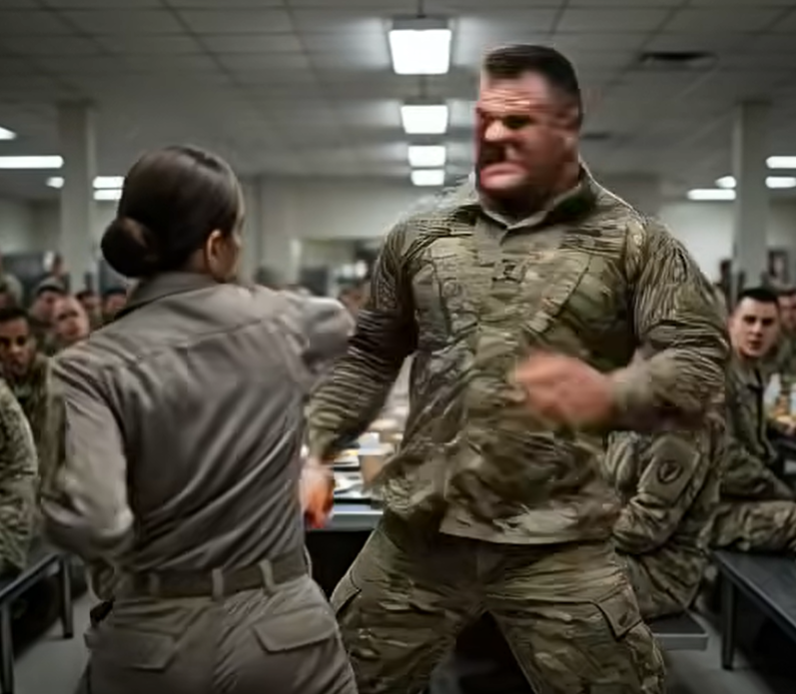
“Die, B*tch,” He Spat, Swinging a Massive Fist in the Mess Hall. He Thought I Was an Easy Target — He Had No Idea He Just Attacked a Classified SEAL Shadow Operative.
I was running on fumes. Seventy-two hours of off-the-books reconnaissance in the frozen Alaskan wilderness had left every muscle screaming. My joints ached from crawling through ice-crusted snow, my eyes burned from staring through night-vision gear, and the only thing keeping me upright was the promise of a hot meal and twelve hours of blackout […]
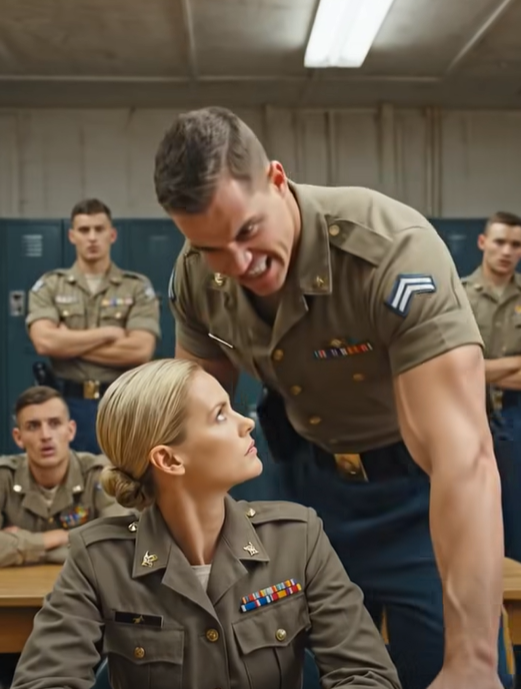
“Do You Know Who I Am?” He Pushed Her — Seconds Later, One ID Card Ended His Career
The dim lights of Rusty’s Bar flickered like dying stars just outside Camp Pendleton. It was a Friday night, the kind where Marines came to forget the sand and the screams they carried home from deployment. I had come here for the opposite reason — to disappear. My name is Commander Thalia Renwick. Highly decorated […]

15 Years After My Dad Kicked Me Out, I Saw Him At My Sister’s Wedding. He Sneered: “If It Wasn’t For Pity, No One Would’ve Invited You.” I Just Smiled And Sipped My Wine. Then The Bride Took The Mic And Changed Everything.
The South Carolina sun was merciless that June afternoon, turning the outdoor wedding venue into a glittering oven. I stood near the back in my crisp Army dress uniform, the brass buttons and medals catching the light with every breath. At 34 years old, I had come home for my little sister’s wedding — the […]
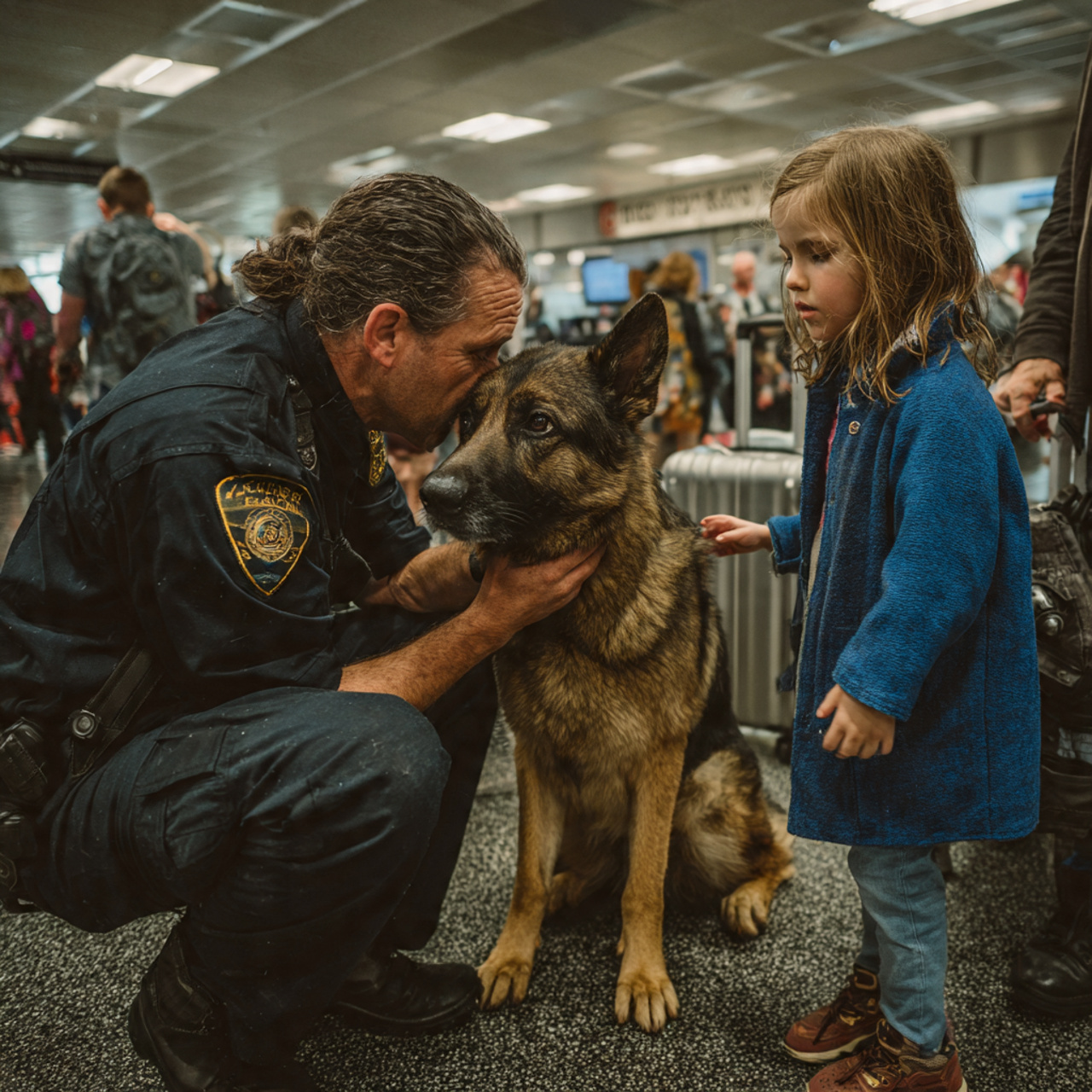
“A POLICE DOG FROZE IN THE AIRPORT. THEN A LITTLE GIRL TAPPED HIS HEAD. WHAT HAPPENED NEXT MADE EVERY TRAVELER STOP. HAVE YOU EVER WITNESSED A SILENT CRY FOR HELP?
The bustling international airport was a whirlwind of rolling suitcases, hurried announcements, and weary travelers rushing to their gates. Officer Liam Mercer patrolled the terminal with his loyal K9 partner, Rex — a highly trained German Shepherd known for his sharp instincts in detection and child safety operations. Everything seemed routine until Rex suddenly froze […]
End of content
No more pages to load