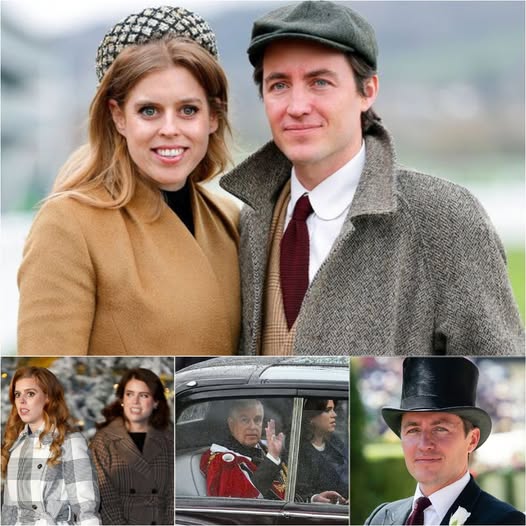
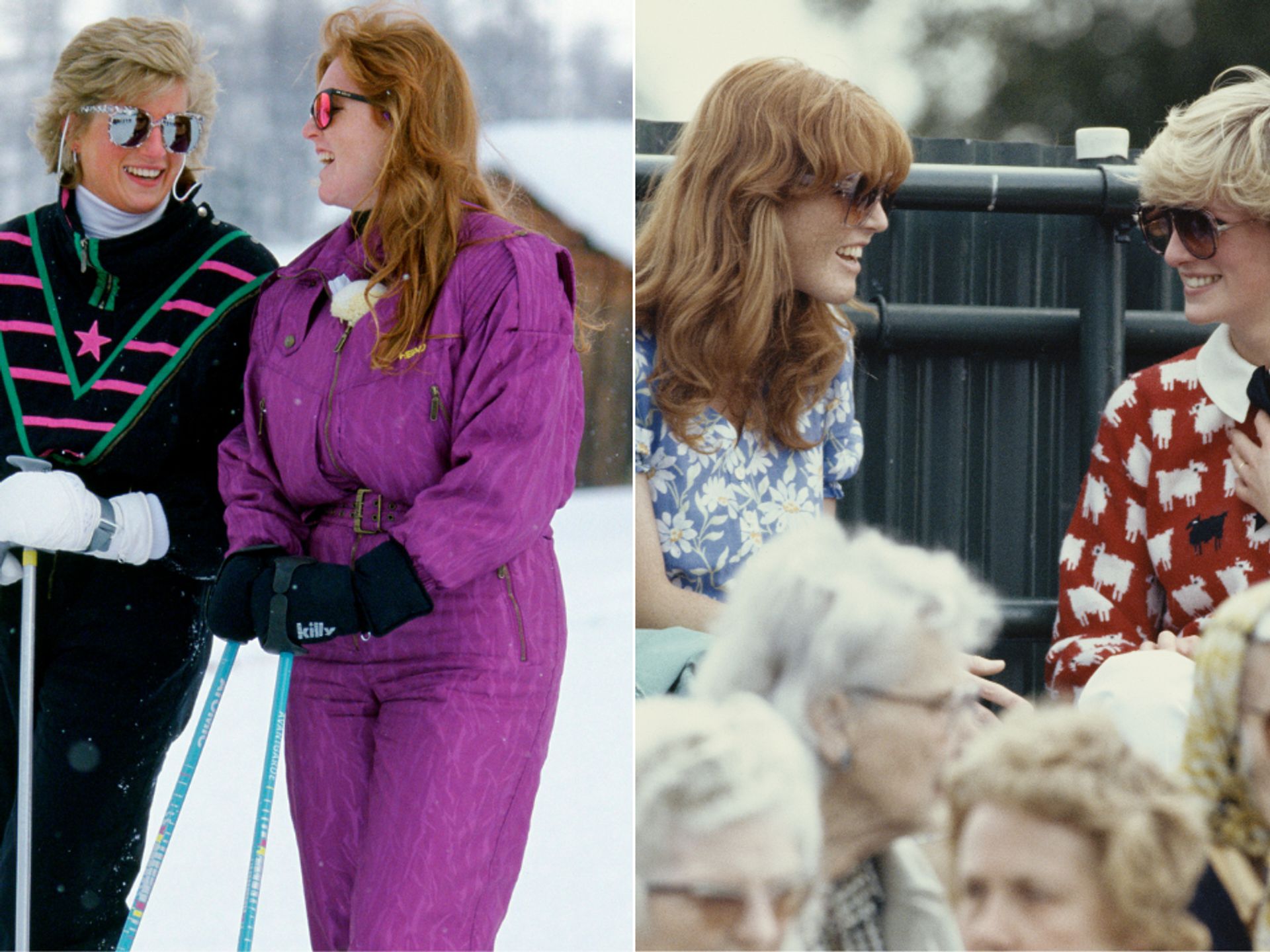
Princess Diana and Sarah Ferguson, the Duchess of York, shared one of the most visible and supportive friendships in modern royal history. Their bond began long before either entered the spotlight of the British monarchy, rooted in shared experiences as young women navigating extraordinary circumstances. Diana, born in 1961, and Sarah, born in 1959, knew each other from teenage social circles in aristocratic England. Their connection deepened significantly when Diana, already engaged to Prince Charles in 1980, introduced Sarah to Prince Andrew, Charles’s younger brother. Diana actively encouraged the match, seeing Sarah as a lively, down-to-earth companion who could bring joy to the royal family. The introduction proved successful: Andrew and Sarah married in 1986 in a ceremony watched by millions, making Sarah Diana’s sister-in-law and solidifying their alliance within the Windsors.
Once inside the royal fold, the two women leaned heavily on each other amid the relentless media scrutiny and rigid expectations of palace life. Both faced intense public pressure—Diana as the glamorous yet vulnerable Princess of Wales, Sarah as the outgoing, sometimes controversial Duchess of York. They confided in one another about marital strains, the challenges of motherhood, and the isolation that came with their positions. Diana, who struggled with bulimia, postpartum issues, and the breakdown of her marriage, found in Sarah a sympathetic ear who understood the peculiar loneliness of royal duty. Sarah, in turn, appreciated Diana’s empathy and advice as she adjusted to life as a royal wife and mother to daughters Beatrice and Eugenie.
Their closeness was evident in public and private moments. They vacationed together, shared family holidays, and supported each other during difficult times. In 1991, as both marriages began to falter, they openly discussed the possibility of leaving royal life, burning up phone lines with late-night conversations about their futures. Diana’s separation from Charles was announced in 1992, followed by Sarah’s split from Andrew the same year. By 1996, both divorces were finalized—Sarah’s in May and Diana’s in August—marking a period of shared transition and vulnerability. That summer, the two women even took a joint holiday in the South of France with their children, a gesture that suggested lingering solidarity despite their personal upheavals.
However, the friendship fractured irreparably in late 1996 following the publication of Sarah’s autobiography, My Story: Sarah, the Duchess of York. The book, released in November of that year, aimed to offer an insider’s perspective on royal life and Sarah’s personal journey. While Sarah had sought to share her experiences candidly, certain passages crossed a line for Diana. According to accounts from those close to Diana, including her former butler Paul Burrell, Diana had explicitly asked Sarah not to include details about her life, her sons William and Harry, or their private relationship in the memoir. Sarah reportedly agreed to this boundary, but the published book contained references that Diana found intrusive and betraying.
One particularly offending anecdote involved Sarah borrowing shoes from Diana during her pre-royal days in Clapham. Sarah wrote that Diana generously gave her several pairs—”and, less happily, her plantar warts”—noting they wore the same size. Though seemingly trivial—a common foot condition like verrucas—the mention struck Diana as a violation of privacy. She viewed it as an unnecessary personal detail shared for public consumption without permission, especially at a time when both women were already under immense emotional strain from their divorces and media hounding. Diana felt used, as if her confidences and kindness had been exploited for the book’s narrative and sales appeal.
The fallout was swift and decisive. Diana, known for her strong emotions and tendency to hold firm once trust was broken, cut off contact completely. Communication ceased, and attempts at reconciliation failed. Sarah later claimed in her 2011 memoir Finding Sarah: A Duchess’s Journey to Find Herself that she never fully understood the reason for the rift, attributing it to Diana’s habit of fixating on perceived slights. “Sadly, at the end we hadn’t spoken for a year, though I never knew the reason, except that once Diana got something in her head, it stuck there for a while,” she wrote. Yet other sources, including royal insiders, point directly to the memoir as the breaking point.
Tensions escalated further with a reported exchange involving a letter. Diana received what appeared to be a note from Sarah’s young daughter Eugenie, addressed in childish handwriting to “HRH The Princess of Wales.” Upon closer inspection, Diana believed it was a ploy by Sarah to elicit sympathy or reopen dialogue indirectly. The letter allegedly contained pointed references to honesty and past assurances, which Diana interpreted as manipulative. She reportedly reacted with fury, viewing it as a final, desperate attempt to guilt her into forgiveness. This incident sealed the estrangement; the two women never spoke again.
The timing amplified the tragedy. Diana’s death in a Paris car crash on August 31, 1997, came less than a year after the book’s release and the final rupture. At the funeral, Sarah attended but the absence of reconciliation hung heavily. Sarah later reflected on the loss with sadness, acknowledging their sibling-like bond and the rows that came with it. “Because we were like siblings… we rowed. And the saddest thing, at the end, we hadn’t spoken for a year,” she told interviewers years later.
The fractured friendship serves as a poignant chapter in the lives of two women who, despite their privileges, faced extraordinary personal and public challenges. Their early closeness offered mutual strength during turbulent years, but the memoir incident exposed the fragility of trust in a world where privacy was scarce and every detail could become public currency. The story underscores how even deep bonds can shatter under pressure, leaving lasting regret in the wake of irreversible loss.
News
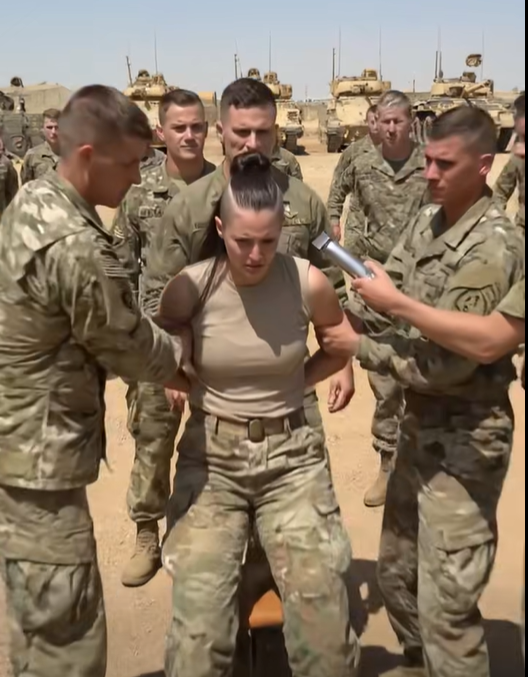
“Shave Her Head,” the Sergeant Ordered Coldly. “If Discipline Won’t Break Her, Maybe Humiliation Will.” But What They Didn’t Know Was That the Woman They Underestimated Would Bring Their Entire Base to Its Knees.
General Alexander Vance had heard the whispers for months: Fort Blackwood was rotting from within. Soldiers spoke in hushed tones of systematic humiliation disguised as “discipline,” falsified training records, missing supply funds that somehow vanished into private accounts, and a toxic command climate built on fear and intimidation. Every official inspection came back sparkling clean […]
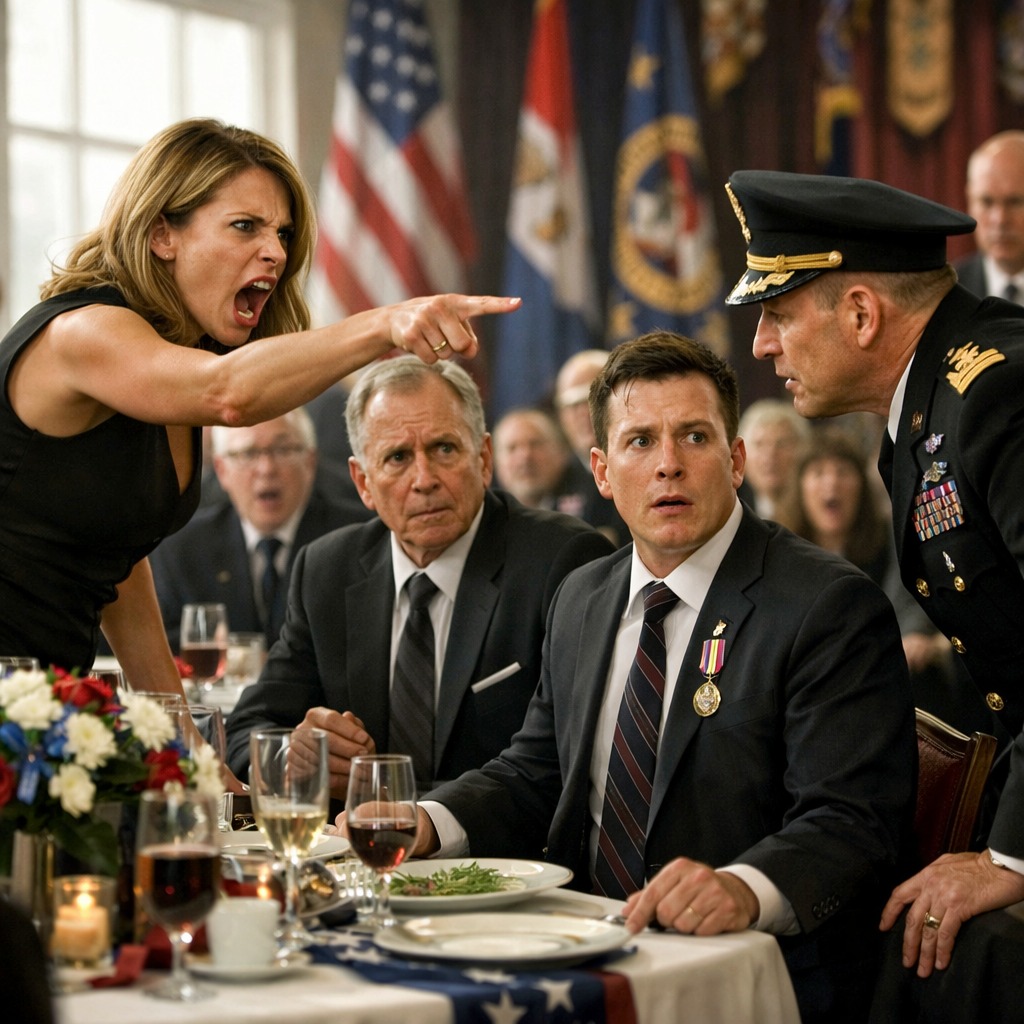
At A Veterans’ Dinner, The Colonel Leaned Toward My Brother And Asked One Simple Question: “Can You Tell Me How You Earned This Decoration, Son?” His Face Turned White. He Pointed At My Father And Said: “He Told Me It Belonged To Our Uncle.” The Uncle Never Existed.
The Ridgewood Armory smelled like every other veterans’ event I’d ever attended: floor wax, overcooked chicken, old coffee, and the faint metallic tang of too many American flags. Fluorescent lights buzzed overhead, casting a harsh glow on rows of folding tables and men in ill-fitting blazers trying to look like they still belonged in uniform. […]
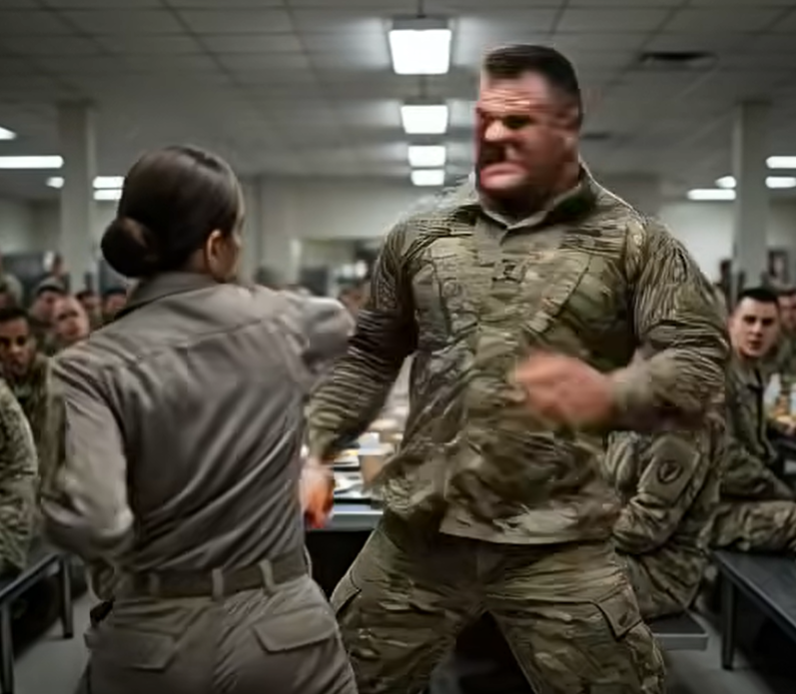
“Die, B*tch,” He Spat, Swinging a Massive Fist in the Mess Hall. He Thought I Was an Easy Target — He Had No Idea He Just Attacked a Classified SEAL Shadow Operative.
I was running on fumes. Seventy-two hours of off-the-books reconnaissance in the frozen Alaskan wilderness had left every muscle screaming. My joints ached from crawling through ice-crusted snow, my eyes burned from staring through night-vision gear, and the only thing keeping me upright was the promise of a hot meal and twelve hours of blackout […]
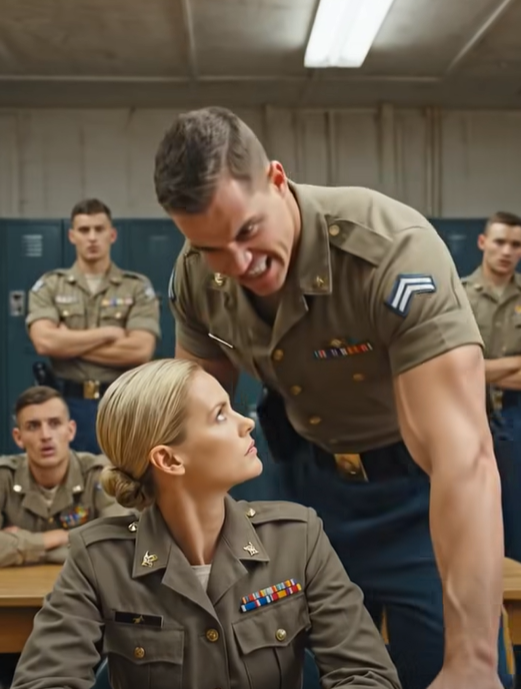
“Do You Know Who I Am?” He Pushed Her — Seconds Later, One ID Card Ended His Career
The dim lights of Rusty’s Bar flickered like dying stars just outside Camp Pendleton. It was a Friday night, the kind where Marines came to forget the sand and the screams they carried home from deployment. I had come here for the opposite reason — to disappear. My name is Commander Thalia Renwick. Highly decorated […]
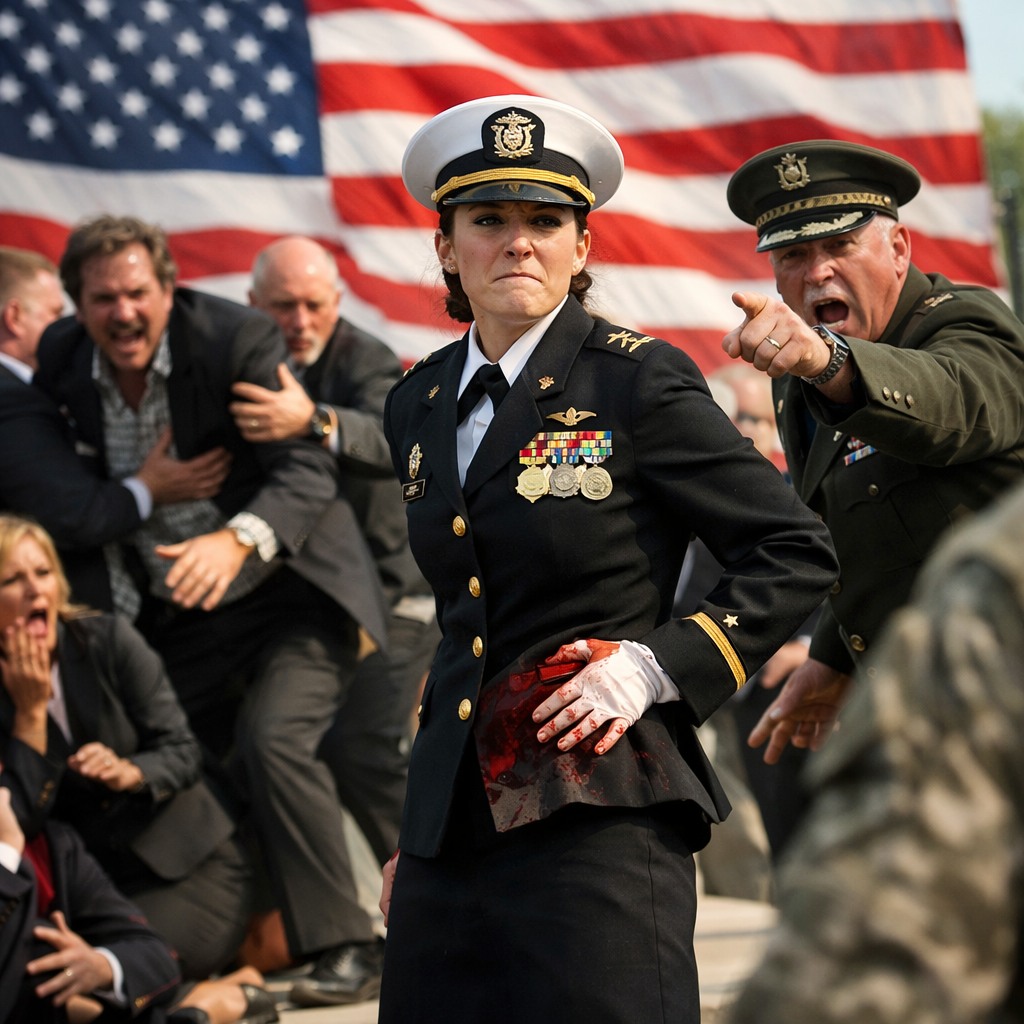
15 Years After My Dad Kicked Me Out, I Saw Him At My Sister’s Wedding. He Sneered: “If It Wasn’t For Pity, No One Would’ve Invited You.” I Just Smiled And Sipped My Wine. Then The Bride Took The Mic And Changed Everything.
The South Carolina sun was merciless that June afternoon, turning the outdoor wedding venue into a glittering oven. I stood near the back in my crisp Army dress uniform, the brass buttons and medals catching the light with every breath. At 34 years old, I had come home for my little sister’s wedding — the […]
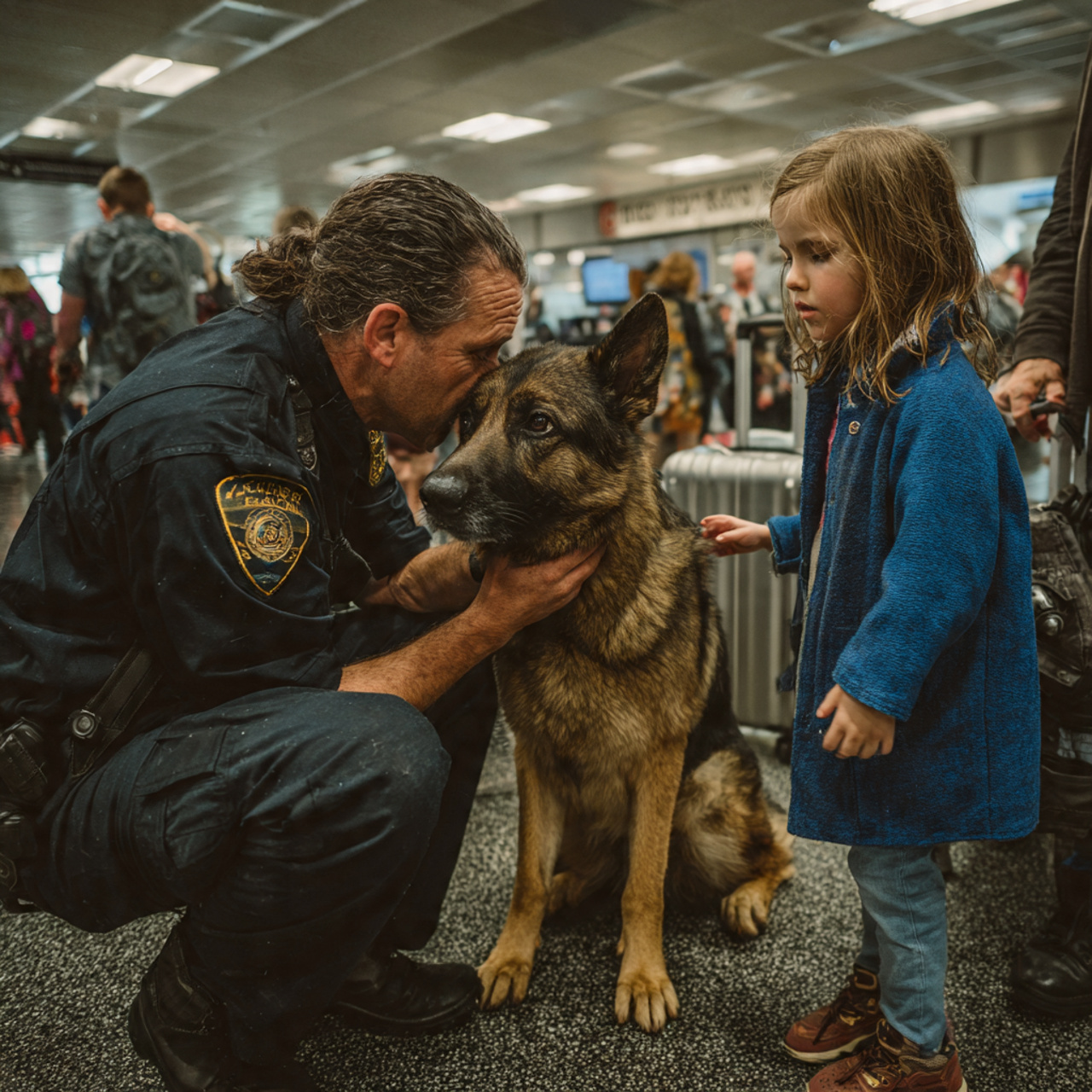
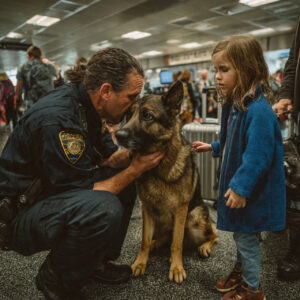
“A POLICE DOG FROZE IN THE AIRPORT. THEN A LITTLE GIRL TAPPED HIS HEAD. WHAT HAPPENED NEXT MADE EVERY TRAVELER STOP. HAVE YOU EVER WITNESSED A SILENT CRY FOR HELP?
The bustling international airport was a whirlwind of rolling suitcases, hurried announcements, and weary travelers rushing to their gates. Officer Liam Mercer patrolled the terminal with his loyal K9 partner, Rex — a highly trained German Shepherd known for his sharp instincts in detection and child safety operations. Everything seemed routine until Rex suddenly froze […]
End of content
No more pages to load