After nearly three years behind bars, Fetty Wap stepped back into freedom on January 8, 2026, but the real release came days later when he was finally reunited with his 9-year-old daughter, Khari. The moment was so raw, so filled with pent-up love and relief, that it reportedly brought Khari’s mother, Masika Kalysha, to tears. What began as a long-awaited family reunion quickly became one of the most emotional stories in hip-hop this year—a testament to a father’s determination to reclaim what incarceration had taken away.
Fetty Wap, born Willie Junior Maxwell II, had been serving a six-year federal sentence for drug trafficking charges related to cocaine distribution. Arrested in 2022, he spent time in facilities including a halfway house transition before his early release to supervised home confinement, set to last until November 2026. The years inside were marked by isolation from his six children, public scrutiny, and the slow erosion of the momentum he had built with hits like “Trap Queen,” “679,” and “My Way.” The “Trap Queen” era had made him a star—platinum plaques, sold-out shows, and a unique melodic trap style that blended singing and rapping—but prison paused everything. No tours, no new music drops, no everyday dad moments. For Khari, born in 2016 during his relationship with Masika Kalysha, those missing years meant growing up without her father’s physical presence.
The reunion unfolded quietly at first. Sources close to the family described Fetty spending an entire week focused on Khari. They visited a recording studio together—perhaps a symbolic nod to his return to music—went shopping, shared meals, and simply existed in the same space after so long apart. Khari met several of her siblings for the first time, including Fetty’s other children from previous relationships. She also spent time with Masika’s younger daughter, Amari, creating a blended family dynamic that felt natural and warm. Photos captured the joy: Fetty in full doting-dad mode, smiling wide as Khari beamed beside him, the two of them inseparable. The images showed a man reclaiming his role—not as a celebrity, but as a father.
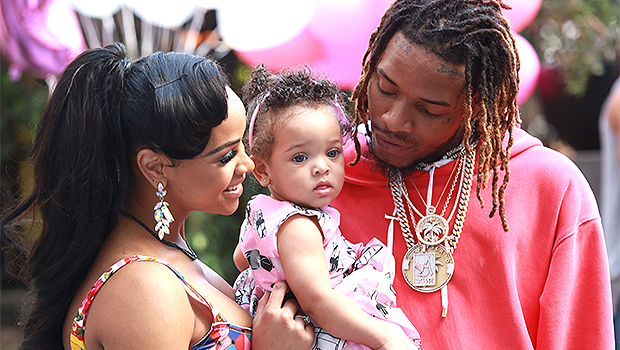
The emotion peaked when Khari’s happiness overflowed. Insiders said the 9-year-old was so overjoyed to have her dad back that it moved Masika to tears. The former couple’s relationship had been complicated—public disputes on reality TV, co-parenting tensions, and Masika’s vocal disappointment right after Fetty’s release. She had posted cryptic messages expressing frustration, calling him out for past behavior even as fans celebrated his freedom. Yet the reunion shifted the tone. Seeing Khari light up reportedly softened the edges; Masika witnessed firsthand the healing power of that father-daughter bond. Rumors swirled that she was now considering relocating closer to New Jersey so Khari could be nearer to Fetty during his home confinement period. While reconciliation between the exes wasn’t on the table, the focus turned firmly to co-parenting and giving Khari stability.
For Fetty, the week was more than quality time—it was redemption. Prison had stripped him of everyday fatherhood: no school drop-offs, no bedtime stories, no watching Khari grow from toddler to young girl. Emerging to find her at 9 years old, full of personality and curiosity, must have been overwhelming. The rapper has always spoken proudly of his kids, often dedicating songs or social media posts to them. During incarceration, those connections were limited to phone calls and occasional visits, if allowed. Walking out meant reclaiming those lost moments, and the reunion photos showed a man determined to make up for lost time—laughing, hugging, simply being present.
The public reaction was overwhelmingly positive. Fans who had followed Fetty’s legal troubles expressed relief and happiness for the family. Social media filled with supportive comments: “This is what matters,” “Khari finally has her dad back,” “Healing looks like this.” The story humanized Fetty beyond the headlines of his arrest and conviction. He wasn’t just a rapper who fell from grace; he was a father who had paid his debt and was now prioritizing family. The image of him with Khari—smiling, relaxed, fully engaged—became a powerful symbol of second chances.
The timing added layers. Fetty’s release came amid a wave of hip-hop artists facing or emerging from legal battles, reminding everyone of the real-world consequences behind the music. Yet his story stood out for its focus on redemption through fatherhood rather than a quick comeback single or diss track. He hosted a low-key welcome home party in New York shortly after, surrounded by loved ones, but kept the spotlight on family rather than flash. The reunion with Khari felt like the true homecoming—more meaningful than any chart position or sold-out show.
Masika’s tears spoke volumes. As Khari’s mother, she had shouldered the bulk of parenting during Fetty’s absence. Raising a child through toddler years into middle childhood alone is no small feat, especially under public scrutiny. Seeing her daughter so happy reportedly cracked through any lingering resentment. It wasn’t about rekindling romance—”never say never” was the vague word on that front—but about prioritizing Khari’s joy. The moment highlighted how children can bridge even the widest divides, turning tension into tentative hope.
Fetty’s next steps remain focused on rebuilding. Home confinement limits his movement, but it also gives him time to reconnect without the pressures of touring or recording. He has teased new music and expressed gratitude for the support during his absence. But right now, the priority is clear: being present for Khari and his other children. The reunion wasn’t just an end to separation—it was a beginning of healing, accountability, and love reclaimed.
In hip-hop, stories of comeback often center on music or money. Fetty Wap’s feels different. He didn’t just walk out of prison; he walked into the arms of a daughter who had waited nearly three years. And when that little girl’s joy made her mother cry, it reminded everyone that some victories can’t be measured in streams or sales—they’re measured in hugs, laughter, and second chances. For Fetty, Khari, and Masika, that moment was everything.
News
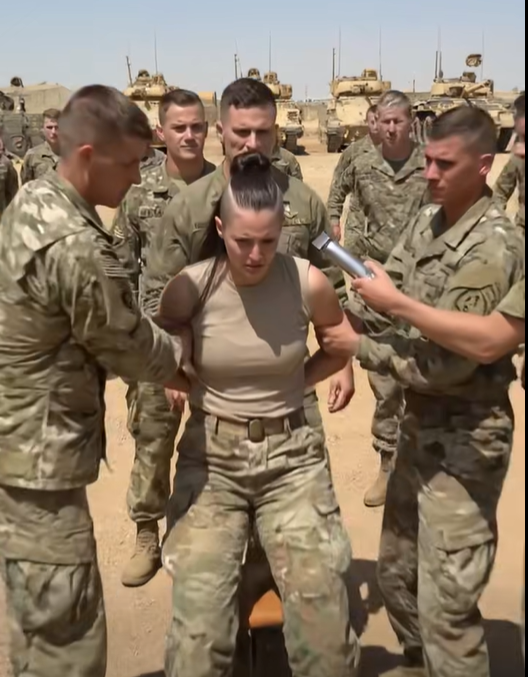
“Shave Her Head,” the Sergeant Ordered Coldly. “If Discipline Won’t Break Her, Maybe Humiliation Will.” But What They Didn’t Know Was That the Woman They Underestimated Would Bring Their Entire Base to Its Knees.
General Alexander Vance had heard the whispers for months: Fort Blackwood was rotting from within. Soldiers spoke in hushed tones of systematic humiliation disguised as “discipline,” falsified training records, missing supply funds that somehow vanished into private accounts, and a toxic command climate built on fear and intimidation. Every official inspection came back sparkling clean […]
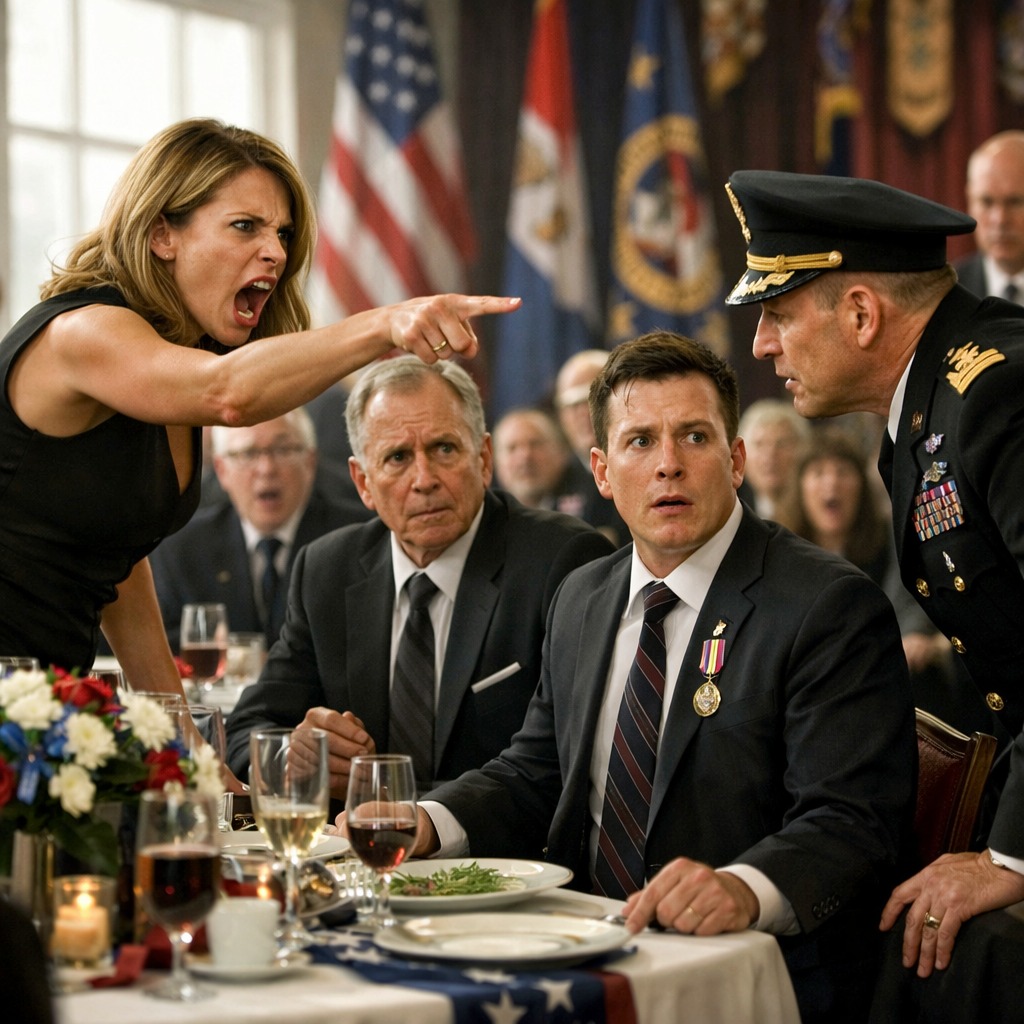
At A Veterans’ Dinner, The Colonel Leaned Toward My Brother And Asked One Simple Question: “Can You Tell Me How You Earned This Decoration, Son?” His Face Turned White. He Pointed At My Father And Said: “He Told Me It Belonged To Our Uncle.” The Uncle Never Existed.
The Ridgewood Armory smelled like every other veterans’ event I’d ever attended: floor wax, overcooked chicken, old coffee, and the faint metallic tang of too many American flags. Fluorescent lights buzzed overhead, casting a harsh glow on rows of folding tables and men in ill-fitting blazers trying to look like they still belonged in uniform. […]
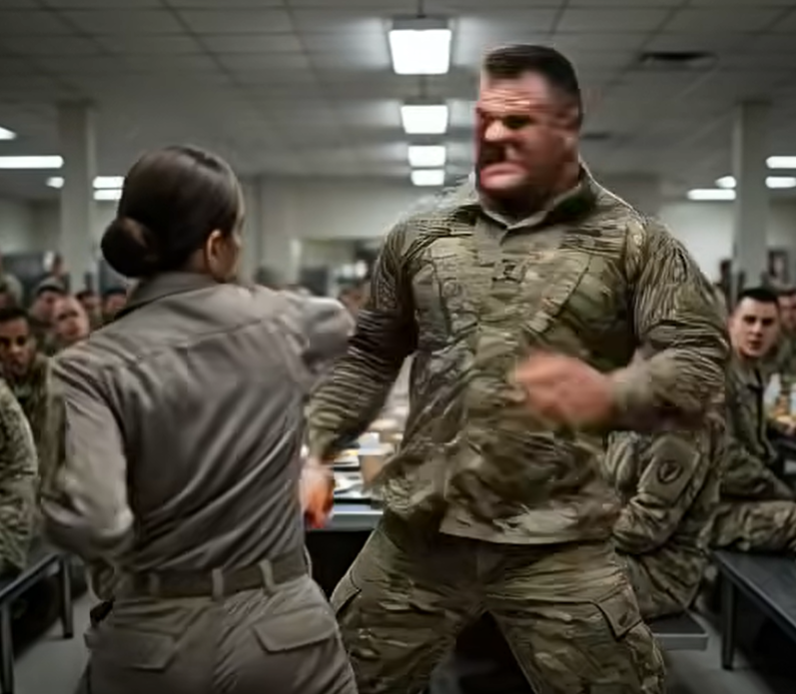
“Die, B*tch,” He Spat, Swinging a Massive Fist in the Mess Hall. He Thought I Was an Easy Target — He Had No Idea He Just Attacked a Classified SEAL Shadow Operative.
I was running on fumes. Seventy-two hours of off-the-books reconnaissance in the frozen Alaskan wilderness had left every muscle screaming. My joints ached from crawling through ice-crusted snow, my eyes burned from staring through night-vision gear, and the only thing keeping me upright was the promise of a hot meal and twelve hours of blackout […]
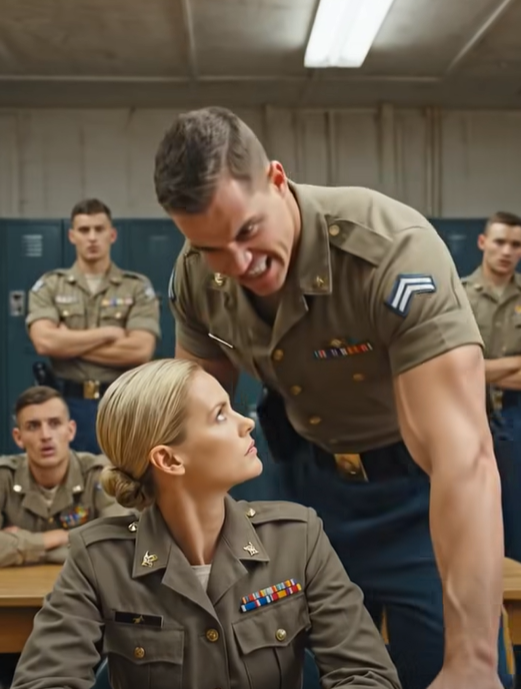
“Do You Know Who I Am?” He Pushed Her — Seconds Later, One ID Card Ended His Career
The dim lights of Rusty’s Bar flickered like dying stars just outside Camp Pendleton. It was a Friday night, the kind where Marines came to forget the sand and the screams they carried home from deployment. I had come here for the opposite reason — to disappear. My name is Commander Thalia Renwick. Highly decorated […]
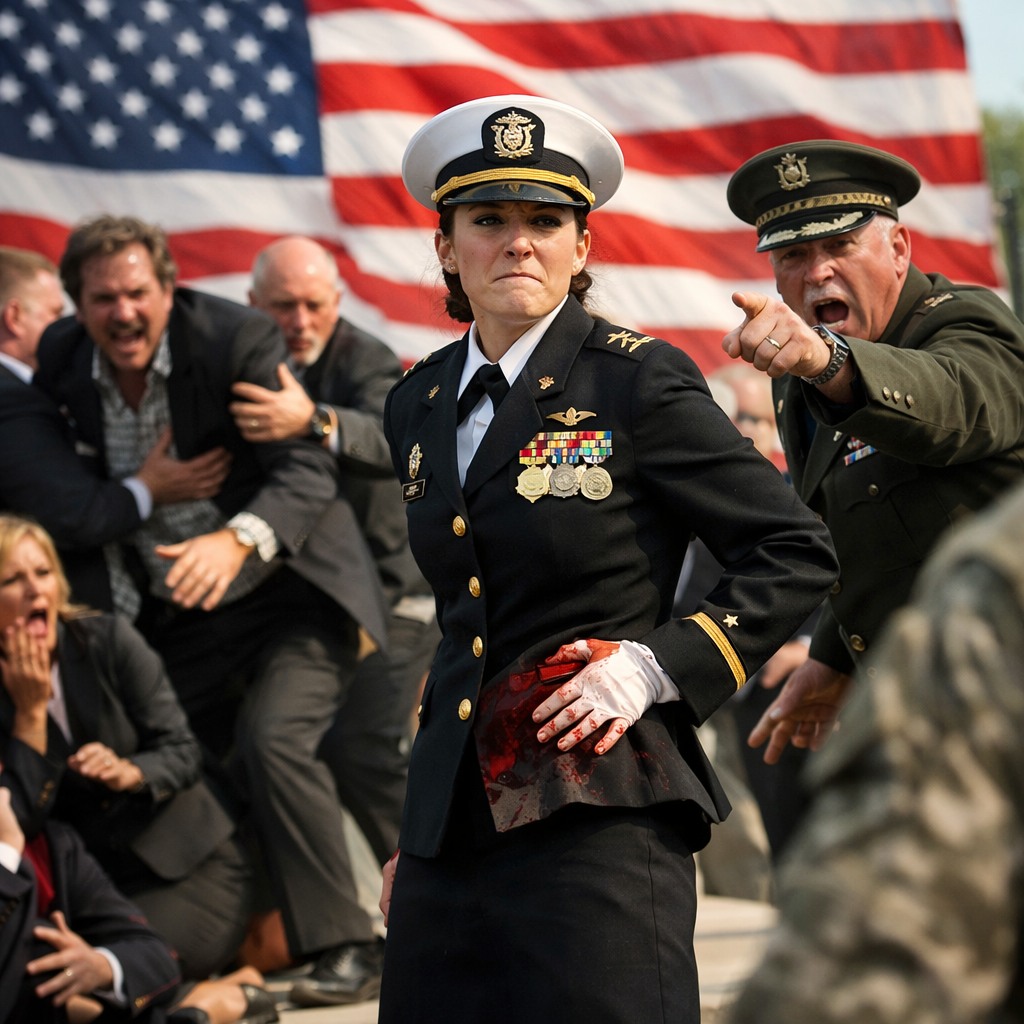
15 Years After My Dad Kicked Me Out, I Saw Him At My Sister’s Wedding. He Sneered: “If It Wasn’t For Pity, No One Would’ve Invited You.” I Just Smiled And Sipped My Wine. Then The Bride Took The Mic And Changed Everything.
The South Carolina sun was merciless that June afternoon, turning the outdoor wedding venue into a glittering oven. I stood near the back in my crisp Army dress uniform, the brass buttons and medals catching the light with every breath. At 34 years old, I had come home for my little sister’s wedding — the […]
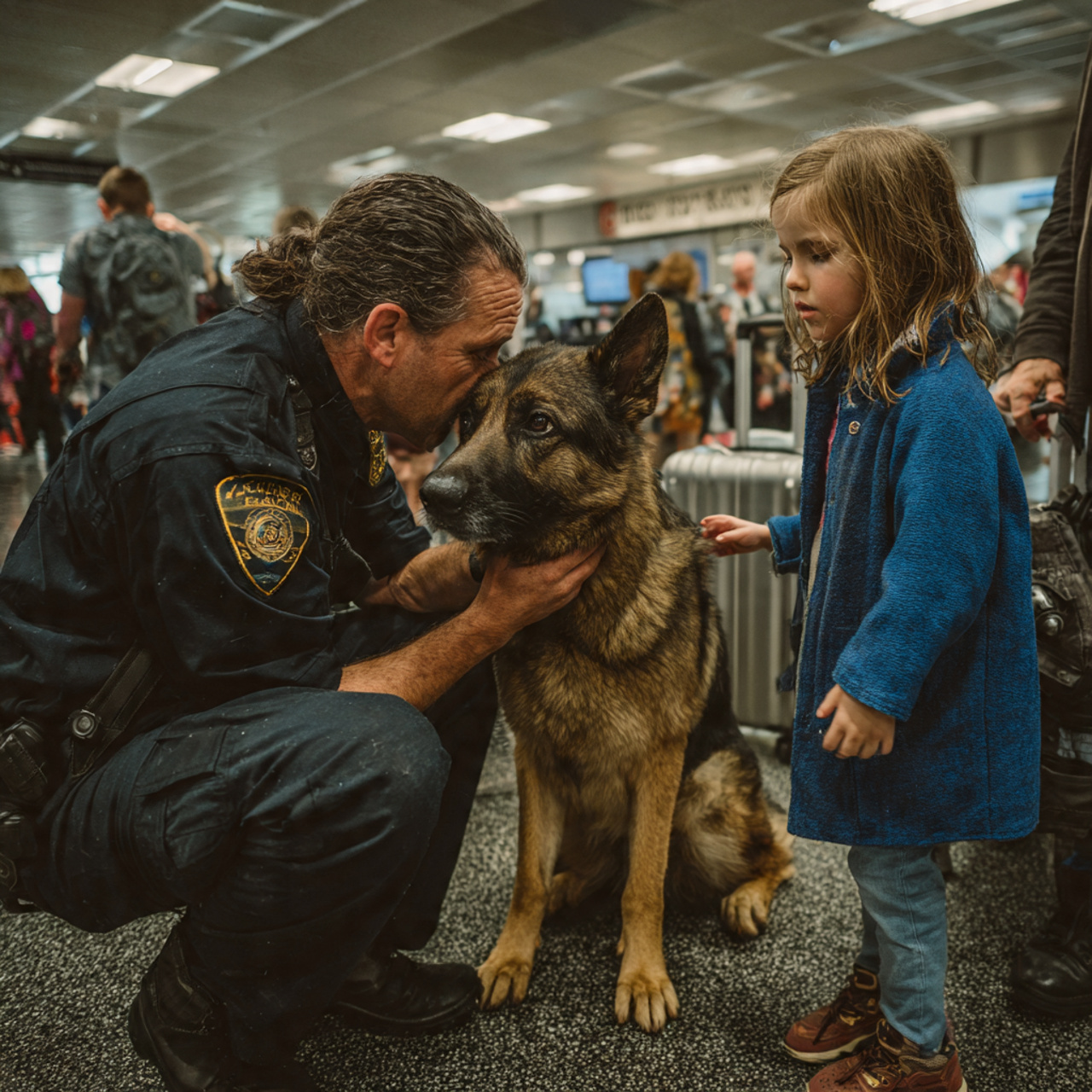
“A POLICE DOG FROZE IN THE AIRPORT. THEN A LITTLE GIRL TAPPED HIS HEAD. WHAT HAPPENED NEXT MADE EVERY TRAVELER STOP. HAVE YOU EVER WITNESSED A SILENT CRY FOR HELP?
The bustling international airport was a whirlwind of rolling suitcases, hurried announcements, and weary travelers rushing to their gates. Officer Liam Mercer patrolled the terminal with his loyal K9 partner, Rex — a highly trained German Shepherd known for his sharp instincts in detection and child safety operations. Everything seemed routine until Rex suddenly froze […]
End of content
No more pages to load