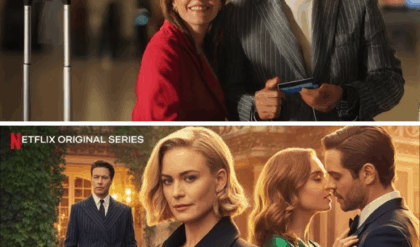
As the first snowflakes dust the Champs-Élysées and fairy lights twinkle like distant stars over the Seine, Netflix has uncorked its latest holiday elixir: Champagne Problems, a romantic comedy that’s bubbling over with Parisian allure, corporate cutthroat, and the kind of heart-fluttering temptation that makes mistletoe seem tame. Premiering on November 19, 2025, just in time to christen the streaming giant’s Yuletide lineup, the film stars Minka Kelly as a high-octane American exec whose one-night Parisian escapade spirals into a champagne-soaked crisis of the heart. Directed and penned by Mark Steven Johnson—whose résumé includes the frothy Love in the Villa and the swipe-right whimsy of Love, Guaranteed—this 99-minute delight has skyrocketed to the top of Netflix’s global charts within days, amassing millions of views and sparking a frenzy of “cozy night in” watch parties. Critics dub it a “lovely escape hatch from holiday stress,” while fans are losing their collective minds over its intoxicating blend of snowy romance, laugh-out-loud banter, and that delicious ache of choosing between ambition and amour. If Emily in Paris crash-landed in a vineyard with a dash of The Holiday‘s soul-searching sparkle, you’d get something perilously close to this effervescent gem—a film that proves sometimes, the best gifts come wrapped in riddles and riddled with regret.
The premise pops like a cork at midnight: Sydney Price (Kelly), a razor-sharp mergers-and-acquisitions whiz from a faceless New York conglomerate, jets off to France with a single, glittering goal—seal the deal on Château Cassell, a storied champagne house teetering on the edge of family infighting and financial woes, before the Christmas bells toll. It’s her golden ticket to partnership, the kind of high-stakes hustle that demands 80-hour weeks and zero distractions. But Sydney’s got a soft spot: her free-spirited sister Ellie (Maeve Courtier-Lilley), who’s been nagging her to “live a little” amid the boardroom battles. Fresh off the plane and buzzing with jet lag and determination, Sydney reluctantly agrees to one night of Paris magic—no work emails, no spreadsheets, just the city’s seductive pulse. Enter Henri Cassell (Tom Wozniczka), a brooding bookseller with tousled hair, a lopsided grin, and eyes that promise secrets deeper than the Marne Valley cellars. What starts as a chance encounter in a dimly lit Shakespeare and Company knockoff—complete with dog-eared volumes of Hemingway and a mischievous pup named Marcel stealing scenes left and right—unfolds into a whirlwind evening of Seine-side strolls, candlelit bistros, and a midnight toast under the Eiffel Tower’s glow. Sparks fly, champagne flows, and by dawn, Sydney’s tumbling into a hotel room tryst that’s equal parts reckless abandon and whispered confessions.
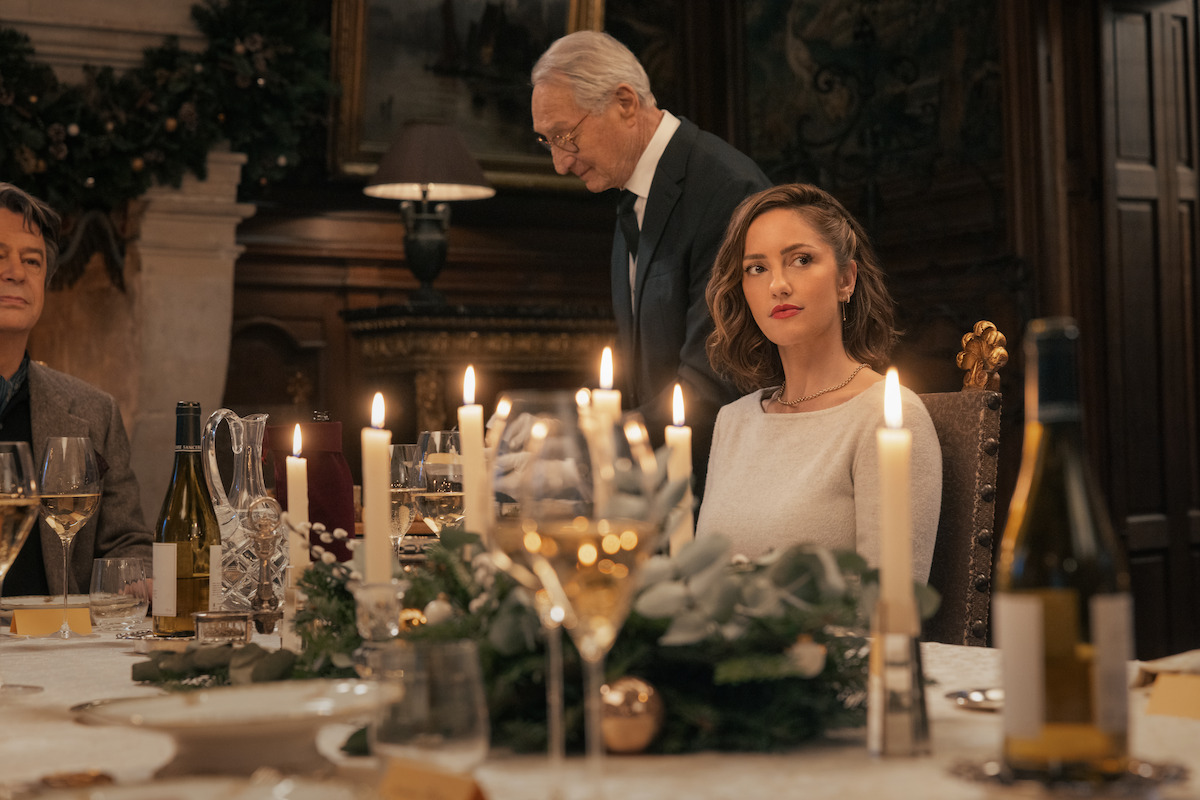
Morning brings the hangover—of the metaphorical kind. As Sydney steels herself for the vineyard showdown, she discovers the unthinkable: Henri isn’t just some dreamy local; he’s the estranged son of Château Cassell’s founder, Hugo (Thibault de Montalembert), a gruff patriarch whose empire is built on generations of grape-stained legacy. Hugo’s a bear of a man, equal parts visionary vintner and stubborn traditionalist, who’s watching his family’s 200-year-old domaine fracture under the weight of modern woes—shrinking heirlooms, greedy cousins circling like vultures, and a boardroom rife with whispers of betrayal. Henri, the black sheep who fled the family fold for the quiet poetry of Paris bookshops, has returned reluctantly at his mother’s urging (Astrid Whettnall as the elegant Brigitte Laurent), only to clash with Hugo’s iron-fisted ways. Sydney’s arrival throws a live grenade into the mix: her company’s bid isn’t just business; it’s a velvet-gloved threat to swallow the Cassells whole, turning artisanal bubbles into mass-market fizz. Suddenly, the woman who captured Henri’s heart is the corporate shark eyeing his birthright, forcing both to navigate a minefield of stolen kisses, ethical dilemmas, and vineyard vendettas. It’s Pretty Woman meets The Devil Wears Prada, but with flutes of vintage brut instead of Rodeo Drive gowns.
What elevates Champagne Problems beyond the rom-com rut is its sly infusion of depth amid the dazzle. Johnson, drawing from his own jaunts through European locales, doesn’t settle for postcard Paris; he bottles the city’s dual soul—the glittering boulevards where tourists chase carpe diem, and the frost-kissed Champagne countryside where roots run as deep as the riddling racks in the cellars. Cinematographer José David Montero captures it all in honeyed hues: golden-hour grapes heavy on the vine, horse-drawn sleighs crunching through December snow, and intimate close-ups of calloused hands rotating bottles like cherished heirlooms. The script bubbles with wit, from Sydney’s deadpan quips about “merger foreplay” to Henri’s poetic musings on champagne as “tears of joy bottled for the brave.” Yet beneath the froth lies a poignant rumination on legacy’s double edge: Sydney, orphaned young and armored by ambition, confronts the hollowness of her ladder-climbing life when faced with the Cassells’ messy, loving chaos. Henri, haunted by his late brother’s shadow and a father who equates success with surrender, grapples with reclaiming his place without losing his soul. Their romance isn’t insta-love fluff; it’s a slow-simmer seduction laced with conflict, where every stolen glance risks exploding the deal—or their hearts.
Minka Kelly, fresh off her rugged turn in Netflix’s Ransom Canyon, slips into Sydney’s stilettos with effortless poise, channeling a blend of Friday Night Lights vulnerability and Euphoria edge that makes her both unbreakable and achingly relatable. At 45, Kelly’s no ingenue; she’s a force—fierce in power suits during boardroom battles, radiant in cashmere sweaters as she thaws under Paris’s spell. Her chemistry with Wozniczka, the Slow Horses alum making his rom-com splash, is the film’s secret ingredient: his Henri is a gentle rogue, all brooding intensity and boyish charm, with a French accent that’s convincingly husky rather than cartoonish. Their meet-cute in the bookstore—fueled by a debate over Jane Austen versus Victor Hugo—crackles with intellectual flirtation, while later scenes, like a clandestine vineyard picnic under starlit vines, simmer with the kind of heat that fogs up the screen (and your living room windows). Supporting players add effervescent fizz: de Montalembert’s Hugo roars with Gallic gravitas, Whettnall’s Brigitte simmers with quiet steel, and scene-stealers like Flula Borg as the eccentric sommelier Otto and Sean Amsing as the flamboyantly fur-clad investor Roberto deliver comic relief that’s equal parts absurd and endearing. Even Marcel the dog, a fluffy Frenchie with soulful eyes, has gone viral for upstaging everyone—proving that in Champagne Problems, even the pups pop.
Production whispers reveal a shoot that mirrored the film’s magic: principal photography wrapped in the spring of 2025 across Paris’s arrondissements and the actual Champagne region, where the cast bunked in a converted chateau-turned-hotel, toasting with real Cassel-inspired cuvées between takes. Johnson, a self-professed Francophile, insisted on authenticity—no green-screen Eiffel Towers here—importing vintners as consultants to ensure every pour and toast rang true. The score by Ryan Shore weaves twinkling harps with sultry accordions, evoking a holiday waltz that’s as cozy as a cashmere scarf and as intoxicating as a vintage Dom. At 99 minutes, it’s paced like a perfect flute—crisp opener, effusive middle, and a finale that lingers without bloating.
Reception has been a toast to triumph: Champagne Problems dethroned holdovers on Netflix’s charts by November 21, hitting No. 1 globally with over 15 million views in its first weekend, per internal metrics—a fizzy feat for a mid-tier rom-com in a sea of blockbusters. Rotten Tomatoes clocks in at 72% critics (praised for “fizzy fun and heartfelt fizz”) and a bubbly 88% audience score, with viewers raving about its “warm, natural heart” and “laugh-out-loud secondary characters.” The Guardian called it “a charmless middle-of-the-road confection,” but even they conceded the scenery “disappears into forgettable spectrum” with style. IndieWire hailed Kelly’s “shining” turn, noting how the film “sneakily transforms into bourgeois affluence as a treat.” Social media is a champagne supernova: #ChampagneProblems has trended in 45 countries, with fans dissecting the bookstore scene frame-by-frame (“That dog knew the plot twist before Sydney did!”) and sharing memes of Roberto’s fur coat as “the real MVP.” One viral thread from a Slow Horses devotee gushed, “Tom Wozniczka trading spies for smooches? Sign me up for every sequel.” Critics like The Wrap quip it’s “custom-tailored for Taylor Swift fans who like escapism shallow… and swift,” nodding to the title’s Evermore echo, while others decry the “formulaic playbook” but admit, “Like champagne itself, it adds some holiday fizz.”
In a season glutted with gingerbread predictability, Champagne Problems stands out for daring to blend temptation with tenderness—Sydney’s arc isn’t just about snagging a guy; it’s a midnight confession to herself, trading boardroom battles for bookstore dreams. The finale, sans spoilers, delivers a time-jump twist that’s equal parts swoony and satisfying: love wins, but not without sacrifice, leaving you misty-eyed and reaching for the bubbly. It’s the holiday fantasy everyone’s losing their minds over because it captures that rare magic—when one reckless night under Paris lights doesn’t just spin your world; it uncorks it. Stream it now on Netflix, dim the lights, and let Sydney show you that sometimes, the sweetest problems are the ones worth savoring. After all, in the words of the film, “Champagne isn’t just a drink—it’s a celebration.” And this one’s worth every pop.