Budweiser didn’t wait for kickoff to win the Super Bowl ad war. On January 26, 2026 — three weeks before the big game — the brand quietly released a 60-second spot titled “American Icons” that has since become one of the most watched, shared, and emotionally charged commercials in recent memory. Within 72 hours the video crossed 220 million views across platforms, generated more than 6 million organic shares, and sparked a nationwide conversation that feels less like marketing buzz and more like a collective sigh of recognition.
The ad opens on black. No logo, no product shot, no voice-over. Just the faint, distant sound of wind moving through tall grass.
Then Lynyrd Skynyrd’s “Simple Man” begins — not the full bombastic version, but a stripped-down acoustic take that feels almost private. A single guitar picks the opening chords while the camera slowly rises over a vast Midwestern field at sunrise. In the distance, a team of Clydesdales appears, pulling an empty red Budweiser wagon. No driver. No cargo. Just the horses moving in perfect unison, breath steaming in the cold air.
As the verse begins (“Mama told me when I was young…”) the camera cuts to a bald eagle lifting off from a dead pine. The bird soars directly toward the rising sun, wings cutting clean lines against the pink-gold sky. The eagle passes over the Clydesdales, and for one breathtaking second the two icons share the frame — earthbound strength below, sky-bound freedom above — while Skynyrd’s voice sings “…find a girl, settle down, live a simple life in a quiet town.”
No celebrities. No CGI spectacle. No product close-ups. Just three timeless American symbols moving in harmony to one of the most earnest rock anthems ever written.
The next forty seconds are pure montage, but every image feels deliberate and earned:
A young Black father teaching his daughter to ride a bicycle on a cracked urban sidewalk while the Clydesdales trot past in slow motion on a distant country road.
An elderly white veteran in a wheelchair saluting an American flag at half-mast while the eagle circles overhead.
A Latina teenager in a diner uniform wiping down tables at dawn; behind her the Budweiser wagon rolls silently by on the highway.
A Native American man standing on a canyon rim at sunset, eagle feather in his hair, watching the same eagle glide past.
A multigenerational family of Asian Americans lighting lanterns during a Lunar New Year celebration; the Clydesdales appear reflected in the water beside them.
A small-town firefighter carrying a child out of a burning building; the eagle flies low overhead as if guiding them to safety.
Every cut is timed to the song’s rhythm, yet nothing feels forced. There is no overt “unity” message, no finger-wagging, no forced diversity checklist. The ad simply shows Americans of every background living ordinary lives under the same sky, watched over by the same enduring symbols.

The final shot returns to the Clydesdales. They have stopped in the middle of an empty field. The lead horse lowers its head slightly. The eagle descends, lands gently on the horse’s broad back, folds its wings, and looks straight into the camera. The music swells to the chorus (“And be a simple kind of man…”) and then — silence. The screen fades to black.
One line of white text appears:
Budweiser. Born in America.
No slogan about “America’s beer.” No call to drink. No logo animation. Just the name, the eagle still perched on the horse, and the quiet certainty that some things are bigger than a sales pitch.
The reaction was immediate and overwhelming. Within the first day the ad achieved a 99% completion rate on YouTube (virtually unheard of for a minute-long spot). Viewer sentiment flipped from neutral to overwhelmingly positive almost overnight. Social media filled with posts from people who rarely share commercials: veterans, first responders, immigrants, small-business owners, parents, grandparents — all saying some version of “I haven’t cried this hard at a beer ad since the 1990s Clydesdales.”
Critics and marketing analysts have called it “the boldest play for the American heart in decades.” By releasing early and refusing to chase viral gimmicks, Budweiser effectively owned the entire pre-Super Bowl conversation. Competitors who spent months teasing celebrity cameos and elaborate concepts suddenly found themselves shouting into a room already full of people talking about something else.
The creative team — led by Wieden+Kennedy — took an enormous risk. In an era when brands are terrified of alienating any demographic, Budweiser leaned hard into unapologetic patriotism without irony, without qualifiers, without winking at the camera. It trusted the audience to feel the emotion rather than be told what to feel. That trust paid off in a way few campaigns ever do.
The ad has also reignited debate about what Super Bowl commercials should be. For years the game has been treated as a cultural tentpole where brands compete to be the loudest, funniest, or most meme-able. Budweiser reminded everyone that attention is fleeting, but emotion is permanent. By dropping early and refusing to play the usual game, they didn’t just buy eyeballs — they claimed hearts.
Whether “American Icons” will be remembered as the single greatest Super Bowl ad ever made remains to be seen. What is already undeniable is that it has changed the conversation. Other brands are reportedly rethinking their own plans. Some are quietly trying to shift toward more emotional, less ironic content; others are doubling down on spectacle in an attempt to stand out. Either way, the rules have shifted.
And somewhere in America, millions of people have watched a horse and an eagle share a single frame — and felt, for a fleeting moment, that perhaps the country isn’t as divided as the headlines insist.
Budweiser didn’t sell beer that day. It sold a feeling.
And in 2026, that feeling proved more valuable than any 30-second slot during the third quarter.
News
“Shave Her Head,” the Sergeant Ordered Coldly. “If Discipline Won’t Break Her, Maybe Humiliation Will.” But What They Didn’t Know Was That the Woman They Underestimated Would Bring Their Entire Base to Its Knees.
General Alexander Vance had heard the whispers for months: Fort Blackwood was rotting from within. Soldiers spoke in hushed tones of systematic humiliation disguised as “discipline,” falsified training records, missing supply funds that somehow vanished into private accounts, and a toxic command climate built on fear and intimidation. Every official inspection came back sparkling clean […]
At A Veterans’ Dinner, The Colonel Leaned Toward My Brother And Asked One Simple Question: “Can You Tell Me How You Earned This Decoration, Son?” His Face Turned White. He Pointed At My Father And Said: “He Told Me It Belonged To Our Uncle.” The Uncle Never Existed.
The Ridgewood Armory smelled like every other veterans’ event I’d ever attended: floor wax, overcooked chicken, old coffee, and the faint metallic tang of too many American flags. Fluorescent lights buzzed overhead, casting a harsh glow on rows of folding tables and men in ill-fitting blazers trying to look like they still belonged in uniform. […]
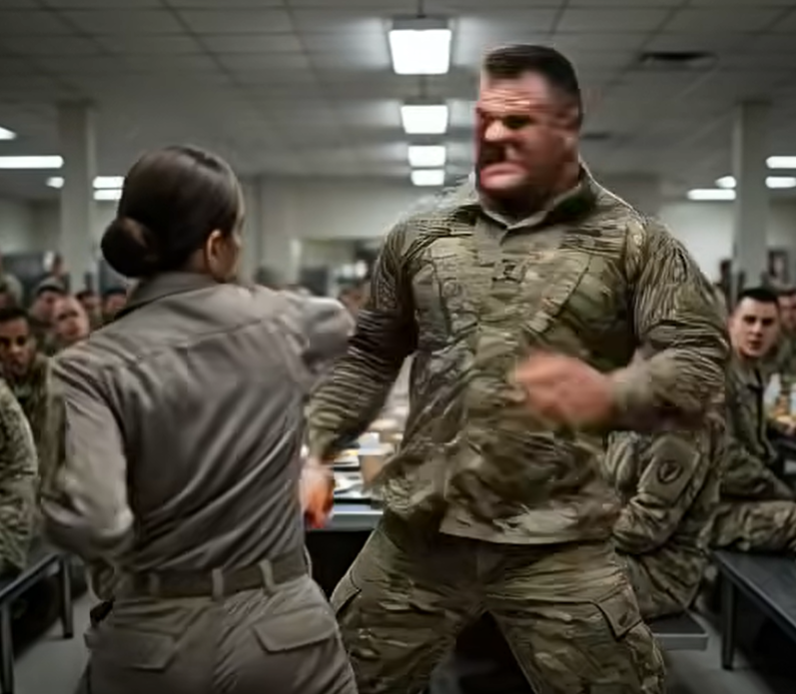
“Die, B*tch,” He Spat, Swinging a Massive Fist in the Mess Hall. He Thought I Was an Easy Target — He Had No Idea He Just Attacked a Classified SEAL Shadow Operative.
I was running on fumes. Seventy-two hours of off-the-books reconnaissance in the frozen Alaskan wilderness had left every muscle screaming. My joints ached from crawling through ice-crusted snow, my eyes burned from staring through night-vision gear, and the only thing keeping me upright was the promise of a hot meal and twelve hours of blackout […]
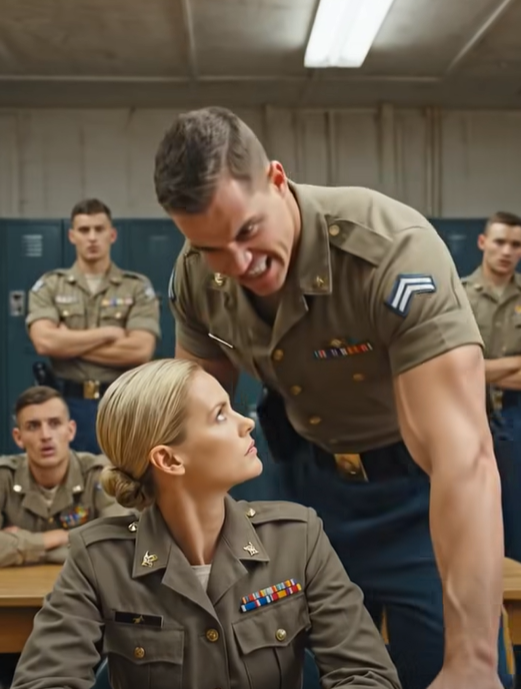
“Do You Know Who I Am?” He Pushed Her — Seconds Later, One ID Card Ended His Career
The dim lights of Rusty’s Bar flickered like dying stars just outside Camp Pendleton. It was a Friday night, the kind where Marines came to forget the sand and the screams they carried home from deployment. I had come here for the opposite reason — to disappear. My name is Commander Thalia Renwick. Highly decorated […]
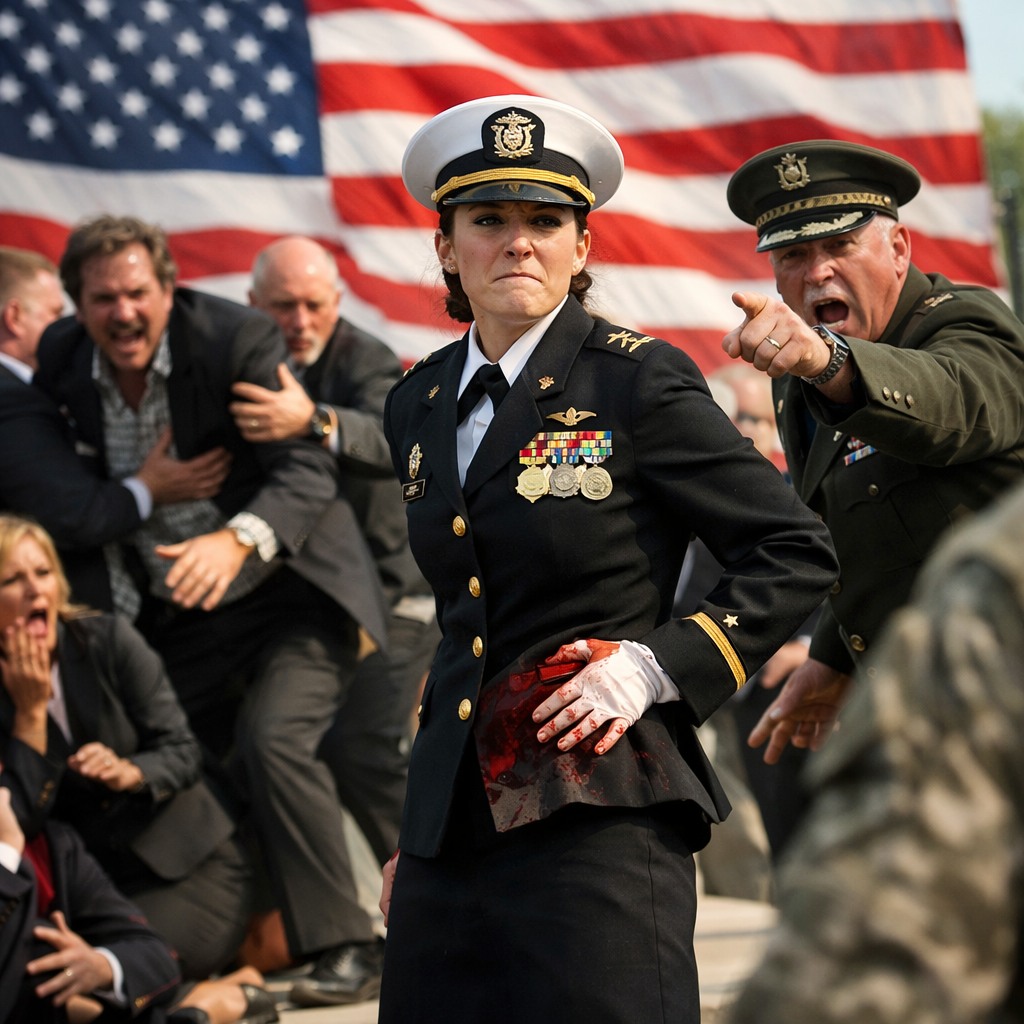
15 Years After My Dad Kicked Me Out, I Saw Him At My Sister’s Wedding. He Sneered: “If It Wasn’t For Pity, No One Would’ve Invited You.” I Just Smiled And Sipped My Wine. Then The Bride Took The Mic And Changed Everything.
The South Carolina sun was merciless that June afternoon, turning the outdoor wedding venue into a glittering oven. I stood near the back in my crisp Army dress uniform, the brass buttons and medals catching the light with every breath. At 34 years old, I had come home for my little sister’s wedding — the […]
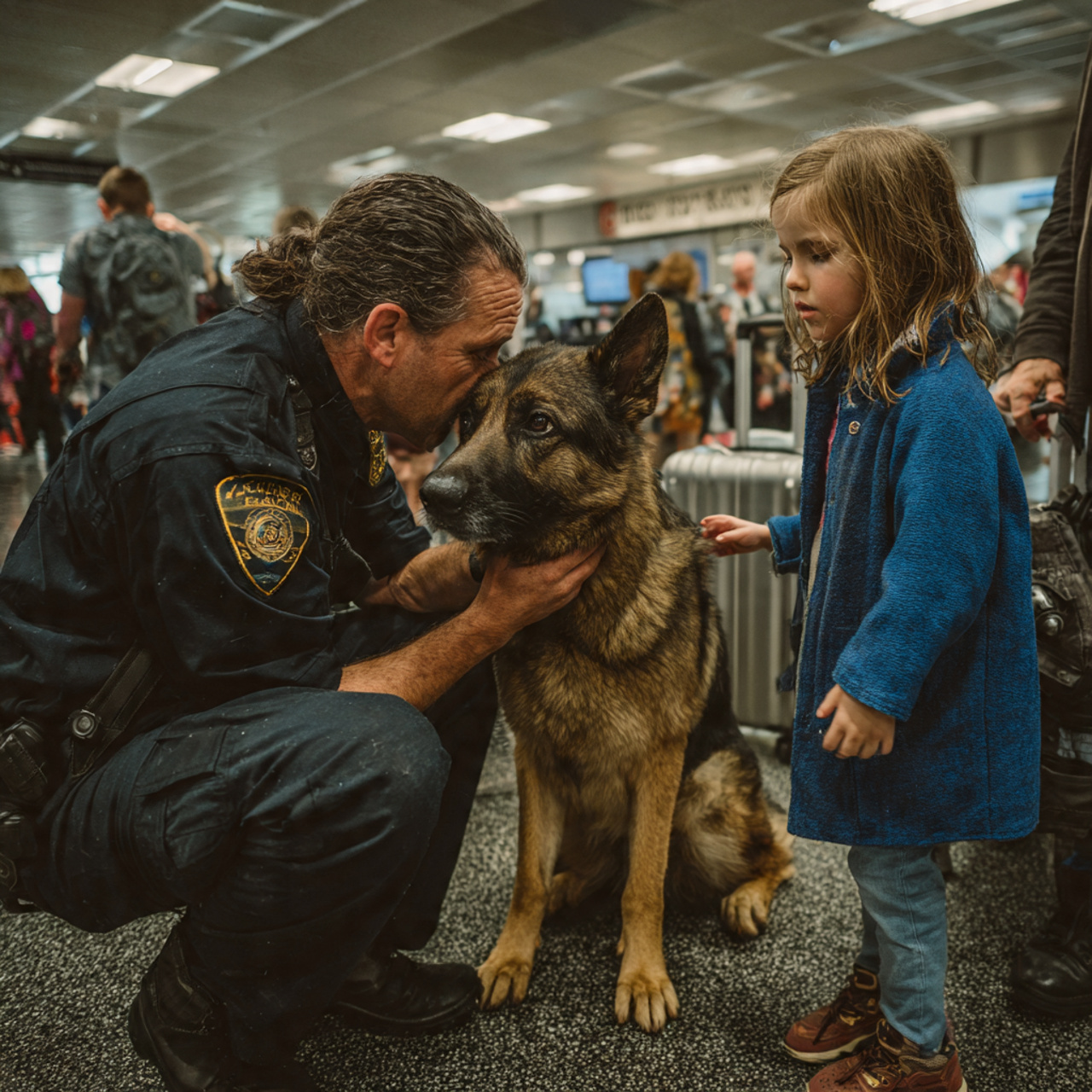
“A POLICE DOG FROZE IN THE AIRPORT. THEN A LITTLE GIRL TAPPED HIS HEAD. WHAT HAPPENED NEXT MADE EVERY TRAVELER STOP. HAVE YOU EVER WITNESSED A SILENT CRY FOR HELP?
The bustling international airport was a whirlwind of rolling suitcases, hurried announcements, and weary travelers rushing to their gates. Officer Liam Mercer patrolled the terminal with his loyal K9 partner, Rex — a highly trained German Shepherd known for his sharp instincts in detection and child safety operations. Everything seemed routine until Rex suddenly froze […]
End of content
No more pages to load