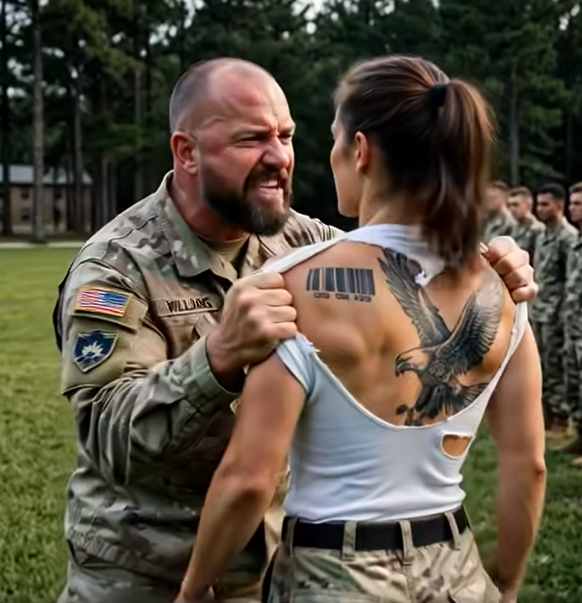
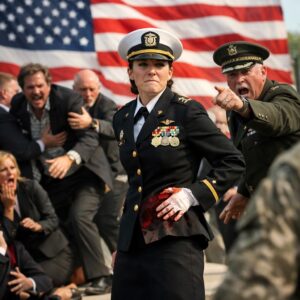
“Beat It, Btch!” US Marine Pushed Her To The Ground — Unaware She Was A Navy SEAL Commander
The gravel bit into Lieutenant Commander Alexis Brennan’s palms before her mind fully accepted the fact that she was on the ground.
Not kneeling. Not taking cover. On the ground like she’d been tossed there.
Dust floated in front of her eyes, catching the harsh Afghan sun. She tasted copper where she’d bitten her cheek. A folder—thick, battered, and so important it might as well have been a living thing—had exploded open when she hit. Photographs. Printouts. A satellite image marked in red. A flash drive sealed in a plastic sleeve. A page of handwritten notes in Pashto that she’d memorized, then rewritten anyway, because memory could be interrogated out of you, but paper could be hidden.
Six months of intelligence scattered across the hard-packed earth of Forward Operating Base Phoenix like trash.
Above her, a man’s voice, loud and furious, as if volume could turn confusion into authority.
“I said get out of here!”
Alexis stayed down for exactly three seconds.
Not because she was hurt. Not because she was afraid. Three seconds because three seconds was what it took to run the calculations that kept people alive.
One: drawing attention to herself could compromise the mission. She was supposed to arrive quietly, brief the base commander, and trigger a response to intelligence so urgent it could be measured in minutes, not hours.
Two: the Marine who’d shoved her had just assaulted a superior officer. He didn’t know that. Couldn’t know it. Alexis wore no uniform, no rank, no trident, nothing that screamed Navy SEAL commander. She looked like what she needed to look like: a dusty contractor, olive cargo pants, a battered jacket, hair pulled into a plain ponytail. She’d come straight from an operation where anything that marked her as military would’ve gotten her killed.
Three: the IED that had detonated outside the perimeter sixty seconds ago wasn’t the real threat. It was a signal. Something larger was already moving.
Ego could wait. People couldn’t.
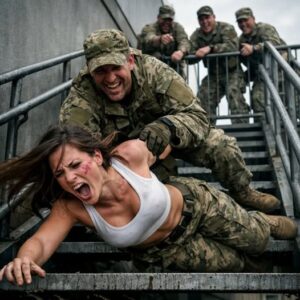
Alexis gathered her documents with deliberate calm, scooping them up and stacking them in order as if she were in a quiet office instead of a base under alert. Her hands didn’t shake. They never shook when it mattered. She’d learned long ago that rage was a luxury and fear was a tool. You used what worked and discarded what didn’t.
“You deaf?” the Marine snapped.
She looked up.
Staff Sergeant, based on the insignia. Early thirties, maybe. Hard build. Tight jaw. The kind of face that looked like it had been carved by discipline and sleep deprivation. His eyes hit her like she was a problem he could solve by pushing harder.
“This is restricted,” he said. “During a security alert, civilians go to the bunker or they get off the base.”
Alexis rose smoothly, the folder pressed to her chest.
“I’m not a civilian,” she said, keeping her voice quiet. Quiet made people lean in. Quiet carried certainty without theatrics. “I need to get to the tactical operations center. Now. It’s urgent.”
“TOC is for military personnel only.” He stepped closer and his gaze did the thing she’d seen a thousand times. He read her age first—twenty-two, if you didn’t know what to look for. Then her gender. Then he made all the wrong conclusions, because men like him had been trained in a world where danger wore a predictable face.
His hand shot out and gripped her arm, firm, controlling, the practiced motion of someone who guided panicked contractors and herded frightened civilians.
“You need an escort,” he said. “You’re not—”
“I don’t have time for this.” Alexis started walking.
He tightened his grip and pulled her back half a step, irritation flaring into something sharper.
The grip on her arm tightened, fingers digging in like he thought force alone could rewrite reality. Alexis felt the familiar burn of adrenaline sharpening her edges, but she didn’t resist. Not yet.
Instead, she turned her head slowly, meeting his eyes. Up close, she saw the flicker of uncertainty beneath the anger—the split-second doubt that comes when someone realizes the person they’re manhandling isn’t flinching.
“Let go, Staff Sergeant,” she said, voice low, level, carrying the calm authority that had once silenced entire briefing rooms full of operators.
He didn’t. His jaw clenched harder. “You don’t give orders here, lady. Move, or I’ll—”
Alarms shrieked again—three long blasts, the signal for imminent perimeter breach. The base snapped alive: boots pounding, shouts echoing, Marines scrambling to defensive positions. Somewhere in the distance, the heavy thump of mortars answered the earlier IED.
The staff sergeant’s hand loosened fractionally. Alexis used the moment. She rotated her wrist in a smooth circle—classic escape from a basic grab—slipping free without breaking stride. He blinked, surprised. She was already moving toward the TOC, documents secured against her chest.
“Hey!” he barked, lunging after her.
That was his second mistake.
She spun—fluid, economical—caught his extended arm, twisted it behind his back in one continuous motion, and drove him face-first into the nearest Hesco barrier. Not hard enough to injure. Just hard enough to pin. His cheek pressed against the sand-filled wire, breath coming in sharp bursts.
“Stay down,” she said quietly. “You’re interfering with classified operations.”
He struggled once, testing. She applied precise pressure to the radial nerve. He went still.
Around them, Marines froze mid-stride. A corporal with a radio halfway to his mouth stared. A sergeant lowered his M4 slightly, eyes wide. No one moved to intervene. Not yet.
From the direction of the command post, a voice cut through the chaos.
“Stand down! Everyone stand down!”
Colonel Daniel Voss, base commander, strode forward flanked by two MPs and his sergeant major. Voss was tall, gray at the temples, the kind of officer who’d seen enough combat to recognize trouble before it spoke. His eyes flicked from the pinned staff sergeant to Alexis, then to the scattered remnants of her folder still clutched in her free hand.
“Lieutenant Commander Brennan,” Voss said. Not a question. Recognition.
Alexis released her hold. The staff sergeant stumbled back, rubbing his arm, confusion warring with humiliation on his face.
Voss stepped between them. “Staff Sergeant Reyes. You just put hands on Lieutenant Commander Alexis Brennan, United States Navy SEALs. Commander of SEAL Team Four’s Reconnaissance and Direct Action Platoon. She’s here on my direct invitation with priority intelligence that may have just saved this base from being overrun.”
Reyes blinked. The color left his face in stages.
Alexis straightened her jacket, brushed dust from her sleeves. “Colonel, the defile at grid Echo-7-Alpha is compromised. Multiple vehicles inbound—technical-mounted heavy machine guns, at least two platoons dismounted. They’re using the diversionary IED to screen their main effort. We have maybe eight minutes before they crest the ridge.”
Voss nodded once, sharp. “TOC. Now.”
He turned to Reyes. “You’re relieved of duty pending investigation for assault on a superior officer. Sergeant Major, escort him to the holding area.”
Reyes opened his mouth—protest, apology, something—but nothing came out. The sergeant major took his elbow firmly and led him away. The other Marines watched in stunned silence as Alexis and Voss moved toward the TOC.
Inside the dimly lit operations center, screens glowed with drone feeds and thermal overlays. Officers hunched over maps. Alexis laid her folder on the central table, spreading the documents with practiced efficiency.
“Here,” she said, tapping the satellite image. “They’re already in position. The mortars were probing fire. The real assault is coming from the east, masked by the smoke. We need to reposition Echo and Foxtrot companies to the high ground now, and vector in the Apaches from Kandahar. If we wait for confirmation, we lose the initiative.”
Voss studied the intel for five seconds, then looked at her. “You could’ve identified yourself at the gate.”
“I was trying to,” she replied evenly. “Discretion was part of the package. Civilian cover until I reached you.”
He exhaled. “Point taken. My fault for not briefing the perimeter watch more thoroughly.”
Alexis didn’t respond. Blame was irrelevant. Action mattered.
Minutes later, orders went out. Marines shifted positions. Gunships were cleared hot. The incoming assault met prepared defenses instead of surprise—machine-gun nests, Javelins, coordinated fire. The enemy broke contact within twenty minutes, leaving burning vehicles and retreating shadows.
When the all-clear sounded, Voss found Alexis outside the TOC, leaning against a sandbag wall, watching the horizon where dust still hung in the air.
“Reyes is in the brig,” he said. “He’ll face NJP at minimum. Probably court-martial if the JAG pushes it.”
Alexis nodded once. “He thought he was protecting the base.”
“He thought he was protecting his ego,” Voss corrected. “And he nearly cost us both.”
She pushed off the wall, wincing slightly at the scrape on her palms. “Mission’s done. I need to exfil before dark.”
Voss extended his hand. “You saved lives today, Commander. Including mine. Thank you.”
She shook it—firm, brief. “Just doing the job, sir.”
As she walked toward the waiting Black Hawk, rotor blades already turning, she passed the holding area. Staff Sergeant Reyes sat on a bench inside the wire, head in his hands, MPs standing guard.
He looked up as she passed.
Their eyes met.
No words. No salute. Just the long, silent look of a man who’d finally understood what he’d almost thrown away—and the woman who’d carried the weight of it without breaking.
Alexis kept walking.
Clomp of boots on gravel. The thump of rotors overhead. Dust swirling in her wake.
She didn’t look back.
Some lessons only hurt when you learn them the hard way.
And some people only see rank when it’s too late to salute it.
News
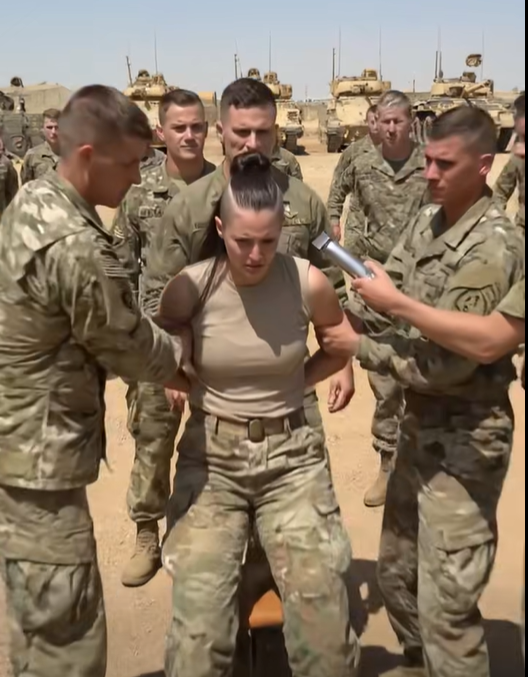
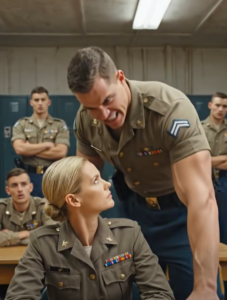
“Shave Her Head,” the Sergeant Ordered Coldly. “If Discipline Won’t Break Her, Maybe Humiliation Will.” But What They Didn’t Know Was That the Woman They Underestimated Would Bring Their Entire Base to Its Knees.
General Alexander Vance had heard the whispers for months: Fort Blackwood was rotting from within. Soldiers spoke in hushed tones of systematic humiliation disguised as “discipline,” falsified training records, missing supply funds that somehow vanished into private accounts, and a toxic command climate built on fear and intimidation. Every official inspection came back sparkling clean […]
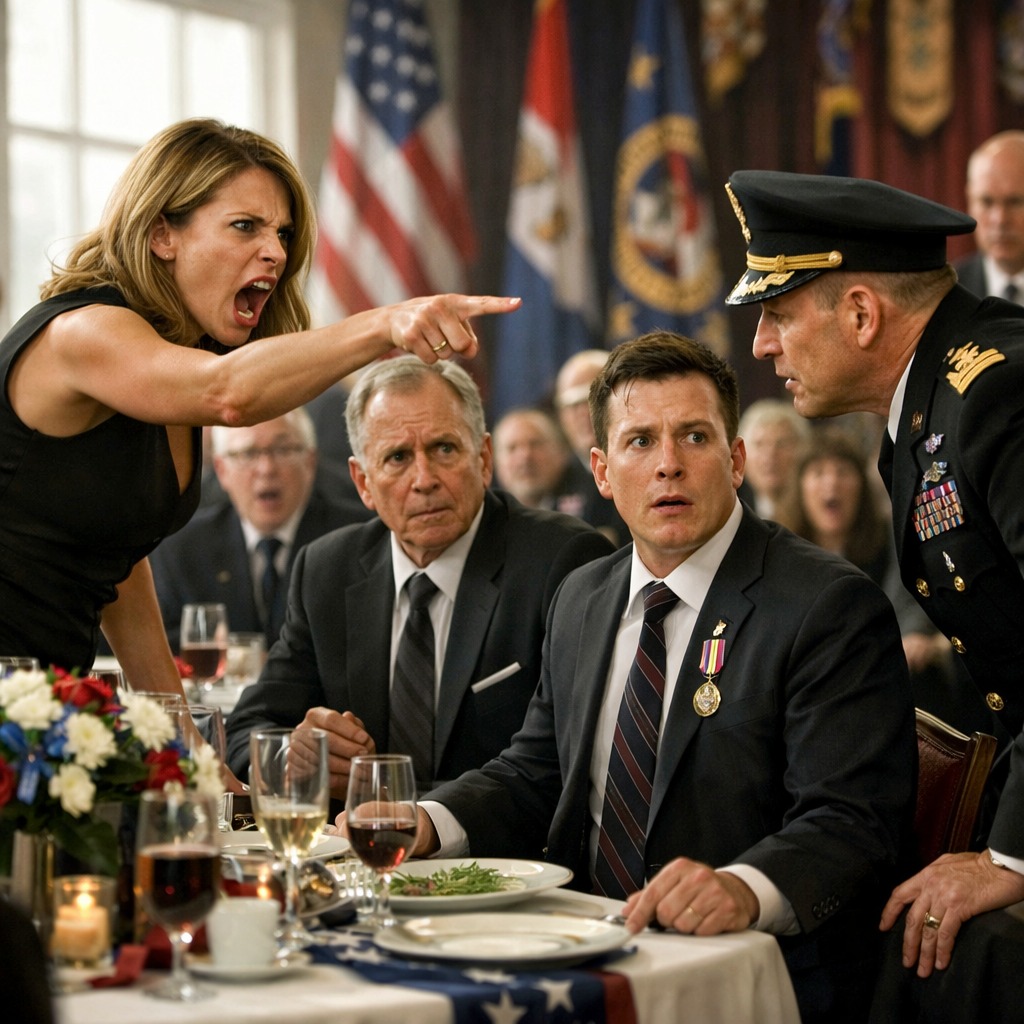
At A Veterans’ Dinner, The Colonel Leaned Toward My Brother And Asked One Simple Question: “Can You Tell Me How You Earned This Decoration, Son?” His Face Turned White. He Pointed At My Father And Said: “He Told Me It Belonged To Our Uncle.” The Uncle Never Existed.
The Ridgewood Armory smelled like every other veterans’ event I’d ever attended: floor wax, overcooked chicken, old coffee, and the faint metallic tang of too many American flags. Fluorescent lights buzzed overhead, casting a harsh glow on rows of folding tables and men in ill-fitting blazers trying to look like they still belonged in uniform. […]
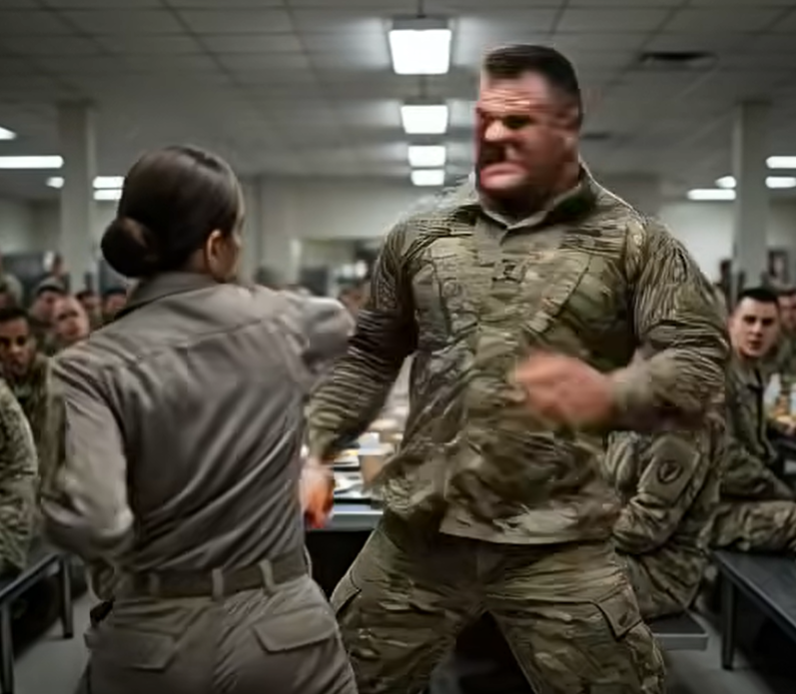
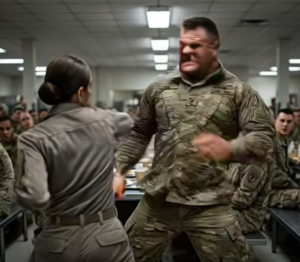
“Die, B*tch,” He Spat, Swinging a Massive Fist in the Mess Hall. He Thought I Was an Easy Target — He Had No Idea He Just Attacked a Classified SEAL Shadow Operative.
I was running on fumes. Seventy-two hours of off-the-books reconnaissance in the frozen Alaskan wilderness had left every muscle screaming. My joints ached from crawling through ice-crusted snow, my eyes burned from staring through night-vision gear, and the only thing keeping me upright was the promise of a hot meal and twelve hours of blackout […]
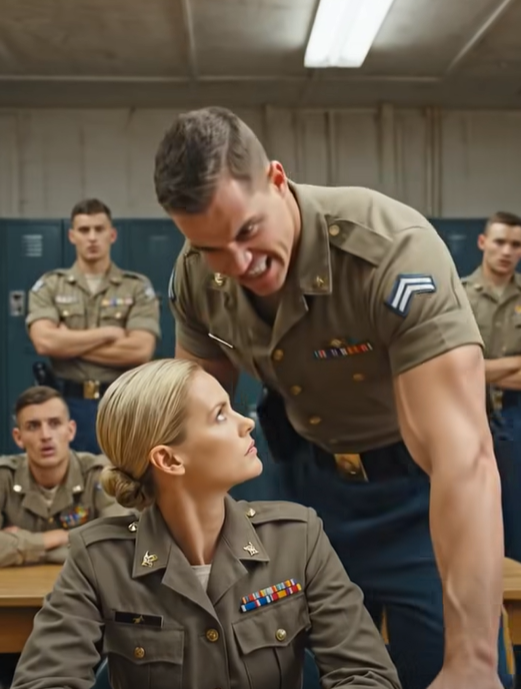
“Do You Know Who I Am?” He Pushed Her — Seconds Later, One ID Card Ended His Career
The dim lights of Rusty’s Bar flickered like dying stars just outside Camp Pendleton. It was a Friday night, the kind where Marines came to forget the sand and the screams they carried home from deployment. I had come here for the opposite reason — to disappear. My name is Commander Thalia Renwick. Highly decorated […]
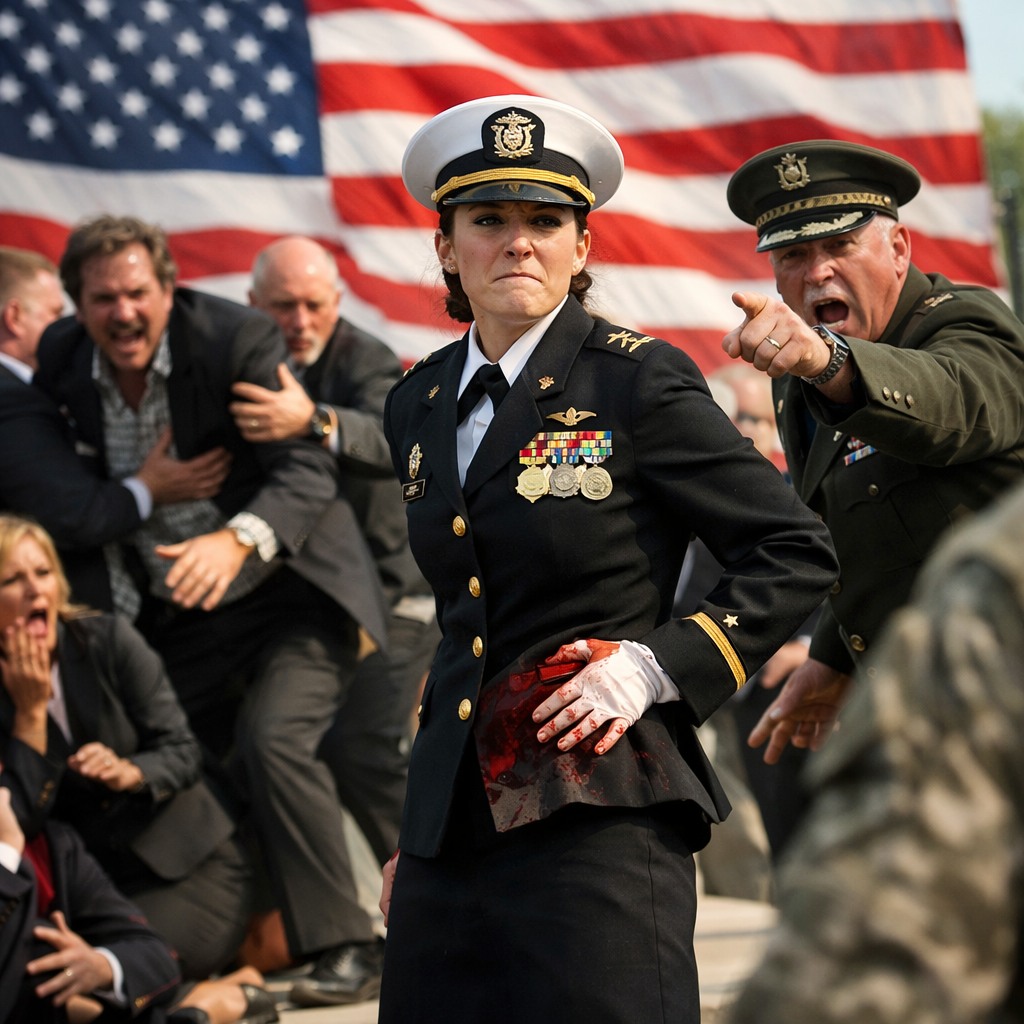
15 Years After My Dad Kicked Me Out, I Saw Him At My Sister’s Wedding. He Sneered: “If It Wasn’t For Pity, No One Would’ve Invited You.” I Just Smiled And Sipped My Wine. Then The Bride Took The Mic And Changed Everything.
The South Carolina sun was merciless that June afternoon, turning the outdoor wedding venue into a glittering oven. I stood near the back in my crisp Army dress uniform, the brass buttons and medals catching the light with every breath. At 34 years old, I had come home for my little sister’s wedding — the […]
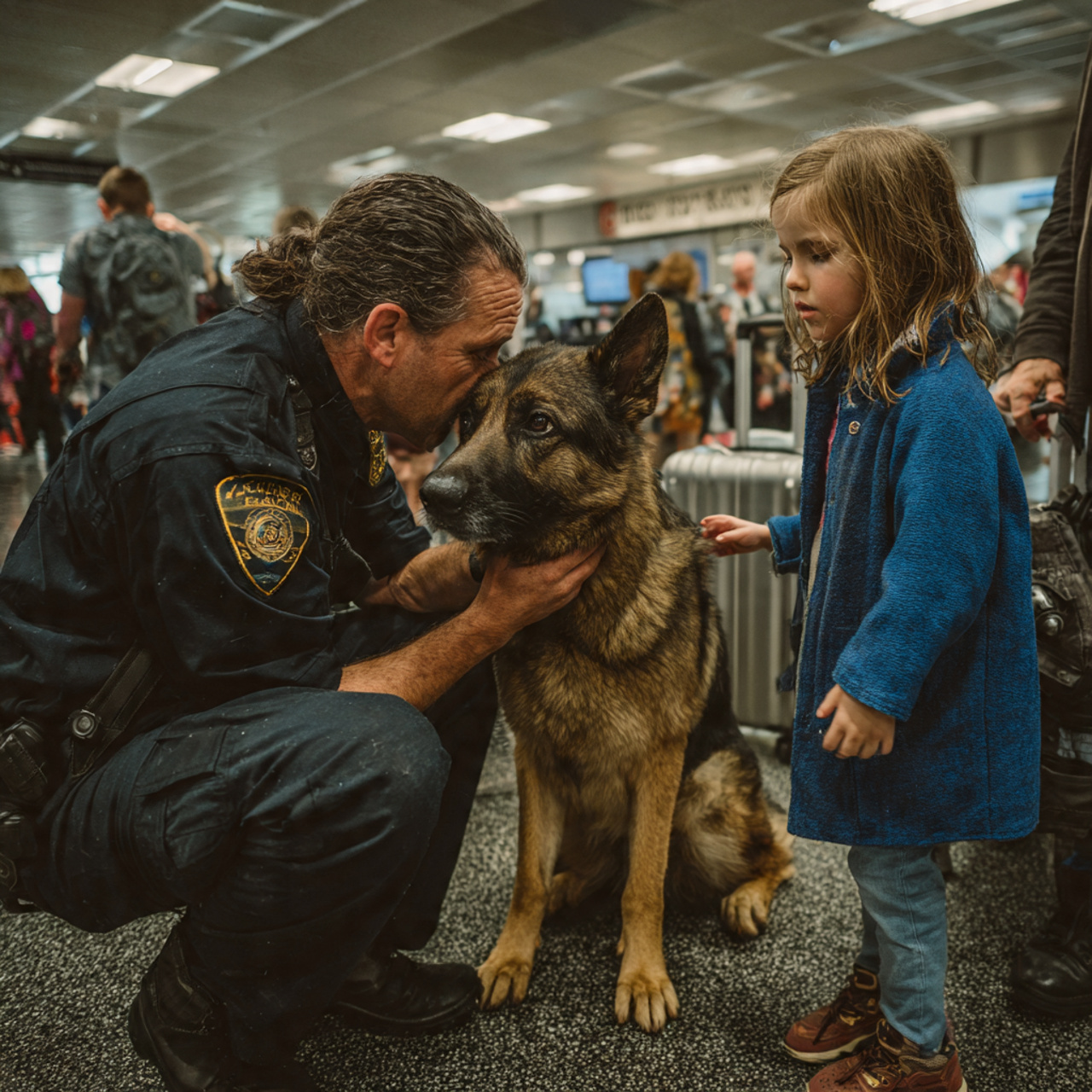
“A POLICE DOG FROZE IN THE AIRPORT. THEN A LITTLE GIRL TAPPED HIS HEAD. WHAT HAPPENED NEXT MADE EVERY TRAVELER STOP. HAVE YOU EVER WITNESSED A SILENT CRY FOR HELP?
The bustling international airport was a whirlwind of rolling suitcases, hurried announcements, and weary travelers rushing to their gates. Officer Liam Mercer patrolled the terminal with his loyal K9 partner, Rex — a highly trained German Shepherd known for his sharp instincts in detection and child safety operations. Everything seemed routine until Rex suddenly froze […]
End of content
No more pages to load