In the dim glow of a London hospital corridor, where the hum of fluorescent lights mingles with the weight of unspoken fears, a couple stands hand in hand, their faces etched with a quiet storm of hope and dread. This is the arresting image from the BBC’s first-look preview for Babies, a six-part drama that’s landed like a soft thunderclap in the midst of a chilly December 2025. Directed, written, and created by the two-time BAFTA-winning Stefan Golaszewski—whose previous works Mum and Marriage turned the mundane into the magnificent—the series promises to be more than a story; it’s a lifeline tossed into the often-silent sea of pregnancy loss. Starring the luminous Siobhán Cullen and Paapa Essiedu as Lisa and Stephen, Babies is being hailed by early insiders and preview audiences as “the most emotional love story of the decade,” a raw tapestry of grief, humor, and unyielding tenderness that lingers “in your chest long after the screen fades to black.” As the BBC quietly unleashes these breathtaking glimpses, the internet is already bracing for a collective sob: soft glances across rainy bus rides, impossible choices whispered in the dead of night, and the devastating beauty of two souls clinging to each other amid unimaginable heartache.
What makes Babies feel like such an urgent detonation? In an era where streaming shelves groan under the weight of glossy rom-coms and high-concept thrillers, this series dares to dwell in the delicate tightrope of real-life fragility. Set against the unassuming backdrop of modern London—cramped flats, bustling buses, and sterile clinics that feel all too familiar—Babies follows Lisa and Stephen, a couple in their thirties whose dream of parenthood is repeatedly upended by the cruel randomness of multiple miscarriages. It’s not a tale of tidy triumphs or villainous twists; it’s a portrait of resilience forged in the fire of loss, where every positive test strip is a fragile victory, and every scan a potential gut-punch. Preview clips, shared sparingly on BBC iPlayer teasers and social media snippets, capture the essence: Cullen’s Lisa, with her wide-eyed vulnerability and fierce wit, sharing a tentative laugh with Essiedu’s Stephen during a nighttime bus journey, their knees brushing in that electric way that screams “us against the world.” Cut to the hospital waiting room, where the same pair sits rigid, her hand squeezing his until knuckles whiten, the air thick with the what-ifs that no amount of small talk can dispel. These moments aren’t melodrama; they’re mirrors, reflecting the silent struggles of one in four pregnancies that end in miscarriage, a statistic that’s as staggering as it is under-discussed.
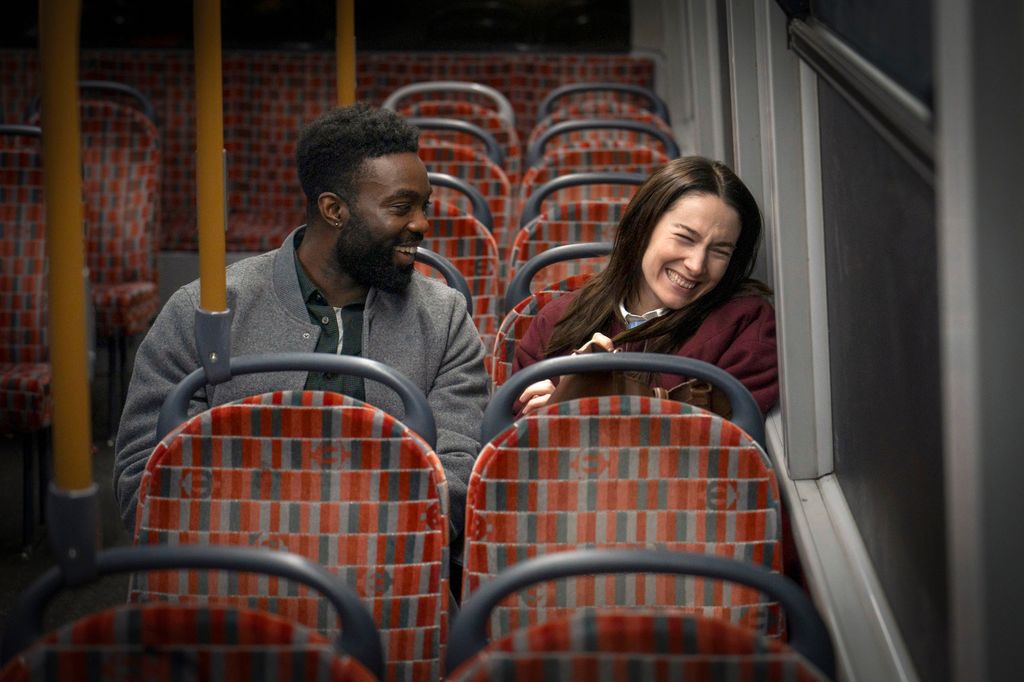
The buzz around Babies ignited like dry tinder when the first-look images dropped on December 5, 2025, via the BBC’s media center. Within hours, X (formerly Twitter) and Reddit were flooded with reactions that ranged from hushed awe to outright preparation for waterworks: “I’ve got my tissues ready, but I know it’ll be more than that—this looks like it heals while it hurts,” one user posted, attaching a screenshot of the bus scene. Another, a parent who’d endured similar losses, shared, “Finally, a show that says the quiet parts out loud. Stefan gets it—the humor in the hurt, the love that outlasts the letdowns.” Forums like r/television and r/BritishTV are ablaze with preemptive threads, fans dissecting the preview’s subtle cues: the way Stephen’s gaze lingers on Lisa’s profile, heavy with unspoken apologies; the faint ultrasound outline peeking from her handbag, a talisman of tentative joy. It’s the kind of anticipation that echoes the slow-burn fervor around Marriage, Golaszewski’s 2022 gem that peeled back the layers of a long-term union to reveal its quiet erosions and renewals. But Babies ups the ante, weaving in not just one couple’s odyssey but a constellation of relationships that ripple outward, testing bonds and exposing the fault lines we all pretend aren’t there.
At the emotional epicenter are Cullen and Essiedu, whose chemistry in the promo shots alone has critics murmuring about awards-season inevitability. Siobhán Cullen, fresh off her breakout as the sardonic investigative journalist in Netflix’s Bodkin and the titular grief-stricken widow in Obituary, brings a lived-in authenticity to Lisa—a graphic designer whose creativity masks a well of quiet determination. In interviews teasing the role, Cullen has spoken of the “honor and terror” of embodying a woman whose body becomes both battleground and beacon, drawing from Golaszewski’s script that balances devastation with defiant sparks of joy. “Lisa’s not broken; she’s bending,” Cullen shared in a recent chat with The Guardian. “Stefan writes women who laugh through the lump in their throat, and that’s what makes her—and this story—unforgettable.” Paapa Essiedu, the magnetic force behind Black Mirror‘s “Demon 79” and the titular schemer in The Capture, embodies Stephen with a soulful intensity that’s equal parts protector and partner-in-peril. Known for his stage roots in Hamlet at the National Theatre, Essiedu infuses the character with a poetic vulnerability, his expressive eyes conveying the helplessness of loving someone through their pain. Their pairing feels fated: two actors who’ve excelled in roles that demand emotional excavation, now tasked with making the invisible visible—the gnawing doubt after another loss, the stolen midnight dances in their kitchen to ward off despair.
Orbiting this central duo is a supporting cast that adds layers of contrast and complication, turning Babies into a multifaceted exploration of how loss echoes through friendships and new beginnings. Charlotte Riley (The Peripheral, Press), with her steely poise honed in dystopian dramas, steps into the role of Amanda, a vibrant newcomer whose whirlwind romance with Stephen’s old mate Dave injects fresh energy into the narrative. Jack Bannon (Pennyworth, Pulse), all brooding charm and hidden depths, plays Dave—the lifelong friend whose easygoing banter with Stephen begins to fray under the strain of his own relational tightrope. As Amanda and Dave navigate the giddy uncertainties of early love—late-night takeaways, impulsive weekend getaways—their story intersects with Lisa and Stephen’s in poignant ways, highlighting the bittersweet irony of life’s forward march. “One couple’s building while the other’s rebuilding,” Golaszewski explained in a BBC blog post, “and in that tension, you see how friendship can both buoy and buckle.” These dynamics promise the series’ secret weapon: not just tears, but the messy, human humor that Golaszewski wields like a balm—awkward pub confessions over pints, disastrous attempts at “normalcy” with board games that devolve into pillow fights.
Golaszewski’s return to the BBC feels like a homecoming for a storyteller who’s made a career of mining the gold in the everyday. His oeuvre—from the raucous flat-sharing antics of Him & Her to the suburban widow’s wry rebirth in Mum (a flawless 100% on Rotten Tomatoes)—has always prioritized the unflinching over the fantastical. Marriage, with its BAFTA nods for Nicola Walker and Sean Bean, proved he could dissect long-haul love without descending into cynicism, earning raves for its “tender authenticity.” Babies extends that legacy, tackling a subject that’s long been television’s blind spot: the recurrent grief of pregnancy loss, affecting millions yet shrouded in stigma. “This is the story that’s never told,” Golaszewski said upon the series’ November 2024 announcement, crediting the BBC’s boldness in greenlighting a narrative that’s as urgent as it is intimate. Filming wrapped in late summer 2025 around London’s leafy suburbs and clinical interiors, with a production team that’s a Rolodex of talent: executive producers Ruth Kenley-Letts (Joan) and Neil Blair (Fantastic Beasts), series producer Lyndsay Robinson (Mum), and cinematographer Danny Cohen (The King’s Speech) capturing the play of light on tear-streaked faces.
The behind-the-scenes alchemy has been as heartfelt as the onscreen tale. Snowed-In Productions, the banner behind Mrs. Wilson and Trigger Point, partnered with The Money Men Studios and All3Media International to ensure Babies resonates globally—its themes of hope amid heartbreak transcending borders. Lindsay Salt, BBC Drama Director, called it “a tender, authentic look at a time rarely covered on TV,” praising the cast’s “warmth and deep humanity.” Early screenings for select critics and support groups have yielded whispers of devastation: one attendee from a miscarriage charity described the pilot as “a hug you didn’t know you needed,” while a TV insider leaked that the finale’s closing scene “left the room in stunned silence, then applause.” No full trailer yet—the BBC’s playing it close to the chest—but those preview frames have sparked viral edits on TikTok, set to haunting covers of Fleetwood Mac’s “Landslide,” amassing millions of views. Hashtags like #BabiesBBC and #LoveAfterLoss are climbing, with users sharing personal stories in a wave of cathartic solidarity.
In a TV landscape dominated by spectacle, Babies arrives as a quiet revolution, reminding us that the most devastating stories are the ones that mirror our own. It’s the glance shared over a negative test, the inside joke that pierces the pain, the fierce vow to try again because love demands it. As the series gears up for its 2026 premiere on BBC One and iPlayer—exact date TBA, but whispers point to early spring—the preview alone has audiences shaken, stocking up on tissues and steeling for sobs. This isn’t just drama; it’s a dispatch from the frontlines of the heart, where loss carves space for deeper connection. In Golaszewski’s hands, and with Cullen and Essiedu’s luminous leads, Babies isn’t content to break hearts—it mends them, one raw frame at a time. Get ready to cry, to laugh through the lump, and to hold your loved ones a little tighter. Because in the end, this is what love looks like when it’s tested, tried, and true: unbreakable, even in the breaking.