In the ever-shifting landscape of streaming, few comebacks feel as poetic—or as overdue—as the arrival of 11.22.63 on Netflix. Originally premiering as a Hulu exclusive in February 2016, this ambitious eight-part limited series, adapted from Stephen King’s 2011 bestselling novel, has spent years quietly building a cult following. Now, in early 2026—exactly a decade after its debut—the show has crossed over to Netflix, where it exploded onto the U.S. charts, climbing as high as #3 in its first weeks, trailing only juggernauts like Stranger Things and Harlan Coben’s Run Away. What was once a sleeper hit for sci-fi and King enthusiasts is suddenly everywhere, with viewers rediscovering—or discovering for the first time—a gripping blend of historical drama, psychological tension, romance, and haunting time-travel mechanics that feels more relevant than ever.
The series opens in present-day Maine, where high-school English teacher Jake Epping (James Franco) leads a quiet, somewhat aimless life following a painful divorce. His routine shatters when his longtime friend and diner owner, Al Templeton (Chris Cooper), reveals a shocking secret: a mysterious portal in the diner’s pantry that transports anyone who steps through it back to October 1958. The catch? Every trip resets to the same date, and whatever changes you make in the past, when you return, only two minutes have passed in the present. Al, dying of cancer, has spent years attempting the same mission: prevent the assassination of President John F. Kennedy on November 22, 1963. Convinced that stopping Lee Harvey Oswald could rewrite history for the better—averting Vietnam escalation, cultural upheavals, and decades of conspiracy theories—Al urges Jake to take up the cause.

Jake, initially skeptical, agrees after witnessing the portal’s power and Al’s desperate plea. He steps through, emerging into the vibrant, cigarette-hazed world of late-1950s America. Adopting the alias George Amberson, he settles in small-town Texas, teaching English at a local high school while meticulously researching Oswald’s life and movements. The plan seems straightforward: observe, gather evidence, intervene at the right moment. But as months stretch into years, the past fights back. A mysterious force—described by King as “the obdurate past”—throws obstacles in Jake’s path: random accidents, suspicious coincidences, violent encounters. The butterfly effect isn’t abstract; it’s personal and punishing.
At the heart of the series lies Jake’s growing attachment to the era. He falls deeply in love with Sadie Dunhill (Sarah Gadon), a kind, resilient fellow teacher scarred by a traumatic past. Their romance blooms slowly and authentically—tender dances at school events, quiet conversations over pie, stolen moments amid the tension of his secret mission. Sadie becomes Jake’s anchor, a reason to question whether changing history is worth the cost. If he succeeds, their life together might vanish in the reset. The emotional stakes escalate as Jake befriends Bill Turcotte (George MacKay), a fellow teacher who becomes his reluctant ally, and navigates Oswald’s volatile domestic life, portrayed with chilling nuance by Daniel Webber as the troubled, abusive husband to Marina Oswald (Lucy Fry).
The production, executive-produced by J.J. Abrams and developed by Bridget Carpenter, captures the novel’s essence with cinematic flair. Period details immerse viewers: the chrome diners, tail-finned cars, cigarette smoke curling in every frame, the optimistic hum of pre-assassination America contrasting sharply with the looming tragedy. The slow-burn pacing allows characters to breathe, building suspense not through constant action but through mounting dread and moral complexity. Franco delivers one of his most committed performances as Jake—a man torn between duty and desire, his everyman charm masking deepening desperation. Gadon’s Sadie radiates quiet strength, making their relationship the series’ emotional core. Supporting turns, particularly Cooper’s poignant Al and MacKay’s loyal but flawed Bill, add layers of humanity.
Critics and audiences praised the miniseries upon release for its faithful yet inventive adaptation. With an 83% Rotten Tomatoes score from critics and strong audience approval, it stood out among King adaptations for avoiding horror tropes in favor of thoughtful exploration. The time-travel rules feel earned rather than contrived: the past resists change with escalating ferocity, from minor mishaps to life-threatening violence. Ethical questions abound—what right does one man have to alter history? Would preventing JFK’s death truly improve the world, or unleash worse horrors? The finale, “The Day in Question,” delivers a payoff that is both heartbreaking and profound, with a coda that lingers like a ghost.
The Netflix arrival has reignited passion. Debuting January 7, 2026, the series quickly climbed charts, hitting #3 in the U.S. within days and maintaining strong positions weeks later. Social media buzzes with reactions: newcomers call it “addictive” and “devastating,” while longtime fans celebrate the wider exposure. Many warn it’s not light viewing—”This isn’t just entertainment; it’s a meditation on regret, love, and the weight of history.” The timing feels serendipitous, arriving amid renewed interest in King’s catalog and a cultural moment hungry for stories about consequence and what-ifs.
11.22.63 transcends typical genre fare. It weaves sci-fi intrigue with historical authenticity, thriller tension with romantic depth, asking viewers to confront uncomfortable truths: some events define eras for a reason, and tampering with them risks everything. For a weekend binge, it’s perfect—eight tightly crafted episodes that build to an unforgettable conclusion. But prepare your heart: once you step through that portal with Jake, the past doesn’t let go easily, and neither will the emotions it stirs long after the credits fade.
News
“Shave Her Head,” the Sergeant Ordered Coldly. “If Discipline Won’t Break Her, Maybe Humiliation Will.” But What They Didn’t Know Was That the Woman They Underestimated Would Bring Their Entire Base to Its Knees.
General Alexander Vance had heard the whispers for months: Fort Blackwood was rotting from within. Soldiers spoke in hushed tones of systematic humiliation disguised as “discipline,” falsified training records, missing supply funds that somehow vanished into private accounts, and a toxic command climate built on fear and intimidation. Every official inspection came back sparkling clean […]
At A Veterans’ Dinner, The Colonel Leaned Toward My Brother And Asked One Simple Question: “Can You Tell Me How You Earned This Decoration, Son?” His Face Turned White. He Pointed At My Father And Said: “He Told Me It Belonged To Our Uncle.” The Uncle Never Existed.
The Ridgewood Armory smelled like every other veterans’ event I’d ever attended: floor wax, overcooked chicken, old coffee, and the faint metallic tang of too many American flags. Fluorescent lights buzzed overhead, casting a harsh glow on rows of folding tables and men in ill-fitting blazers trying to look like they still belonged in uniform. […]
“Die, B*tch,” He Spat, Swinging a Massive Fist in the Mess Hall. He Thought I Was an Easy Target — He Had No Idea He Just Attacked a Classified SEAL Shadow Operative.
I was running on fumes. Seventy-two hours of off-the-books reconnaissance in the frozen Alaskan wilderness had left every muscle screaming. My joints ached from crawling through ice-crusted snow, my eyes burned from staring through night-vision gear, and the only thing keeping me upright was the promise of a hot meal and twelve hours of blackout […]
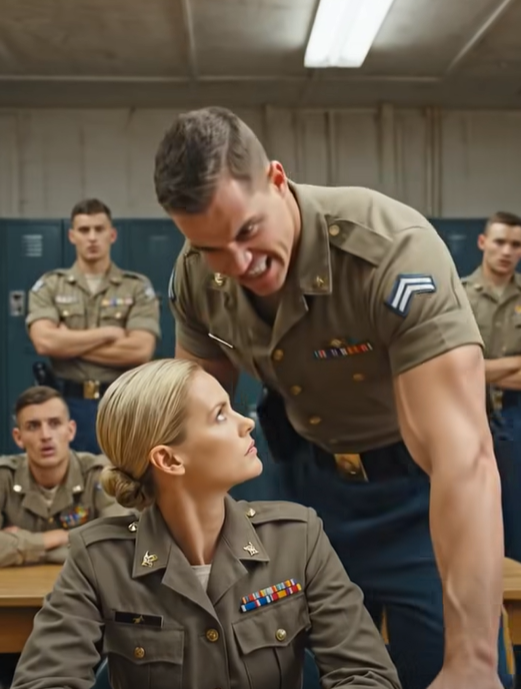
“Do You Know Who I Am?” He Pushed Her — Seconds Later, One ID Card Ended His Career
The dim lights of Rusty’s Bar flickered like dying stars just outside Camp Pendleton. It was a Friday night, the kind where Marines came to forget the sand and the screams they carried home from deployment. I had come here for the opposite reason — to disappear. My name is Commander Thalia Renwick. Highly decorated […]
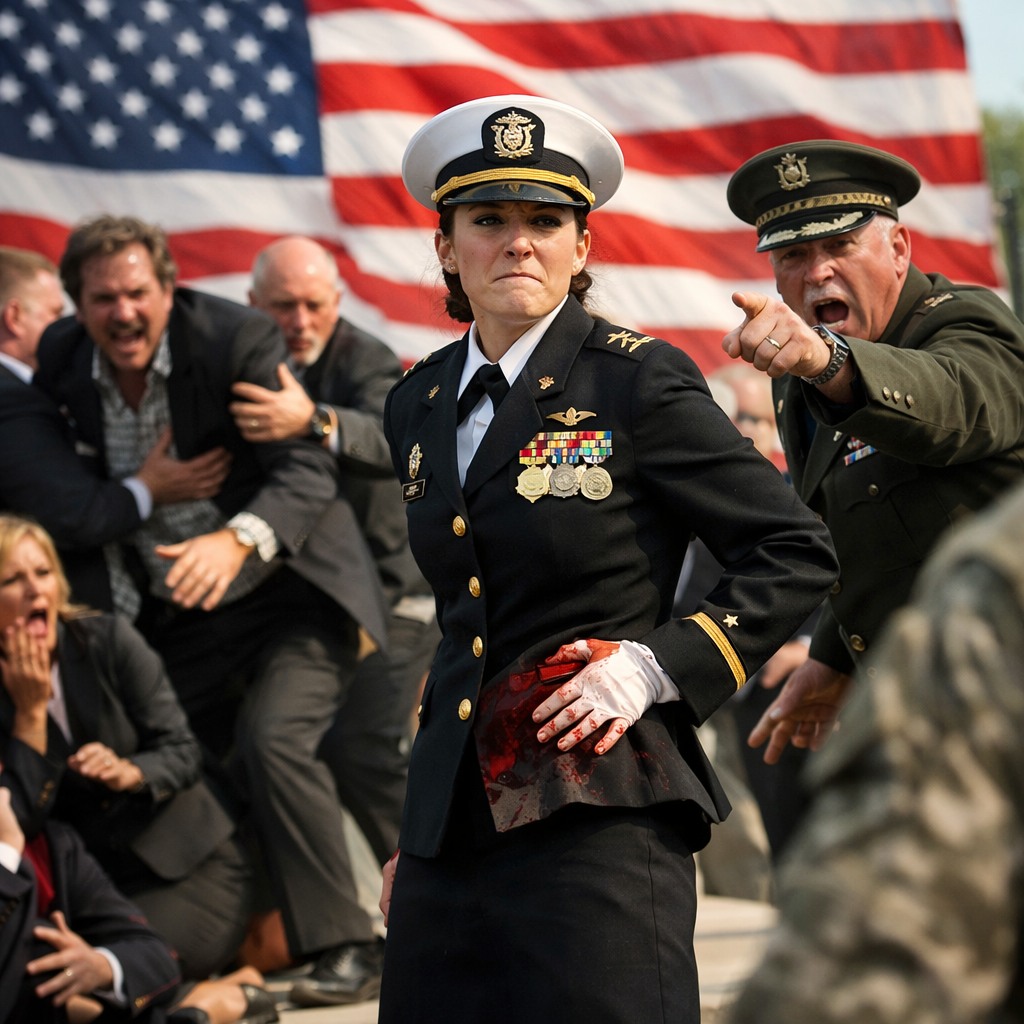
15 Years After My Dad Kicked Me Out, I Saw Him At My Sister’s Wedding. He Sneered: “If It Wasn’t For Pity, No One Would’ve Invited You.” I Just Smiled And Sipped My Wine. Then The Bride Took The Mic And Changed Everything.
The South Carolina sun was merciless that June afternoon, turning the outdoor wedding venue into a glittering oven. I stood near the back in my crisp Army dress uniform, the brass buttons and medals catching the light with every breath. At 34 years old, I had come home for my little sister’s wedding — the […]
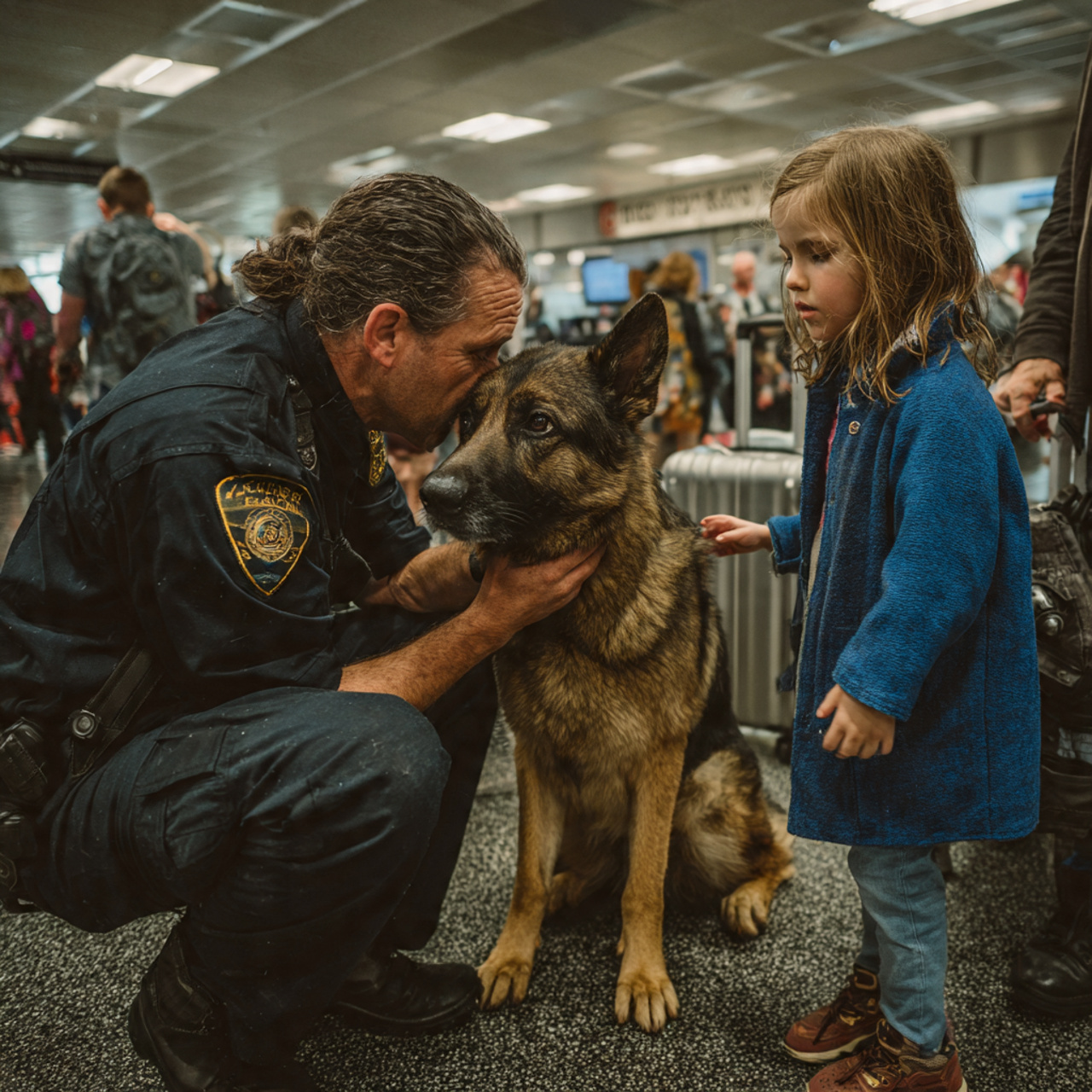
“A POLICE DOG FROZE IN THE AIRPORT. THEN A LITTLE GIRL TAPPED HIS HEAD. WHAT HAPPENED NEXT MADE EVERY TRAVELER STOP. HAVE YOU EVER WITNESSED A SILENT CRY FOR HELP?
The bustling international airport was a whirlwind of rolling suitcases, hurried announcements, and weary travelers rushing to their gates. Officer Liam Mercer patrolled the terminal with his loyal K9 partner, Rex — a highly trained German Shepherd known for his sharp instincts in detection and child safety operations. Everything seemed routine until Rex suddenly froze […]
End of content
No more pages to load