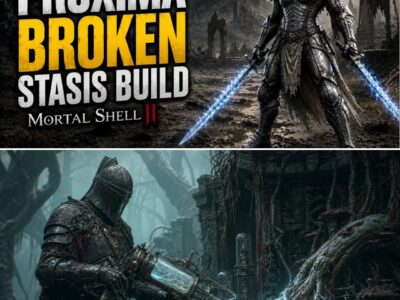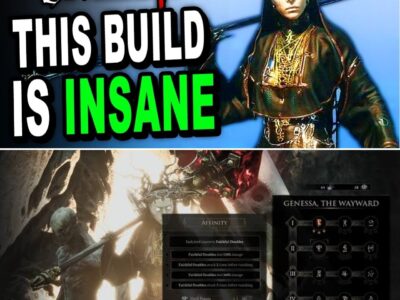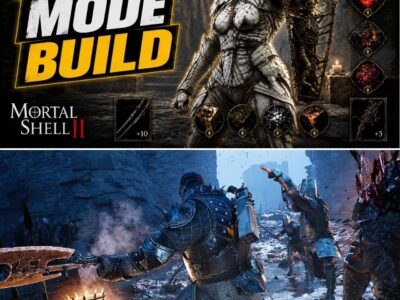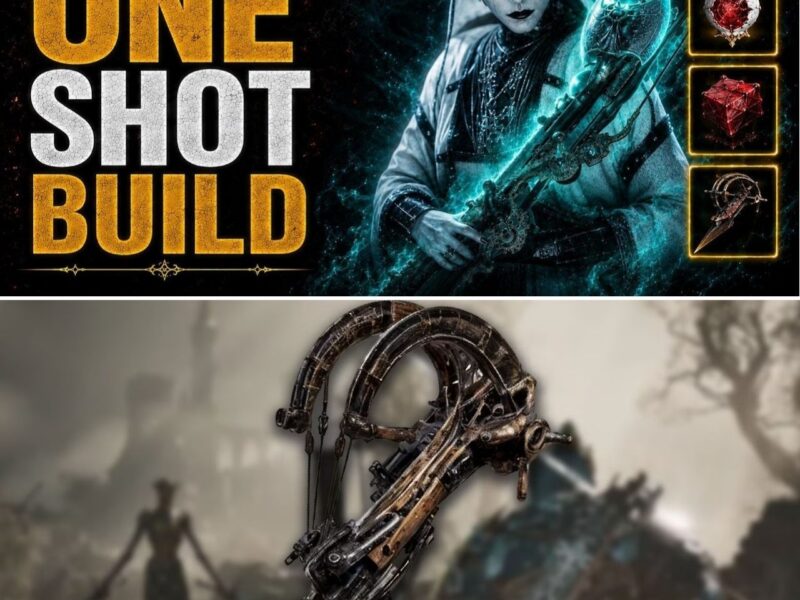
Mortal Shell 2’s Genessa One-Shot Build Is Turning the Salvaged Trebuchaxe Into a Boss-Killing Machine
🔥 GENESSA JUST FOUND THE MOST DISGUSTING ONE-SHOT WEAPON IN MORTAL SHELL 2!
The Salvaged Trebuchaxe was already deleting boss health bars — then players started pairing it with Genessa, stacking the right Tarstones, and turning one charged shot into an absolute execution.
But here’s the crazy part: the developers themselves admitted the Trebuchaxe’s Tarred Fragment was literally “overpowered and broken”… and STILL, players are finding ways to make Genessa hit absurdly hard. 👀
🔥 See the ONE-SHOT Genessa build before the meta changes again 👇
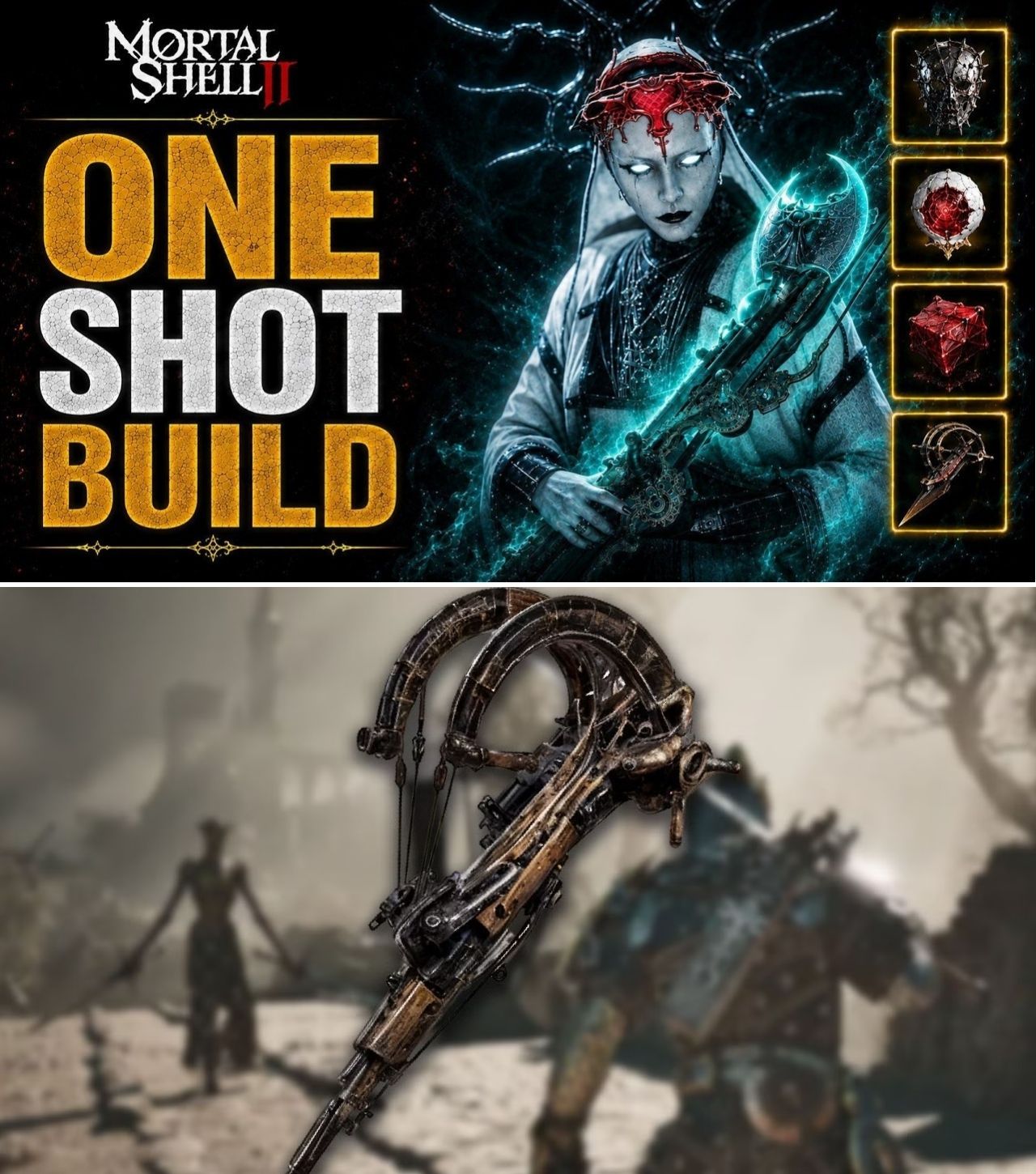
Mortal Shell 2’s Genessa One-Shot Build Is Turning the Salvaged Trebuchaxe Into a Boss-Killing Machine
Genessa players have discovered a brutal burst-damage setup centered around the Salvaged Trebuchaxe, with community testing showing that the sidearm can erase enormous chunks of boss health when the right Tarstones, charge mechanics and stagger windows are combined. The catch? Cold Symmetry has already acknowledged that one of the weapon’s key interactions was “overpowered and broken” and redesigned it in the Week 1 Update.
There is a reason the Salvaged Trebuchaxe has quickly become one of the most talked-about sidearms in Mortal Shell II.
It does not behave like a conventional ranged weapon.
Instead of simply firing a projectile and moving on, the Trebuchaxe allows players to charge its attack for substantially greater impact. With the right Tarstone configuration, that charged attack can become the centerpiece of a burst-damage build capable of taking enormous chunks out of an enemy’s health bar.
And when players began combining it with Genessa, the results became difficult to ignore.
Community testing during the game’s launch period showed Trebuchaxe builds capable of essentially one-cycling bosses, while players on Reddit described the weapon’s damage as “absurd.” One player reported a +5 Trebuchaxe with a combination of Charged Stone, Tarred Fragment, Deadeye Stone, Marksman’s Stone and Siegebreaker’s Stone being enough to one-cycle a boss.
Another Steam community post demonstrated a particularly extreme interaction against the Monolith, claiming that a charged Tarred Fragment shot into its exposed heart after a stagger could kill it without even requiring the player to proceed through its first phase.
The community reaction was immediate.
“Broken” became the word of the week.
And then the developers stepped in.
The Developers Actually Called It Overpowered
The most important piece of context surrounding the current Trebuchaxe meta is not a Reddit comment or a YouTube thumbnail.
It comes directly from the developers.
In the Week 1 Update released August 29, Cold Symmetry stated that the Salvaged Trebuchaxe’s Tarred Fragment had been redesigned because it was simultaneously “overpowered and broken.”
That is unusually direct language for a balance patch.
The developers were not simply adjusting a number because the weapon was slightly stronger than intended.
They identified the interaction itself as a problem.
That matters when evaluating the latest Genessa one-shot builds.
A video showcasing a devastating Trebuchaxe interaction may have been recorded before the redesign.
A player attempting to reproduce the exact setup after the Week 1 Update may therefore see different results.
But the underlying concept remains highly relevant.
The Trebuchaxe’s ability to deliver huge burst damage has not suddenly disappeared from the game’s build ecosystem.
If anything, the patch has made players even more interested in figuring out what the sidearm can still do.
Why the Trebuchaxe Is So Dangerous
The Trebuchaxe’s biggest advantage is simple:
burst damage.
Most weapons in Mortal Shell II require players to maintain pressure over multiple attacks.
The Trebuchaxe can condense a large amount of its damage into a single charged projectile.
That changes the math of a boss encounter.
Instead of needing to remain in melee range for an extended period, the player can look for a vulnerability window, charge the weapon and fire.
If the enemy is staggered, exposed or otherwise unable to respond, the projectile can turn that short opening into an enormous damage opportunity.
This is especially powerful against large enemies.
Community testing has repeatedly identified the Trebuchaxe as particularly effective against targets that are large enough and stationary enough for its projectile effects to connect consistently.
That last point is important.
The weapon is not universally perfect.
Its effectiveness depends heavily on whether the projectile can actually connect.
Tarred Fragment Is the Center of the Build
The most notorious interaction involves Tarred Fragment.
Before the Week 1 redesign, this Tarstone could turn the Trebuchaxe’s projectile into a particularly destructive spinning attack.
Community players quickly discovered that the spinning projectile could continue damaging an enemy rather than behaving like a conventional single-impact shot.
One Reddit user described the resulting damage as extremely high, while another reported that the weapon’s active ability could reach roughly 5,000 total damage under the right setup.
The interaction was so effective that players began experimenting with ways to force bosses into positions where the spinning projectile would continue connecting.
Instead of simply firing and moving away, they could create an arena where the boss was effectively trapped inside the damage zone.
That is the basic philosophy behind the “broken” Trebuchaxe build.
Don’t just hit the boss.
Make the boss stay inside the hitbox.
Genessa Makes the Strategy Even More Interesting
Genessa is particularly well suited to experimental burst builds because her kit can create additional pressure without requiring her to personally perform every attack.
Her Doubles can contribute to combat while Genessa focuses on positioning, attacking and setting up the next major damage window.
The Week 1 Update also improved Genessa’s Doubles targeting behavior, including fixes for astral copies drifting away from their intended targets and improvements to target selection when an original enemy dies.
That is relevant because a one-shot build is not necessarily about maximizing a single weapon’s damage in isolation.
It is about maximizing the damage delivered during a specific window.
If Genessa’s Doubles are attacking while she prepares the Trebuchaxe, the enemy can continue taking pressure while the player waits for the correct moment.
The weapon then becomes the finisher.
The Basic One-Shot Philosophy
The Genessa Trebuchaxe setup is best understood as a burst window build rather than a traditional sustained-DPS build.
The sequence looks roughly like this:
Build pressure → create a stagger/opening → position the boss → charge Trebuchaxe → fire during vulnerability → let the Tarstone interactions do the rest.
The exact execution varies depending on the boss and the current patch.
But the underlying concept is consistent.
The player is not trying to win through 30 seconds of uninterrupted melee attacks.
They are trying to turn one opening into an overwhelming damage event.
That is why the phrase “one-shot build” has become so common around Trebuchaxe content.
It does not necessarily mean every boss literally dies from one button press.
It means the build can compress an enormous percentage of the boss’s health into a single attack sequence.
Charged Stone Makes the Setup More Dangerous
One of the recurring pieces in community Trebuchaxe testing is Charged Stone.
The reason is obvious.
The entire strategy depends on getting maximum value from a charged attack.
If the build can improve the charge-based damage or make charging more efficient, the central burst becomes even more powerful.
The exact optimal Tarstone configuration can vary depending on whether the player prioritizes raw damage, stagger, charge speed or secondary effects.
But the community’s experimentation has repeatedly placed charged-shot bonuses at the heart of Trebuchaxe burst setups.
That makes Charged Stone one of the first things players should investigate when building around the sidearm.
Marksman’s Stone and Deadeye Stone Push the Ranged Damage Higher
Community testing has also repeatedly highlighted Marksman’s Stone and Deadeye Stone in Trebuchaxe configurations.
One of the early Reddit demonstrations specifically listed both alongside the Salvaged Trebuchaxe and Tarred Fragment in a boss one-cycle setup.
That combination makes intuitive sense.
If the entire build revolves around a high-impact ranged attack, Tarstones that improve the sidearm’s effectiveness become significantly more valuable than generic melee bonuses.
The goal is not to make every attack stronger.
The goal is to make the one attack that matters as strong as possible.
That distinction separates the Trebuchaxe build from conventional Genessa setups.
Siegebreaker’s Stone Adds Another Layer
The same community setup also used Siegebreaker’s Stone.
Its relevance is tied to stagger-oriented play.
That creates an important interaction.
The player wants the boss to enter a vulnerable state.
Then they want the Trebuchaxe to capitalize on that state.
A Tarstone that helps create or exploit the stagger window therefore has value even if it does not directly increase the final projectile’s damage.
It is another example of why the best one-shot builds are not necessarily built from five “damage” Tarstones.
Some of the strongest pieces are there to create the conditions under which the damage becomes possible.
The Monolith Example Shows Just How Extreme It Can Get
The clearest example comes from a Steam community test involving the Monolith.
The player reported that after parrying several attacks or staggering the boss once, they could avoid the normal riposte/visceral sequence, charge the Tarred Fragment shot and hit the exposed heart.
According to the post, the resulting attack could kill the boss without requiring the fight to progress through the first phase.
That is the kind of interaction that makes a build instantly attractive to the Soulslike community.
Boss mechanics normally divide a fight into phases.
Players learn attack patterns.
They wait for openings.
They slowly reduce the health bar.
The Trebuchaxe strategy can effectively ask:
“What if we simply delete the phase?”
Of course, the technique depends on the specific boss and the exact interaction.
It should not be interpreted as proof that every boss can be one-shot.
But it demonstrates the ceiling of the weapon’s burst potential.
Large Enemies Are the Trebuchaxe’s Best Friends
There is a recurring theme in community testing:
size matters.
The Trebuchaxe can be devastating when the target is large enough for the projectile or its spinning effect to maintain contact.
One Reddit user who experimented with the weapon noted that it worked particularly well against large enemies that could remain relatively stationary. The same player reported that the projectile could sometimes fail completely against smaller or more mobile humanoid targets.
That is an important weakness.
A weapon capable of deleting a boss’s health bar is not automatically the best weapon for every encounter.
Against agile enemies, projectile pathing and hit detection become more important.
The projectile can hit terrain.
It can pass a target.
It can fail to maintain contact.
And if the attack misses, the entire one-shot setup loses its purpose.
The Weapon Was Also Reported as Buggy
The early community response to Trebuchaxe was not universally positive.
Some players reported inconsistent interactions against certain enemies.
One Reddit discussion specifically mentioned situations where the projectile appeared to pass through a boss or deal little to no damage. Others reported problems with the spinning projectile becoming stuck on environmental geometry.
That is important because it helps explain why the weapon could feel either completely broken or strangely ineffective depending on the encounter.
A one-shot build has a very high ceiling.
But it also has a high dependence on execution and hit registration.
When everything connects, the damage looks absurd.
When the projectile misses or behaves unpredictably, the player can be left wondering what happened.
And Then Came the Week 1 Patch
This is where the story changes.
The Week 1 Update did not simply buff Trebuchaxe.
It specifically redesigned Tarred Fragment after determining that its previous implementation was both overpowered and broken.
That means players should be cautious when watching older Trebuchaxe videos.
If the video was recorded before August 29, 2026, the showcased Tarred Fragment interaction may no longer work exactly the same way.
The video can still be useful for understanding the build’s philosophy.
But it should not automatically be treated as a current damage benchmark.
This distinction is particularly important for YouTube titles such as “ONE SHOT,” “BROKEN,” or “INFINITE DAMAGE.”
The title may describe what the creator achieved on the version shown in the footage.
It does not necessarily describe the exact state of the live game today.
The Patch May Actually Make the Build More Interesting
Paradoxically, the redesign could make Trebuchaxe buildcraft more interesting.
If the old Tarred Fragment interaction was strong enough to overwhelm the intended combat system, removing that specific interaction forces players to explore the weapon’s other strengths.
Charged attacks.
Ranged damage bonuses.
Stagger exploitation.
Positioning.
Genessa’s supporting abilities.
Alternative Tarstones.
Instead of one universally dominant trick, the community now has to determine which combination produces the best legitimate burst damage.
That process is already underway.
Recent community posts continue to highlight the Trebuchaxe as a powerful sidearm even after the patch environment began shifting.
Genessa Has Another Advantage: Flexibility
One reason Genessa remains attractive for this type of build is that she does not have to commit entirely to the Trebuchaxe.
She can still use a strong melee weapon.
She can use her Doubles.
She can maintain pressure while waiting for the right ranged opportunity.
That means the player is not completely helpless when the one-shot setup fails.
This is an important distinction from a pure gimmick build.
A good Genessa Trebuchaxe setup should still have a functional backup plan.
If the boss moves out of range, switch to melee.
If the projectile misses, rebuild.
If the boss cannot be staggered, change the strategy.
The best players will treat the one-shot as an opportunity rather than the entire combat system.
There Is Also a Tiel Comparison
Interestingly, community build discussions have identified Tiel as another strong candidate for Trebuchaxe burst setups.
One current build guide specifically recommends Tiel with Axe and Dagger + Salvaged Trebuchaxe, using a critical-hit-oriented strategy built around Shadow Strike and charged Trebuchaxe damage.
That creates an interesting contrast.
Tiel can focus heavily on burst and critical-hit mechanics.
Genessa can bring additional battlefield pressure through her Doubles.
So the same weapon can support two different philosophies.
Tiel: create a massive critical burst.
Genessa: create pressure and use Trebuchaxe as the devastating finisher.
Neither approach needs to be considered universally superior.
It depends on the player’s preferred rhythm.
Why the Build Is So Satisfying
There is something uniquely satisfying about a ranged one-shot build in a Soulslike.
You spend the fight waiting.
You watch the boss.
You learn the attack pattern.
You build the stagger meter.
Then the opportunity appears.
The boss drops.
You step back.
You charge the Trebuchaxe.
And instead of performing a conventional riposte, you fire.
The projectile connects.
The health bar disappears.
That is the fantasy behind the build.
It rewards patience rather than button mashing.
The player is effectively saying:
“I don’t need ten openings. I only need one.”
But “One-Shot” Needs a Disclaimer
Despite the dramatic title, players should not expect the build to literally kill every boss in one attack.
The community evidence does not support that claim.
Some enemies are poor Trebuchaxe targets.
Some bosses have mechanics that interfere with the setup.
Projectile behavior can be inconsistent.
And the Week 1 Update changed the most notorious Tarred Fragment interaction.
The more accurate description is:
a high-burst Genessa build capable of producing extremely large damage spikes during vulnerability windows.
That is still impressive.
It just does not require exaggeration to make the build sound powerful.
The Real Question Is What Survived the Patch
That is what makes the current Trebuchaxe meta particularly interesting.
The community has already demonstrated that the weapon can produce absurd burst damage.
The developers have acknowledged that its previous Tarred Fragment behavior was not working as intended.
Now the question becomes:
How much of that damage ceiling remains after the redesign?
Can Genessa still exploit stagger windows?
Which Tarstones now provide the highest practical damage?
Is raw charge damage better than stacking stagger?
Does Tarred Fragment remain the best ability option?
And which bosses can still be deleted before their mechanics even begin?
Those are the questions build creators are now testing.
The Future of the Genessa One-Shot
Mortal Shell II is still in its earliest post-launch phase.
The game only received its first major patch on August 29, and Cold Symmetry has already demonstrated that it is willing to make significant balance changes when particular interactions get out of control.
That means today’s one-shot build could become tomorrow’s museum piece.
But that is also what makes the current build meta so entertaining.
Players are still discovering interactions.
The developers are still balancing them.
And the community is rapidly testing the limits of every Shell, weapon and Tarstone combination.
For Genessa players, the Salvaged Trebuchaxe remains one of the most intriguing weapons to experiment with.
It can turn a carefully created opening into an enormous burst of damage.
It can punish staggered enemies from range.
And, under the right circumstances, it can make a boss health bar disappear so quickly that the fight barely looks like a fight anymore.
The old Tarred Fragment interaction may have been too much.
Cold Symmetry clearly thought so.
But the underlying idea behind the build remains alive:
Create one opening.
Charge one shot.
Make it count.
And if Genessa can turn that single opening into a boss health bar vanishing before the next attack even begins, the “one-shot build” label may not be as exaggerated as it first sounds.