Fable’s “Glow-Up” Sparks a New Gaming War — But Did Playground Games Actually Change the Hero?
🚨 FABLE JUST GAVE THE INTERNET THE “I TOLD YOU SO” MOMENT IT WAS WAITING FOR. 👀
A new Gamescom teaser shows the female Hero looking noticeably different — and suddenly the same crowd that spent months criticizing her appearance is celebrating like they just won a war.
But here’s the twist: did Playground Games actually change her face… or did the internet completely misunderstand what it was looking at?
One side is calling it a massive glow-up. The other says there was never a fixed face to begin with.
And somehow, a character-creation system just became the center of a full-blown gaming culture war…
Here’s what actually changed — and what didn’t 👇
Fable’s “Glow-Up” Sparks a New Gaming War — But Did Playground Games Actually Change the Hero?
A new Fable teaser has reignited an old argument over the game’s female Hero, with some gamers celebrating what they see as a major facial redesign while others point out that the protagonist is customizable and the supposed “change” may be far less dramatic than the internet suggests.
For a game that has not even launched yet, Fable has already gone through several lives online.
There was the excitement surrounding the revival of one of Xbox’s most recognizable RPG franchises. Then came years of scrutiny over the reboot’s visual direction, including a particularly persistent argument about the appearance of the female Hero shown in early promotional footage.
Now, a tiny new teaser has reopened the entire debate.
And this time, the reaction is going in the opposite direction.
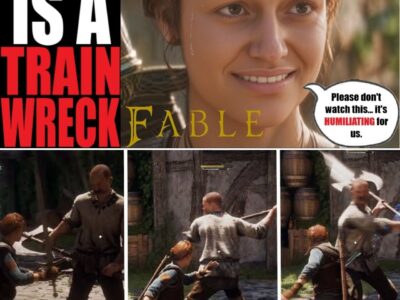
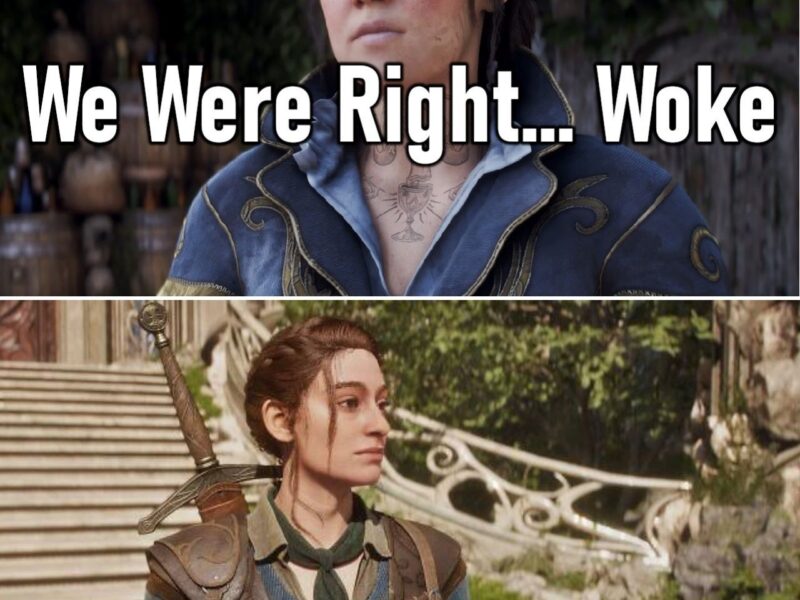
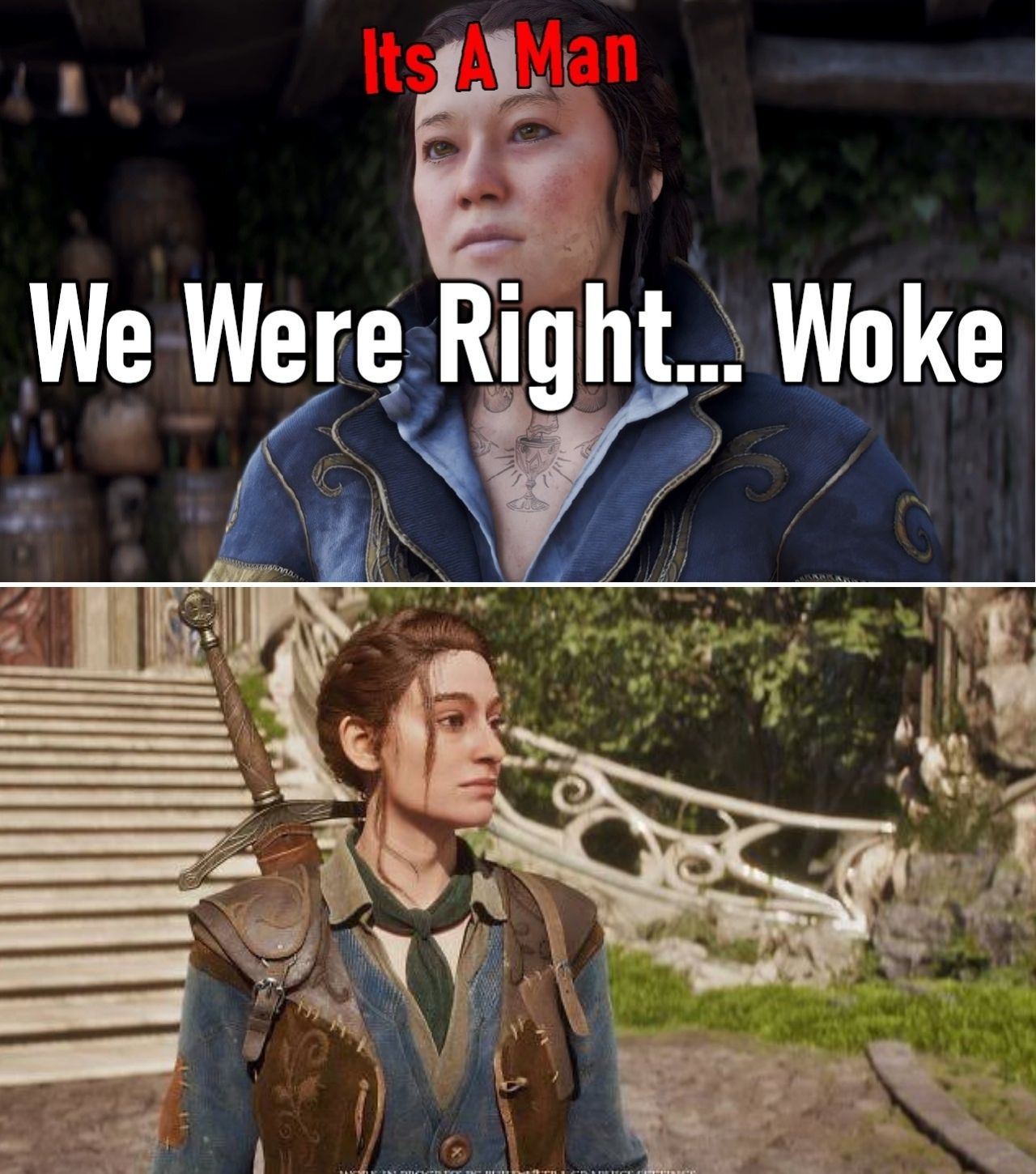
A short Fable teaser released ahead of Gamescom 2026 briefly shows a female character whose facial appearance looks noticeably different from the version seen in earlier promotional material. The clip is extremely short, but that has not stopped social media users from comparing screenshots and declaring that Playground Games has finally “fixed” the character.
Some commentators have gone considerably further, framing the moment as proof that persistent criticism from a particular section of the gaming audience finally forced the developers to respond.
That is where the story gets complicated.
Because there is currently no official confirmation that Playground Games redesigned the Hero because of online criticism.
And there is another detail that changes the picture considerably:
Fable’s Hero is customizable.
The Face That Started the Argument
The controversy surrounding the female Hero is not new.
When the reboot was first shown, sections of the gaming community immediately focused on the appearance of the female character featured in the marketing.
The criticism was unusually persistent.
Some players argued that the character looked unattractive or poorly designed. Others accused the developers of deliberately moving away from conventional ideas of fantasy-hero aesthetics.
The debate quickly became wrapped up in the larger culture-war arguments that have surrounded character design in Western games for years.
For some critics, the character’s face became symbolic of what they believed was wrong with modern AAA game development.
For others, the entire discussion was absurd because Fable had never promised a single fixed protagonist whose appearance would be identical for every player.
And that second argument became increasingly relevant as Playground Games revealed more about how the new game actually works.
The reboot allows players to create and customize their Hero.
Xbox has repeatedly described Fable as a game in which players can become the Hero they want to be, with customization options affecting the character’s appearance. The game’s official materials emphasize that players can shape their Hero while exploring Albion and making choices that affect their reputation and relationships.
That means the face seen in a trailer does not necessarily represent one immutable protagonist.
It can simply be one version of a customizable character.
Then Came the New Teaser
On August 21, Playground Games published a short teaser ahead of its Gamescom appearance.
The clip was only a few seconds long, but viewers immediately noticed the female character’s face.
Compared with earlier footage, she appeared to have softer facial features and a noticeably different overall look.
The reaction was instant.
Some social media users interpreted the footage as evidence that Playground had changed the character following years of criticism.
One widely circulated reaction claimed that Xbox had “heard the fans’ feedback” and that the new character looked significantly better. Another joked that the fictional character had finally “listened to the complaints.”
Other users went further, suggesting that the apparent change could increase sales.
One widely repeated joke claimed that the new face would sell an additional million copies.
And then came the victory lap.
Some gaming commentators presented the teaser as evidence that the so-called “chuds” — an insulting internet term used by some online communities to describe socially conservative or culture-war-oriented gamers — had won.
The argument was simple:
Gamers complained.
The character changed.
Therefore, gamers won.
Except there is a problem with that conclusion.
There May Not Have Been a “Redesign”
The most important fact getting lost in the online celebration is that Fable has character customization.
GamingBible pointed this out directly in its coverage of the controversy, noting that the supposed redesign narrative overlooks the game’s character creator. The publication argued that Playground has shown different versions of its customizable Hero throughout the game’s marketing rather than establishing one fixed face that has now been replaced.
That distinction is crucial.
If the player can customize the Hero’s face, then comparing two promotional characters and declaring one to be the “old” face and another to be the “new” face may not be technically accurate.
They could simply be different character presets.
Or different versions of the same customization system.
Or different Hero configurations used by the marketing team.
There is also nothing currently available from Playground Games confirming that the studio changed the character because of backlash.
So the most dramatic version of the story — “Gamers complained and Xbox surrendered” — remains unproven.
But the Visual Difference Is Real
That does not mean people imagined the difference.
The newer footage does appear to show a female Hero with facial features that differ from earlier promotional material.
Several outlets have highlighted the contrast.
Gamemeca described the character as having become noticeably more attractive compared with the earlier version, while Beebom characterized the change as a major facial redesign.
Inven Global similarly noted that the appearance shown in the new teaser is noticeably different from previously presented versions.
So there are two separate questions:
Did the character’s appearance change in the marketing?
Apparently, yes.
Did Playground change it because angry gamers demanded it?
There is currently no public evidence proving that.
That difference is exactly what makes the story interesting.
The Internet Wants a Winner
The reason the debate has become so heated is that the change fits neatly into an existing narrative.
One side sees the new face and says:
“We told you so.”
The other side says:
“You are celebrating something that isn’t even a redesign.”
Both sides have an incentive to interpret the footage in the way that supports their existing beliefs.
That is how a less-than-one-second glimpse of a video-game character can become a political scoreboard.
The actual game is much less interested in that scoreboard.
According to Playground Games and Xbox, Fable is built around player choice and customization.
Players can choose their Hero’s appearance.
They can determine how their character interacts with Albion.
They can pursue relationships.
They can own businesses.
They can make decisions that influence reputation.
And they can play the game as the character they want to create.
In other words, the controversy is arguably fighting over a question the game itself is designed to let players answer individually.
The Character Creator Changes the Conversation
This is one of the most important pieces of context surrounding the controversy.
Traditional single-player RPGs often have a fixed protagonist.
If the developers change that character’s face, there is a straightforward before-and-after comparison.
Fable is different.
The new game gives players control over their Hero’s appearance.
That means the character shown in promotional material is partly a marketing choice.
Playground can show a particular Hero in one trailer and another configuration later without necessarily rewriting the underlying game.
This has already happened across the game’s marketing.
Players have noticed different-looking characters in different promotional materials, and community discussions have repeatedly asked whether particular characters are intended to represent the player’s customizable Hero.
That makes it risky to treat every visual change as evidence of a development retreat.
The developers may simply be showing another version.
The Timing Is Fueling the Theory
Still, the timing is undeniably interesting.
The controversy over the female Hero has existed for years.
Then, just days before Gamescom, Playground releases a teaser featuring a noticeably different-looking female Hero.
Naturally, people connect the dots.
This is especially true because the new footage arrives at a moment when Fable is trying to rebuild momentum.
The game has been delayed from its earlier 2026 window and is now scheduled to launch on February 23, 2027.
The delay gives Playground additional time to polish the game, while the Gamescom appearance provides an opportunity to show much more substantial gameplay.
The teaser therefore had a clear marketing purpose.
It was designed to get people talking.
And it succeeded.
Perhaps more than anyone expected.
Then the Actual Gameplay Arrived
The irony is that the facial controversy may have overshadowed what Playground was actually trying to promote.
At Gamescom, Fable received a much longer gameplay presentation.
The showcase reportedly included around 18 minutes of new material, showing elements such as Albion’s living world, homes and businesses, reputation, relationships, character appearance, family systems, choices and combat.
That is a much more meaningful look at the game than a few frames of a character’s face.
And the gameplay systems are where Fable will ultimately succeed or fail.
The developers have been particularly keen to highlight the game’s “Living Population” system.
Xbox says more than 1,000 NPCs populate Albion, each with individual personalities and ongoing lives. Players can interact with them in different ways, potentially becoming friends, enemies, employees, spouses or even something considerably darker.
That system is potentially far more consequential to the final game than whether one marketing character has a particular jawline.
The Pre-Order Question Is More Concrete
There is, however, another reason the current discussion matters.
Fable is already available for pre-order.
The Standard Edition is listed at $69.99, while the Premium Edition costs $99.99 and includes up to five days of early access.
The game is also launching day one through Game Pass.
That creates a very different buying equation from a traditional $70 release.
A player who already subscribes to Game Pass Ultimate or PC Game Pass can play the game without purchasing the Standard Edition outright. Xbox’s official page confirms that Fable will be available day one through Game Pass.
At the same time, there are clearly players willing to buy it.
The Collector’s Edition has already sold out, according to the official Fable FAQ, which says there are currently no plans to restock it.
That makes the claim that “nobody wants this game” difficult to sustain.
There is clearly an audience willing to put money down before launch.
The real question is how large that audience ultimately becomes.
And That’s Where the “Chuds Won” Narrative Gets Complicated
If the argument is that criticism can influence how games are marketed, the new teaser is certainly interesting.
If the argument is that Playground Games officially capitulated to a specific online group, there is currently no evidence strong enough to establish that.
The most defensible conclusion is much simpler:
Playground showed a different-looking customizable Hero.
The internet noticed.
Some people loved the change.
Some people celebrated it as a victory.
Others pointed out that the protagonist’s appearance is customizable and questioned whether there was ever a fixed face to “redesign” in the first place.
Everything beyond that remains interpretation.
And perhaps that is the most revealing part of the whole controversy.
A game about choice has become the latest battlefield over who gets to decide what a fictional hero should look like.
What Happens When Fable Finally Launches?
For Playground Games, the stakes are now considerably higher than a viral argument over facial features.
Fable is scheduled to arrive on February 23, 2027, for Xbox Series X|S, PC and PlayStation 5, with Game Pass availability from day one.
The studio has spent years rebuilding a franchise that has been dormant since the original era of Lionhead.
The audience will ultimately judge the game on much more than character design.
Does Albion feel alive?
Do the choices matter?
Is the combat satisfying?
Does the humor still feel like Fable?
Does the relationship and reputation system deliver meaningful consequences?
Does the reboot understand why people loved the original games?
Those are the questions that will determine whether Fable succeeds.
Not whether one teaser contains a prettier face.
For now, though, the internet has chosen its battlefield.
One side sees a “glow-up.”
Another sees proof that the supposed redesign never existed.
And somewhere in the middle sits Playground Games, preparing to release a massive RPG whose customizable Hero means that, ironically, both sides may be arguing over a face that players were never required to use in the first place.
The real victory won’t be claimed by either side of the culture war.
It will belong to whichever version of Fable actually delivers when February 2027 arrives.