The Somerset Hunt Controversy: Drone Footage Sparks Outrage Over Children and Babies Exposed to Dead Stag Aftermath
An innocent countryside tradition or pure, unadulterated barbarism? Footage has just surfaced showing something truly unthinkable at a Somerset hunt, and the internet is going to war over it. 😡
While animal rights groups are losing their minds over what a drone captured in the aftermath of a brutal deer chase, it’s the presence of toddlers and even a baby mere feet away from a dead stag’s body packed into a vehicle that has everyone feeling physically sick.
How can anyone normalize this level of violence for the youngest generation? The internet is divided, but the outrage is completely boiling over.
See the disturbing footage and read the full breakdown of what really happened behind the scenes 👇
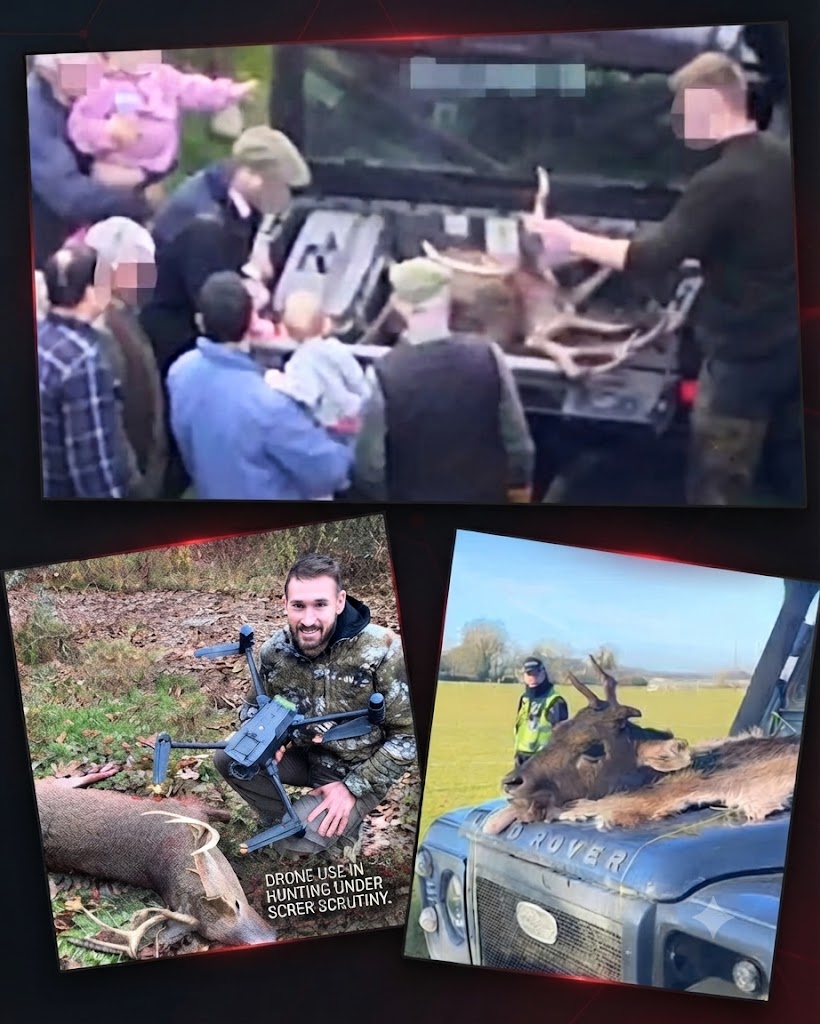
A fresh chapter in Britain’s deeply polarized debate over rural bloodsports has erupted following the emergence of controversial drone footage from the English countryside. Animal welfare campaigners and local communities are locked in intense fury after recordings allegedly showed young children—including a baby—brought into close proximity with the grim aftermath of a deer hunt, featuring the carcass of a young stag secured inside a vehicle.
The footage has reignited fierce questions regarding child welfare, the ethics of exposing minors to graphic wildlife kills, and the ongoing viability of traditional hunting practices in modern Britain.
The Drone Footage and the Escalating Dispute
The controversy centers around monitoring material captured by regional hunt saboteur groups and independent wildlife observers tracking activities in areas such as the Quantock Hills in Somerset. According to campaign organizations, drone cameras recorded the culmination of a protracted chase involving local staghounds.
While hunts operating in the region have historically defended their practices under traditional frameworks or specific exemptions—such as monitoring and flushing out under strict legal guidelines—opponents argue that the reality on the ground crosses ethical boundaries.
The latest wave of public indignation, however, shifted focus away from just the chase itself and onto the spectators. Observers noted that families, including very young children and infants, were present at the scene. Video snippets shared across social media and reviewed by campaign groups show children standing near the aftermath, with the body of a young stag visible in the back of a vehicle.
Community Fallout and the Ethics of Exposure
The revelation has split public opinion sharply across social platforms, community forums, and animal welfare networks.
To critics and child protection advocates, normalizing visceral wildlife slaughter in front of toddlers and babies is profoundly damaging. Animal rights charities have long argued that exposing developing minds to the distress, exhaustion, and ultimate death of wild mammals desensitizes youth to cruelty. Campaigners contend that involving children in the macabre traditions surrounding the end of a hunt—such as viewing the carcass or participating in hunt meets—amounts to psychological harm and crosses a line that civil society should not tolerate.
Conversely, defenders of rural traditions and hunting communities argue that growing up around field sports is an inherent part of country life. Supporters maintain that children raised in rural areas are exposed to the realities of nature, wildlife management, and food sourcing from an early age, framing it as an educational cultural heritage rather than a morbid spectacle. They accuse activist groups of sensationalizing standard rural practices to score political points against traditional communities.
Legal Scrutiny and Future Pressures
The incident has once again placed local law enforcement and lawmakers under pressure. Avon and Somerset Police have previously faced calls to thoroughly investigate operations involving regional staghounds following similar digital evidence submissions by wildlife monitors.
Under the Hunting Act 2004, hunting mammals with dogs is strictly prohibited in England and Wales, though exemptions concerning the observation, research, or flushing out of injured animals have frequently been a point of fierce legal contention between prosecutors and hunt legal teams.
As animal welfare organizations push for tighter legislative loopholes and a total ban on remaining trail and traditional deer hunts, this latest footage ensures that the ethical battle lines will not fade quietly. With public sensitivity surrounding child exposure to violence at an all-time high, the debate is no longer just about the welfare of Britain’s wildlife—it is increasingly about what kind of values are being passed down to the next generation.