The Wolverine Culture War: Why Gamers Are Rejecting Sony’s ‘Soy Boy’ Mutant While Journalists Rush to Defend It
🚨 WHY IS THE MEDIA PROTECTING THIS GAME? The leaked Wolverine footage is tearing the internet apart, and gamers are officially accusing PlayStation of completely ruining one of the most iconic male heroes in comic history… 🚨
The community is furious over bizarre, “softened” cutscenes—including a highly controversial, intimate interaction with Sabertooth—claiming the studio is prioritizing political agendas over actual gameplay. But while fans tear the leaks to shreds, mainstream gaming journalists are rushing to defend the billion-dollar corporation and telling players they’re wrong. Who is really out of touch here?
Find out why the internet thinks Insomniac has completely betrayed its core audience! 👇🔥
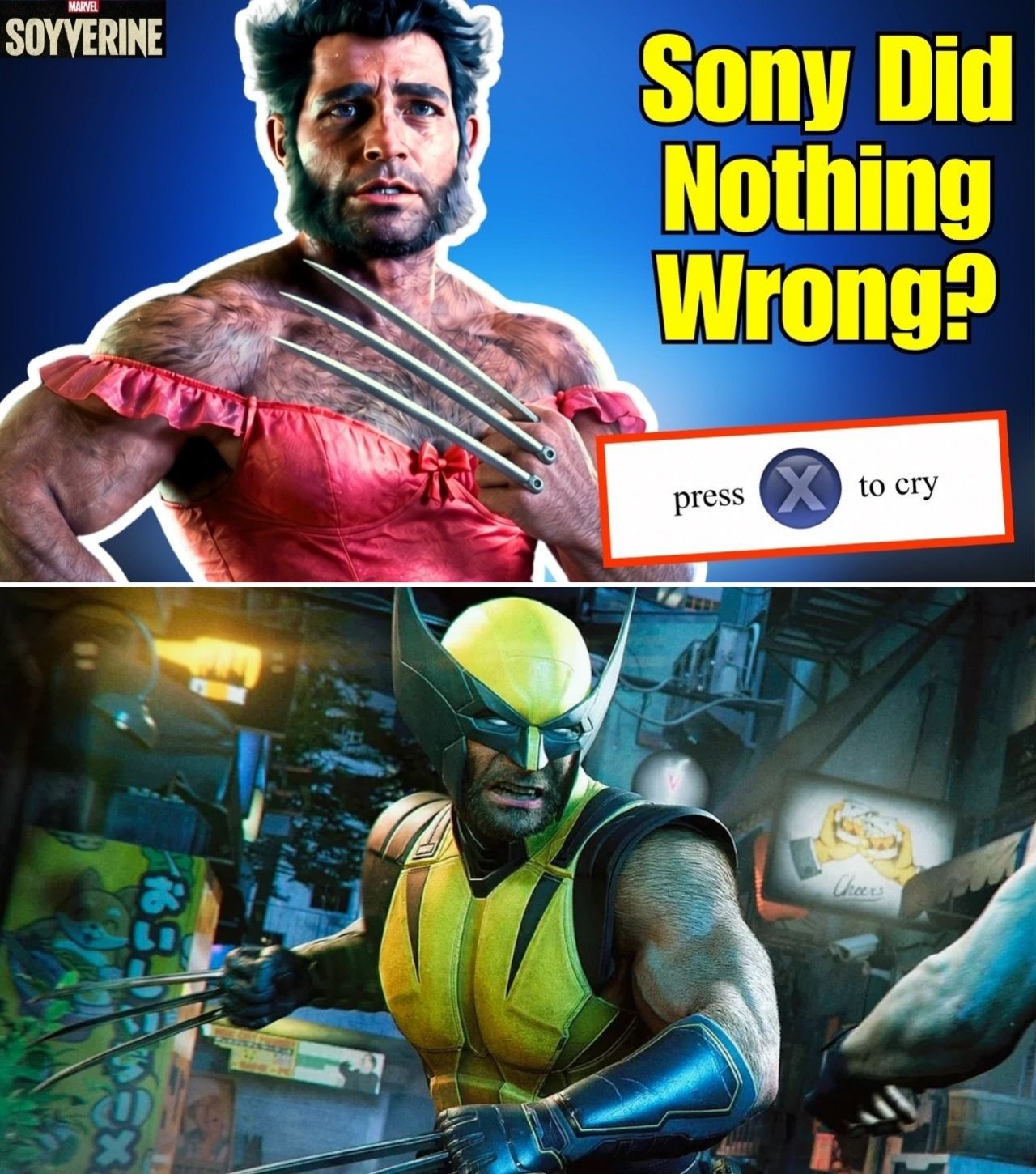
The battle lines have been firmly drawn in the gaming industry’s ongoing culture war, and the latest ground zero is Insomniac Games’ highly anticipated PlayStation 5 exclusive, Marvel’s Wolverine. Following a massive data breach that leaked hours of developmental footage onto the internet, a fierce and highly polarized debate has consumed social media. On one side stands a massive, vocal contingent of traditional gamers who are actively rejecting the game’s creative direction, accusing the studio of emasculating a legendary comic book icon. On the other side stands the mainstream gaming press, who have launched a coordinated defense of the billion-dollar corporation, urging fans to stop attacking the title.
The resulting clash highlights a profound disconnect between the people who make and cover modern AAA video games and the core audience expected to buy them.
The Emasculation of Logan and the “Soy Boy” Allegations
For decades, the character of Wolverine has been defined by his feral aggression, rugged masculinity, and unapologetic brutality. However, the leaked footage from Insomniac’s upcoming title has left many fans feeling that this defining edge has been completely sanded off.
Across Reddit, X (formerly Twitter), and YouTube, the prevailing sentiment is that the game looks aggressively “mid” and resembles “cinematic slop.” But the mechanical complaints pale in comparison to the cultural ones. A highly prominent narrative circulating among the fanbase is that Sony and Insomniac are deliberately softening male leads, turning them into what internet culture refers to as “soy boys.”
“We see these main characters that we love, we see them kind of made in a more feminine version,” argued the host of the popular gaming commentary channel Wagner Knows Why? in a recent viral breakdown. “When you look at the Wolverine that we have in the past and the Wolverine that we see right now, it doesn’t have the aggressiveness. It has a softness that is completely absent from the original versions.”
Critics are pointing to specific leaked cutscenes to validate these fears. One heavily mocked sequence involves the mutant Mystique saving a passive, inactive Wolverine—a trope fans argue is part of a broader industry trend designed to elevate female “boss lady” characters at the expense of established male heroes.
Even more controversial is a leaked cinematic confrontation between Wolverine and his iconic arch-nemesis, Sabertooth. Instead of a blood-soaked clash between two feral mutants, the choreography features Sabertooth gently caressing Logan’s cheek. The scene was immediately blasted by fans for portraying bizarre, out-of-place “homosexual undertones” and “Brokeback Mountain vibes” rather than the bitter, violent rivalry fans expect from the X-Men lore.
The Journalistic Shield Wall
As the backlash reached a fever pitch, the mainstream gaming press stepped in. Outlets like Kotaku, GameSpot, and The Gamer have run numerous articles and opinion pieces defending Insomniac Games, praising the game’s direction, and admonishing the gaming public for jumping to toxic conclusions based on unfinished footage.
To the game’s detractors, this journalistic defense is not an objective assessment of the game’s quality, but rather an ideological protection racket. The core gamer demographic heavily suspects that modern gaming journalists act as corporate mouthpieces for studios like Sony because they share the exact same progressive political leanings.
“These gaming journalists are defending their ideological stance,” noted Wagner Knows Why? in his commentary. “Sony makes the games that they believe have the same ideological pattern that they want to see reflected in the gaming world… And that is the reciprocity that we’re seeing with the journalists coming out defending billion-dollar organizations because, ‘Hey, they share our ideology, so we’re going to respect them no matter how goofy and dumb the gameplay looks.'”
This distrust of the media has deep roots, tracing back to the Gamergate controversies of the 2010s. Critics frequently point to industry figures like Bloomberg’s Jason Schreier or cultural critic Anita Sarkeesian as the architects of a massive cultural shift that deliberately pushed traditional, male-oriented voices out of the industry in favor of a more progressive, diverse, and heavily sanitized corporate ideology.
Hiring Practices and the “Concord” Connection
The community’s suspicion extends far beyond the final product and directly into Insomniac’s hiring practices. In the wake of the leaks, internet sleuths began auditing the social media profiles and employment histories of the developers working on Marvel’s Wolverine. What they found only cemented their fears that the studio was prioritizing political activism over passion for the source material.
It was discovered that a prominent writer on the game had a history of vocal progressive political activism, including strong support for the Black Lives Matter movement. To the anti-woke gaming crowd, hiring political activists to write traditional comic book narratives is a recipe for disaster. “How could they write a good Wolverine when they hate all the characteristics that make up Wolverine an appealing character to the general audience?” critics asked.
Furthermore, fans uncovered that Insomniac had recently hired artists and developers who previously worked on Concord, the disastrous live-service hero shooter from Firewalk Studios that Sony recently shut down just weeks after launch. Concord was widely mocked for its unappealing, heavily sanitized character designs, leading gamers to fear that those same divisive design philosophies are now infecting the X-Men universe.
The Trust Deficit and the Ghost of Spider-Man 2
The level of paranoia surrounding Marvel’s Wolverine is staggering, but it does not exist in a vacuum. Insomniac Games heavily burned its core audience with its previous release, Marvel’s Spider-Man 2.
During the marketing for that game, fans were promised the ultimate Peter Parker and Miles Morales power fantasy. Instead, players found themselves routinely forced into stealth sequences playing as Mary Jane Watson—who was portrayed effortlessly taking down elite mercenaries with a stun gun—or engaging in entirely separate missions playing as a deaf teenager navigating street art.
The backlash to those forced perspective shifts was immense. Gamers felt they were tricked into playing supporting female characters in a game designed to appease progressive critics rather than the actual fan base. That exact fear is now haunting Wolverine. Rumors recently spiraled out of control that players would be forced into playing as other X-Men characters, forcing Insomniac to issue a direct statement confirming that Logan is the game’s sole playable protagonist.
However, the trust is already broken. “We don’t trust these game developers anymore because these game developers have betrayed us,” the Wagner Knows Why? video summarized. “We saw it with Spider-Man 2 where they tricked us and had us play Mary Jane, and said we’re bigots if we don’t like playing [her].”
A Billion-Dollar Standoff
The situation surrounding Marvel’s Wolverine has evolved from a standard video game leak into a massive referendum on the state of Western entertainment. Sony and Insomniac are standing behind a production budget that reportedly eclipses $300 million, backed by a loyal gaming press that insists the studio’s progressive direction is the correct path forward for the medium.
Conversely, a massive, highly mobilized segment of the consumer base is flatly refusing to accept what they view as the continued “soy-boyification” of their favorite franchises. They are tired of the sanitized dialogue, the subverted expectations, and the persistent feeling that the developers actively despise the traditional demographics that built the gaming industry.
As the release date approaches, the gaming world is watching a high-stakes game of chicken. Will the coordinated support of the journalistic class be enough to propel Marvel’s Wolverine to commercial success, or will the total rejection by the hardcore community turn Sony’s biggest superhero asset into a historic financial disaster? The answer will likely define the creative direction of the PlayStation brand for the next decade.