‘VOICES TOLD ME’: COURTROOM ERUPTS AS OFFICER TESTIFIES TO THEORY PSYCHOLOGIST ‘COACHED’ LINDSAY CLANCY AFTER TRAGEDY
COURTROOM EXPLODES: Police drop an absolute bombshell claim that a doctor “coached” Lindsay Clancy after the passings of her three children—and 4 words could destroy her defense!
Was the entire “postpartum psychosis” narrative manufactured in the hospital room, or are prosecutors desperate to cover up a horrific medical failure? Jurors sat up in pure shock as testimony revealed who handed Clancy a phone—and what she was allegedly instructed to say next to her husband… 👇
🔥 FULL TRIAL BREAKDOWN & BOMBSHELL TESTIMONY DETAILS HERE:
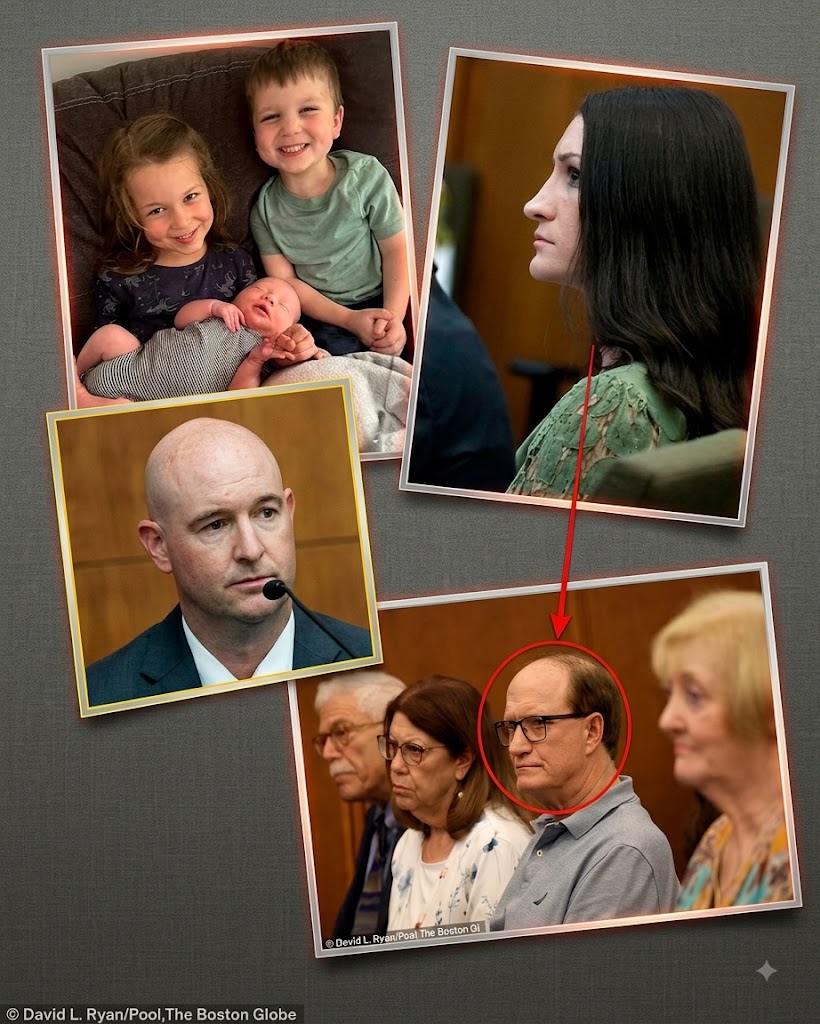
A Massachusetts courtroom erupted into intense debate this week after a state police officer disclosed under oath that investigators explored a explosive theory: that a doctor may have instructed Lindsay Clancy to claim she was hearing voices following the tragic deaths of her three young children.
The dramatic revelation came during cross-examination in Plymouth Superior Court, where Clancy, 36, is standing trial for three counts of murder and strangulation in the January 2023 deaths of 5-year-old Cora, 3-year-old Dawson, and 8-month-old Callan. The trial—which has captured global attention across mainstream networks and true-crime online communities—turned volatile as prosecutors and defense attorneys clashed over whether Clancy’s claim of hearing voices was a genuine manifestation of postpartum psychosis or a manufactured strategy suggested in the immediate aftermath of the tragedy.
The Four Words That Transformed the Trial
At the center of the dispute are four words that have echoed throughout the defense’s case: “A voice told me.”
According to defense attorney Kevin Reddington, Clancy suffered a catastrophic psychiatric break brought on by severe postpartum psychosis, postpartum depression, and a severe regime of over a dozen prescribed psychiatric medications. Reddington told the court that on the evening of January 24, 2023, a commanding voice told Clancy: “This is your last chance. Kill the children so you can kill yourself.” She then strangled her children with exercise bands before leaping from a second-story window in a suicide attempt that left her permanently paralyzed from the waist down.
However, testimony from Massachusetts State Police Trooper Dan Lawlor exposed a sharp rift inside the investigation. Lawlor testified that while providing security at the hospital where Clancy was being treated, he witnessed a consulting doctor hand Clancy his personal cell phone to call her husband, Patrick Clancy.
When pressed on cross-examination, Lawlor acknowledged that investigators discussed a theoretical possibility that the clinician had “coached” or encouraged Clancy to state she was hearing voices when speaking with her husband.
Prosecutor Shanan Buckingham immediately fired back during re-direct examination, aggressively questioning the basis of the claim. Buckingham forced Lawlor to clarify that his understanding came from informal discussions with a lead detective on the case rather than formal instructions or official strategy directives from prosecutors.
A Meticulous Plan or Acute Psychotic Break?
The “coaching” allegation hits at the very core of the prosecution’s argument. Prosecutors contend that Clancy, a former labor and delivery nurse at Massachusetts General Hospital, acted with deliberate premeditation when she sent her husband out to pick up dinner and takeout medication before carrying out the killings.
Throughout the trial, prosecutors have presented evidence intended to show clarity and self-awareness:
Digital Records & Journals: Entries detailing her daily routines, medication schedules, and feelings of “brain fog” without explicit mentions of active hallucinations.
Prior Medical Evaluations: Testimony from clinicians who saw Clancy in late December 2022 and early January 2023, who noted severe anxiety and depressive symptoms but reported no signs of active psychosis, delusions, or auditory hallucinations.
Conversely, the defense maintains that the absence of documented psychosis in brief 17-minute psychiatric appointments does not rule out a rapid, severe onset of postpartum psychosis—a rare and notoriously volatile condition known to escalate suddenly.
Social Media Sleuths and Public Division
The bombshell testimony triggered a massive wave of reaction across true-crime channels on YouTube, TikTok, X, and Reddit’s popular r/TrueCrimeDiscussion forum.
On Reddit and Discord: Online observers debated the legal implications of Trooper Lawlor’s testimony. Many sleuths pointed out that even if the prosecution entertained the coaching theory, proving that a medical professional intentionally instructed a patient to fabricate psychiatric symptoms presents an exceptionally high evidentiary bar.
On TikTok and X: Maternal health advocates expressed outrage at the prosecution’s line of questioning, arguing that accusing medical staff of “coaching” undermines Clancy’s documented attempts to seek emergency psychiatric care in the weeks prior to the tragedy. Others argued that the claim creates reasonable doubt regarding the credibility of early post-incident statements.
Courtroom journalists from Court TV and major regional outlets reported that jurors appeared visibly attentive during Lawlor’s testimony, taking notes as the defense sought to highlight potential confirmation bias among law enforcement investigators.
High Stakes in the Weeks Ahead
As the trial moves into its third week in Plymouth Superior Court, the stakes could not be higher. If convicted of first-degree murder, Lindsay Clancy faces life in prison without the possibility of parole. If found not guilty by reason of lack of criminal responsibility due to insanity or severe mental illness, she will be committed to a state psychiatric facility indefinitely.
With medical examiners, toxicologists, and defense-retained forensic psychiatrists scheduled to take the stand in coming days, the jury will ultimately be forced to determine whether those four words were the genuine tragic cries of a mother broken by illness, or the calculated result of a story constructed after the fact.