The Wounds That Never Heal: Why HBO’s ‘Sharp Objects’ Remains the Gold Standard of Psychological Thrillers
Think you’ve seen the darkest thriller on HBO? Think again. 🔪🌪️
If you think you know “psychological,” wait until you step into Wind Gap. It’s been years since Sharp Objects dropped, but it remains the most unsettling, atmospheric, and haunting masterpiece HBO has ever produced.
Amy Adams is at her absolute peak in a performance that will leave you breathless, while the slow-burn dread will keep you looking over your shoulder long after the credits roll. It’s not just a mystery—it’s a deep dive into generational trauma that feels like a punch to the gut.
Trust us, you aren’t ready for that ending. Is it finally time for a binge? 👇
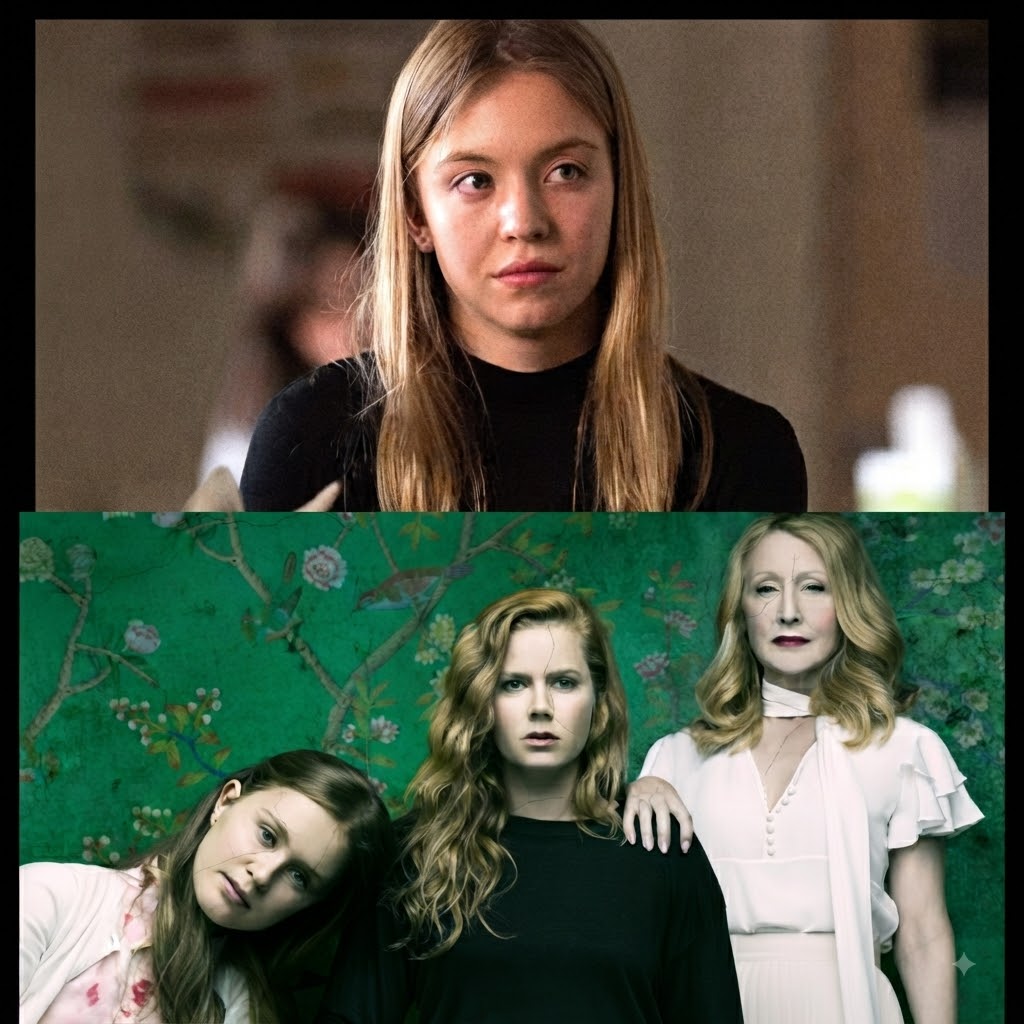
In the vast, crowded ecosystem of “prestige television,” it is rare for a series to truly leave a scar on its audience. Many thrillers are designed to be forgotten—binged over a weekend, enjoyed for their twists, and discarded. But then there is HBO’s Sharp Objects. Based on Gillian Flynn’s razor-sharp novel and directed with an icy, impeccable hand by Jean-Marc Vallée, this eight-part series is not just a show; it is an experience that lingers long after the final frame.
Twelve years after the era-defining True Detective changed the crime landscape, Sharp Objects arrived to push the boundaries even further. It proved that a thriller didn’t need car chases or gunfights to be terrifying—it only needed the quiet, suffocating weight of the past.
A Portrait of Southern Gothic Decay
The series follows Camille Preaker (Amy Adams), a troubled journalist who returns to her stifling hometown of Wind Gap, Missouri, to cover the gruesome murders of two young girls. On the surface, it’s a classic mystery trope: the outsider returning to a place they tried to escape. But beneath the surface, Sharp Objects is a visceral exploration of the damage parents can inflict on their children.
Wind Gap is not just a setting; it is a character. The show’s production design creates a world that is humid, decaying, and relentlessly judgmental. Every shot is framed with an obsessive attention to detail, from the peeling wallpaper in the family mansion to the eerie silence of the town’s streets. Vallée’s direction utilizes “subliminal” editing—flickering, almost hallucinogenic flashes of memory—to put the viewer directly inside Camille’s shattered psyche.
The Performance of a Lifetime
Amy Adams has long been considered one of the greatest actors of her generation, but her work in Sharp Objects is, quite simply, haunting. She plays Camille with a fragility that feels dangerous. As she battles her own demons—represented by her history of self-harm—while navigating the venomous presence of her mother, Adora (Patricia Clarkson), the show transforms from a standard whodunit into a masterclass in psychological warfare.
Patricia Clarkson’s portrayal of Adora is equally chilling. She embodies the “Southern Matriarch” trope and twists it into something monstrous, hiding a sadistic level of control behind a mask of poise and “proper” behavior. The chemistry—or rather, the toxicity—between Adams and Clarkson is the engine that drives the series toward its devastating conclusion.
Why Now Is the Perfect Time to Binge
In an era where television is often dominated by “plot-heavy” shows that rely on cliffhangers, Sharp Objects demands a different kind of attention. It is a slow-burn in the truest sense of the word. It isn’t interested in providing quick answers; it is interested in peeling back the layers of a broken person until there is nothing left to hide.
For those who missed it during its initial run, or for those looking for a series that rewards deep, contemplative viewing, Sharp Objects is the perfect choice. It is a dense, beautifully crafted, and deeply disturbing piece of art that challenges the viewer to look at the “sharp objects” in their own lives—the things we use to keep the pain at bay.
The Legacy of the “Limited Series”
Sharp Objects solidified HBO’s dominance in the psychological thriller space. It utilized the “limited series” format to its maximum potential, delivering a story that had a definitive beginning, middle, and end, free from the bloat of multi-season renewal requirements. It showed that limited runs can attract the highest caliber of talent, and it paved the way for subsequent hits like The White Lotus and Mare of Easttown.
But more than its structural success, it is remembered for its emotional impact. It is a show about the resilience of the human spirit in the face of impossible trauma. It is a show about the scars we carry, both visible and invisible.
The Ending That Still Haunts
Without venturing into spoiler territory for the uninitiated, the final moments of Sharp Objects are among the most shocking in the history of television. It is a climax that forces the viewer to re-contextualize everything they have seen for the previous eight hours. When the truth is finally laid bare, it isn’t a relief—it’s a reckoning.
In a modern world that feels increasingly loud and chaotic, the quiet, focused dread of Sharp Objects is more relevant than ever. It remains a testament to what happens when master craftsmen—Flynn, Vallée, Adams—are given the space to tell a story with total, uncompromising integrity.
If you haven’t visited Wind Gap, proceed with caution. But once you start, you won’t be able to look away.