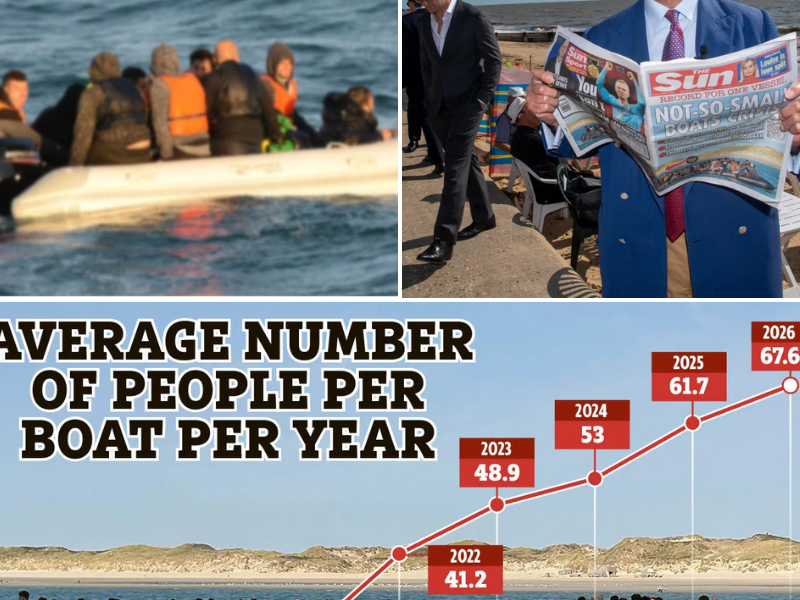
THE DAY SMALL BOATS BECAME A BIG BOAT CRISIS: Record-Breaking 49ft Mega-Dinghies Carry 230+ Migrants Across the Channel in Defiance of European Border Controls
An unprecedented escalation in the illegal Channel migration crisis has triggered nationwide fury across the United Kingdom following the arrival of a massive, custom-built 49-foot PVC mega-dinghy carrying a staggering 230 migrants. Newly released photographic evidence has exposed how international human smuggling networks have rapidly abandoned traditional canoe-sized rowboats in favor of colossal, motorized watercraft that rival the passenger capacity of commercial commercial aircraft. Transport analysts and border security experts noted that the single vessel crammed more occupants on board than a standard Boeing 737 passenger jet flying standard regional routes. The alarming maritime breakthrough has completely laid bare the operational vulnerabilities along European shores, sparking fierce political recriminations and intensifying demands for immediate, unyielding enforcement protocols to dismantle organized trafficking syndicates operating with apparent impunity.
The record-shattering crossing unfolded as the enormous vessel traversed the world’s busiest shipping lane before being intercepted and brought into Dover. Measuring 49 feet from bow to stern, the latest generation of mega-dinghies is substantially larger than previous vessels deployed earlier in the season, stretching more than ten feet longer than a standard double-decker London bus. According to intelligence estimates from border security analysts, organized criminal syndicates are thought to charge approximately £2,000 per head for illegal passage across the hazardous waters, meaning a single successful voyage using these jumbo craft can generate an estimated £450,000 in illicit profit. Opposition figures and border security watchdogs immediately seized on the development, branding the current state of border management a national humiliation and arguing that people traffickers are laughing all the way to the bank while enforcement agencies struggle to keep pace with evolving smuggling tactics.
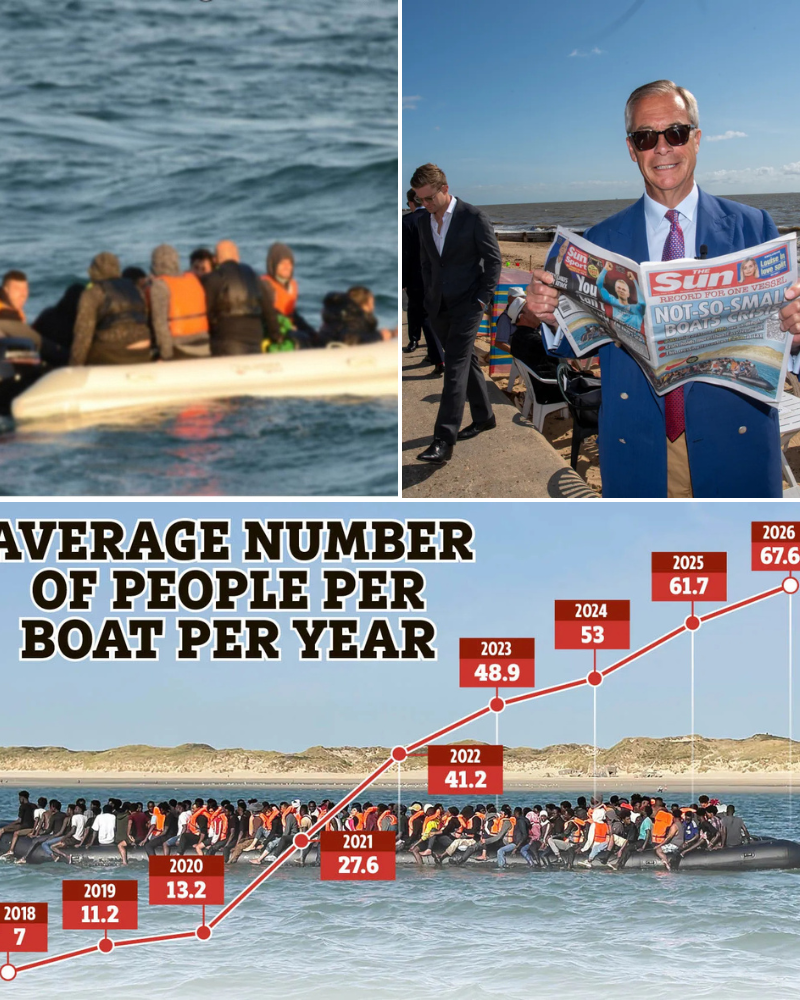
The emergence of these massive vessels highlights a dangerous tactical adaptation by trafficking rings attempting to circumvent intensified beach patrols by French law enforcement along the northern coast. Rather than launching dozens of smaller, easily detectable dinghies, criminal syndicates have concentrated human cargo into single, high-capacity behemoths to maximize financial returns per voyage. However, maritime safety experts and rescue organizations have repeatedly warned that these overloaded mega-dinghies present catastrophic structural risks. French rescue workers reported that Monday’s record-breaking craft was visibly buckling under the immense weight of its 230 passengers while still in coastal waters, teetering perilously close to a catastrophic mass casualty event. This follows a string of recent maritime disasters, including an incident where a mega-dinghy carrying 173 occupants caught fire and capsized shortly after departure, requiring emergency interventions and highlighting the lethal nature of these overcrowded experiments.
Political fallout has spread rapidly across Whitehall as ministers face intense scrutiny over the effectiveness of bilateral security agreements aimed at stopping illegal departures at the source. While government spokespersons point to broader year-on-year declines in overall small-boat arrivals, critics argue that the shift toward mega-dinghies represents a dangerous new phase in the crisis that defeats traditional containment strategies. Law enforcement agencies on both sides of the Channel are facing mounting pressure to target the specialized supply chains manufacturing these custom-made, oversized inflatables before they reach European beaches. Intelligence units are actively investigating how such large commercial-grade watercraft are transported, inflated, and loaded in plain sight without triggering immediate law enforcement interdiction, pointing to coordinated logistical networks operating across multiple European jurisdictions.
The human element of the crossings remains a persistent tragedy, with vulnerable individuals—including toddlers, infants, and families—subjected to extreme peril by ruthless trafficking networks. Eyewitness accounts from French coastal towns described chaotic scenes as dozens of migrants rushed to board already overburdened hulls, occasionally spilling into the surf before the vessels pushed off into the dark shipping lanes. Humanitarian organizations have repeatedly condemned the smugglers’ callous disregard for human life, noting that cramming hundreds of desperate people onto unseaworthy, buckling plastic tubes transforms a dangerous maritime crossing into a floating death trap. Despite millions of taxpayer funds allocated toward cross-border policing and technological surveillance, the ongoing deployment of plane-sized dinghies proves that international crime rings remain adaptable, resilient, and deeply entrenched.
As the political debate reaches a fever pitch ahead of upcoming parliamentary reviews, pressure is mounting on home affairs officials to re-evaluate current naval interception and deterrence frameworks. Border security experts emphasize that standard maritime tactics designed for smaller inflatable rafts are wholly inadequate when confronting vessels the size of commercial barges carrying hundreds of undocumented passengers. The ongoing proliferation of mega-dinghies demands a radical upgrade in intelligence-led policing, asset deployment, and rapid-response capabilities to intercept these floating juggernauts before they ever clear European territorial waters. For millions of concerned citizens watching the crisis unfold, the sight of a single boat carrying more people than a passenger jet serves as an undeniable wake-up call that the battle to secure Europe’s maritime borders is entering a critical and highly volatile new chapter.