‘A BOX-CHECKING ROBOT’: Lindsay Clancy’s Psychiatrist Faces Brutal Cross-Examination Over Experience and Treatment Decisions
Just one month on the job—and she was handed the psychiatric care of a mother spiraling into a catastrophic crisis. 🚨
Dr. Jennifer Tufts faced a blistering, high-stakes grilling in court as defense attorneys ripped into her qualifications, her 25-minute telehealth chats, and her handling of Lindsay Clancy’s exploding prescription cocktail. Was this a rookie doctor dangerously out of her depth, or is the medical establishment being unfairly scapegoated for an unimaginable tragedy?
The explosive courtroom showdown that has the true-crime community demanding answers is unfolding right now—get the full, jaw-dropping breakdown 👇🔥
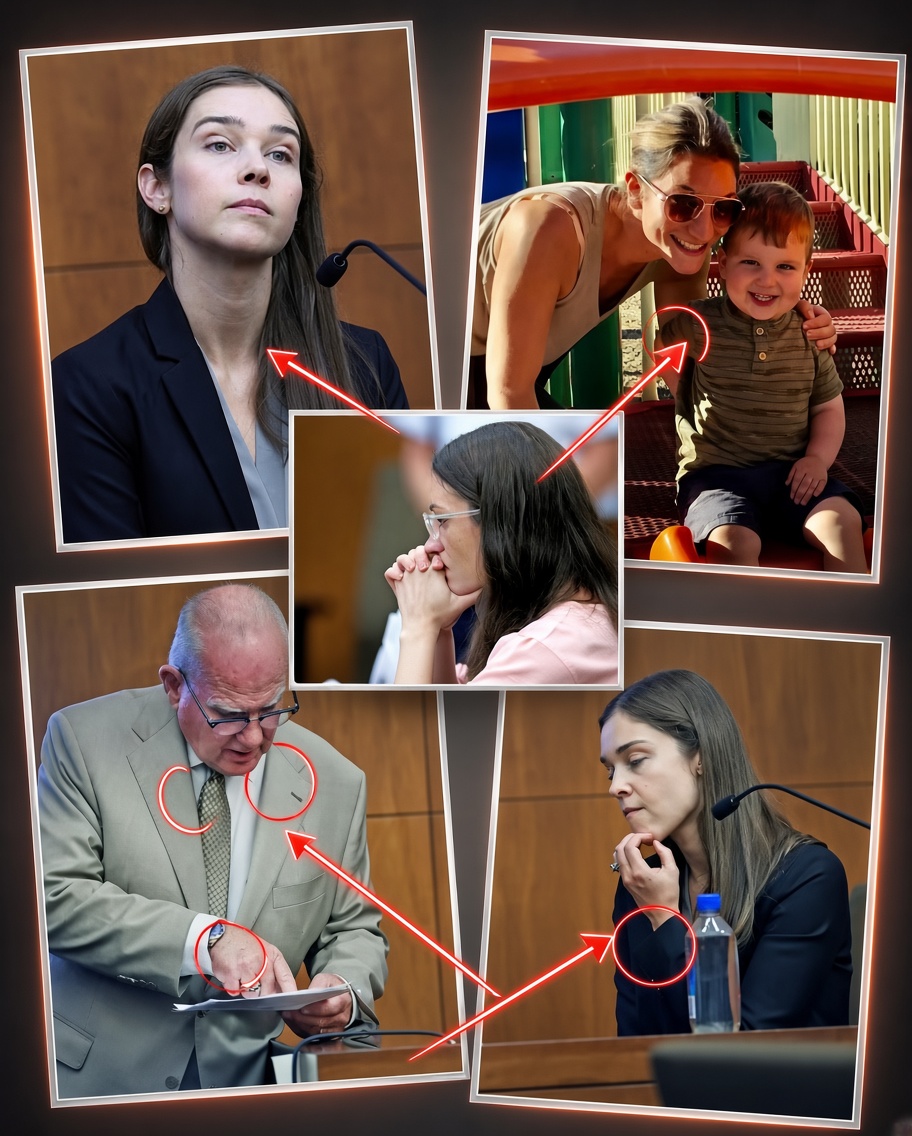
In a tense, highly contentious courtroom showdown that left observers on the edge of their seats, Dr. Jennifer Tufts—Clancy’s former psychiatrist—took the witness stand for a grueling cross-examination. As defense attorney Kevin Reddington tore into Tufts’ medical notes, treatment decisions, and prescription history, a stunning and controversial detail came to light: Tufts had reportedly been practicing independently in her role for a mere month when she first began treating Clancy in September 2022.
The revelation has blown wide open a secondary, highly volatile debate in the case: Was Lindsay Clancy a victim of a medical system staffed by inexperienced clinicians rushing through superficial telehealth appointments, or is the defense desperately trying to shift the blame away from a cold-blooded killer?
As the courtroom drama unfolds in Plymouth Superior Court, the internet has erupted, with millions across Reddit, TikTok, and X dissecting every word of Tufts’ testimony.
The One-Month Experience Controversy
The most explosive moment of Tufts’ appearance came when Reddington pressed the psychiatrist on her professional background. The defense attorney highlighted that Tufts had been fully credentialed and practicing independently for approximately one month prior to taking on Clancy as a patient.
The line of questioning was a calculated attempt to undermine Tufts’ credibility, suggesting that a clinician newly out of residency was unequipped to handle the complex, rapidly deteriorating mental state of a postpartum mother experiencing severe anxiety and insomnia.
Under pressure, Tufts defended her qualifications, asserting that she had managed numerous postpartum patients during her residency and had completed specialized training, including a focused elective with a perinatal psychiatrist. Furthermore, she testified that she did not believe her treatment fell below the standard of care, telling the court firmly, “I do not believe that I’ve been negligent”.
Yet, the defense zeroed in on the delivery method of that care: video calls. Tufts admitted that her sessions with Clancy were conducted almost exclusively via telehealth, consisting of 25-minute video appointments supplemented by digitized note-taking.
Reddington seized on this format, painting a picture of an impersonal, automated system. At one point during the blistering cross-examination, the defense attorney seemingly likened Tufts to a “box-checking robot,” slamming the reliance on quick digital check-ins rather than rigorous, in-person psychiatric evaluations.
When Reddington asked why Tufts never brought Clancy into an office for a face-to-face evaluation as her symptoms worsened, Tufts defended the method. “Talking to her over the video didn’t seem like an issue. It didn’t seem like there was something I was missing,” she replied.
A Maze of Prescriptions and Worsening Symptoms
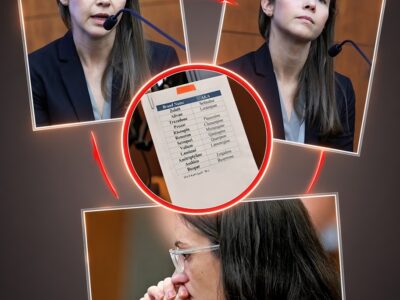
The testimony also cast a harsh light on the pharmaceutical carousel that Clancy experienced in the months leading up to the deaths of her three children—five-year-old Cora, three-year-old Dawson, and eight-month-old infant Callan.
Tufts was among a small group of medical providers who managed Clancy’s care, a period during which the mother received a staggering 30 prescriptions for 13 distinct types of medications—including heavy-duty antipsychotics—prescribed by multiple physicians.
When Tufts first began treating Clancy in September 2022, she diagnosed her with generalized anxiety disorder and an adjustment disorder with depressed mood. She initially prescribed Zoloft, a standard first-line medication for anxiety considered safe for breastfeeding mothers.
However, the trial revealed a downward spiral from there. According to Tufts’ own treatment notes and testimony, Clancy reported feeling “awful” after her Zoloft dosage was increased. She suffered from extreme insomnia, crying spells, lack of appetite, and a pervasive “mental fog”. By October, Clancy was experiencing overnight racing thoughts, intense paranoia about developing suicidal ideation, and a desperate fear of being left alone.
Despite these alarming red flags, Tufts testified that Clancy consistently denied having any intentions or plans to harm herself or others. When Tufts asked specifically about suicidal thoughts during an appointment on November 22, Clancy’s notes indicated “Patient denies SI” (suicidal ideation) at that specific moment.
However, by December 1, the situation deteriorated further. Clancy told Tufts she was struggling to sleep due to the sheer volume of medications she was taking—including Remeron—and described “worse depression and intrusive thoughts,” along with a terrifying feeling that she “was going to die”. She admitted she was “close” to having suicidal thoughts.
Reddington aggressively grilled Tufts on her response to those admissions: “You’ve got a woman telling you she’s hopeless, she doesn’t care if she dies, she can’t sleep, what did you do to validate on your therapy?”
Tufts maintained she offered reassurance and treatment pathways. “I told her that this was something we could address, there was hope, there were treatments,” Tufts responded. She also explored options such as Zulresso for postpartum depression and discussed potential treatments like Ketamine, though hospitalization was not deemed immediately necessary at various points because Clancy lacked a specific plan or intent to act on her thoughts.
The ‘Pressured Speech’ Climax and Tense Exchanges
The tension in the courtroom reached a boiling point on Monday afternoon, culminating in a fierce, combative verbal clash between Reddington and Tufts.
The argument centered on Tufts’ medical documentation regarding Clancy’s speech patterns. Pointing to specific records, Reddington noted that Tufts had written down phrases that could be interpreted as signs of mania or escalating psychosis—specifically noting references to speech patterns.
Tufts pushed back furiously against the defense’s interpretation. “I don’t care what it says. I know what I meant,” Tufts snapped during the cross-examination.
“When you wrote this, you did not say ‘not pressured speech.’ You said in the medical record ‘pressured speech,'” Reddington fired back.
“She did not have pressured speech,” Tufts insisted.
“Did you write that, doctor?” Reddington pressed.
“I wrote that, but you’re misinterpreting my note,” Tufts answered.
The contentious exchange concluded with Tufts repeating that her notes were correct, but the defense’s interpretation was entirely incorrect—prompting Reddington to drop his papers and state, “As opposed to yours? I have nothing further,” bringing a dramatic end to the hours-long grilling.
Social Media Erupts: Systemic Failure vs. Individual Accountability
As transcripts of Tufts’ cross-examination flooded the internet, online communities on Reddit, TikTok, and X broke out into fierce factional warfare.
On Reddit’s true-crime boards, medical professionals and laypersons alike debated the ethics of relying on telehealth for severe psychiatric cases. Many users expressed shock that a clinician with only one month of independent practice experience was managing a severe postpartum patient on complex drug cocktails.
“Twenty-five-minute video calls for a woman experiencing acute postpartum crisis? That is a ticking time bomb,” wrote one highly upvoted user on r/TrueCrimeDiscussion. “It highlights a broken mental healthcare system that treats mothers like assembly-line patients instead of giving them intensive, in-person care.”
Conversely, other internet commentators argued that the defense is unfairly crucifying a young doctor to distract from Clancy’s personal accountability.
“Dr. Tufts didn’t commit the murders,” argued a prominent legal commentator on X. “Lindsay repeatedly denied having plans to harm herself or anyone else, and she lied or omitted key details on her intake forms regarding her state. You can’t blame a psychiatrist for failing to predict the unpredictable when the patient tells them they have no intent to act.”
The public polarization reflects the core conflict of the trial itself: Is Lindsay Clancy a tragic casualty of medical malpractice and overmedication, or a criminal defendant seeking to weaponize a mental health defense?
The Road Ahead for the Trial
With Dr. Jennifer Tufts’ testimony concluded, the prosecution continues to build its case, attempting to prove that Clancy understood her actions and acted with chilling rationality. Meanwhile, the defense is using every available witness—from nurses to psychiatrists—to construct a narrative of an overburdened, chemically intoxicated mother abandoned by a fragmented medical network.
As the jury of 12 women and six men absorbs the granular details of prescription logs, telehealth notes, and tense courtroom bickers, one thing is certain. The trial has transcended a simple murder case; it has become a devastating national indictment of how modern medicine handles the invisible, agonizing war fought inside the minds of postpartum mothers.
Whether Tufts’ early-career missteps or routine telehealth protocols will sway the jury remains to be seen, but the medical establishment will undoubtedly feel the shockwaves of this trial for years to come.